

Skip to content
Front of House Notes
Home / Notes

Front of House Notes

These editorial pages cover practical menu display topics for front-of-house teams and venue owners. They focus on everyday decisions around visibility, maintenance, sizing and placement.

Why Snap Frames Work

Why Snap Frames Work

An overview of why tool-free frame opening suits fast menu changes in hospitality settings.

A4 Or A3

A4 Or A3

A simple comparison between common menu frame sizes and where each works best.

Wall Or Window

Wall Or Window

How to choose between wall-mounted and window-facing menu displays for customer visibility.

Using A-Frames

Using A-Frames

Practical notes on where folding menu stands help attract passing trade and show specials.

Menu Reading Distance

Menu Reading Distance

How viewing distance affects size choice, layout density and display position.

Reducing Window Glare

Reducing Window Glare

Ways to improve legibility when menus are displayed near strong daylight and reflections.

Keeping Menus Current

Keeping Menus Current

A routine for updating menu inserts neatly and consistently across multiple frames.

Cleaning Clear Covers

Cleaning Clear Covers

Basic care for anti-glare covers to keep displays clean without scratching the surface.

Frame Corner Checks

Frame Corner Checks

A quick inspection routine for corners, profiles and backing support during menu changes.

Mounting On Tile

Mounting On Tile

Points to consider when positioning menu frames on tiled walls in food service spaces.

Mounting On Brick

Mounting On Brick

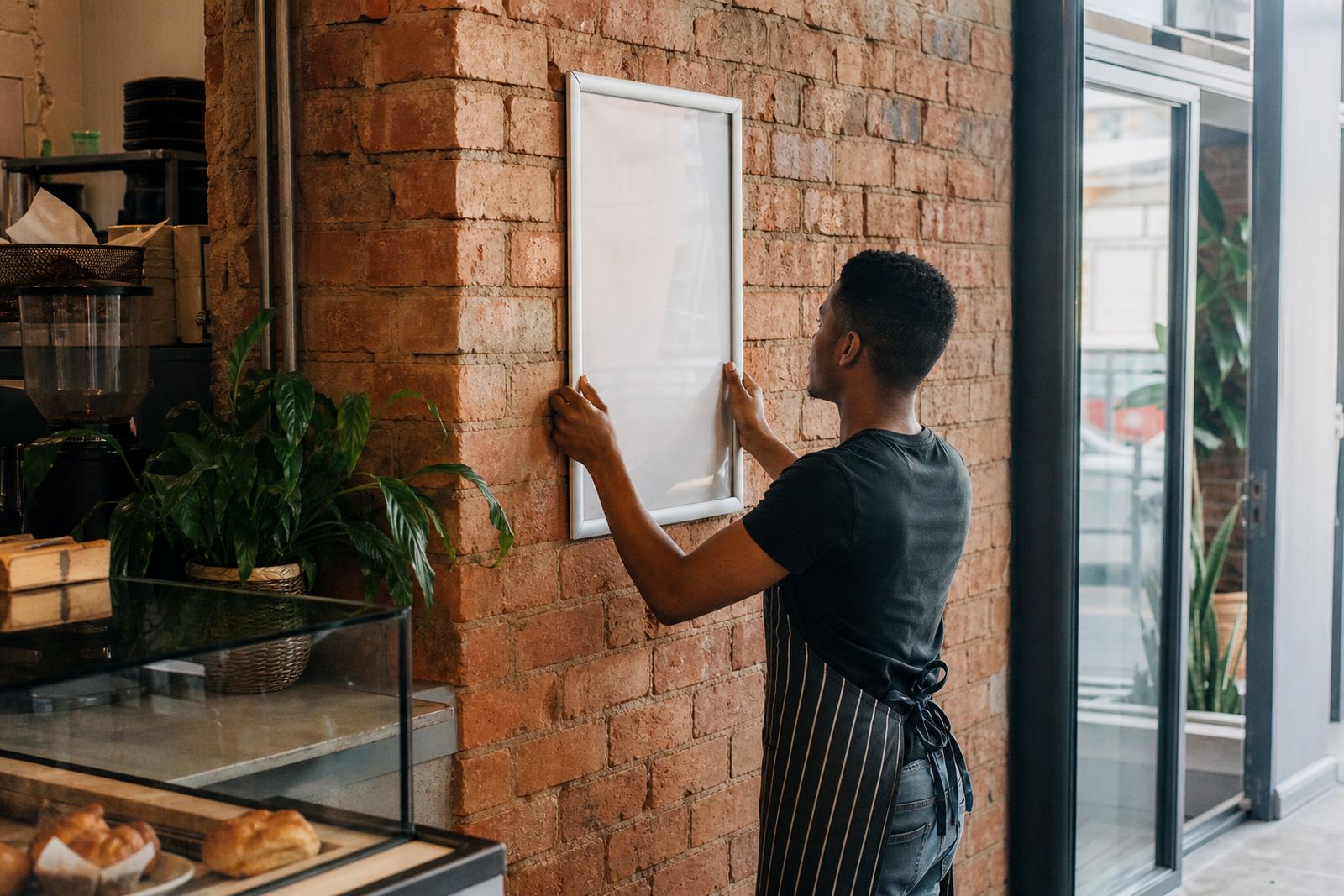
What to watch for when installing menu boards on brick or textured surfaces.

Mounting On Glass

Mounting On Glass

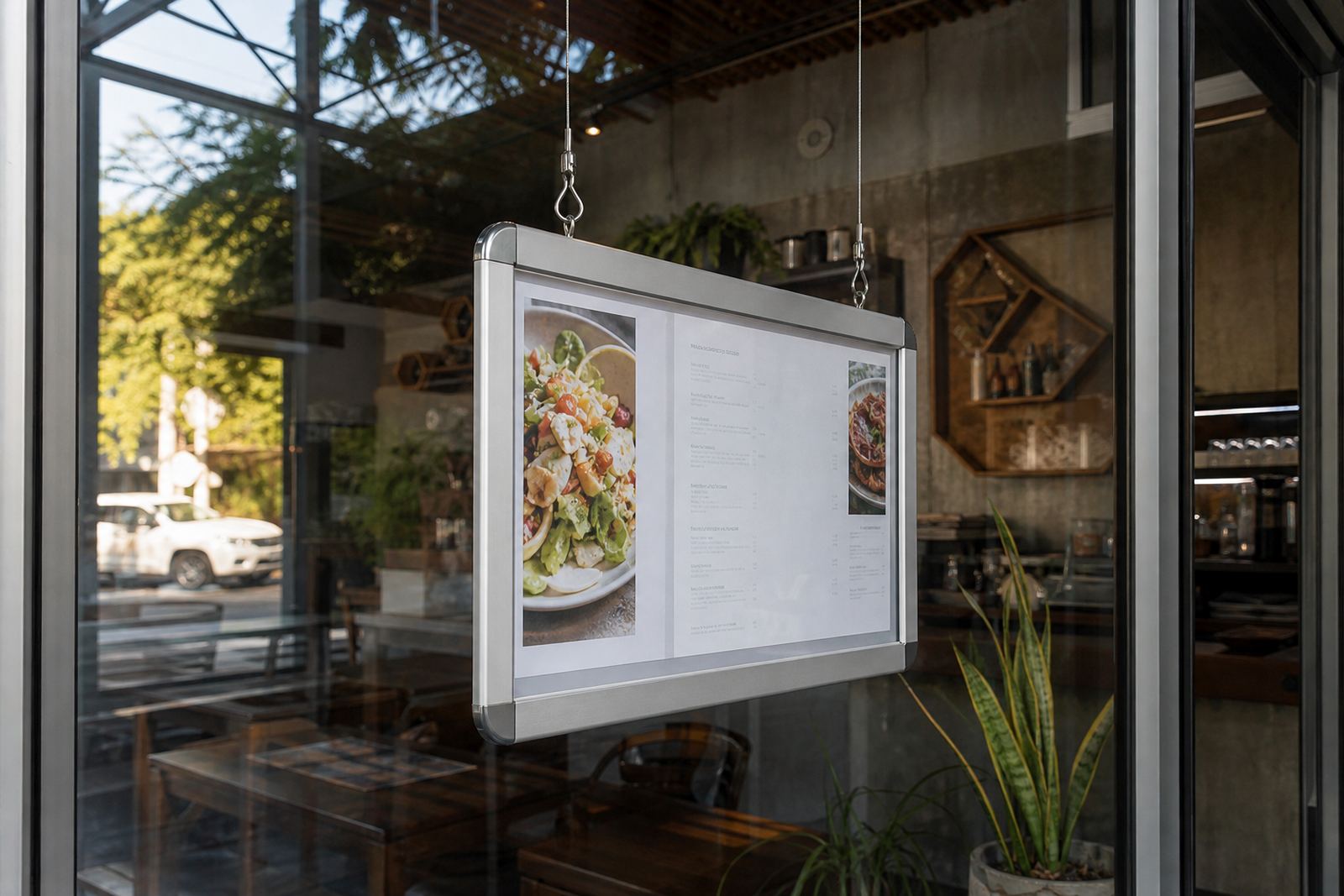
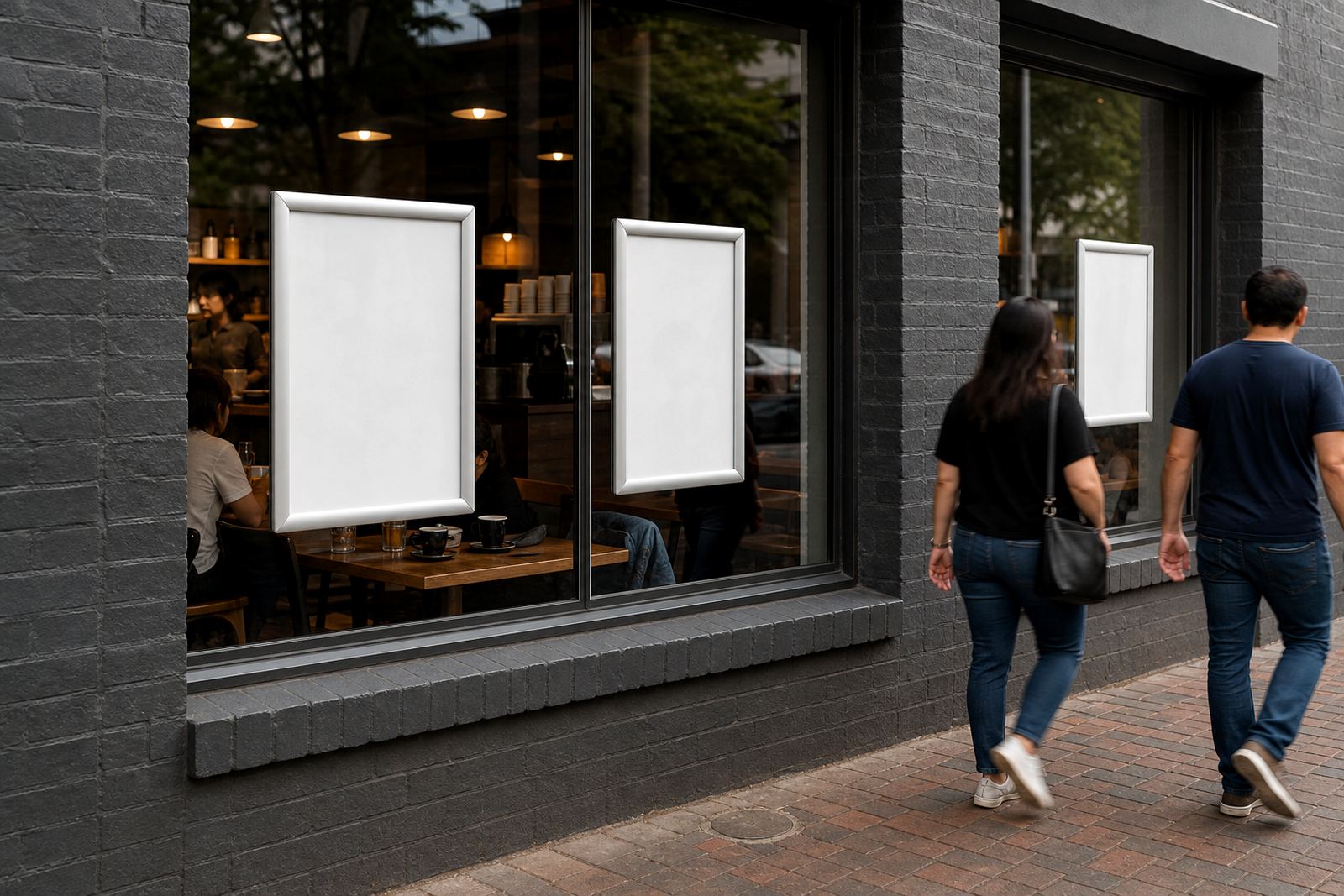
Display methods for glazing where menu information needs to face the street.

Entry Point Displays

Entry Point Displays

Why the first menu seen at the entrance often shapes ordering speed and expectations.

Queue Line Visibility

Queue Line Visibility

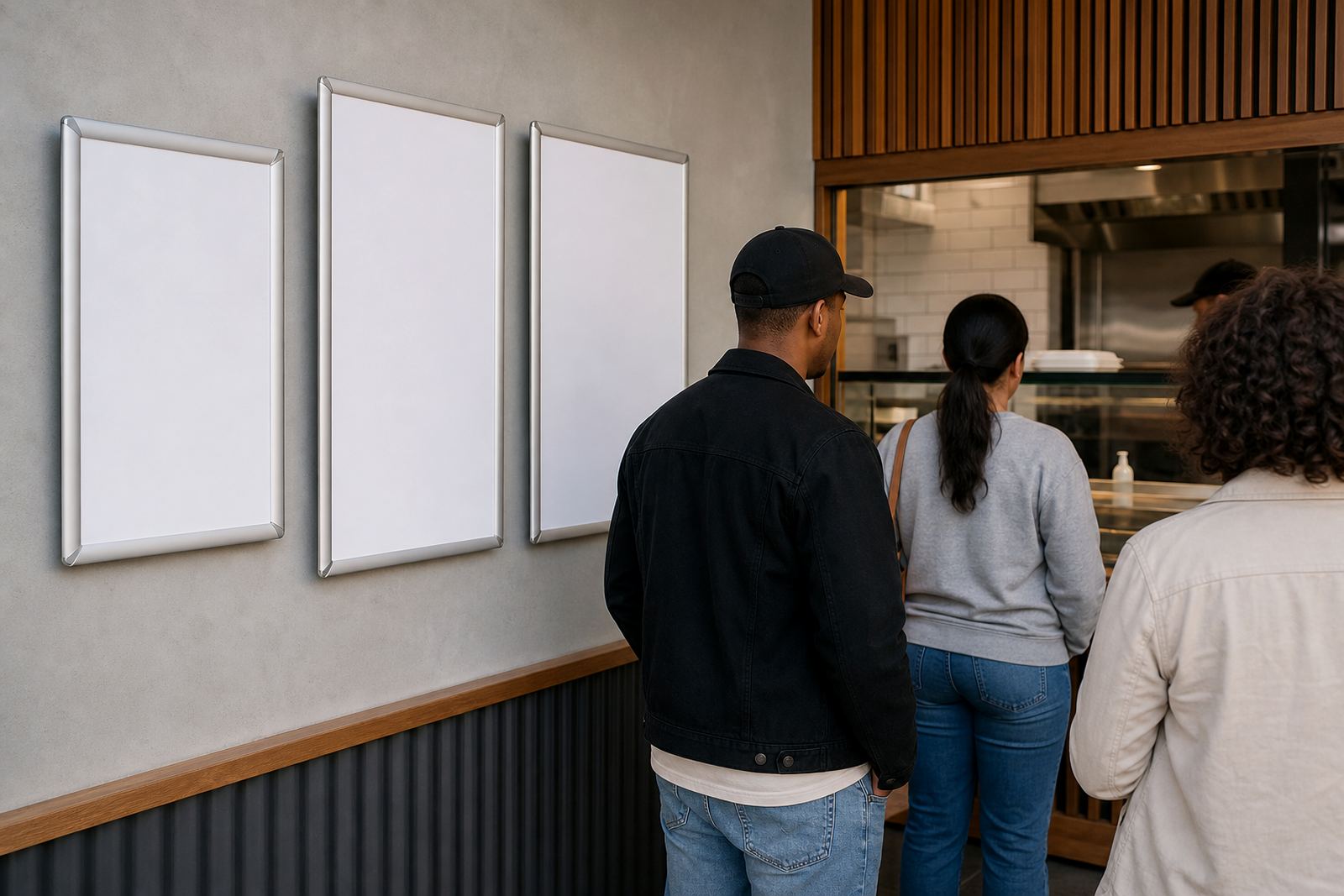
How menu placement along queues can reduce hesitation at the order point.

Drinks List Layouts

Drinks List Layouts

Layout ideas for bars and cafes presenting compact drinks menus in frames.

Specials Board Routine

Specials Board Routine

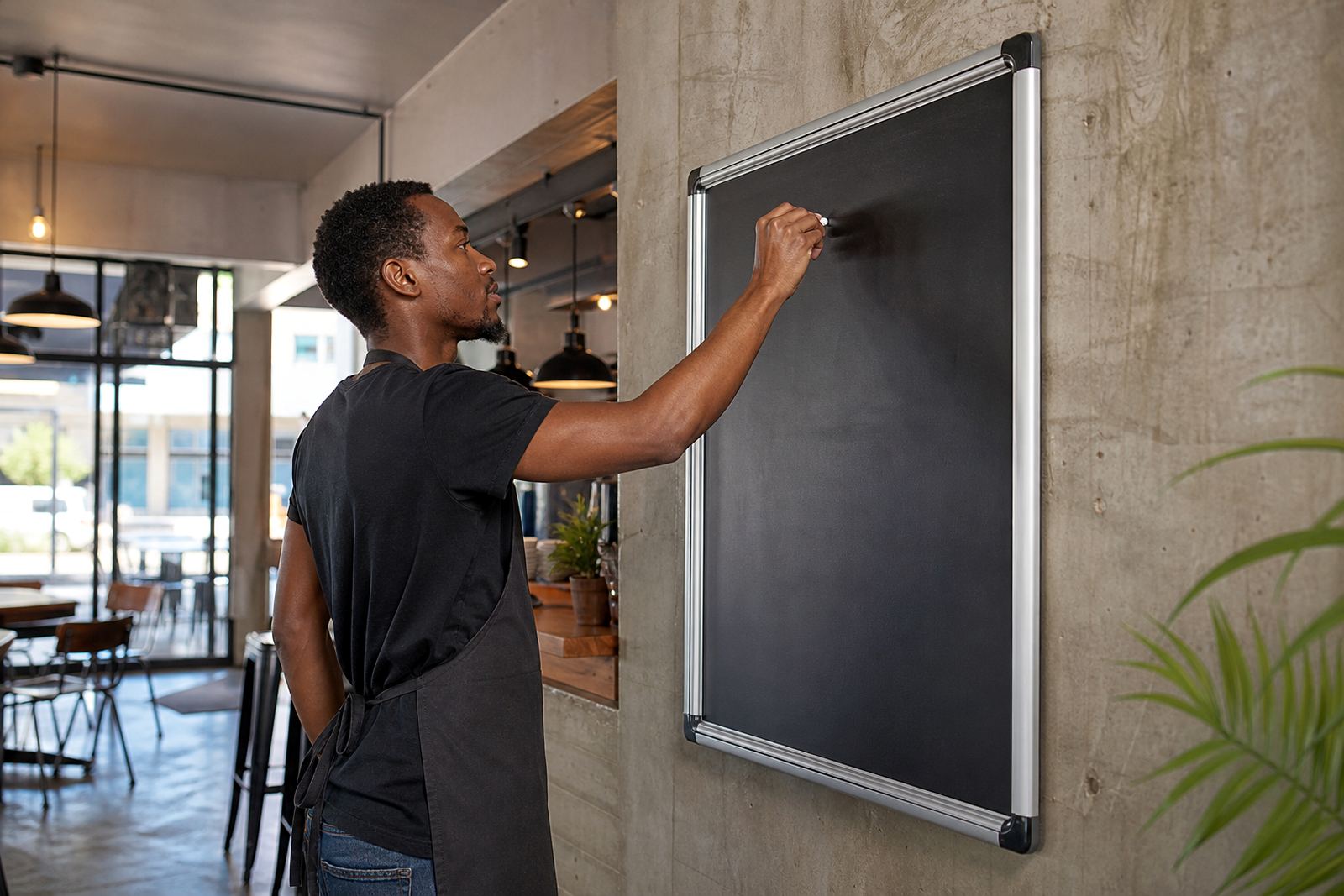
A simple process for updating chalkboards and daily specials before each service.

Menu Reprint Timing

Menu Reprint Timing

Signs that a menu insert should be reprinted rather than kept in circulation.

Portrait Vs Landscape

Portrait Vs Landscape

When each orientation makes sense for readability, wall space and menu structure.

Using Multi Panel Boards

Using Multi Panel Boards

How to split larger menus into sections without making the display feel cluttered.

Countertop Display Tips

Countertop Display Tips

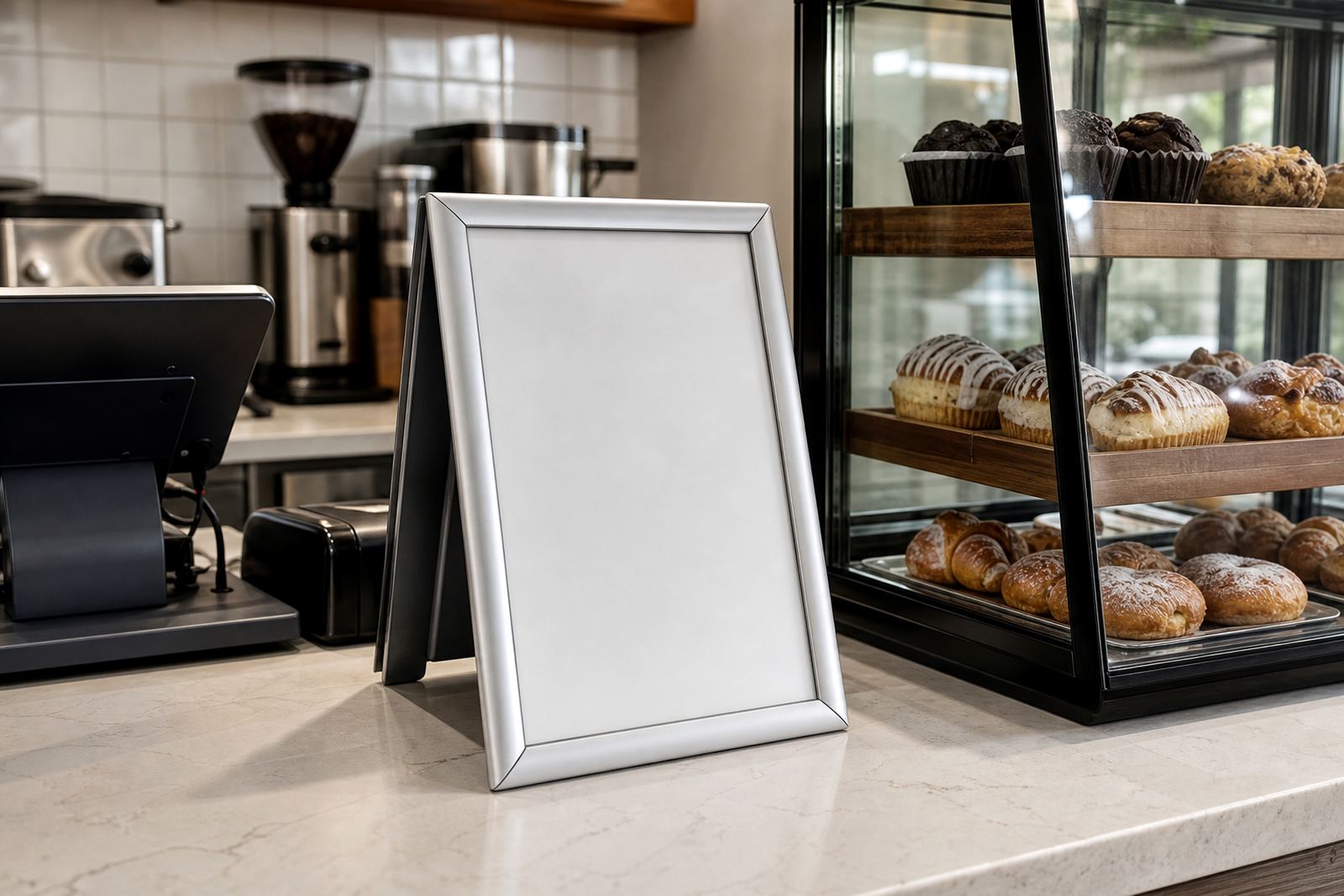
Good uses for small menu frames near tills, pastry cases and collection counters.

Window Menu Pacing

Window Menu Pacing

How to structure window displays so passers-by can scan menus quickly from outside.

Protecting Outdoor Displays

Protecting Outdoor Displays

Care and placement ideas for menu stands used in covered exterior areas.

Daily Open Close Checks

Daily Open Close Checks

A quick checklist for keeping menu displays ready at opening and secure at close.

Avoiding Cluttered Menus

Avoiding Cluttered Menus

Why fewer words, clearer spacing and stronger headings help display boards work better.

Heading Size Basics

Heading Size Basics

How stronger section headings improve scannability in wall and window menus.

Price Column Neatness

Price Column Neatness

Why aligned pricing helps customers read menus faster in a busy service queue.

Seasonal Menu Swaps

Seasonal Menu Swaps

Planning menu insert updates for seasonal dishes, drinks and promotions.

Launch Day Displays

Launch Day Displays

What to prepare when opening a new venue with fresh menus and specials boards.

Takeaway Order Speed

Takeaway Order Speed

How visible menu boards can reduce delays at busy takeaway counters.

Bar Menu Zones

Bar Menu Zones

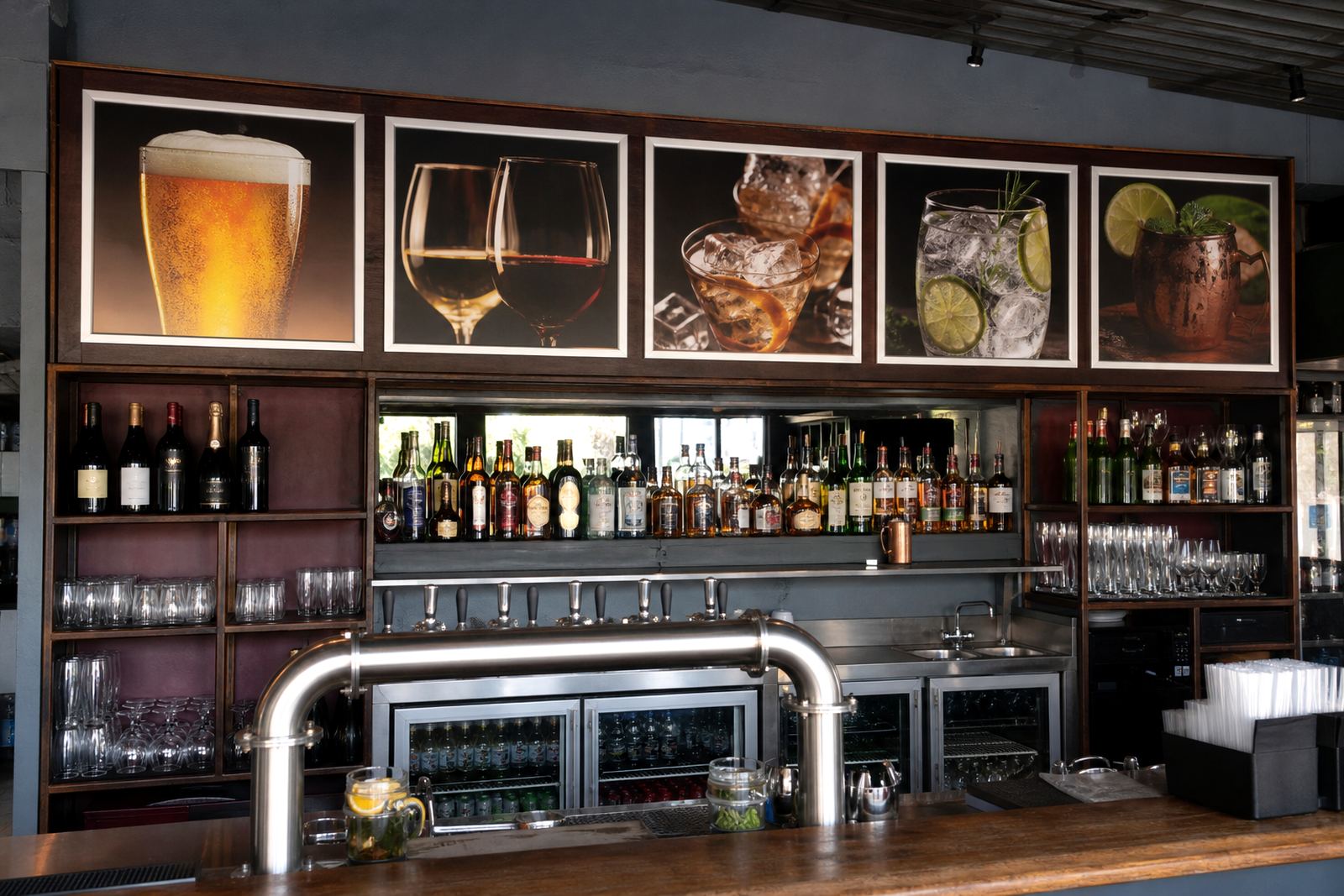
How to separate cocktails, beer, wine and specials into readable display zones.

Cafe Breakfast Changeover

Cafe Breakfast Changeover

A practical way to switch from breakfast to lunch menus during the trading day.

Host Point Information

Host Point Information

Using framed notices at the entrance for seating policies, times and menu highlights.

Collection Point Notices

Collection Point Notices

Helpful uses for small framed notices where takeaway orders are collected.

Chalkboard Writing Clarity

Chalkboard Writing Clarity

Simple lettering habits that keep handwritten specials readable from a distance.

Matching Frame Finishes

Matching Frame Finishes

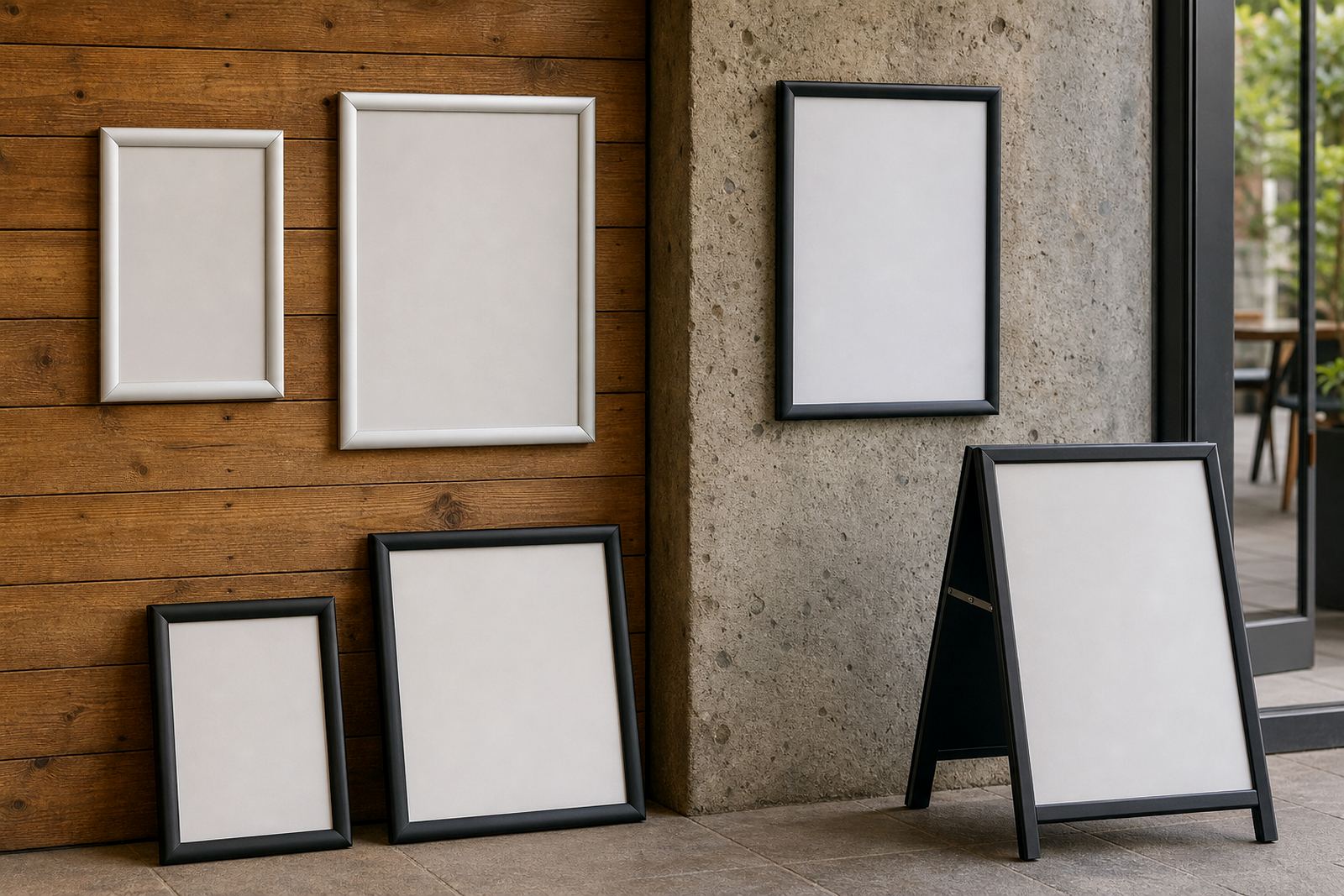
Choosing silver or black frames to suit interior colours and fitting details.

Frames that let the menu change without a fuss

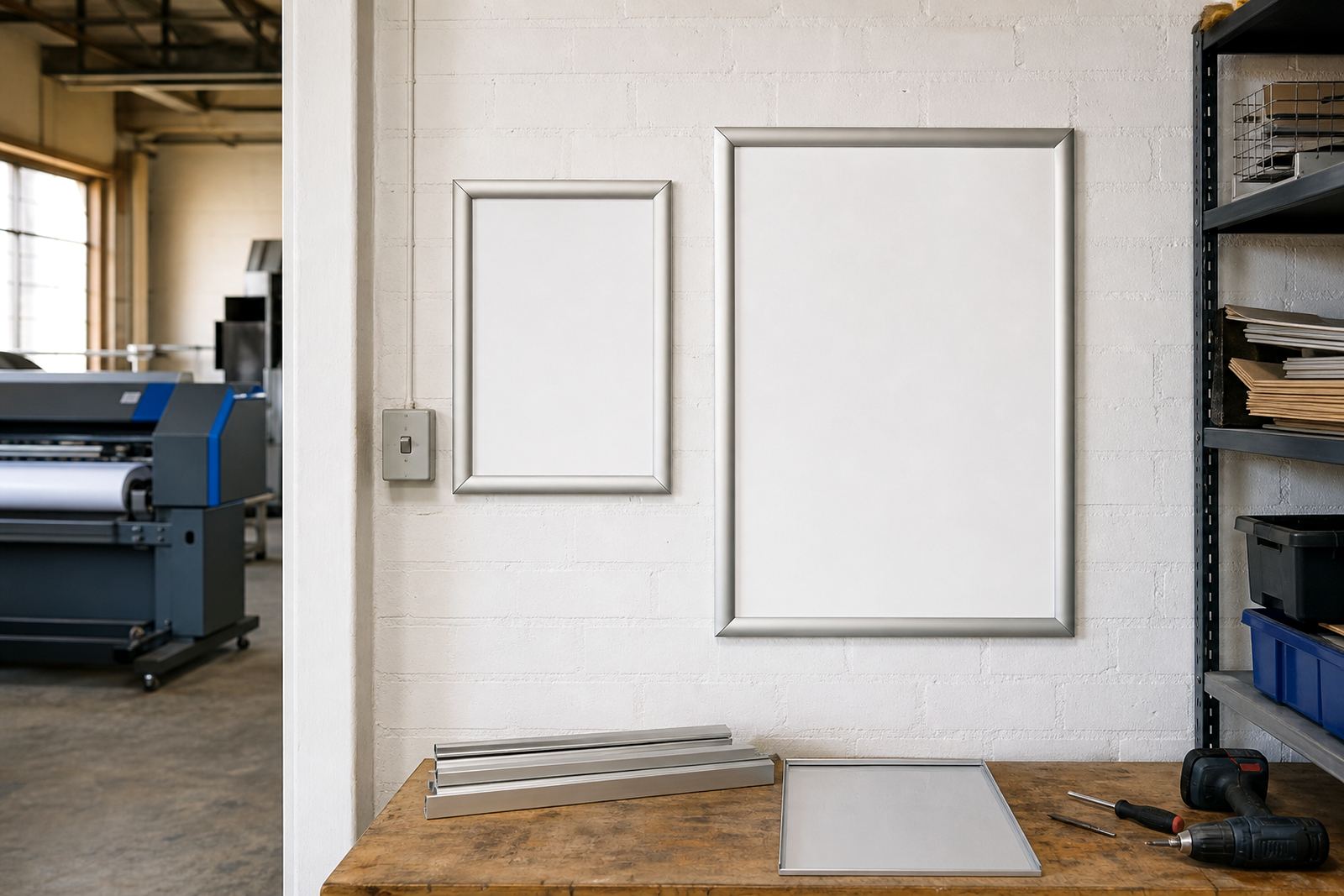
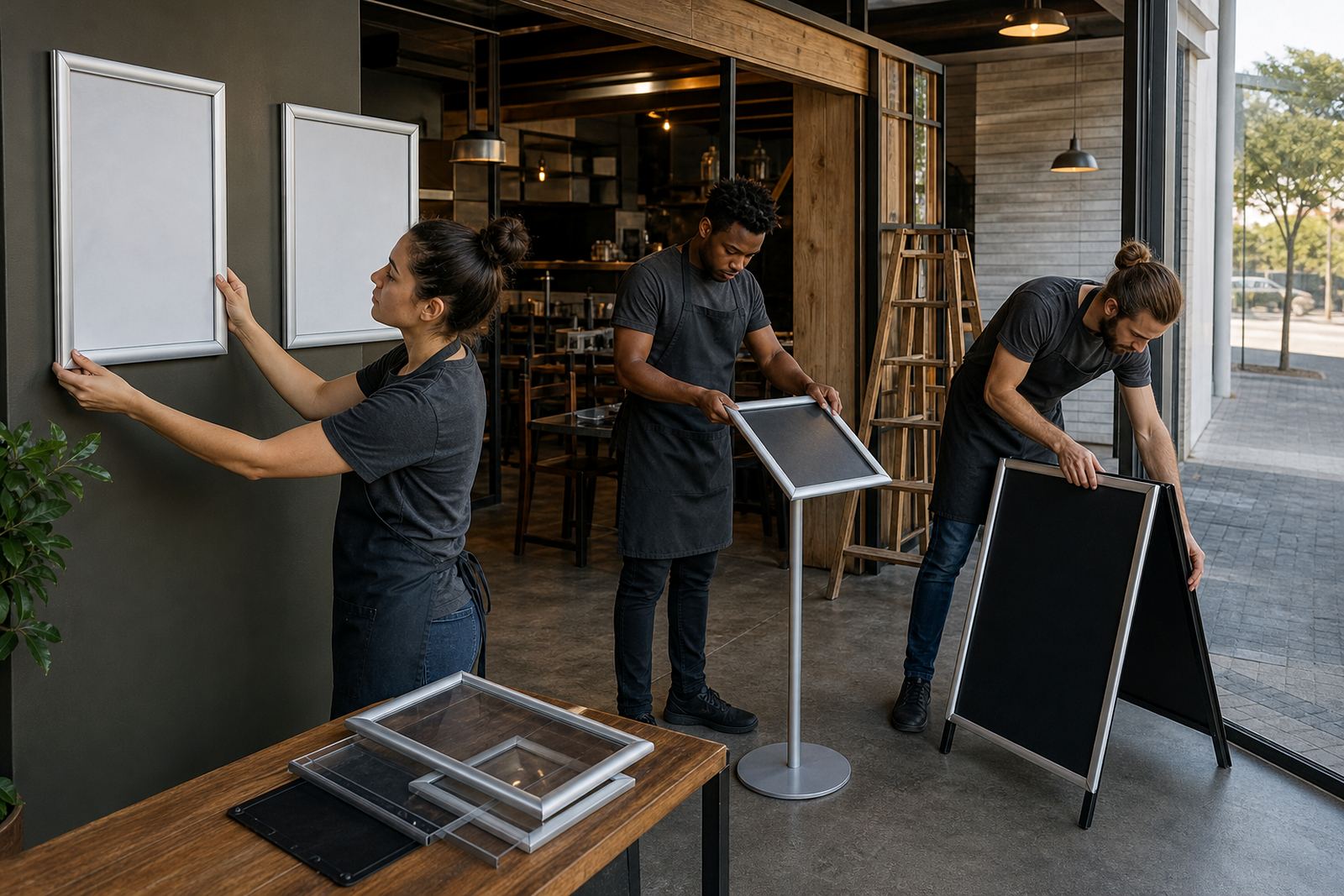
Snap menu frames suit spots where pricing shifts, breakfast rolls change, or the specials board needs a fresh insert before lunch. A4 and A3 sizes are common because they work with standard print files and fit neatly into tight wall spaces, window lines and service counters.

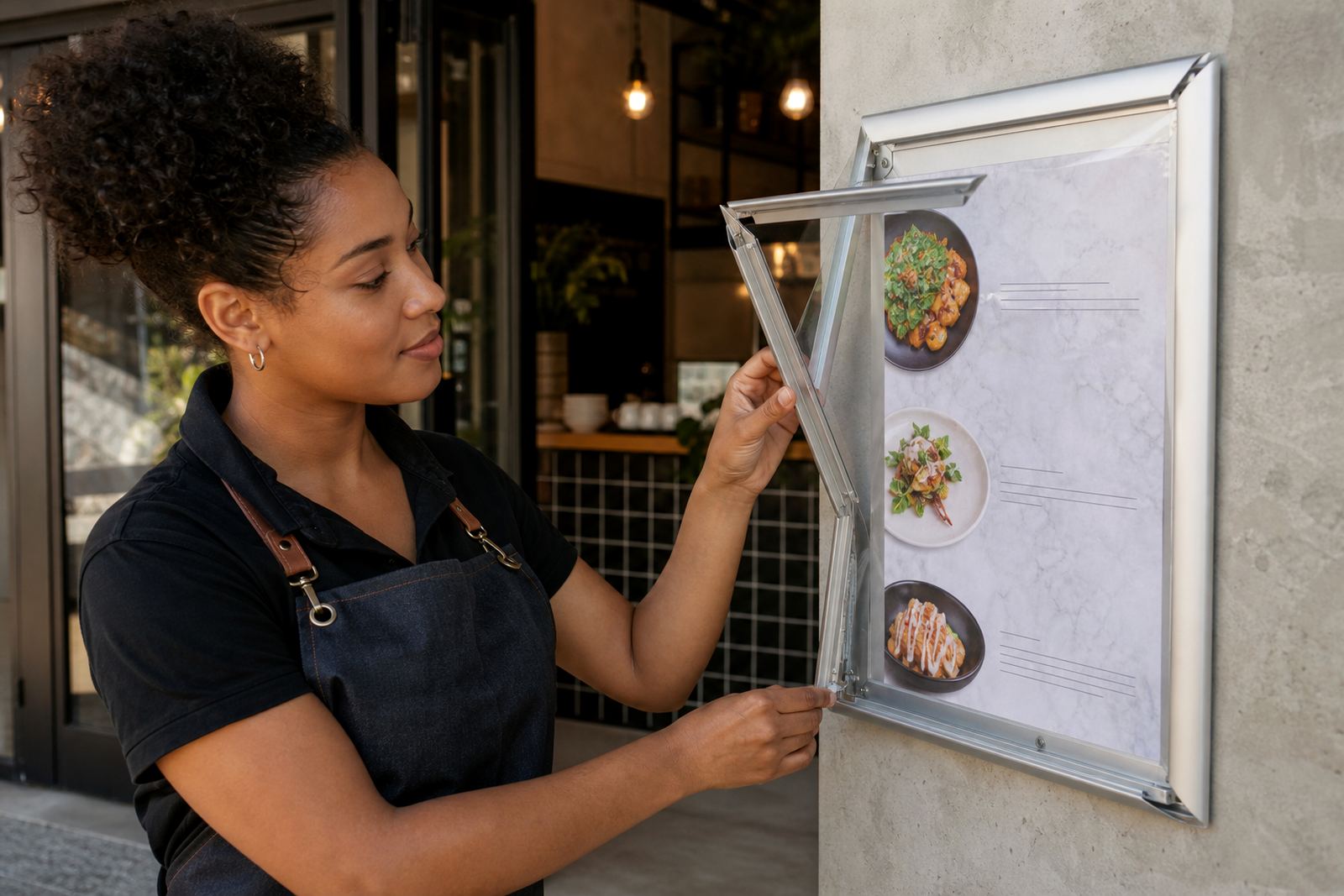
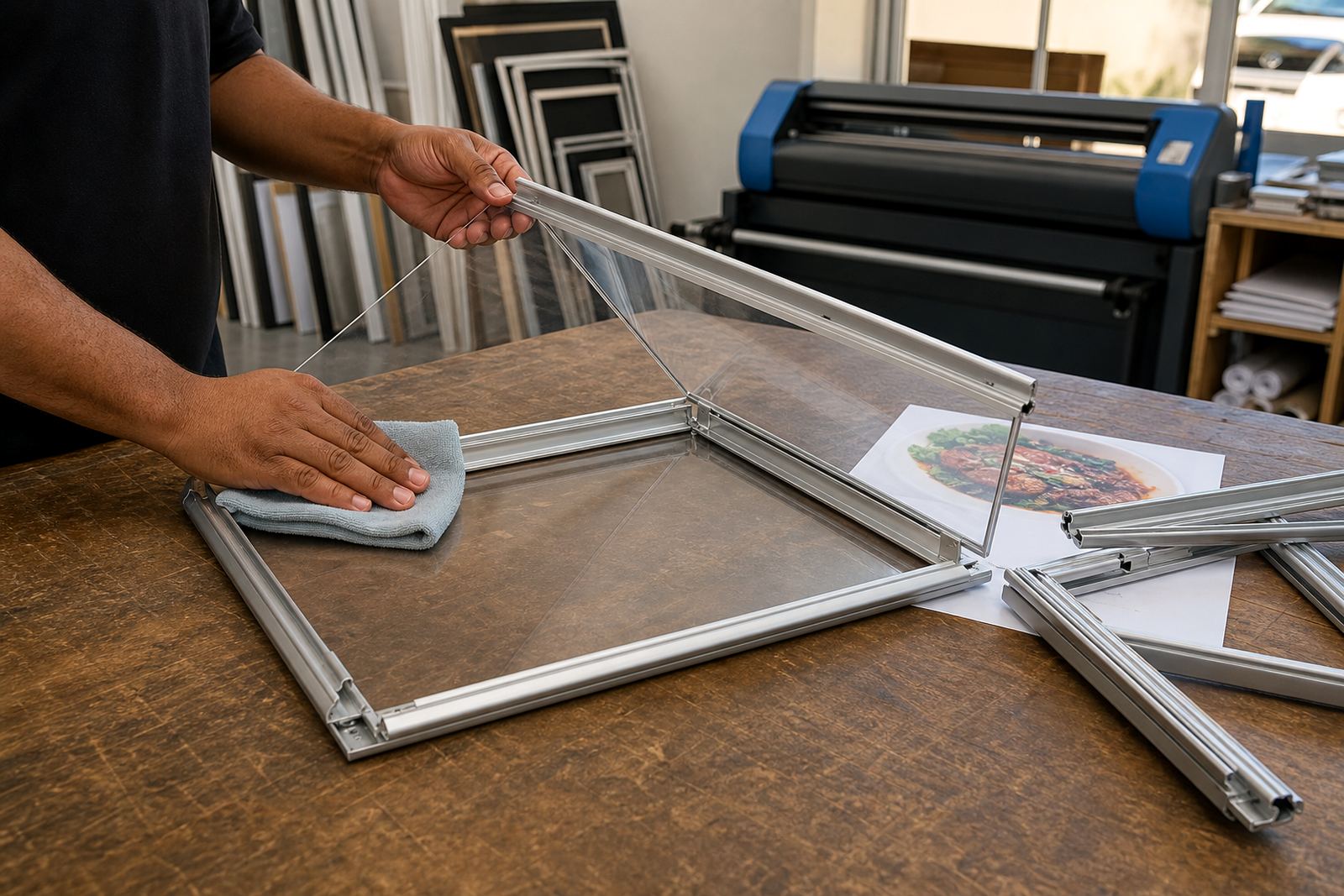
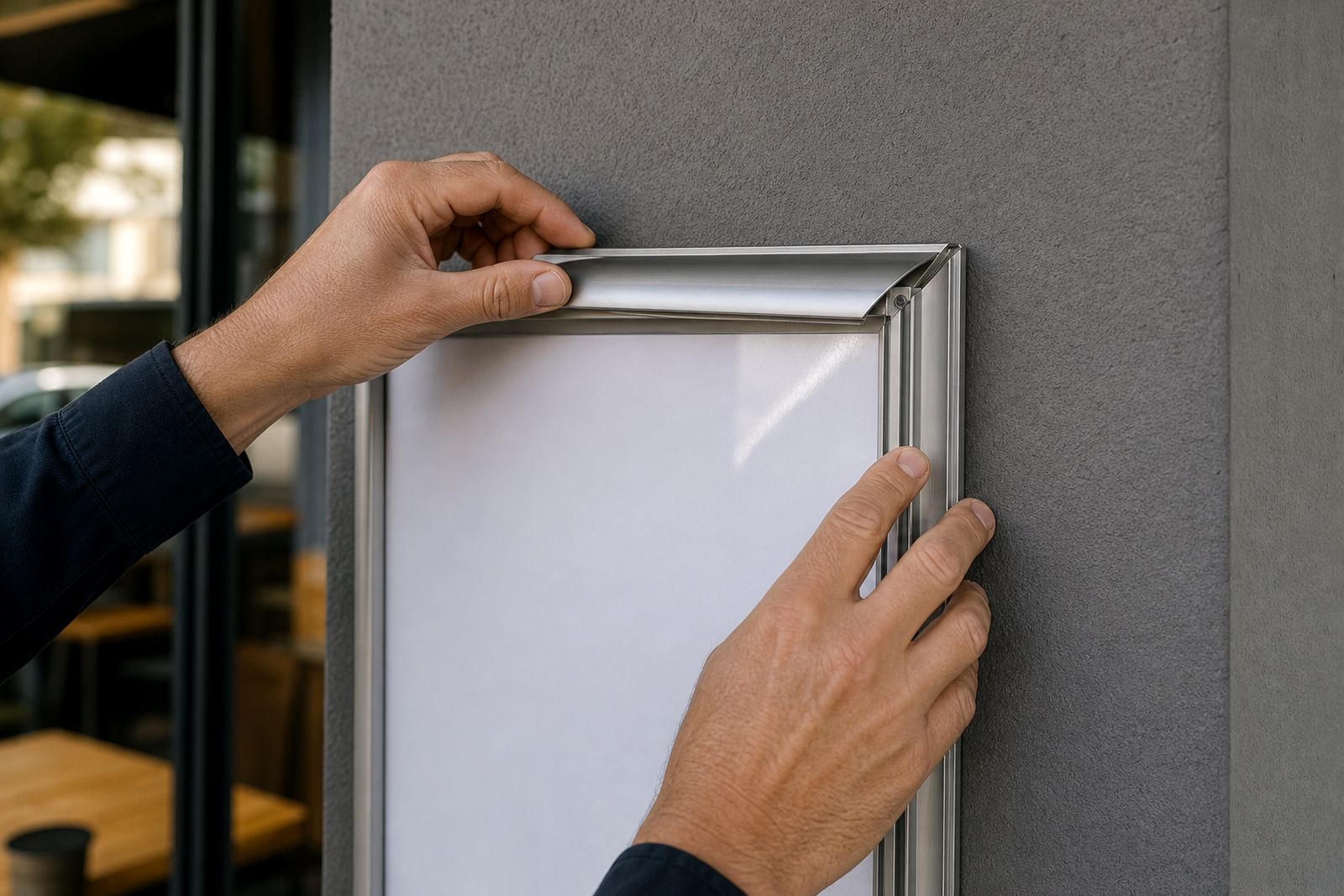
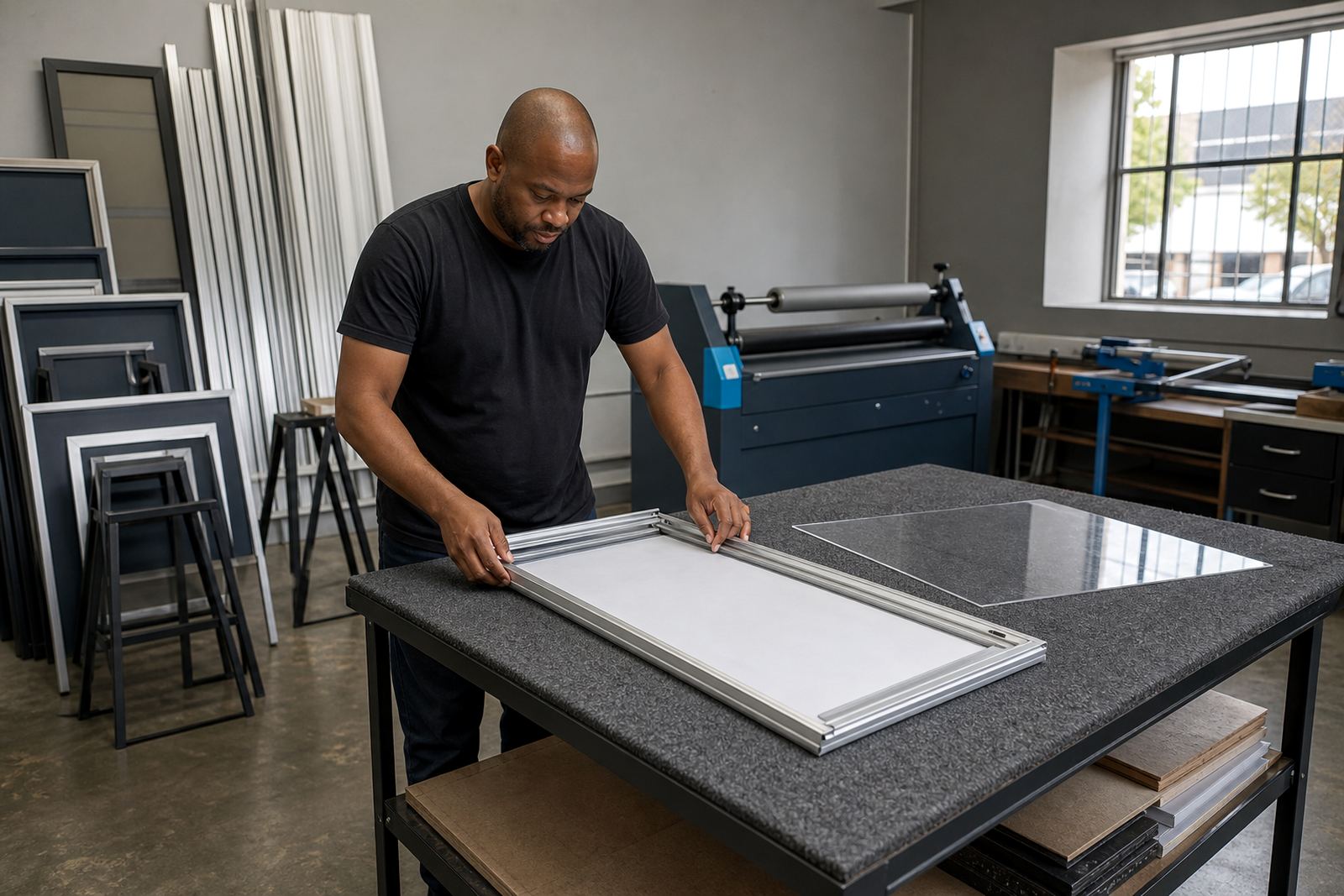
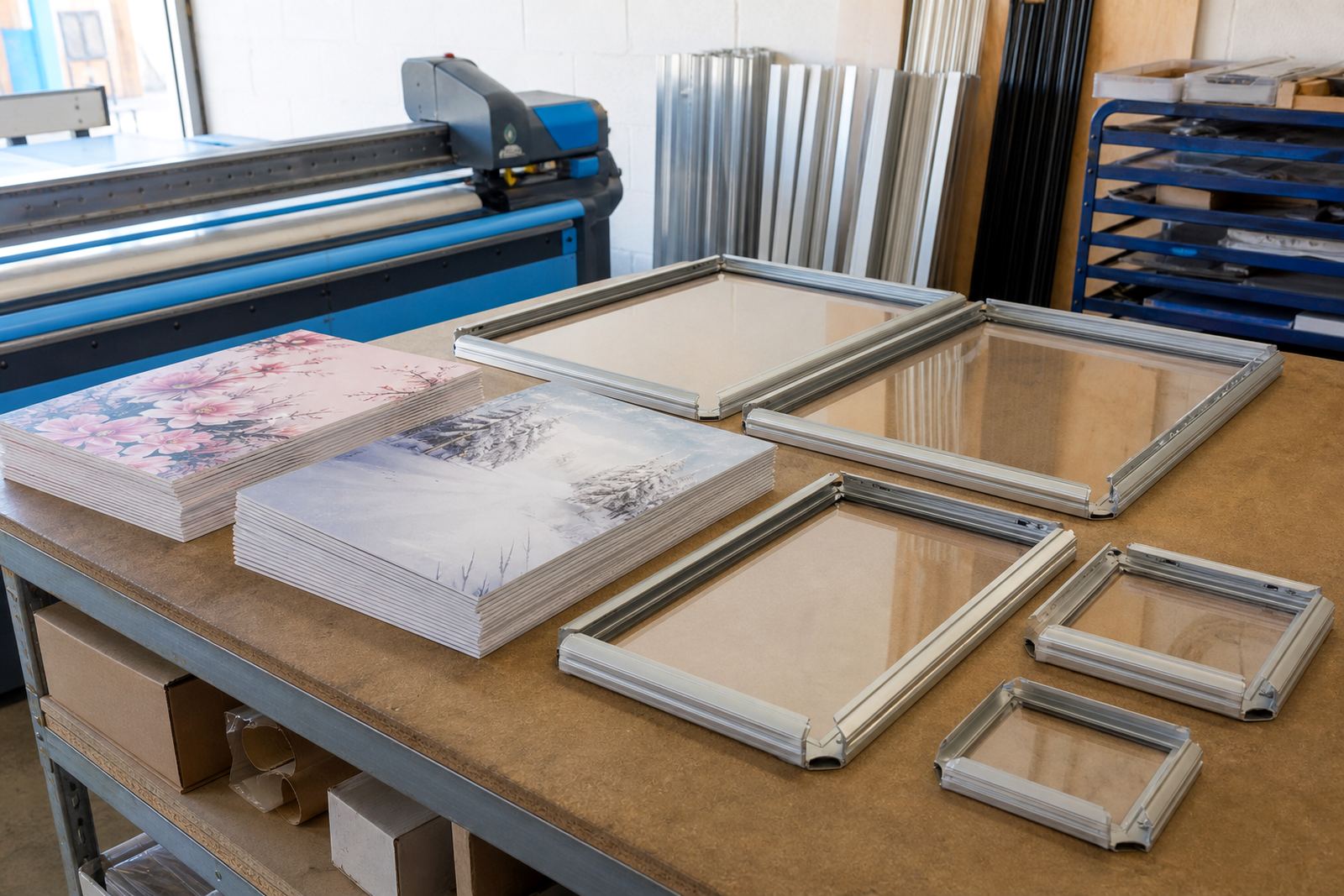
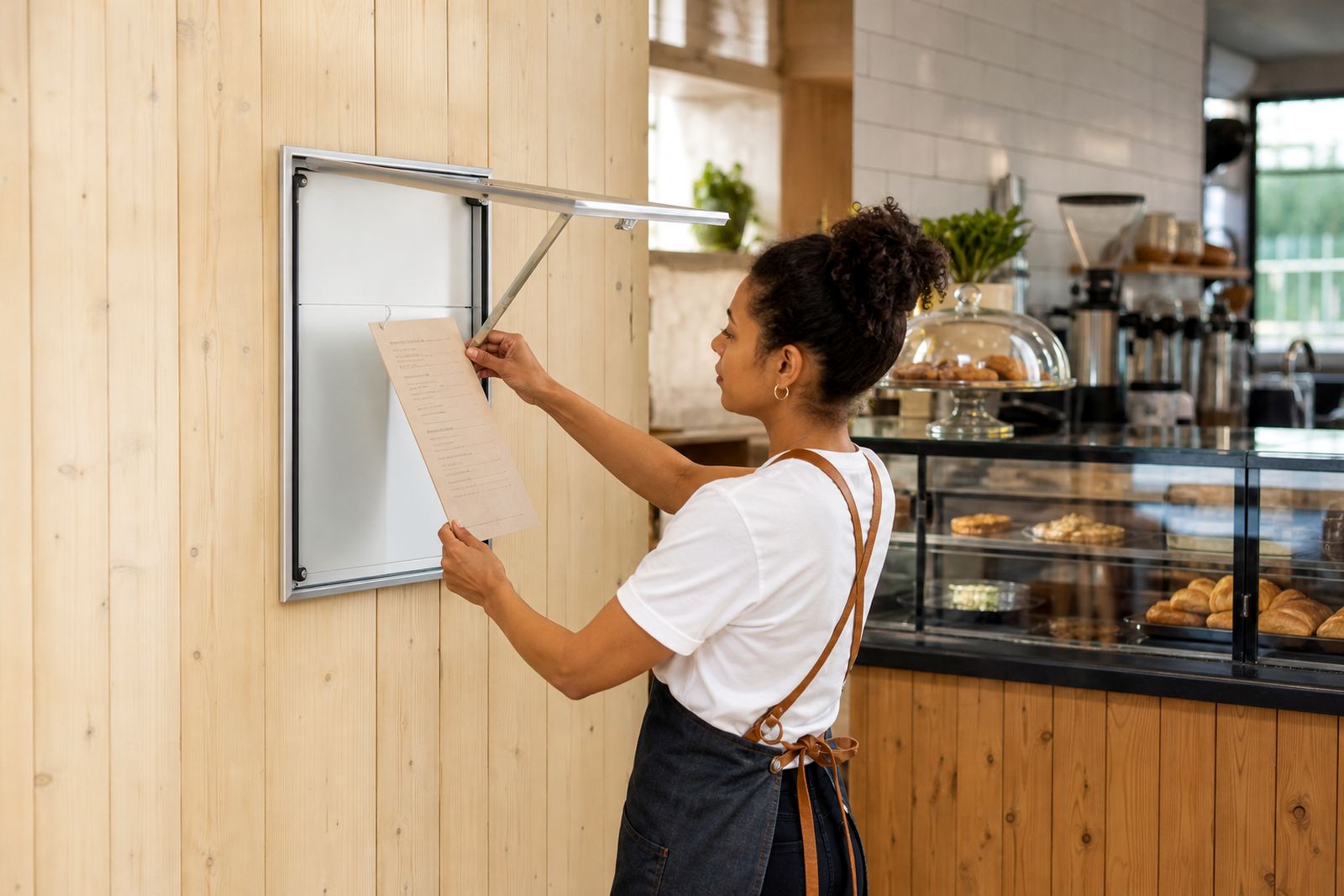
Aluminium profiles keep the edge neat and the snap action makes it easy to lift the front section, slide in a new sheet, and close it again. Anti glare covers help where sunlight hits a front window or where bright downlights would otherwise leave a shiny patch across the text.

Wall, window and counter placement that makes sense

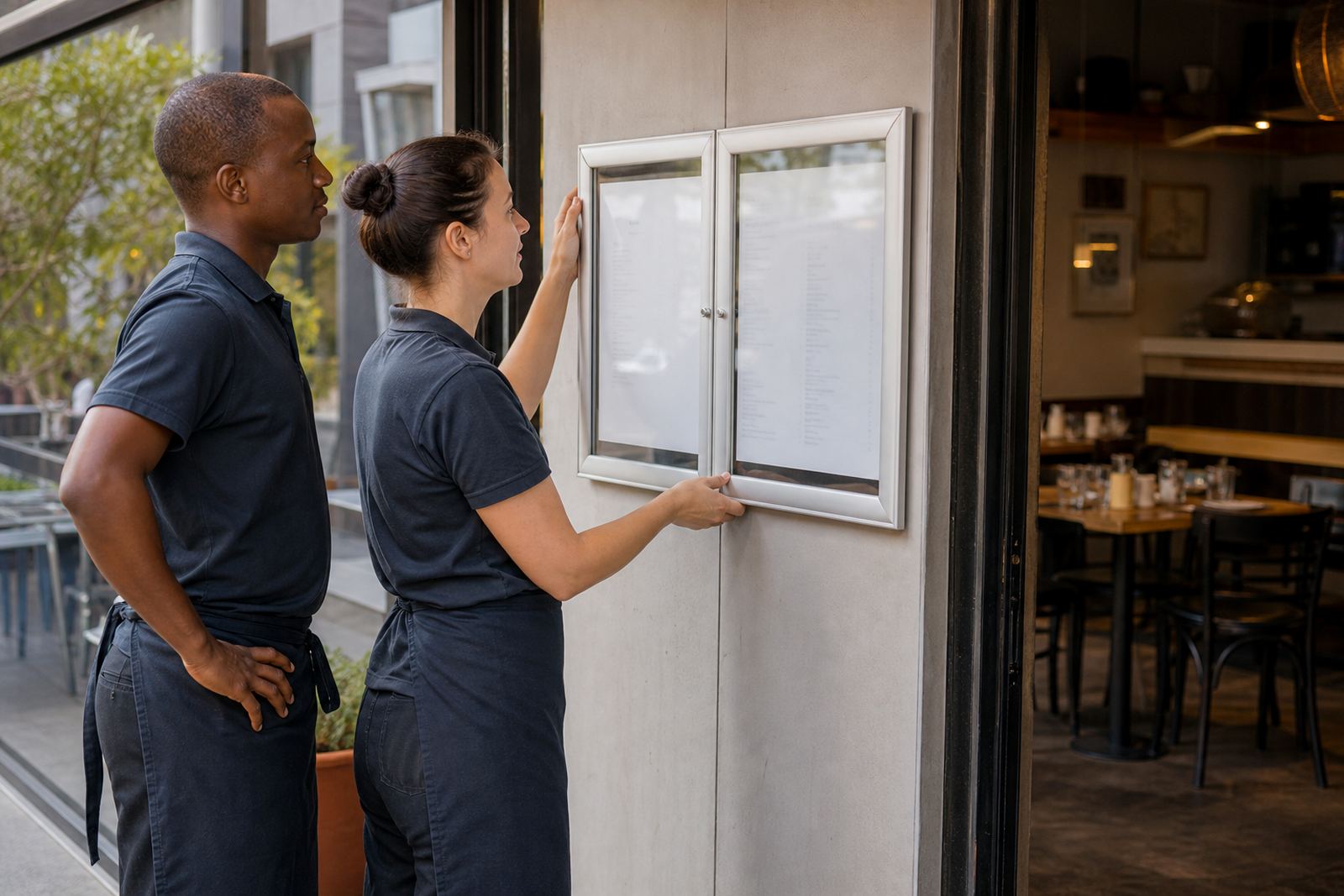
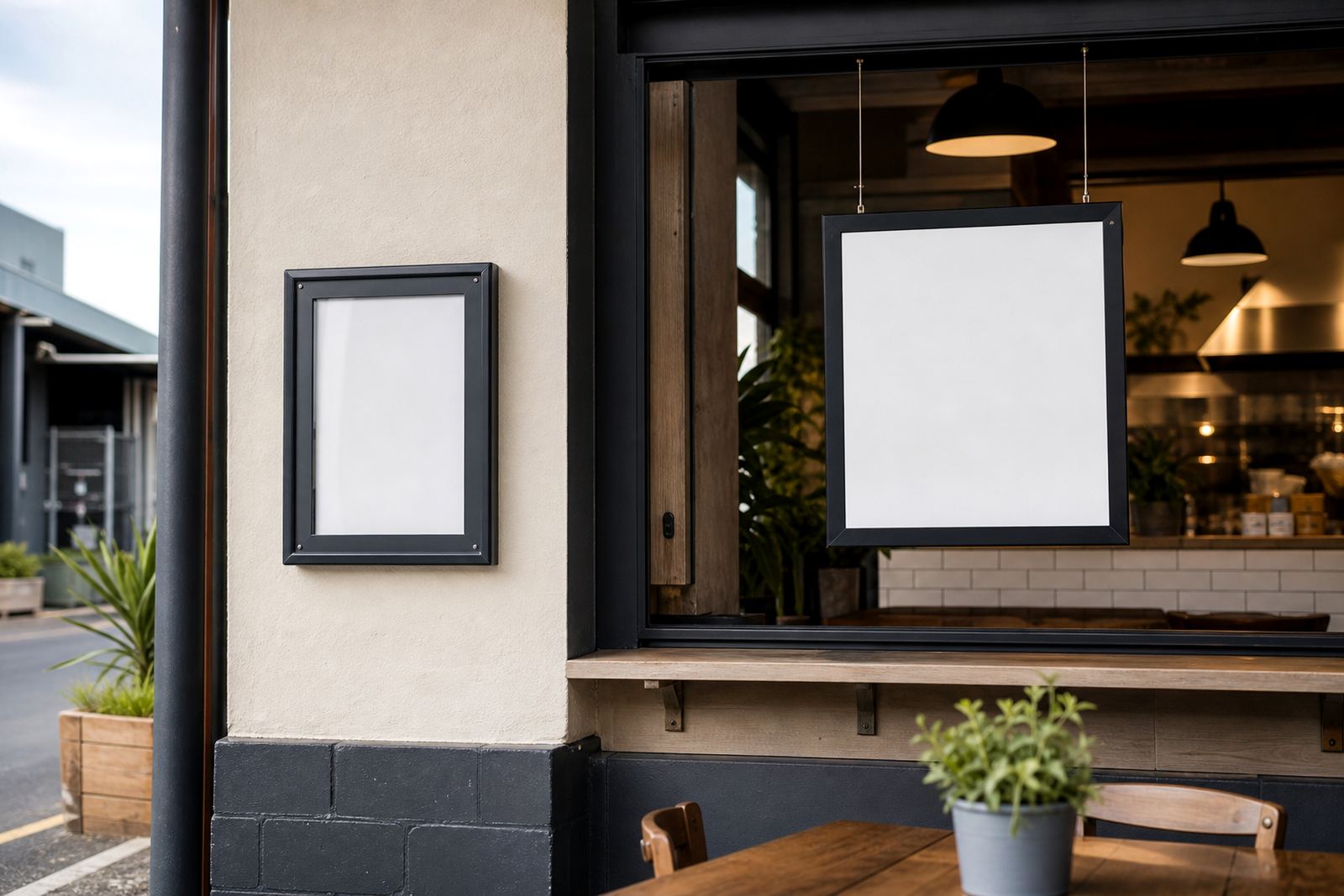
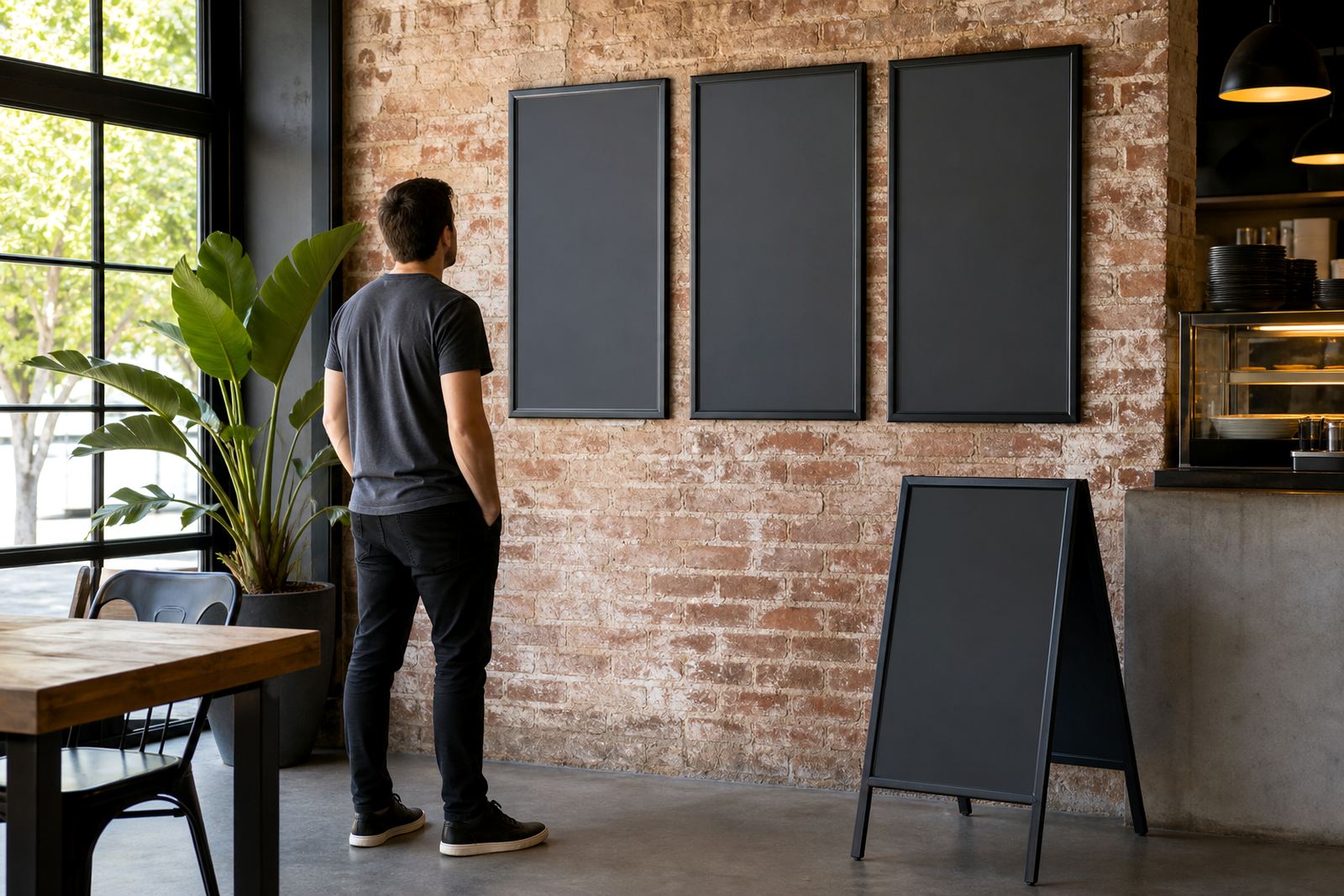
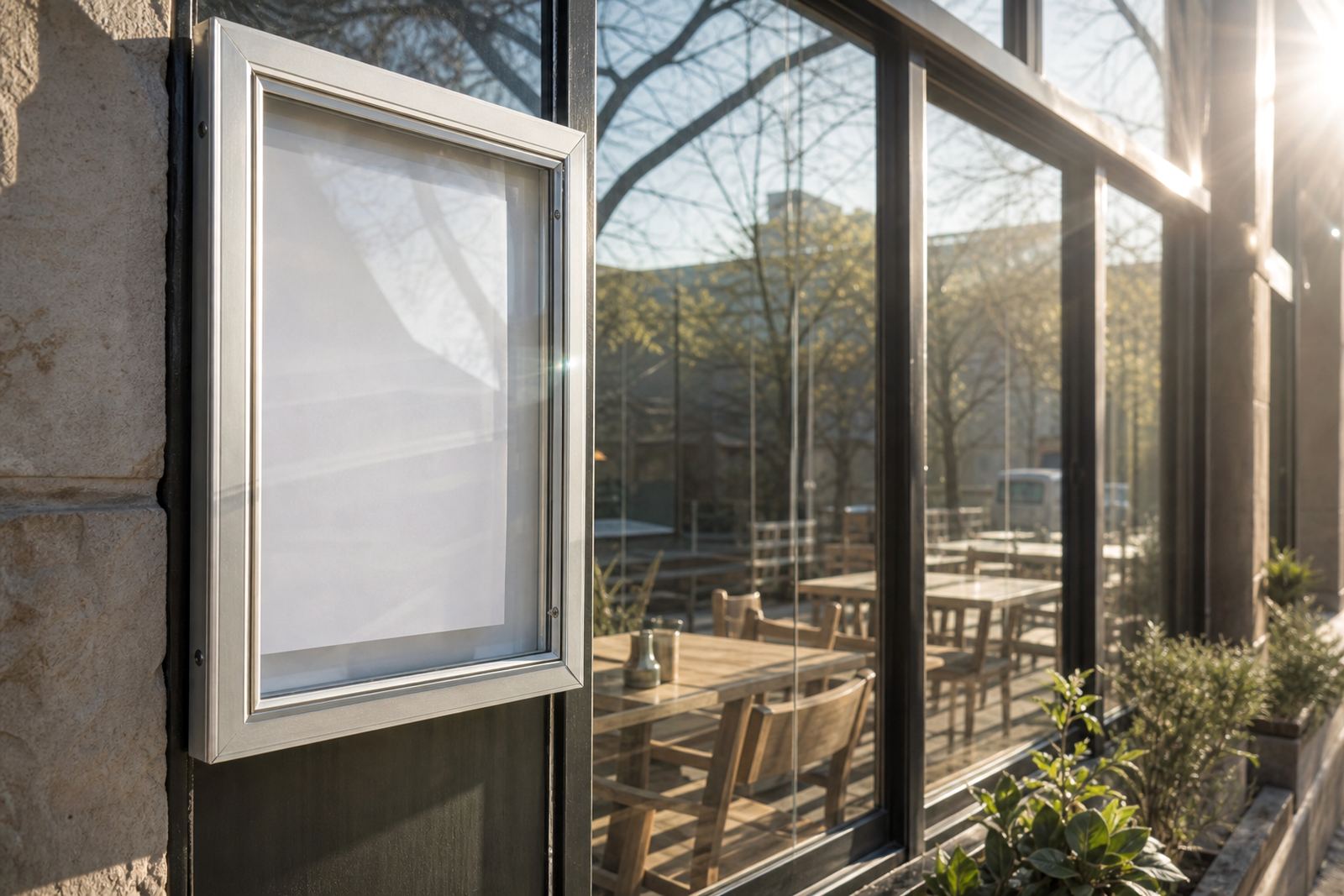
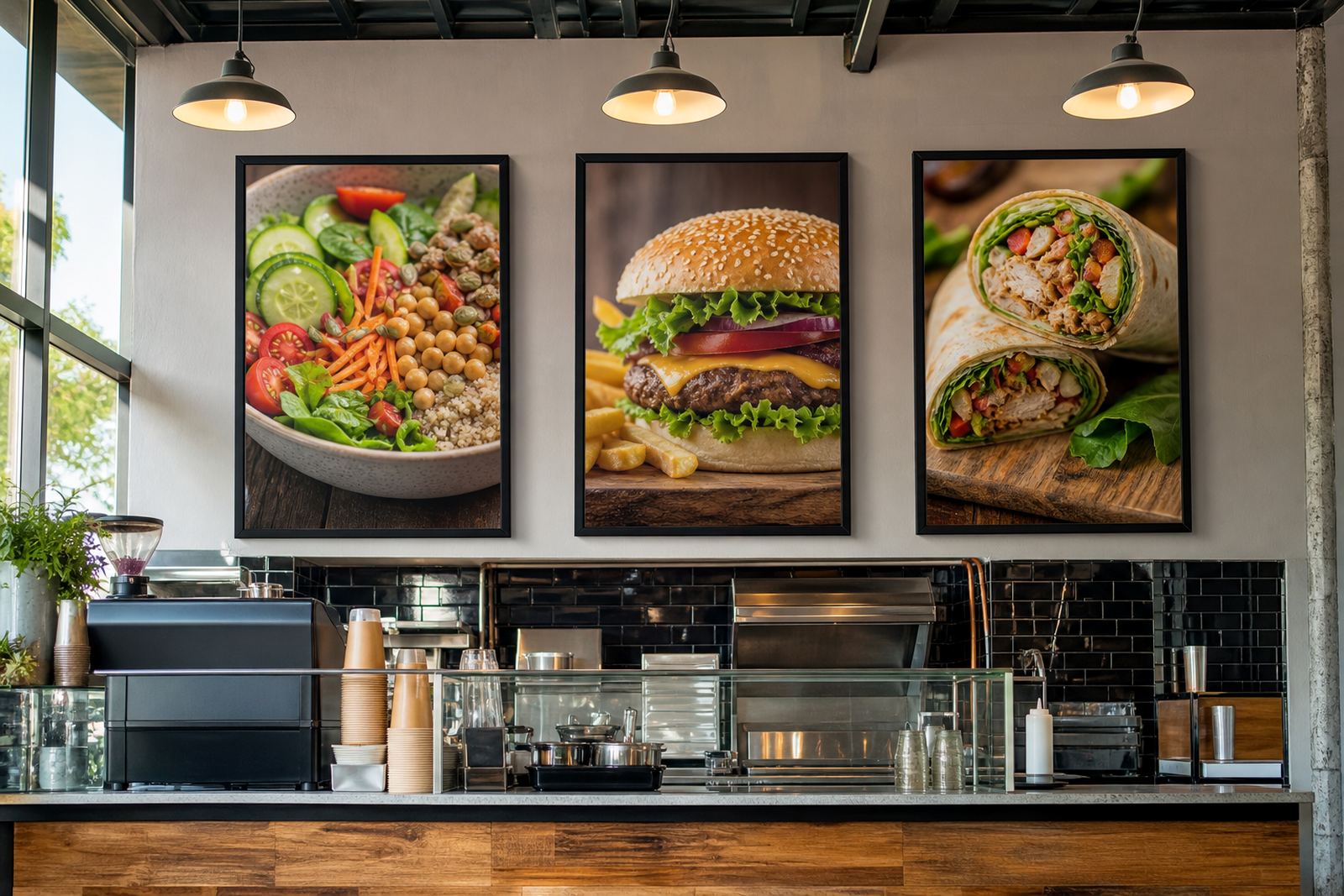
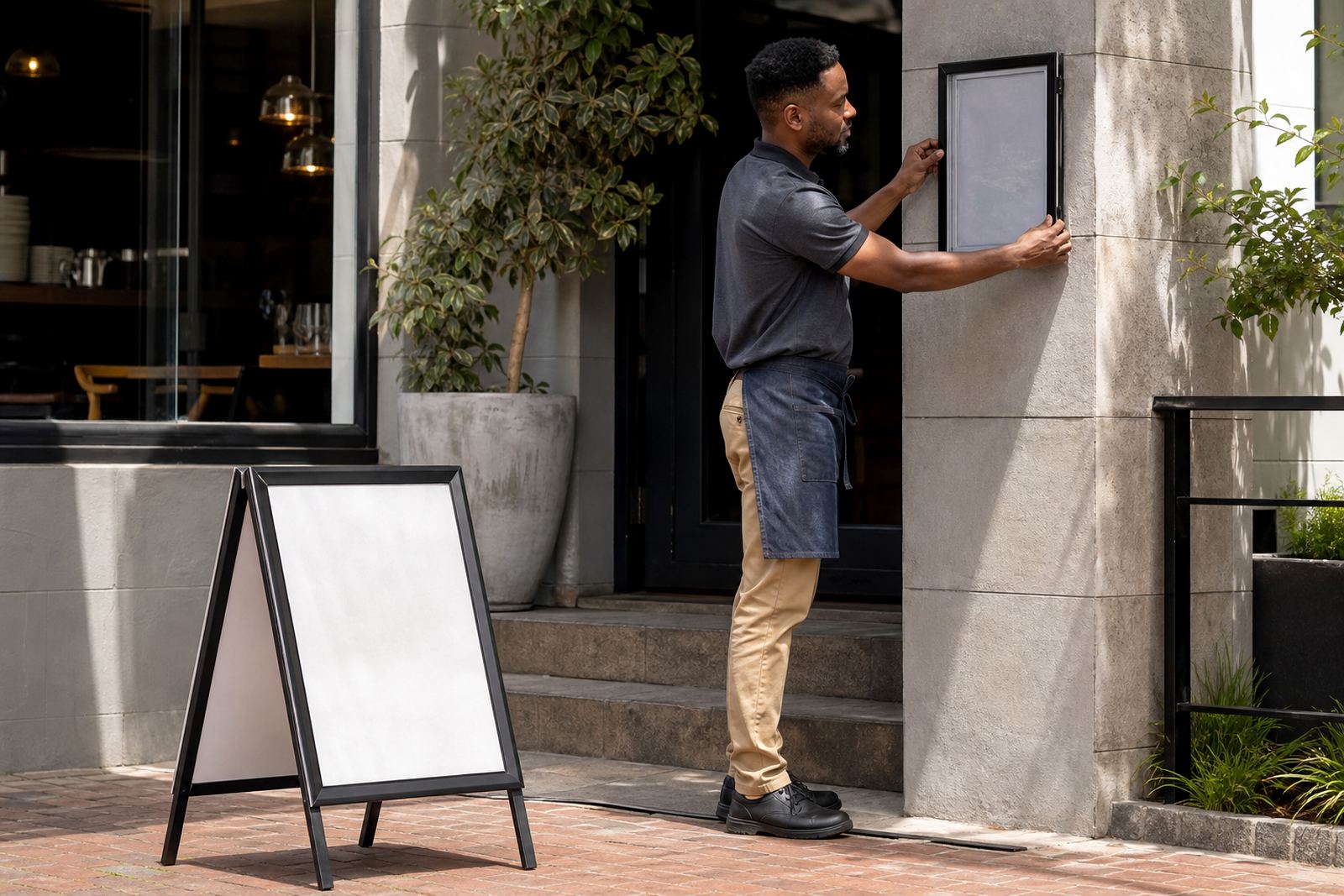
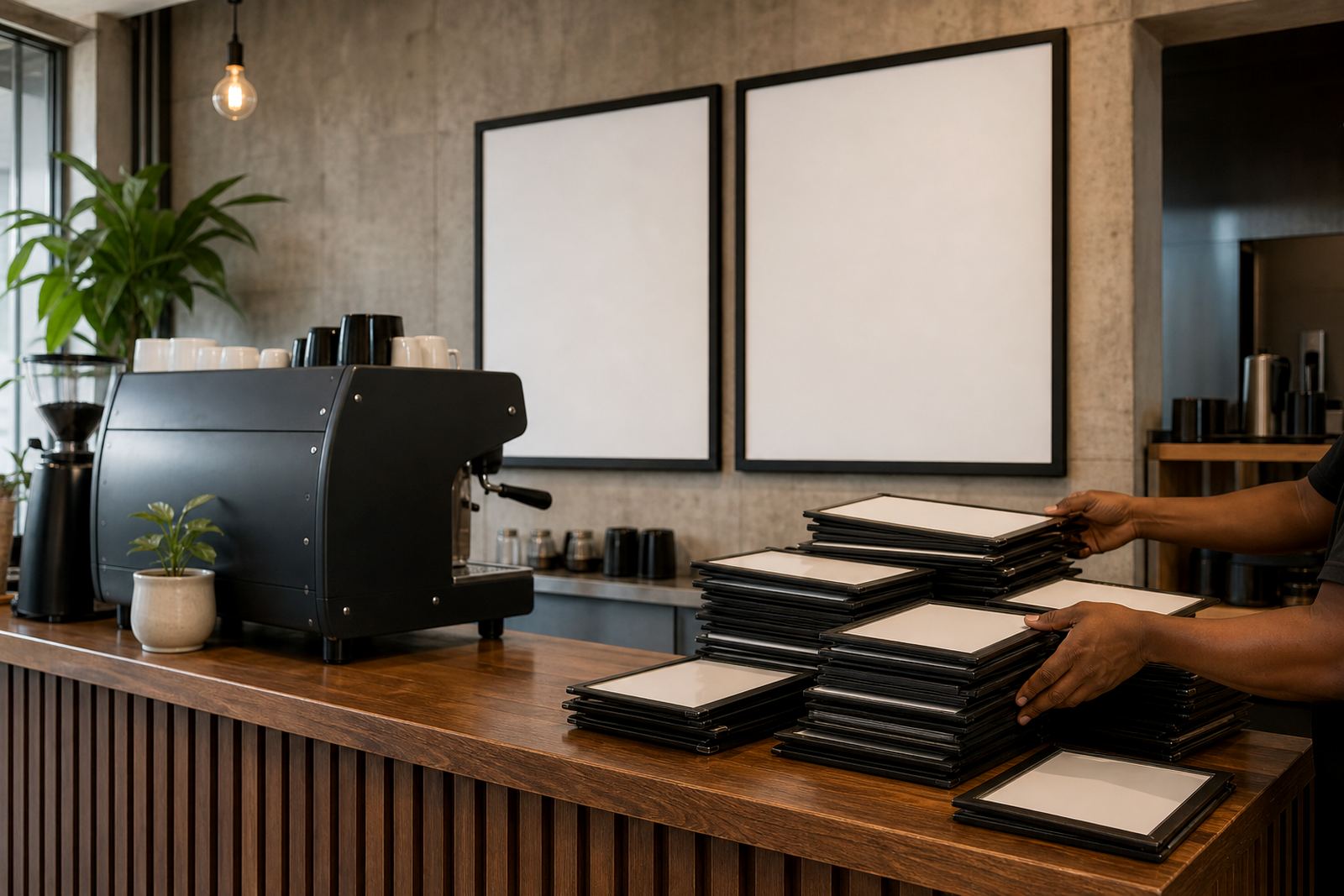
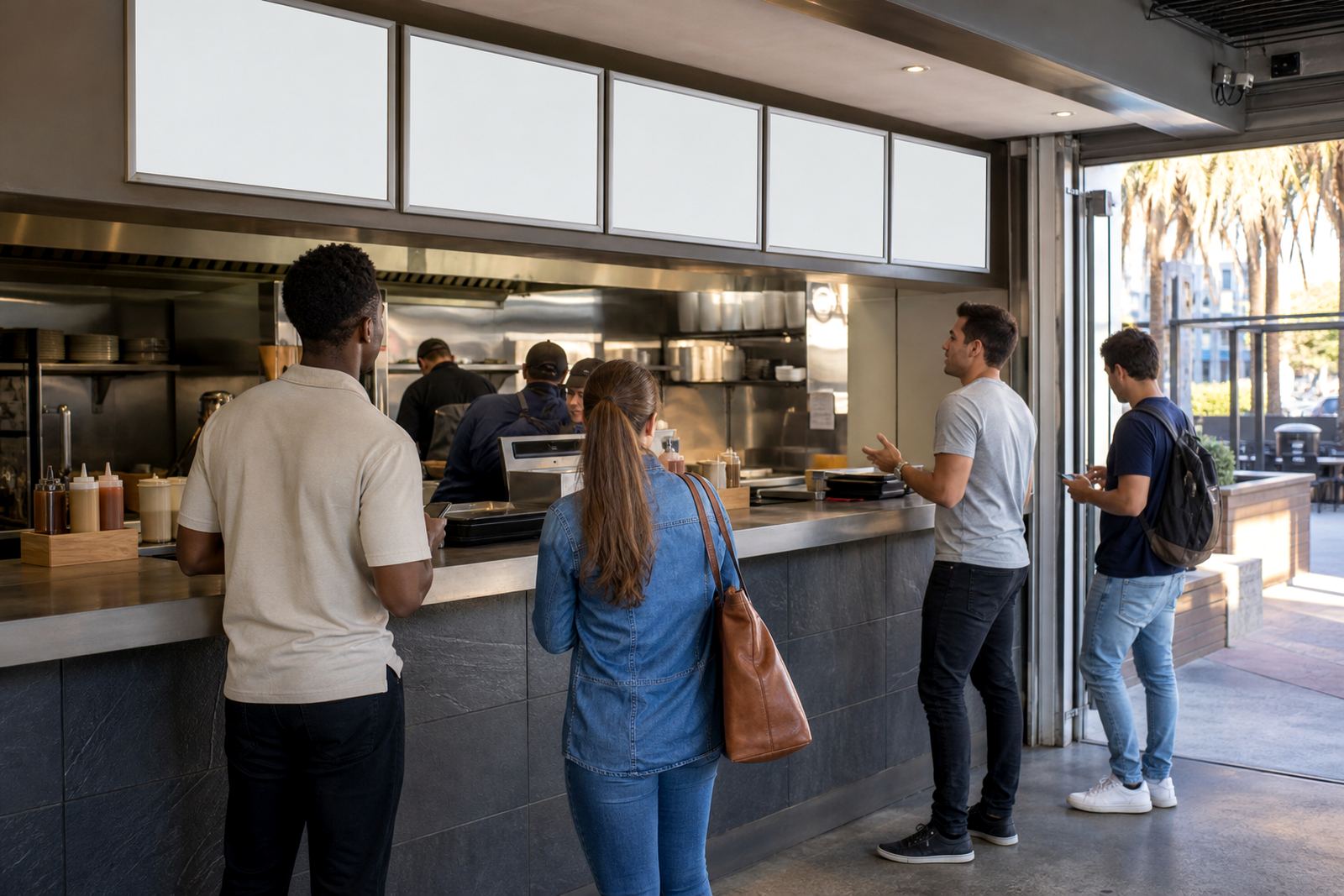
Placement is not only about looks. A wall mounted menu board near the till helps a queue move faster, while a window facing frame can carry trading hours, meal deals or a short list of daily items for passing foot traffic. In a narrow shop, the same frame can work above the counter or beside a point of sale display.

  • A4 suits compact notices, short menus and side items.
  • A3 gives more room for sections, icons and larger reading distances.
  • Window mounting needs clean glazing and enough space for the latch to open.
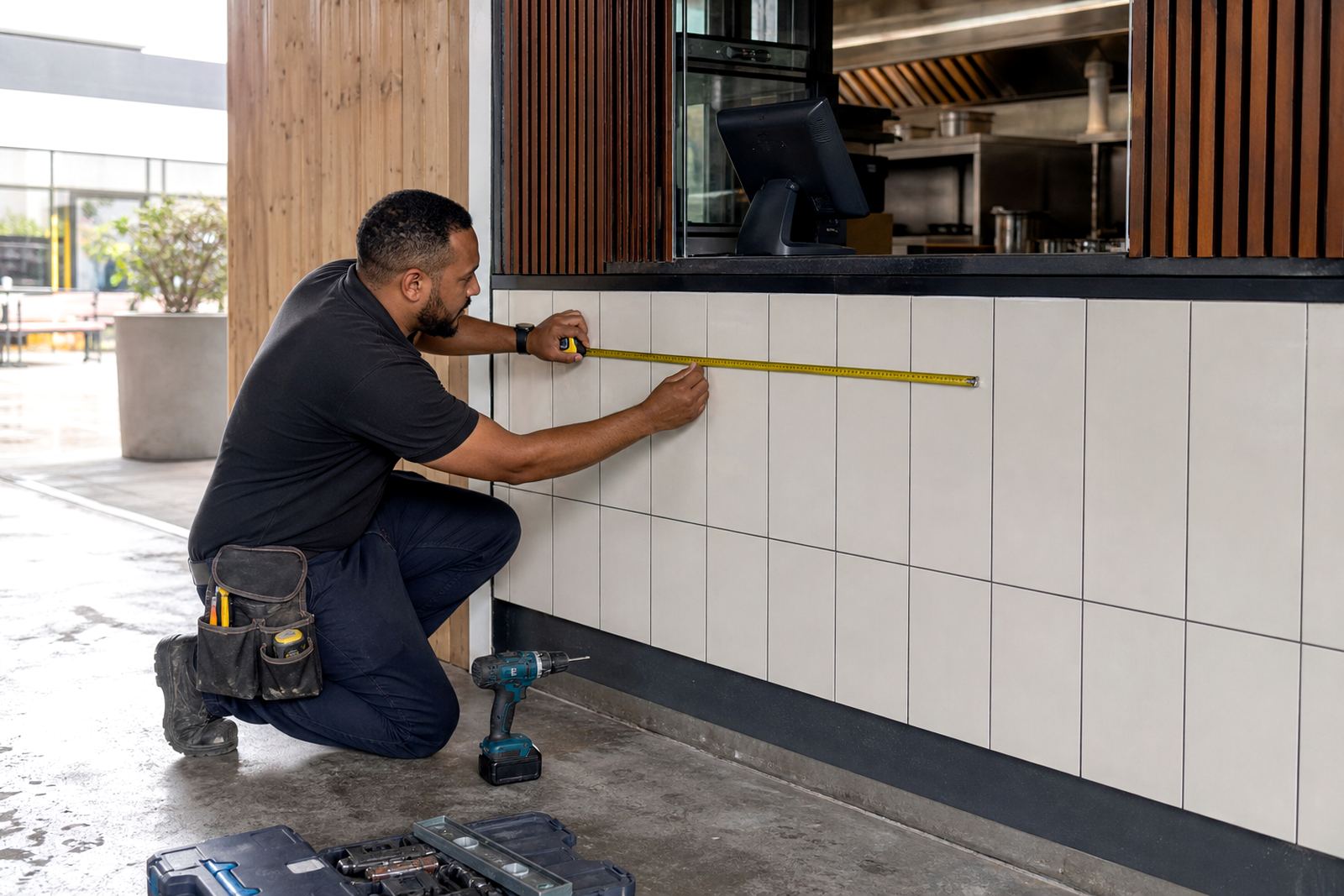
  • Wall mounting works best where staff can reach it without blocking service.

A-frame stands for foot traffic and pavement use

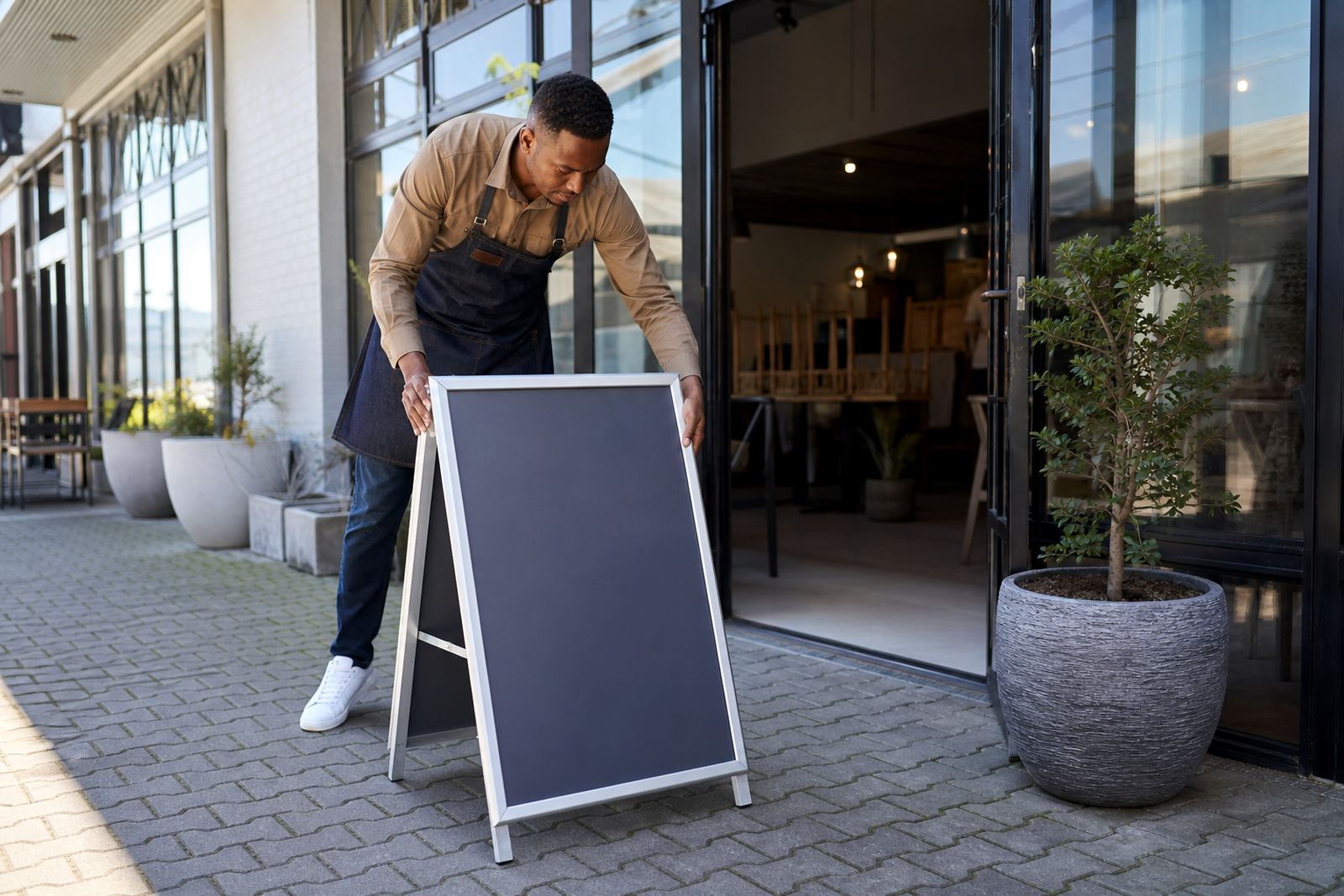
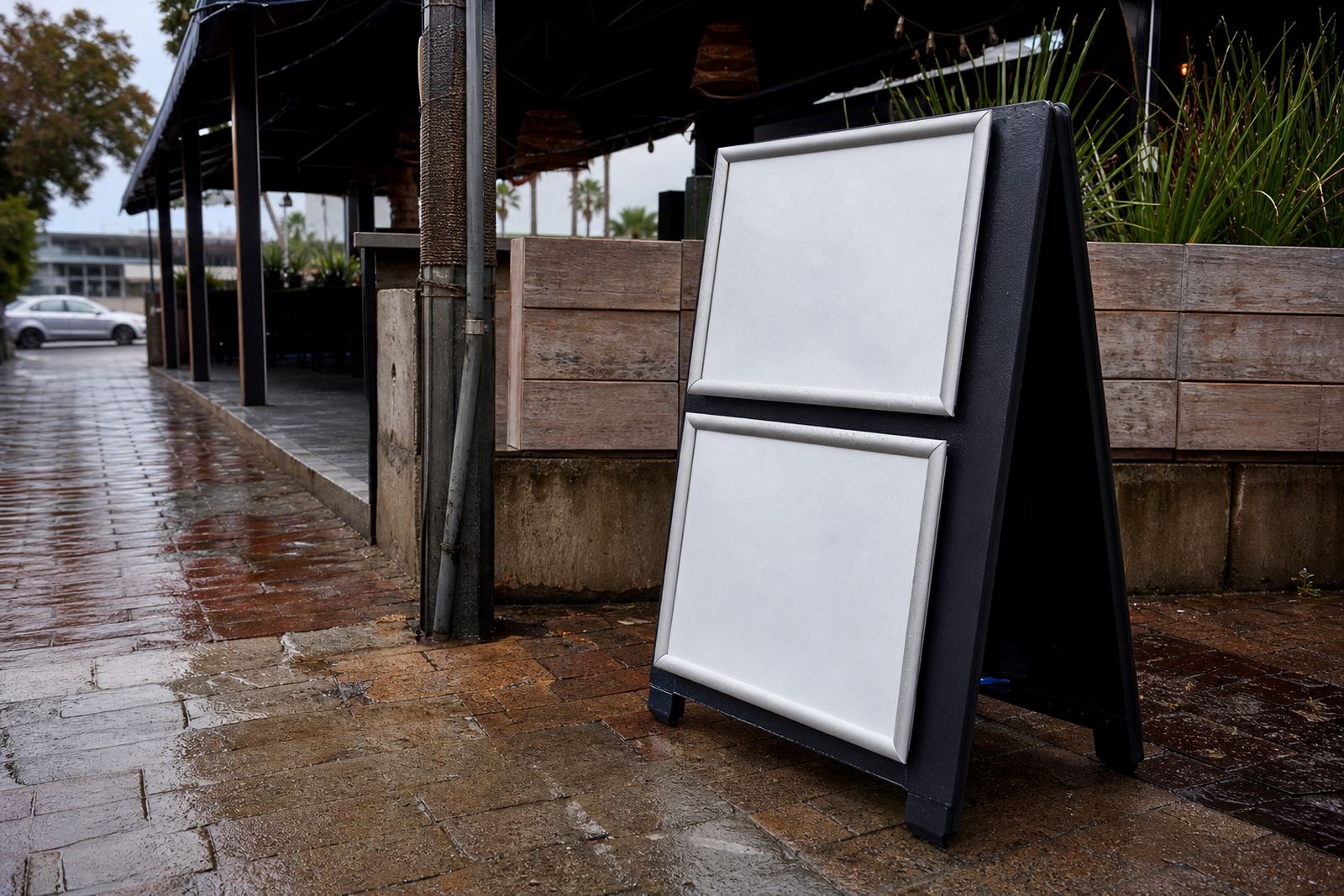
A-frame menu stands help when the menu needs to face the street, the queue, or a courtyard entrance. They are handy for daily specials, lunch boards and takeaway offers that change during service. For Cape Town coastal conditions, the frame finish and insert protection matter because damp air and salt can mark surfaces over time.

Some venues use chalkboards for quick handwritten notes, while others prefer printed inserts for a cleaner look. A-frame options can be used on tiled floors inside or on sheltered pavement areas outside, as long as the venue checks local municipal rules for signage and public walkway use.

Print sizes, inserts and the job of tidy typesetting

Good menu printing starts with the right size. A4 works for short lists and add-on items, while A3 gives more breathing room for sections, notes and pricing columns. Poster insert printing is useful when a frame needs a larger display without replacing the whole unit.

  • Menu resizing keeps older artwork usable in a new frame size.
  • Menu typesetting helps line breaks, prices and section titles sit neatly.
  • Menu proofing catches small spacing errors before printing.
  • Colour matching keeps logos, headings and background tones consistent.
  • Laminated menu prints help against fingerprints and light moisture near counters.

Short run printing suits smaller rollouts, test menus and seasonal changes. For venues with busy service windows, print finishing matters too, because trimmed edges and straight corners make inserts easier to change without folding or scuffing the sheet.

Cleaning, moisture and the small repairs that save time

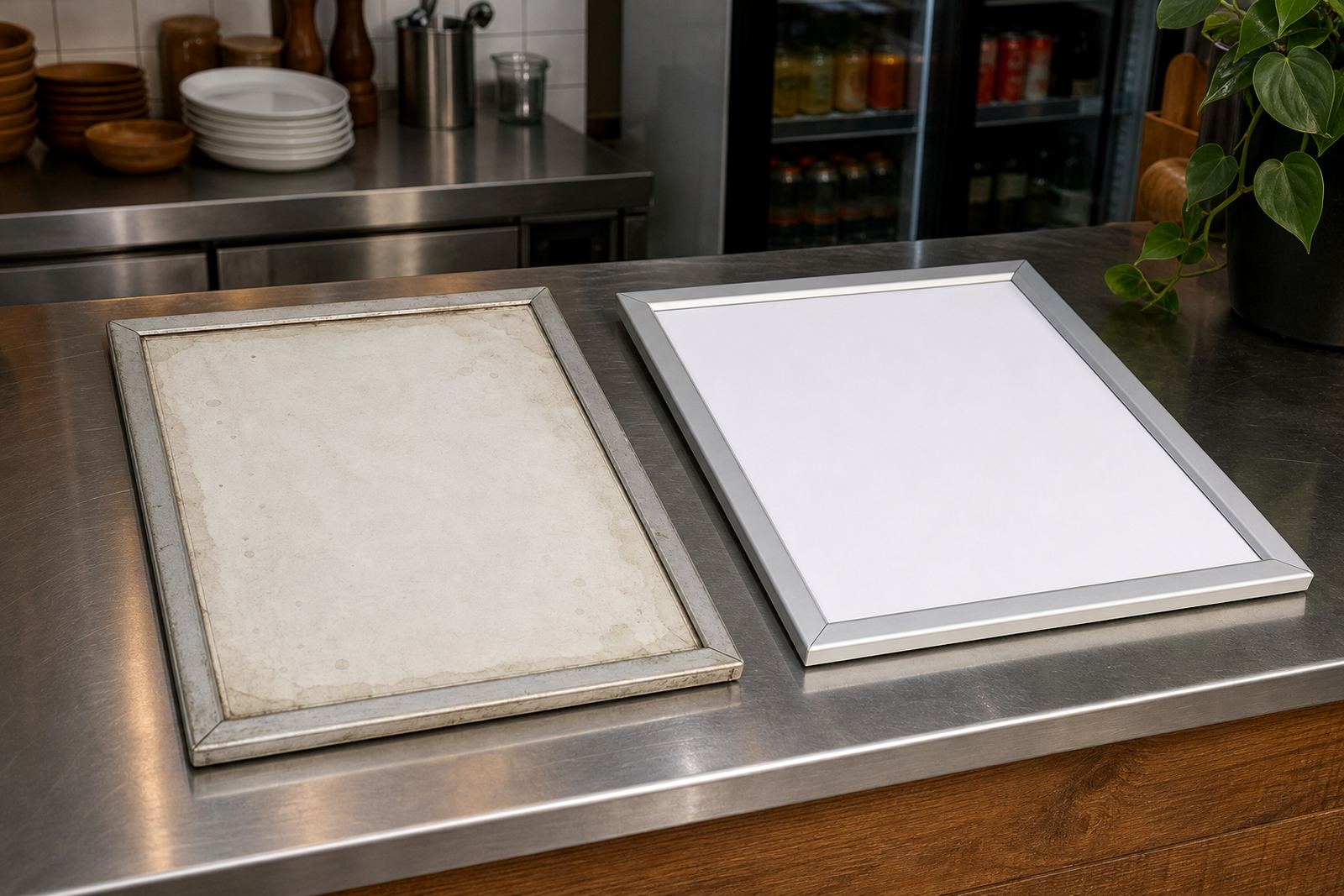
Front-of-house hardware takes daily handling, so maintenance should stay practical. Wipe the cover with a soft cloth, check that the hinge closes evenly, and replace damaged inserts before the page starts curling at the corners. In cafes close to the coast, humidity can make paper lift, so a snug fit and laminated print help the insert stay flat.

Where a board sits near a pass, grease and steam can cloud the surface. A quick clean with the right cloth keeps the display readable and avoids the faded patch that can build up around a busy prep area. Small checks on the frame clips and backboard stops can prevent a loose insert from shifting when staff update the menu in a rush.

Courier delivery and support for multi-site rollouts

Menus often need to move between branches, franchise counters and event spaces. Courier packaging has to protect the frame corners, the cover sheet and the printed inserts so they arrive ready for wall mounting or stand placement. That matters for sites in Cape Town, Stellenbosch, Johannesburg, Durban, Gqeberha, Milnerton, Bellville and Paarl, where the same format may be used across different floor plans.

For a single cafe or a larger group of venues, the useful part is not just the frame itself. It is the mix of templates, resizing, proofing and finishing that keeps the display consistent from one shop to the next.

  • Wall menu boards for fixed service areas.
  • A-frame menu stands for pavement or entrance use.
  • Print-ready templates for repeat updates.
  • Courier delivery across South Africa.

Menu frame questions

What sizes are used most often for menu frames?

A4 and A3 are the usual sizes for snap menu frames and menu boards. A4 suits short lists and notices, while A3 allows more space for sections, prices and larger lettering.

Can menu inserts be changed without tools?

Yes. Snap frames are made for quick insert changes. The front profile lifts open, the print slides in, and the cover closes again without tools.

Do A-frame stands work indoors and outdoors?

They do, as long as the location suits the stand and any local signage rules are followed. Sheltered entrances, courtyards and pavement areas are common uses, with printed inserts or chalkboard panels depending on the venue.

Changing your menu again? Send us the sizes you need.

Contact form