
Read the tile pattern before any holes go in
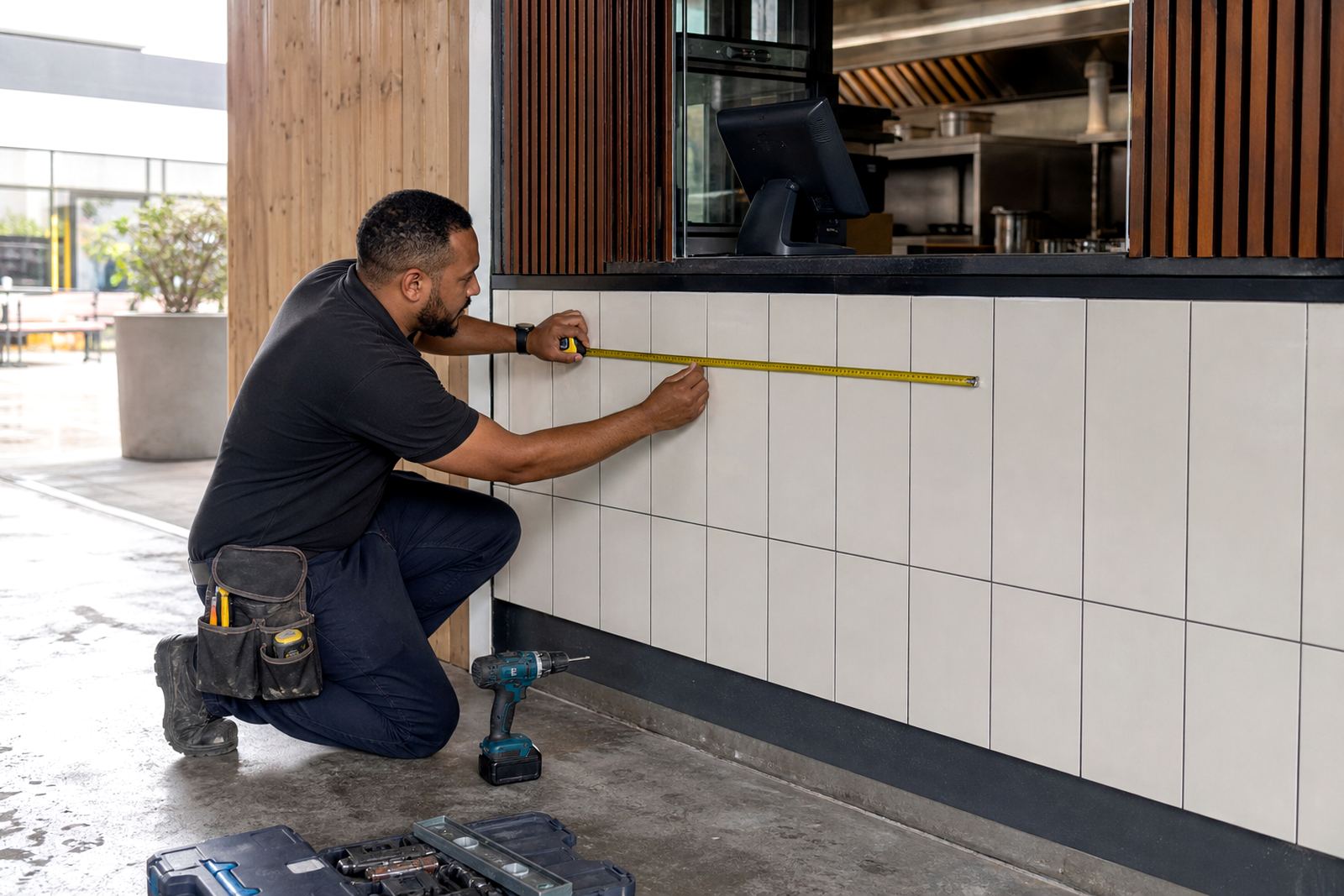
A tiled wall is not the same as painted plaster. Tile joints move in a grid, and that grid often controls where a frame can sit without looking crooked or catching on raised edges. If the menu is going above a counter, check the full tile layout first so the top line of the frame does not fight the grout lines.
On glossy tiles, even a small tilt shows up fast, especially under pendant lighting or daylight from a window. In a Cape Town takeaway counter, a frame placed 15 mm out can look fine at first then feel wrong once the room is busy and the eye keeps returning to it.
- A4 frames suit smaller specials and shorter lists.
- A3 frames work better where several items need one clean display.
- Leave enough wall space for the cover to open without hitting shelves.
- Avoid fixing straight across cracked or hollow tiles.
Fixings need to suit tile, grout and backing
Tile is hard on drill bits and unforgiving when the wrong anchor is used. The actual fixing method depends on what sits behind the tile, whether that is masonry, plasterboard or another substrate. A neat menu frame can still fail if the wall plug sits only in the glaze layer or if the screw bites too close to a tile edge.
For food service spaces, it helps to plan the mounting before service starts. That gives enough time to mark the points carefully, measure from a level line and keep the face of the frame centred where staff can read it without stepping back from the counter.
- Use a level line rather than following one tile row only.
- Keep holes clear of grout cracks and chipped corners.
- Check whether the wall carries weight evenly behind the tile.
- Leave room for opening the snap profile, especially on wall menus.
Where a wall frame works better than a window sign
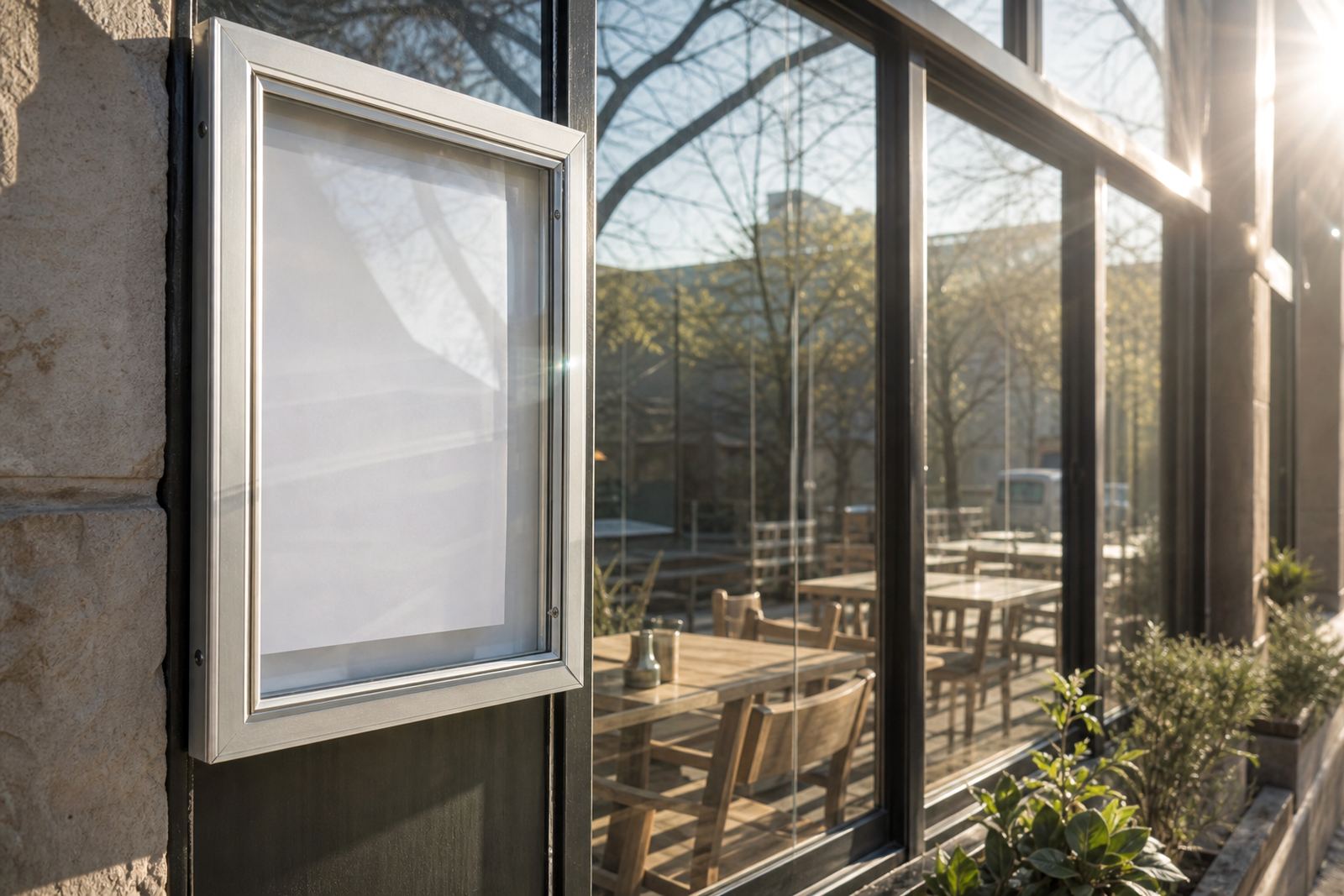
Some tiled walls sit next to glass, service hatches or entrance doors. In those spots, a wall-mounted snap frame can do more than a window insert because it stays readable from inside the room and does not rely on sunlight for contrast. Anti-glare covers help when the wall faces a bright front window or polished floor surface.
A frame near the till must also avoid tight pinch points. If staff need to swap menu sheets often, the cover should open freely and close without rubbing on tile corners. In a busy Paarden Eiland cafe counter, that small detail saves wear on both the frame and the wall finish.
- Choose wall mounting where reflections are heavy.
- Use window mounting only where the sightline stays clear.
- Keep the lower edge above splash zones near sinks.
- Allow enough space for cleaning cloths around the frame.
Cleaning habits should shape the placement
Food spaces are cleaned often, and tiled walls usually get wiped with stronger movement than painted walls. That means the frame should not sit where cloths, spray bottles or tray edges keep hitting it. If a menu board is mounted too low, the first marks appear on the corners, then the cover edges start to look tired before the prints do.
Menu boards with aluminium profiles hold up well when the cover is lifted and closed properly, but they still need sensible positioning. On a tiled splashback, a board placed too close to the prep line can collect grease specks faster than the menu changes.
- Mount above the main wipe zone where possible.
- Keep corners away from trolley routes and tray swings.
- Use laminated prints where frequent handling is expected.
- Check that cleaning cloths can pass underneath the frame.
A3 and A4 frames behave differently on tile
Size changes the whole fixing conversation. An A4 snap frame is lighter and easier to place between tile lines, while an A3 frame needs more care because the footprint is broader and the weight sits further from the wall. On narrow tiled strips, the larger frame can crowd light switches, trims or cabinet tops.
For laminated menu prints and poster inserts, the frame size should match the reading distance. If customers stand one metre away, A4 can work. If the menu needs to be read from across a queue line, A3 usually gives better legibility without filling the wall with too many separate boards.
- A4 suits specials, drinks lists and short add-ons.
- A3 suits full lunch boards or takeaway lists.
- Match the board height to eye level at the counter.
- Check that the frame can open without striking tile lugs or trims.
A local fit for Cape Town counters and tiled service walls
In Paarden Eiland, tiled walls often appear in compact service spaces where counter height, prep space and customer flow all sit close together. A menu frame in that setting has to stay readable from a standing queue, not only from behind the counter. That is where careful placement and tidy print finishing matter as much as the frame itself.
A Stellenbosch cafe with a tiled espresso bar may want one A3 board above the till and a smaller A4 board near the pickup point. In Johannesburg or Durban, where humid air and busy cleaning routines can affect covers, anti-glare sheets and snug mounting help the display keep its shape. The same thinking suits Gqeberha takeaway counters too, where salt air and daily wiping can be hard on exposed edges.
SnapperFrame Menus works with menu templates, resizing, typesetting, proofing, short run printing, laminated menu prints and courier packaging for delivery across South Africa. That makes it easier to send out a tiled-wall menu plan that is measured properly before the frame reaches the shop floor.