
Under a veranda, not in the weather line
Covered exterior areas are a good fit for snap menu frames, but the cover needs more than a roof over the heads of guests. A board placed just inside a restaurant entrance or under a deep awning faces less rain, less wind lift and fewer smudges from passing hands. In Paarden Eiland, where coastal air carries salt and fine grit, placement makes a visible difference to how long the display keeps its clean look.
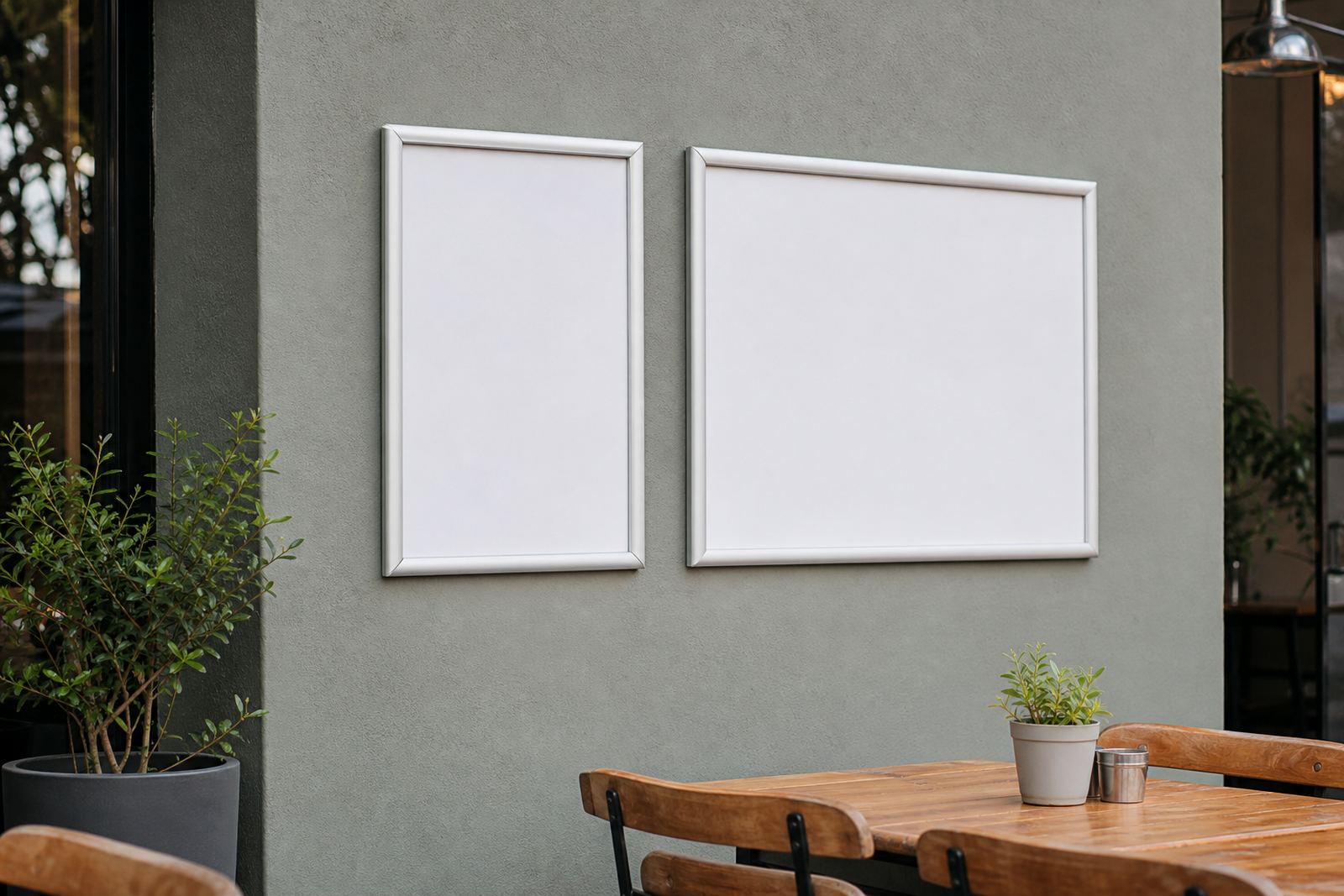
Wall mounted A4 and A3 snap frames work well where staff need a fixed point for specials or trade notices. An A-frame stand suits a courtyard path or paved forecourt where people approach from several angles. If the area gets mist off the harbour, keep the display out of direct spray and away from the edge of the opening. A small shift of even half a metre can help a lot.
- Place the board where guests can read it without stepping into a draught path.
- Keep it clear of hose spray, puddles and roof drips.
- Do not park it under a dripping gutter or loose shade cloth.
- Leave enough space for staff to change inserts without bumping tables or chairs.
Frames that stay readable through the day
For outdoor-facing menu points, the frame itself should do a bit of quiet work. Aluminium profiles are popular because they handle daily opening and closing without feeling bulky. Anti-glare covers help when morning sun or bright paving throws light back into the print. On a west-facing wall in Stellenbosch, the same menu can read very differently in early afternoon light than it does before lunch, so the cover matters.
Printed inserts also need a sensible size choice. A4 is neat for short lists, daily specials and drinks. A3 gives more breathing room for larger menus, set meals or board layouts with icons and pricing. When a menu is resized or typeset for a frame, line breaks should be checked carefully so the layout does not crowd near the edge. A clean border and correct trim leave the board easier to read from a short distance.
- Use A4 for compact displays with limited items.
- Use A3 where the menu has more sections or longer descriptions.
- Ask for print-ready templates before sending the artwork.
- Check that the insert size matches the snap frame opening exactly.
What coastal air does to covers and prints
Humidity and salt can be rough on menu displays, even when they are not fully exposed. In Durban and Gqeberha, a covered deck still gets moisture in the air, and that can fog covers or soften paper corners if the print is not finished properly. Laminated menu prints hold up better where fingerprints, damp hands and regular cleaning are part of the day.
Poster insert printing is useful where a board changes often, while laminated inserts suit repeated handling and wipe-downs. Menu proofing matters too, because a covered outside area is usually one of the first places guests notice spelling errors or colour shifts. If the menu colours must match the indoor boards, the print finish should be checked under daylight, not only under shop lighting. That is where colour matching and finishing work together.
- Choose laminated prints for frequent handling and occasional wiping.
- Use anti-glare covers where sunlight changes across the day.
- Store spare inserts flat, not rolled in a warm vehicle.
- Keep the frame closed fully so moisture does not creep into corners.
A-frame stands for patios, courtyards and pavement edges
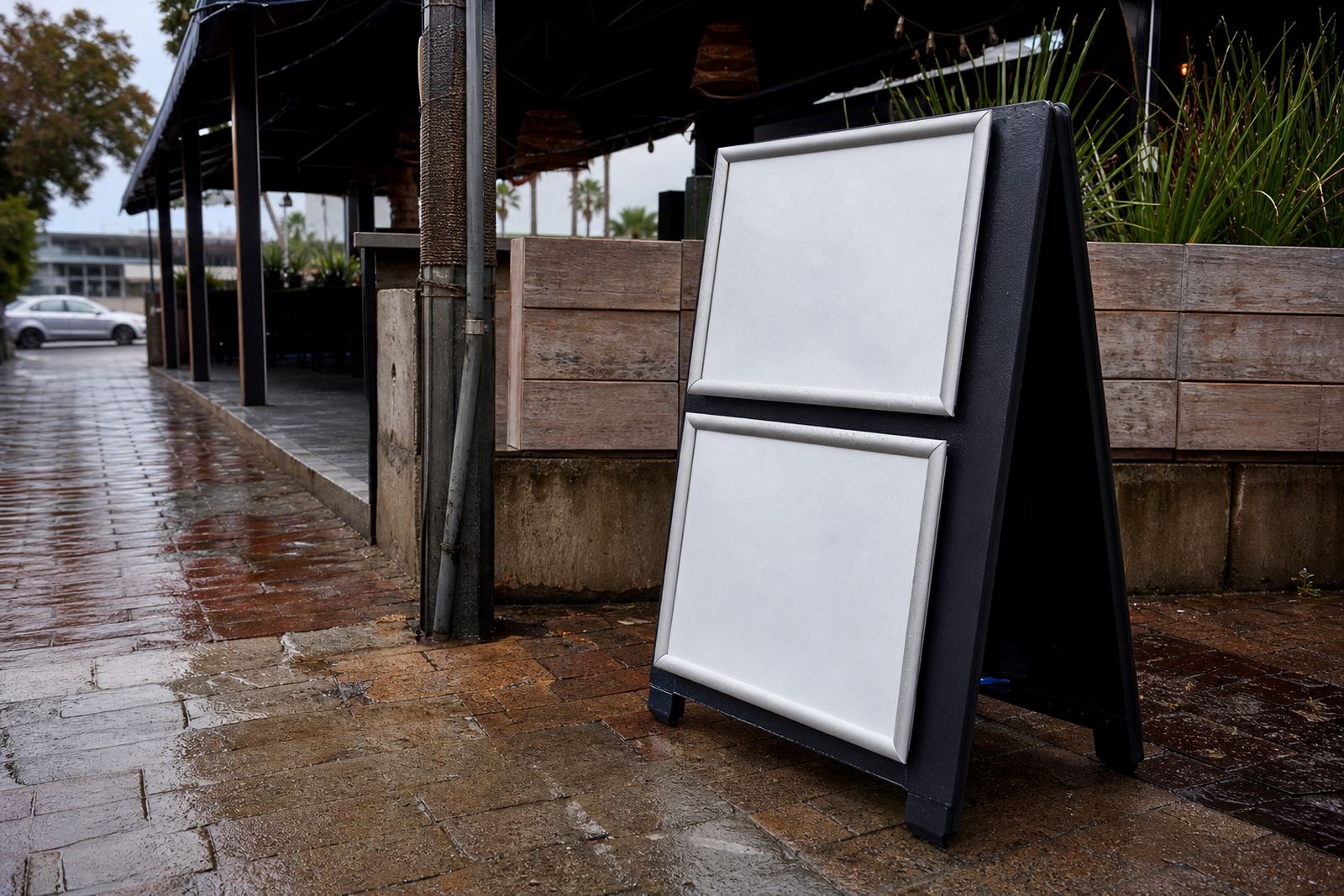
A-frame menu stands are useful where there is no wall space or where the offer changes through the day. Outside a café or takeaway counter, they can sit near the entrance path and point guests toward the current specials without needing tools. The best placement is usually on level ground, not on a sloping paver edge where the stand can twist or move in a breeze.
In a busy Cape Town breakfast spot, an A-frame can carry the coffee list and a short brunch board in the morning, then switch to lunch inserts later. That kind of use suits short run printing and quick menu updates. If the stand is kept outside, weight and balance matter. A lighter frame can move too easily when the wind shifts, while a heavier base stays steadier on tiled or concrete surfaces.
For places with outdoor seating and a narrow entry, the stand should not block foot traffic or sit where delivery trolleys pass. It should guide people, not make them sidestep it.
Cleaning habits that keep the display presentable
Regular cleaning is simple, but it needs a steady routine. Dust, grease and condensation show up fast on menu boards near grills, coffee machines or the main door. A soft cloth and mild cleaner are usually enough for the frame and cover, as long as the board is opened and closed carefully. Harsh scrubbing can scratch the anti-glare layer and make the text harder to read.
For chalkboards used in sheltered exterior spots, the surface should be wiped properly between changes and allowed to dry before new writing goes on. If the board sits near a takeaway hatch, the lower edge often picks up more grime than the top. That area needs a bit more attention. In Milnerton, where winds can carry fine sand, even a protected entrance can collect dust along the frame groove.
- Wipe the cover before the menu starts to look dull.
- Check corners for moisture and dried residue.
- Do not use rough pads on clear covers.
- Replace warped or stained inserts before they make the display look tired.
A Cape Town example with practical limits
A small lunch spot in Paarden Eiland with a shaded pavement edge wanted one display for weekday specials and another for takeaway pricing. A wall mounted A3 snap frame went beside the entrance under cover, while an A-frame stood closer to the walkway where passing customers could read it without stepping inside. The wall frame held the main menu insert, and the stand carried the daily changes.
The location got strong afternoon light and occasional sea mist, so the setup used anti-glare covers and laminated inserts for the outdoor-facing board. The printable area was kept clean with a simple layout, larger prices and enough white space around the text. That made the board easier to read from the curb and easier for staff to change when the offer shifted.
For businesses in Cape Town, Stellenbosch, Johannesburg, Durban or Gqeberha, the same thinking applies in different ways. Coastal humidity, high foot traffic and sheltered courtyards all ask for careful placement, clear sizing and sensible finishing. Our contact form is the right place to send the details when the display needs resizing, print finishing or a new insert set for outdoor use.