Front-of-house displays that move with the menu
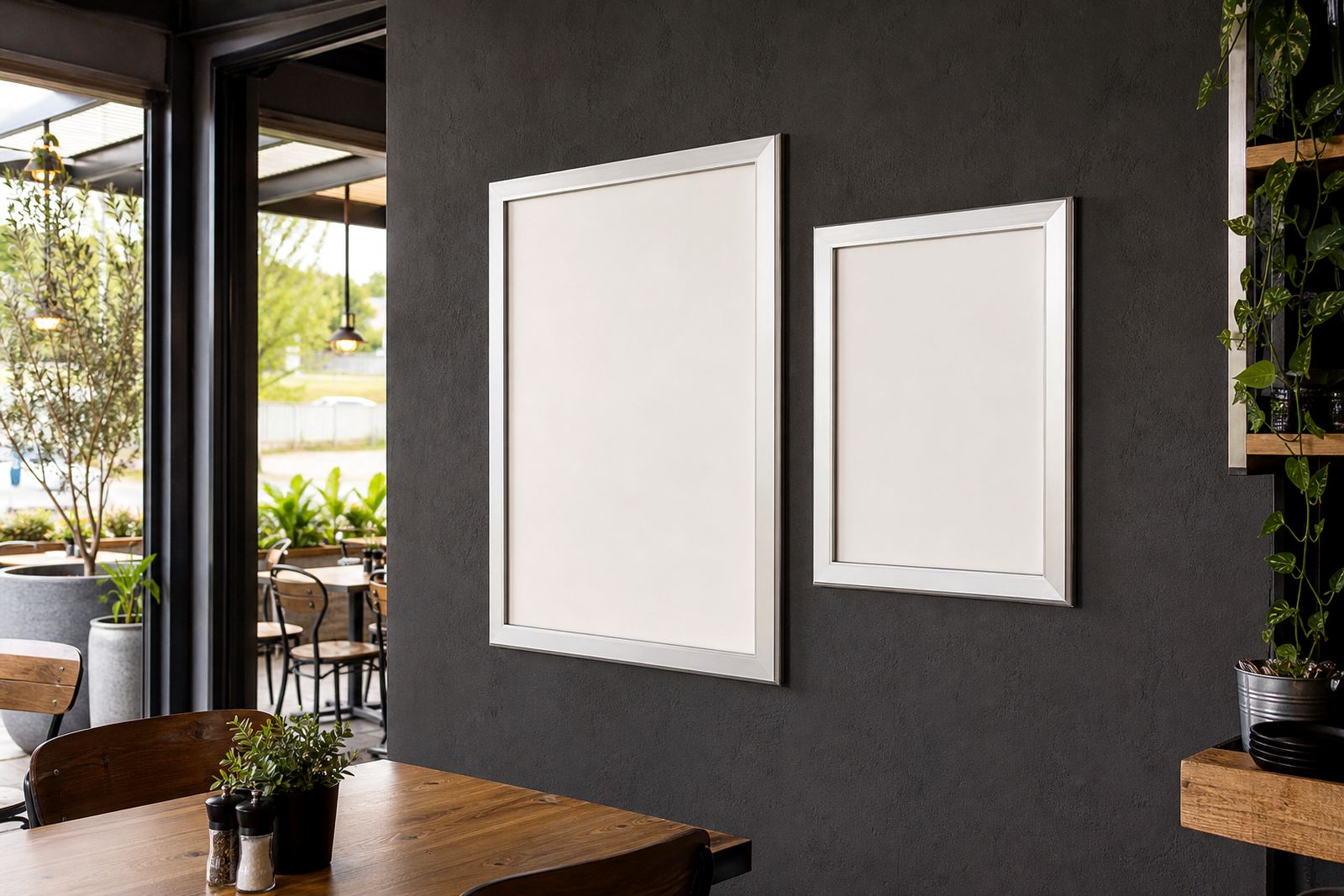
A restaurant fit-out often starts with the menu itself. Snap menu frames keep paper inserts neat, and the aluminium profile gives a clean edge for wall menus, window displays and counter zones. In busy cafés and takeaway counters, that matters when prices change or a breakfast insert needs swapping before the lunch rush.
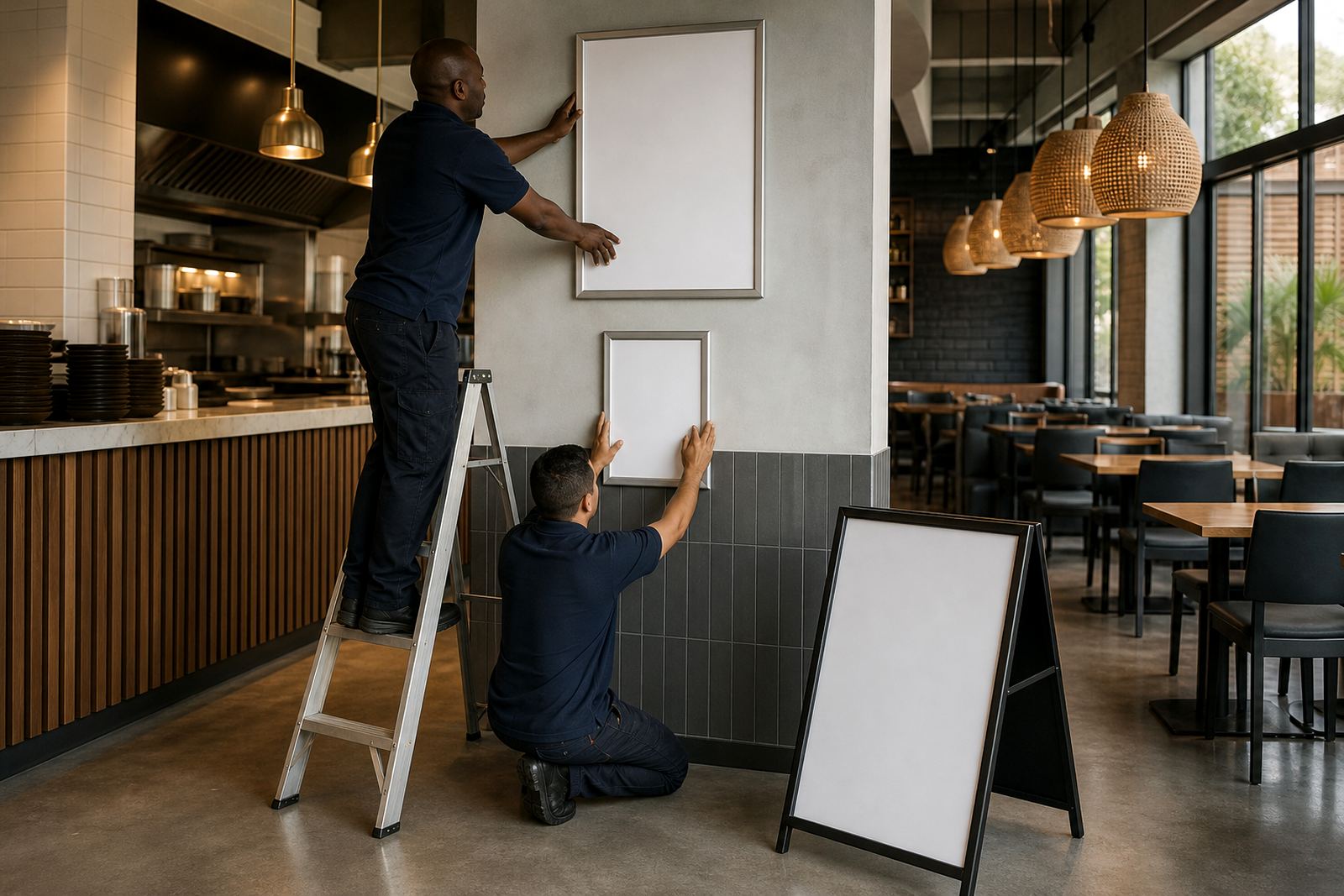
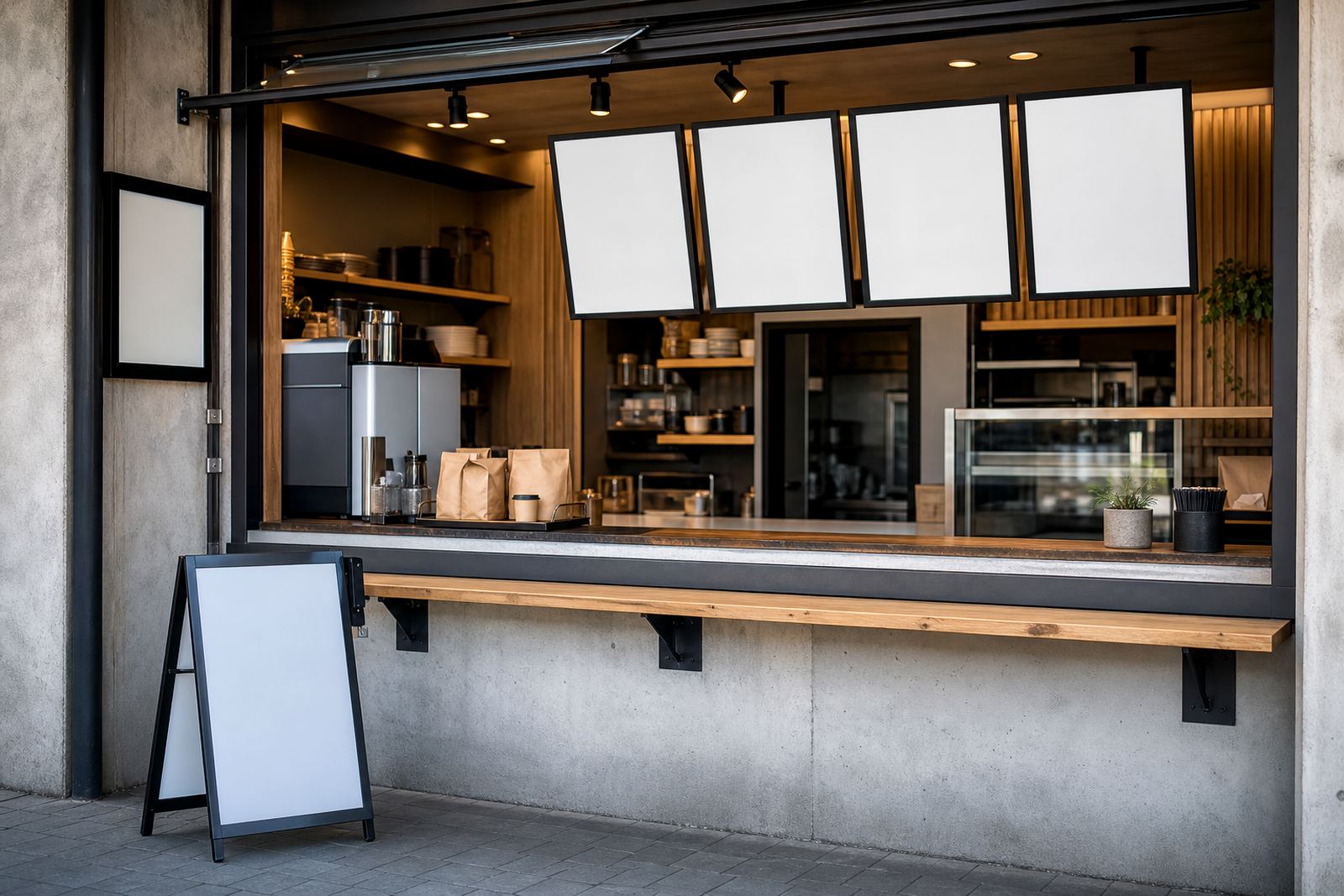
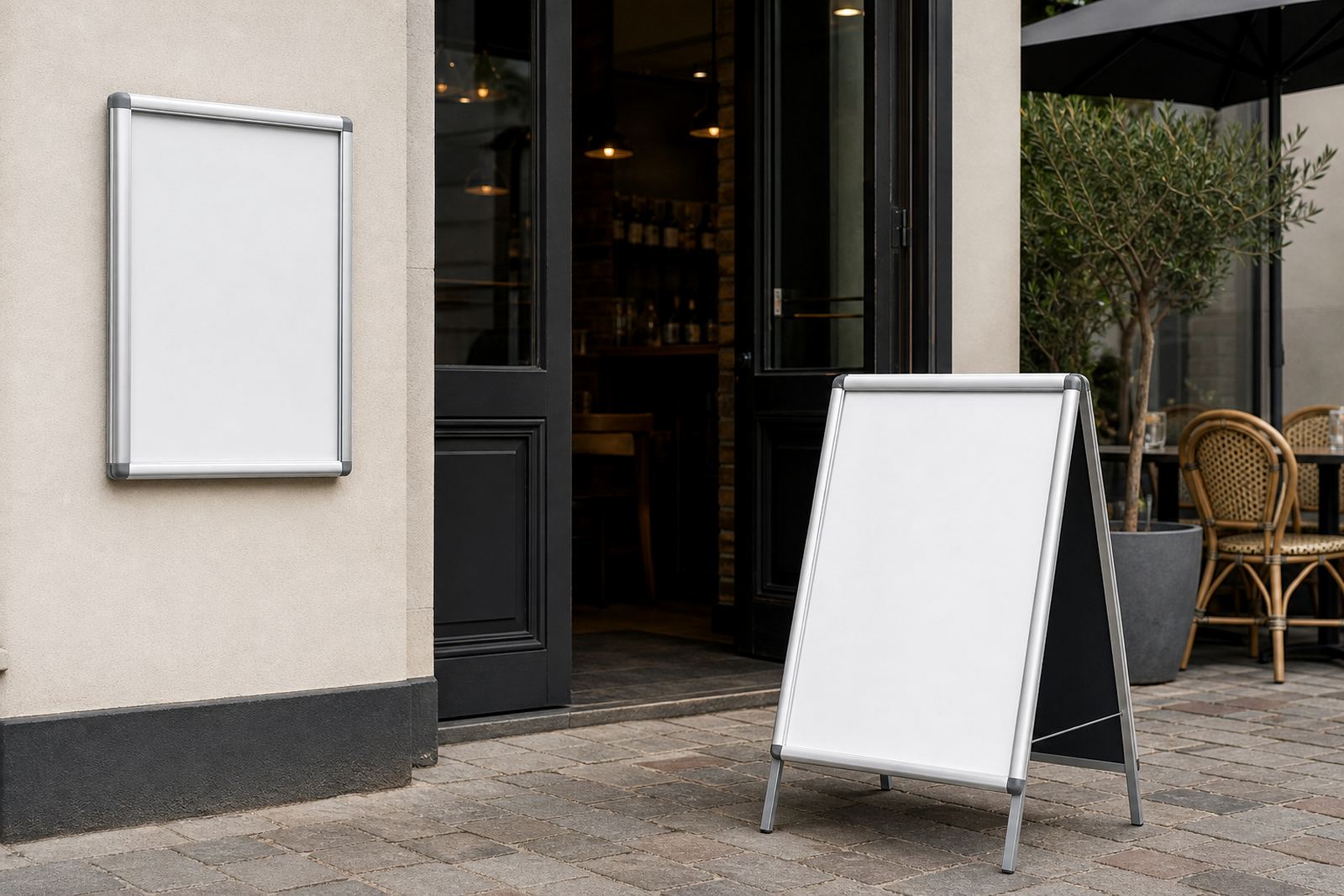
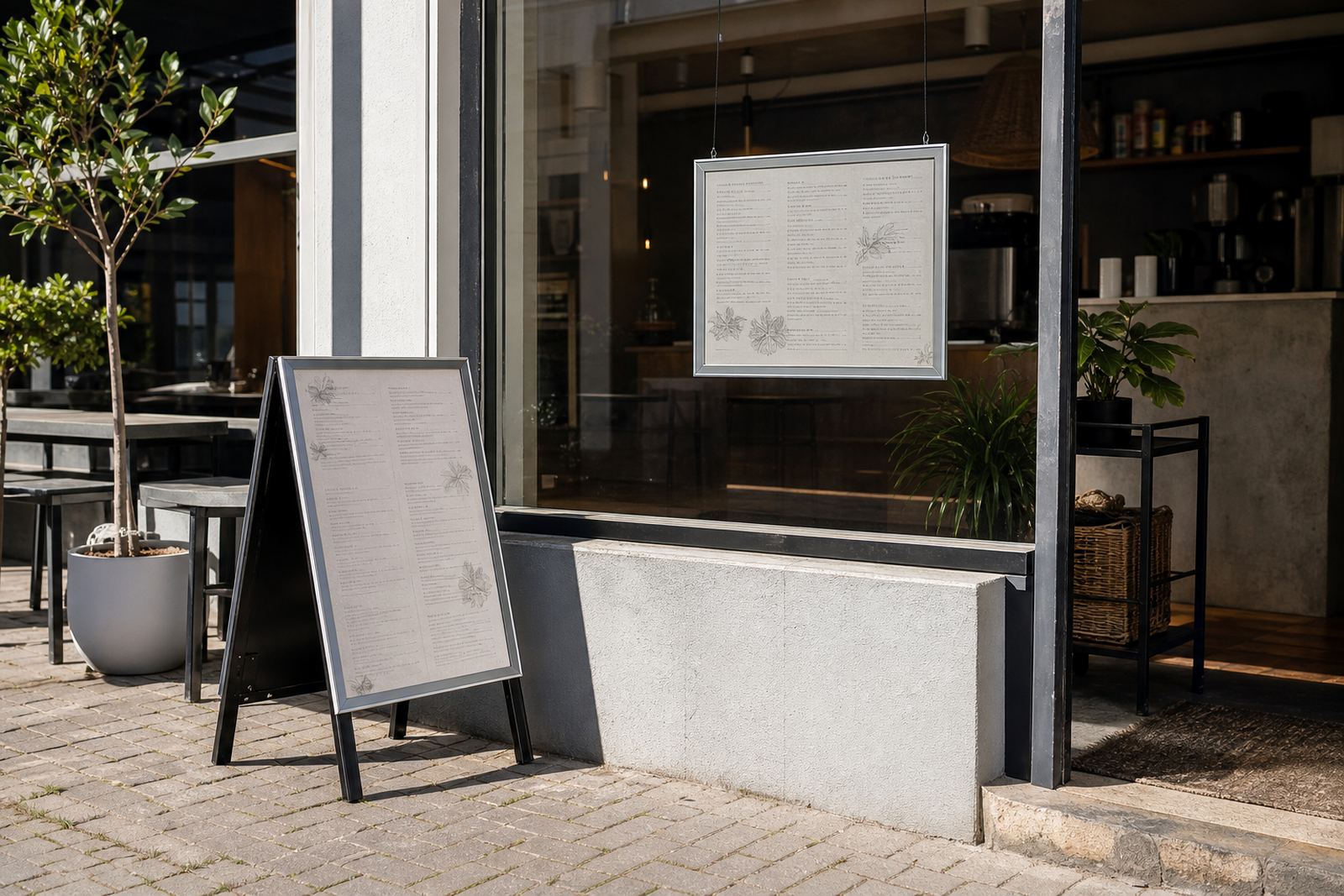
For hospitality spaces in Paarden Eiland, Stellenbosch or Durban, the usual choice is between A4 and A3 frames, then the mounting method follows the wall space. A window-mounted frame suits street-facing service points, while a freestanding A-frame works well near entrances, pavement edges or queue areas.
- A4 frames suit smaller menus, specials and drinks lists
- A3 frames give more room for add-ons, combo meals and chef notes
- Anti-glare covers help when strong daylight hits glass frontages
What changes between a café, bar and takeaway counter
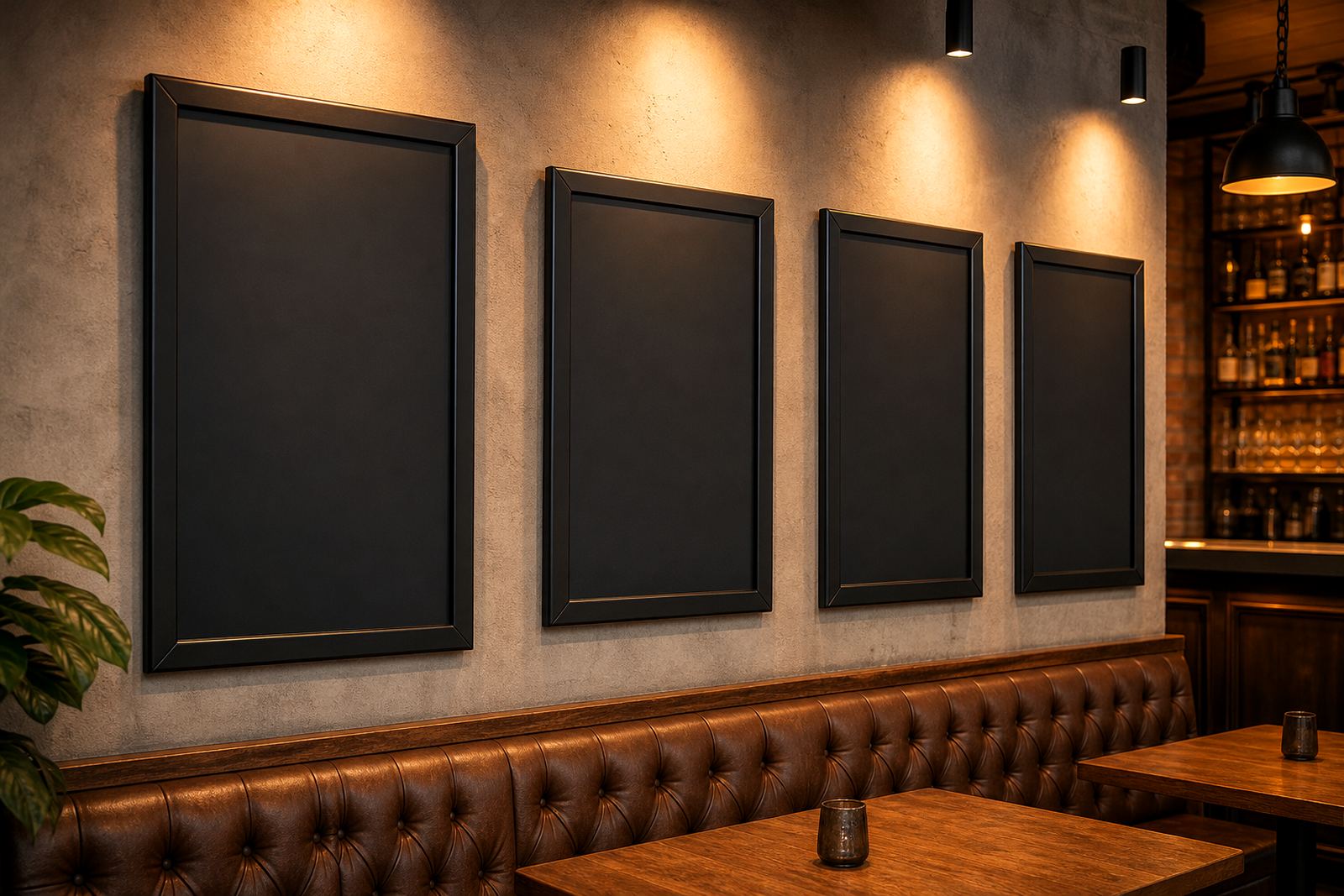
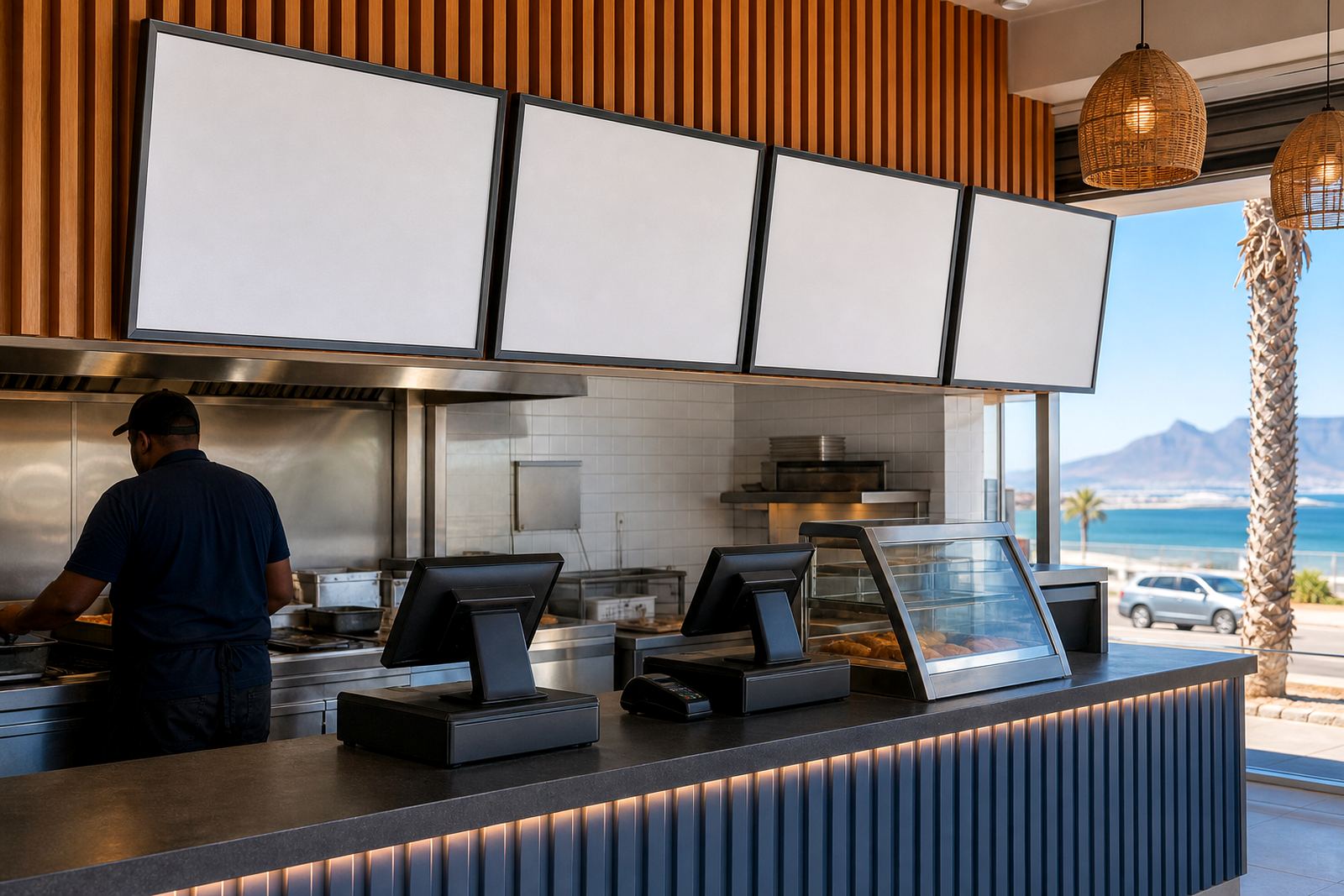
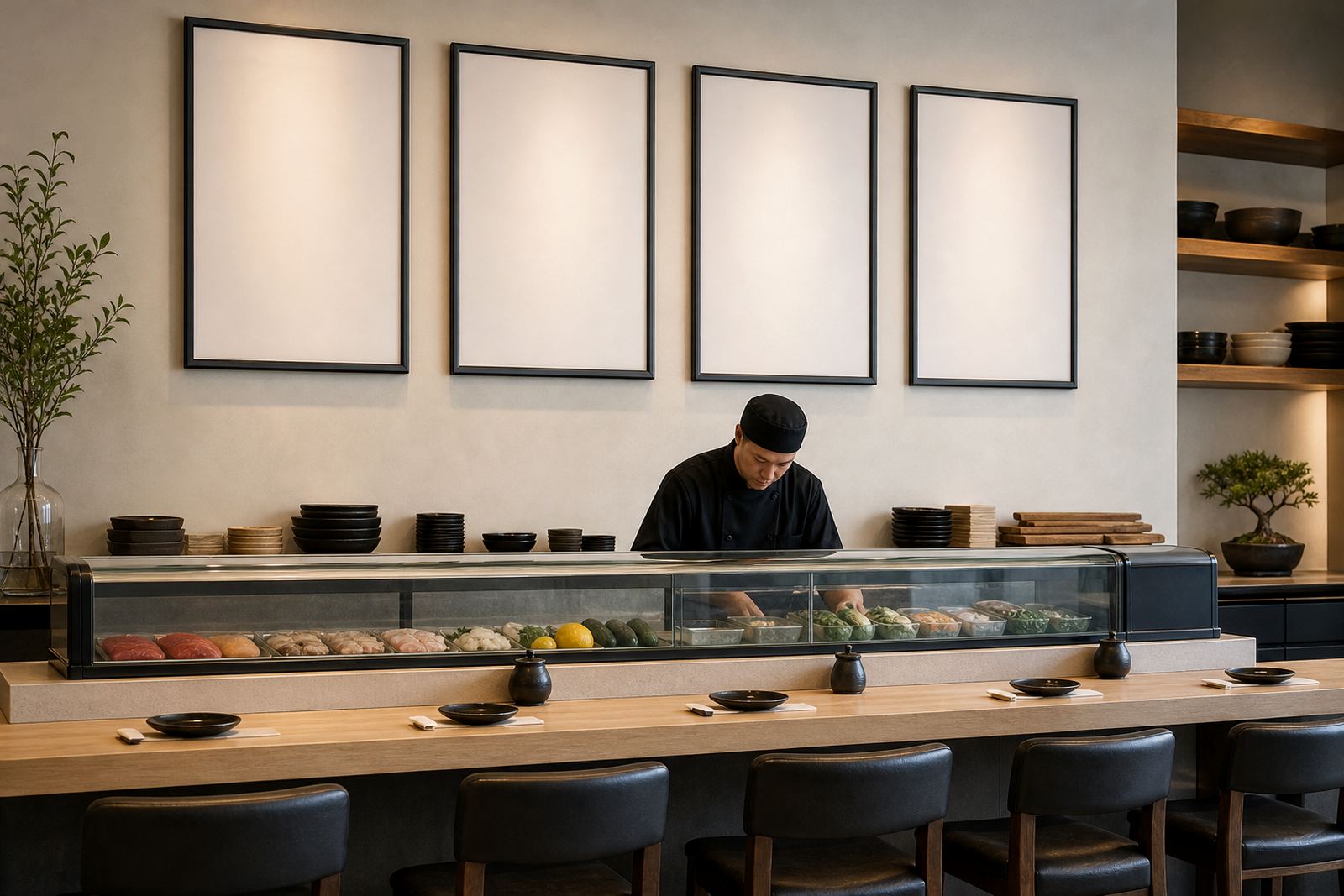
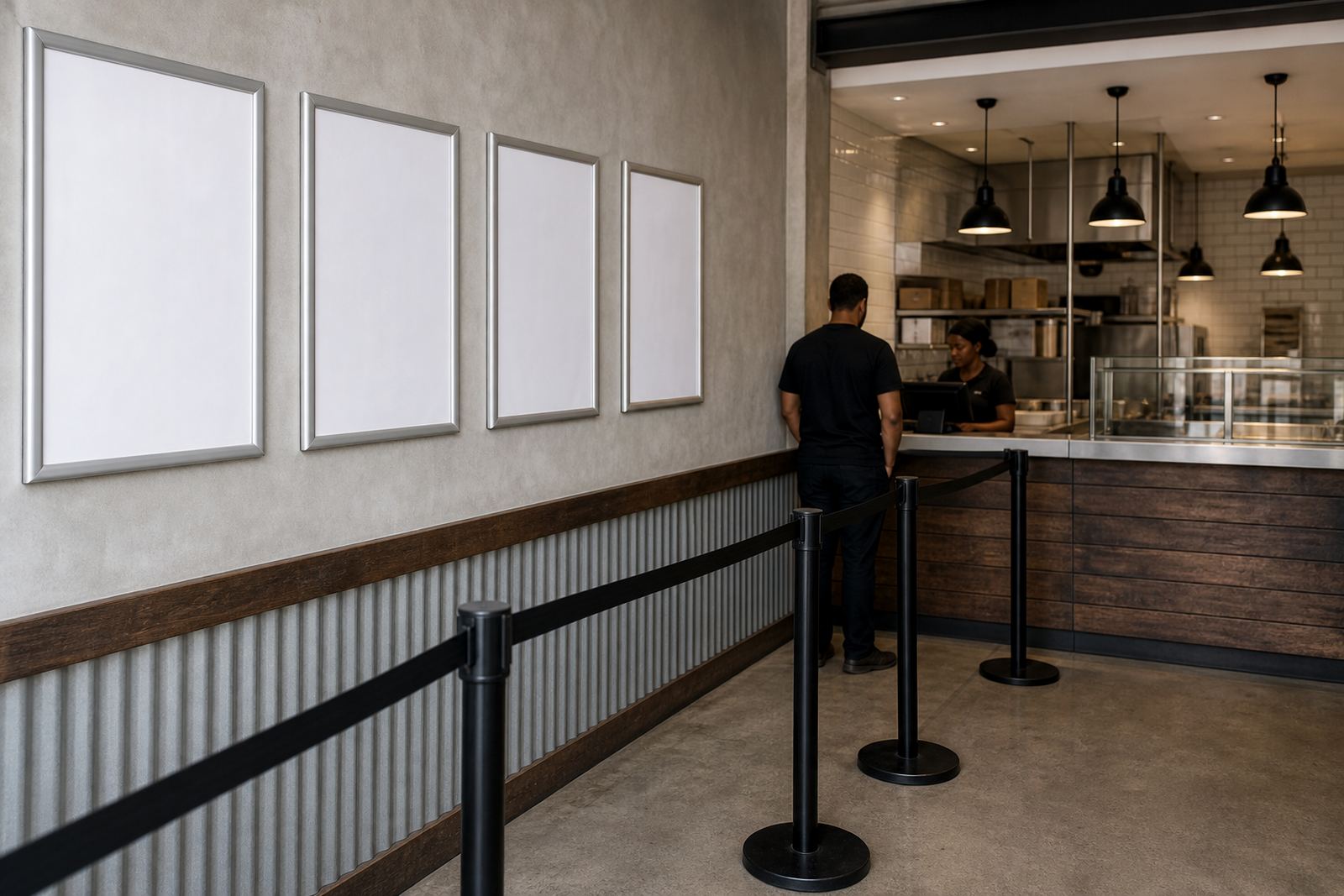
The venue type shapes the display plan. Cafés usually need a calm, readable board for a short menu and a separate spot for specials. Bars often want drinks boards where low light still leaves the text legible. Takeaway counters need faster menu swaps and tighter spacing, because the board sits close to the order point and customers scan it while the queue moves.
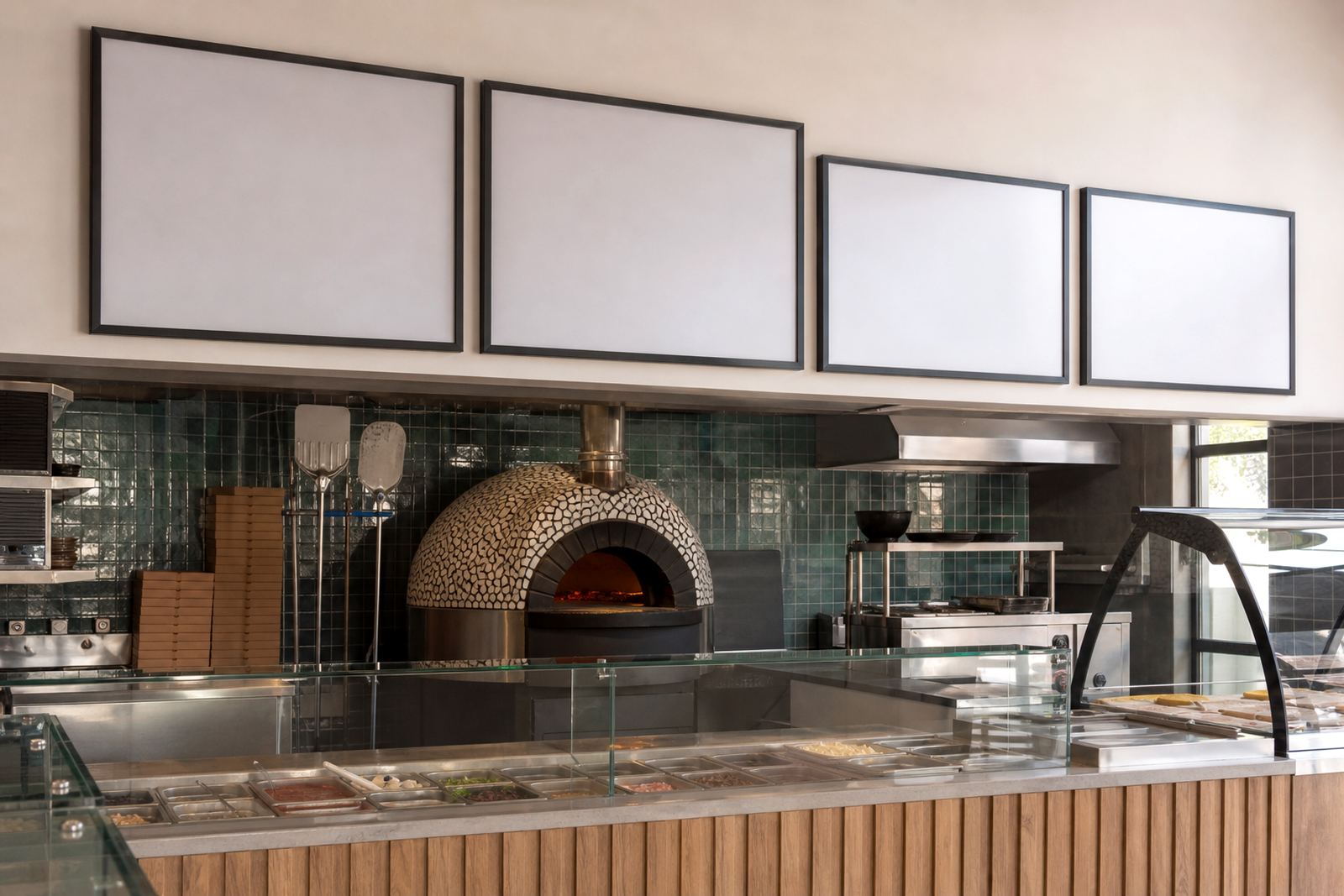
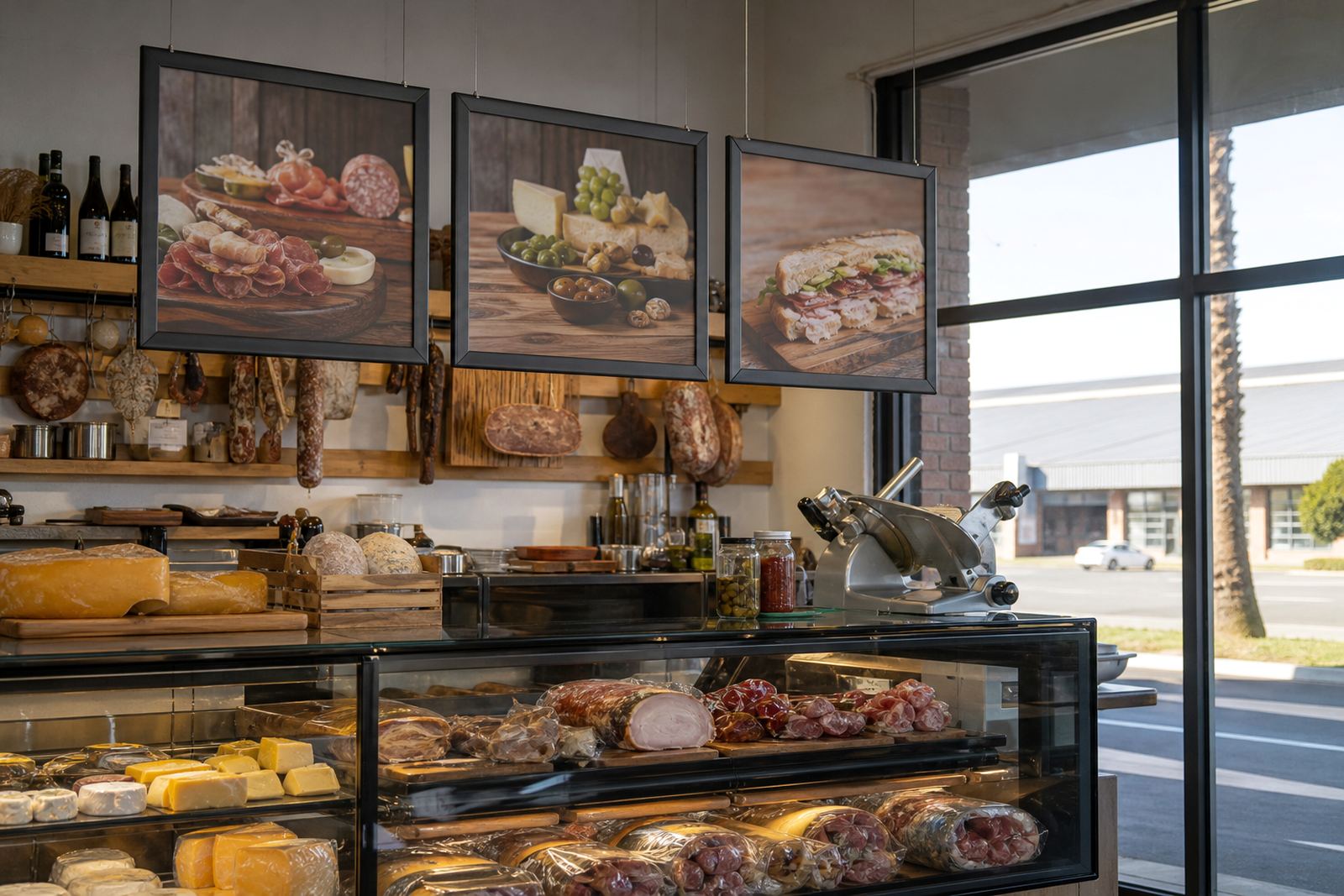
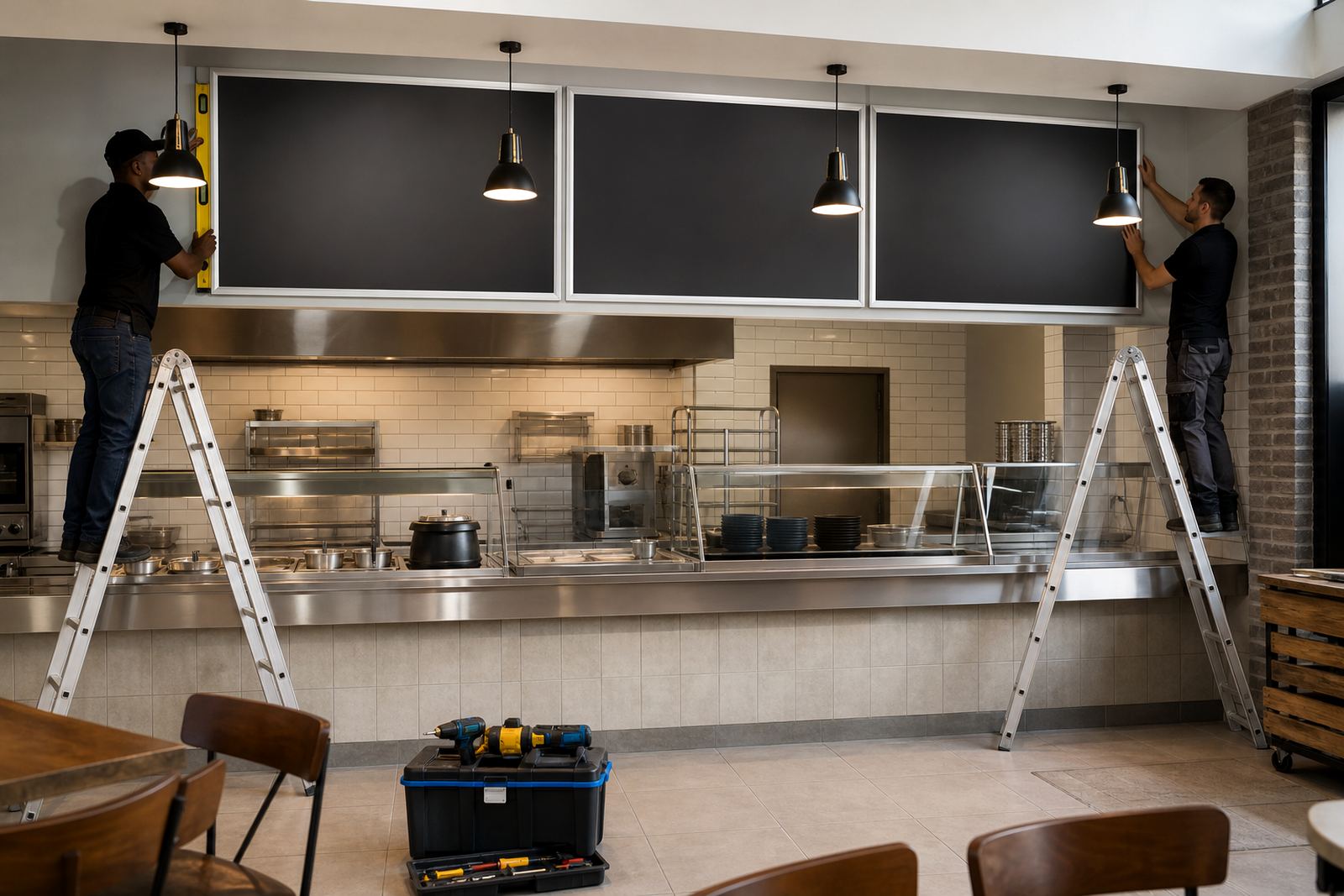
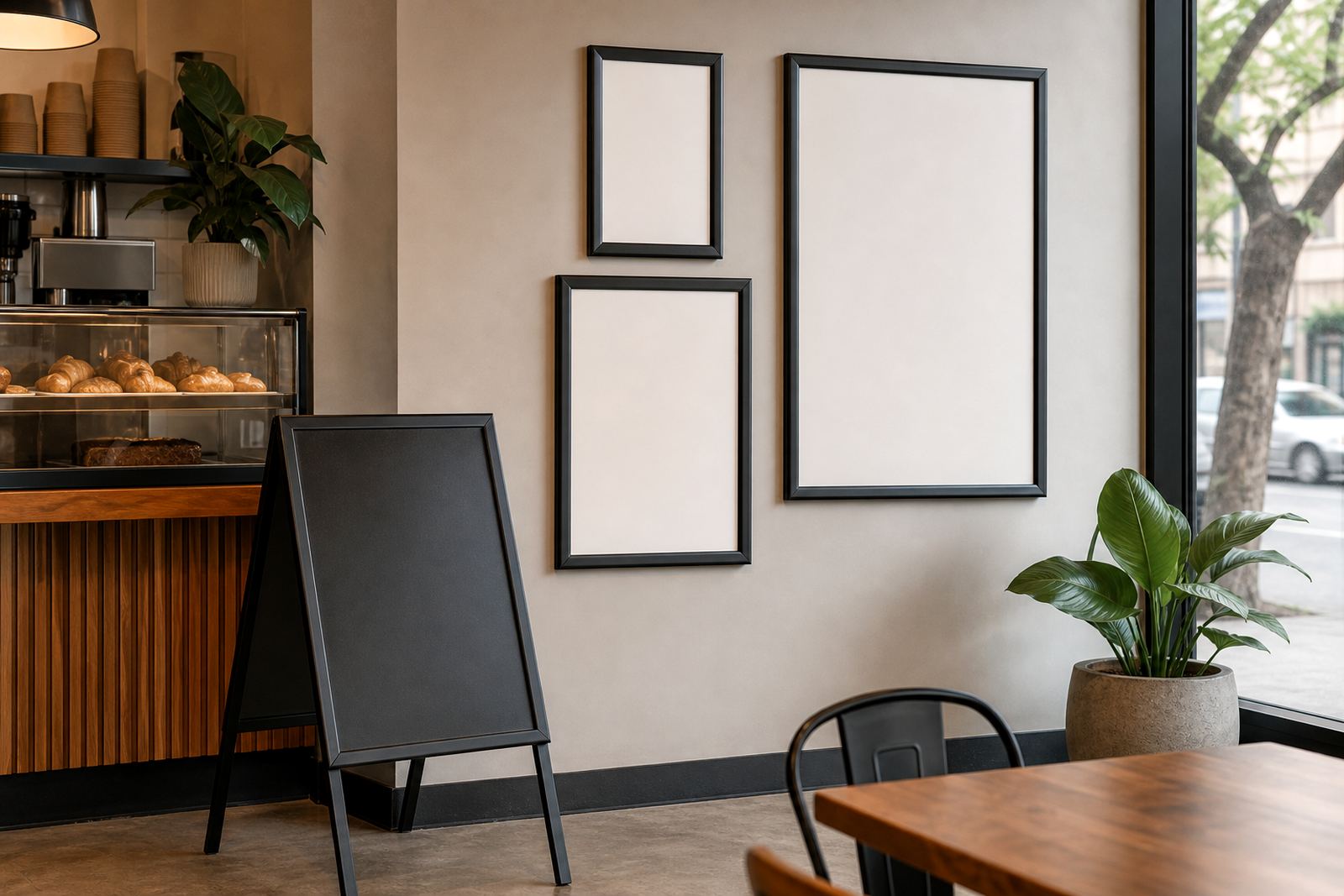
Some fit-outs use wall menu boards for the fixed items and A-frame stands for rotating offers or day specials. Others combine chalkboards with printed inserts, so the handwritten lines stay flexible while the main menu stays tidy. Menu printing sizes are usually set to A4 or A3, though the final layout depends on the wall width and how far the customer stands back.
Mounting choices that suit the room
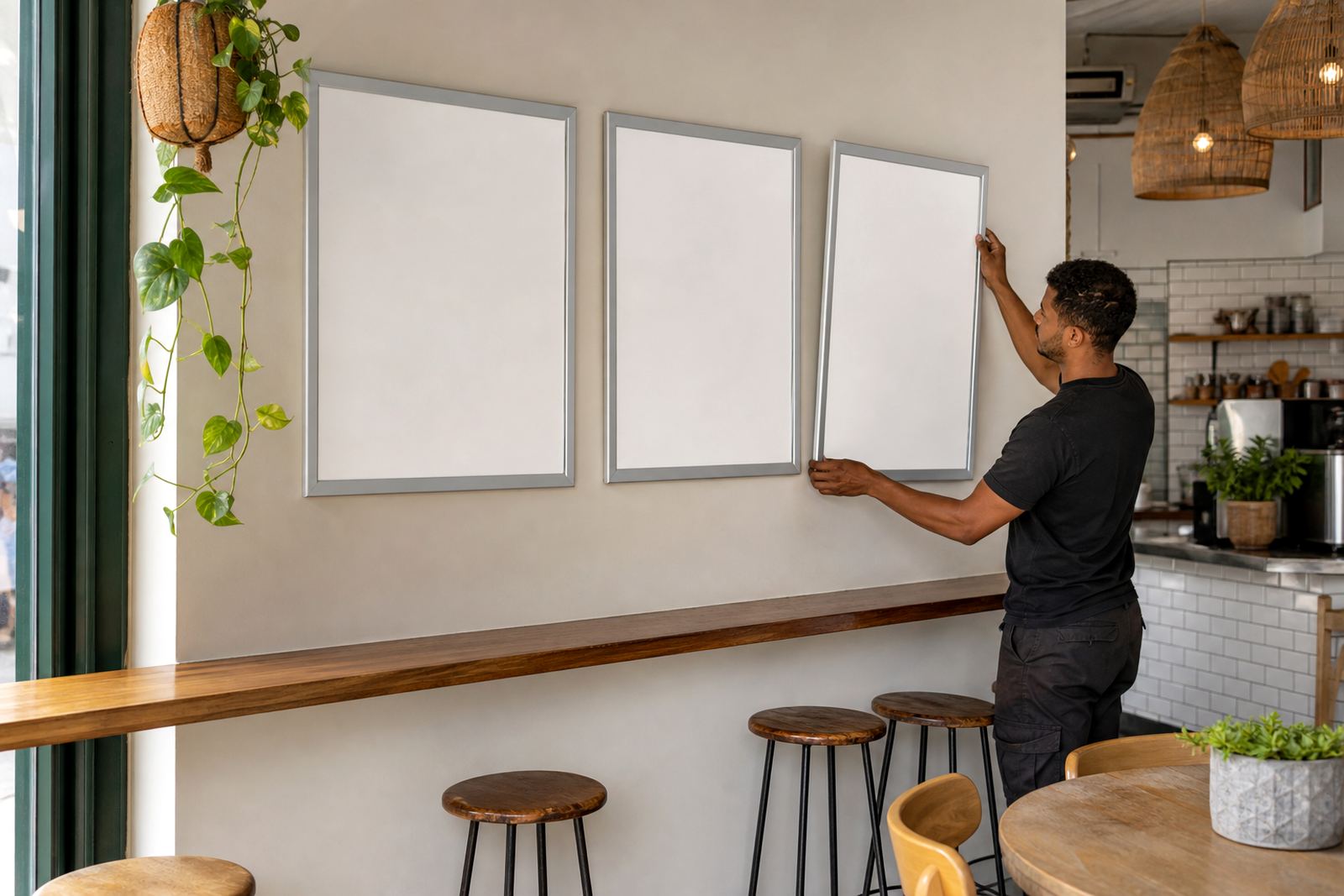
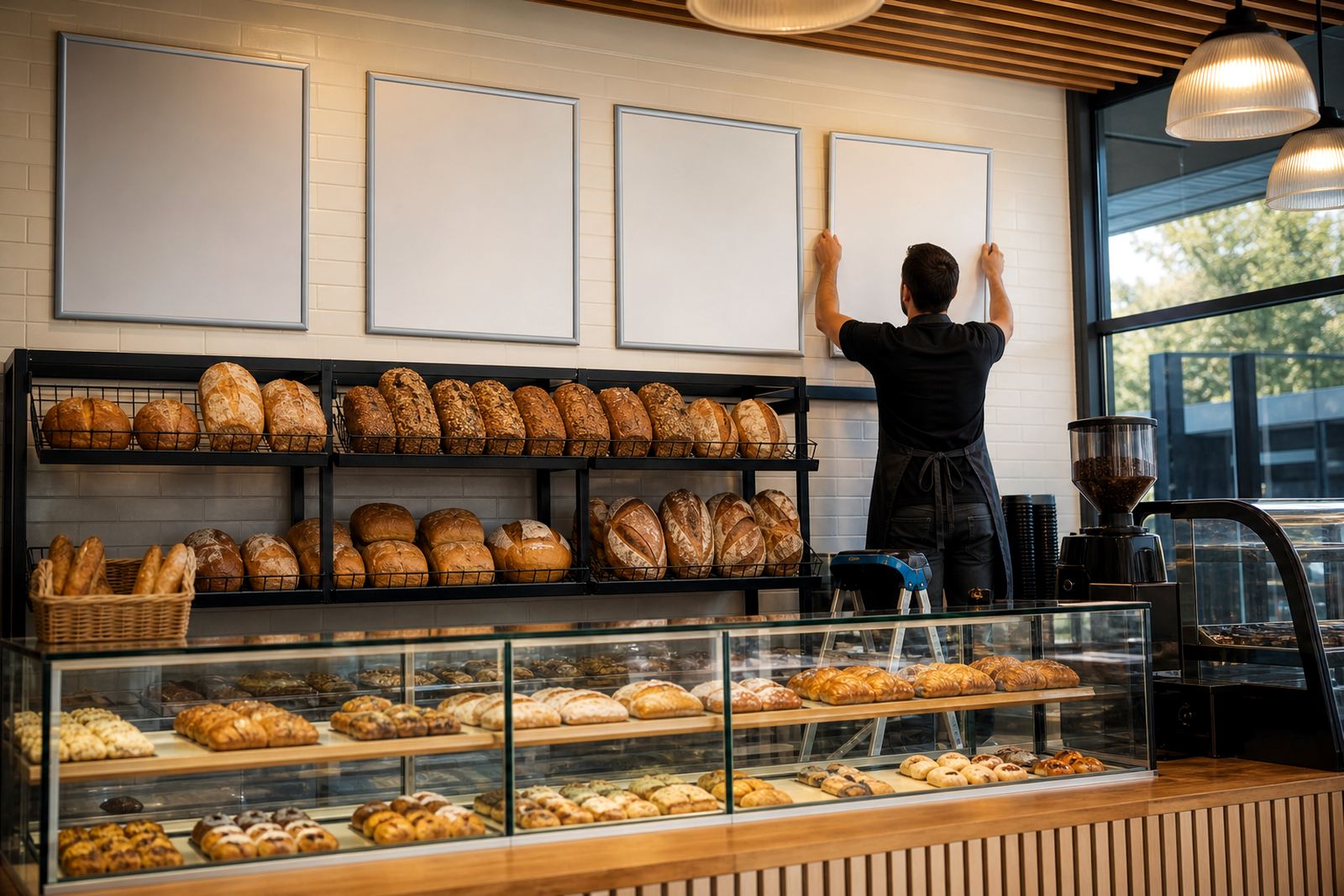
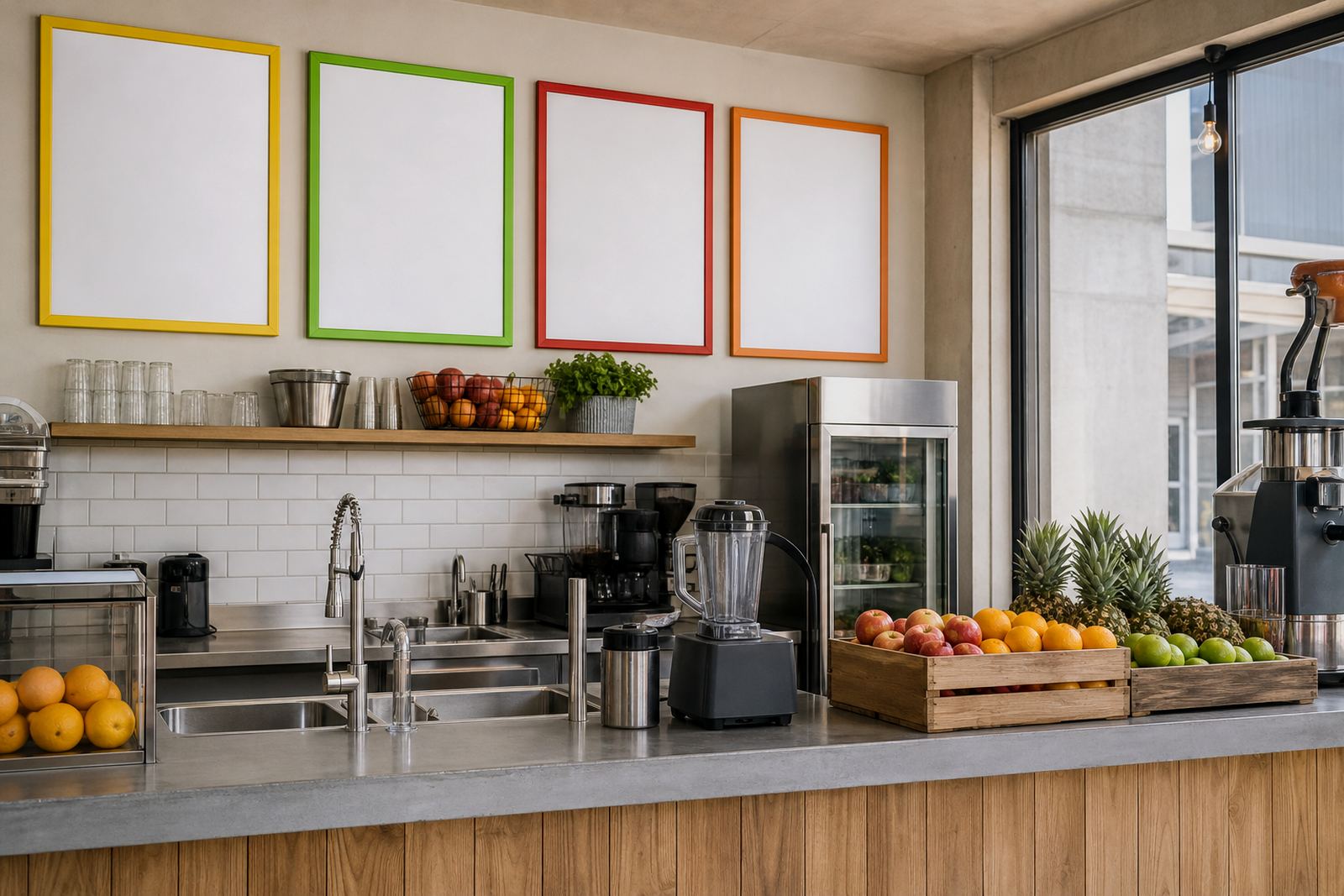
Wall and window mounting each solve a different problem. A wall frame keeps the menu at eye level and works well where the counter wall is clear. Window mounting helps when the frontage needs to carry the message from outside, especially on narrow streets or inside centres where people decide before they enter.
Our project notes often include these details:
- Frame size and insert size for each menu panel
- Wall, glass or freestanding placement
- Number of menu changes expected each week
- Whether laminated menu prints or poster inserts are needed
That mix helps the board stay practical rather than overfilled. It also leaves room for menu updates, colour matching and print finishing when a venue wants the display to sit neatly with the rest of the interior.
Menus that hold up in a working room
Hospitality spaces deal with fingerprints, steam and regular handling, especially near coffee machines and service counters. Aluminium snap frames and laminated prints are a good fit where menus are swapped often. Anti-glare covers reduce reflection and make the text easier to read under downlights or window light, which is handy in Cape Town, Gqeberha and the coastal towns where bright daylight can wash out smaller type.
A tidy menu display also helps with short run printing and proofing. If the menu changes by season, the frame size stays the same and only the insert changes. That keeps the fit-out orderly, and the board does not need new hardware each time the prices shift.
When the fit-out needs more than one display type
Many venues use a mix of formats rather than one single board. A front window may carry the main offer, the counter may hold the drinks list, and an A-frame might announce specials near the entrance. In larger sites, the same menu can be resized for a wall panel, a counter insert and a chalkboard-style feature board.
- Use a snap frame for fixed or semi-fixed menus
- Use an A-frame for entrances, courtyards and pavement service
- Use chalkboards for changing specials and feature items
- Use poster inserts where larger visual panels are needed
This is where menu typesetting matters. The text has to fit the frame, leave breathing room and stay readable from a normal customer distance. Too much content on one board slows the queue, and too little content leaves the board looking unfinished.
Project pages by area and venue type
These fit-out pages are organised by area and by the kind of venue being fitted out, so the examples feel familiar to the setting rather than generic. A small breakfast café in Stellenbosch does not need the same board plan as a busy takeaway counter in Bellville or a bar in Durban.
The listing cards will be added separately, and the pages below this hub will show the typical combinations of snap menu frames, wall menu boards and A-frame stands used across South African hospitality spaces. That makes it easier to compare what suits a narrow frontage, a brighter room or a counter with limited wall space.