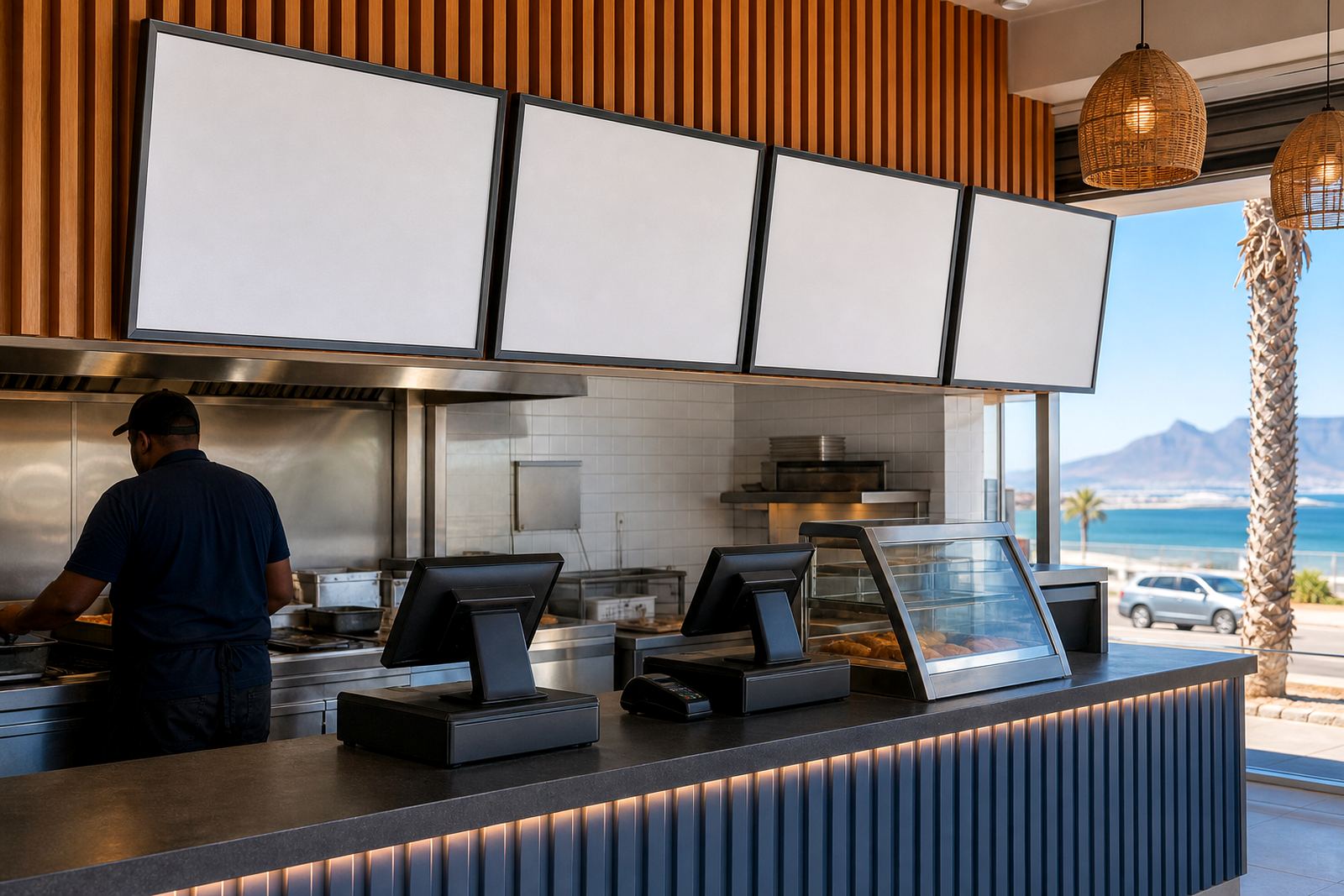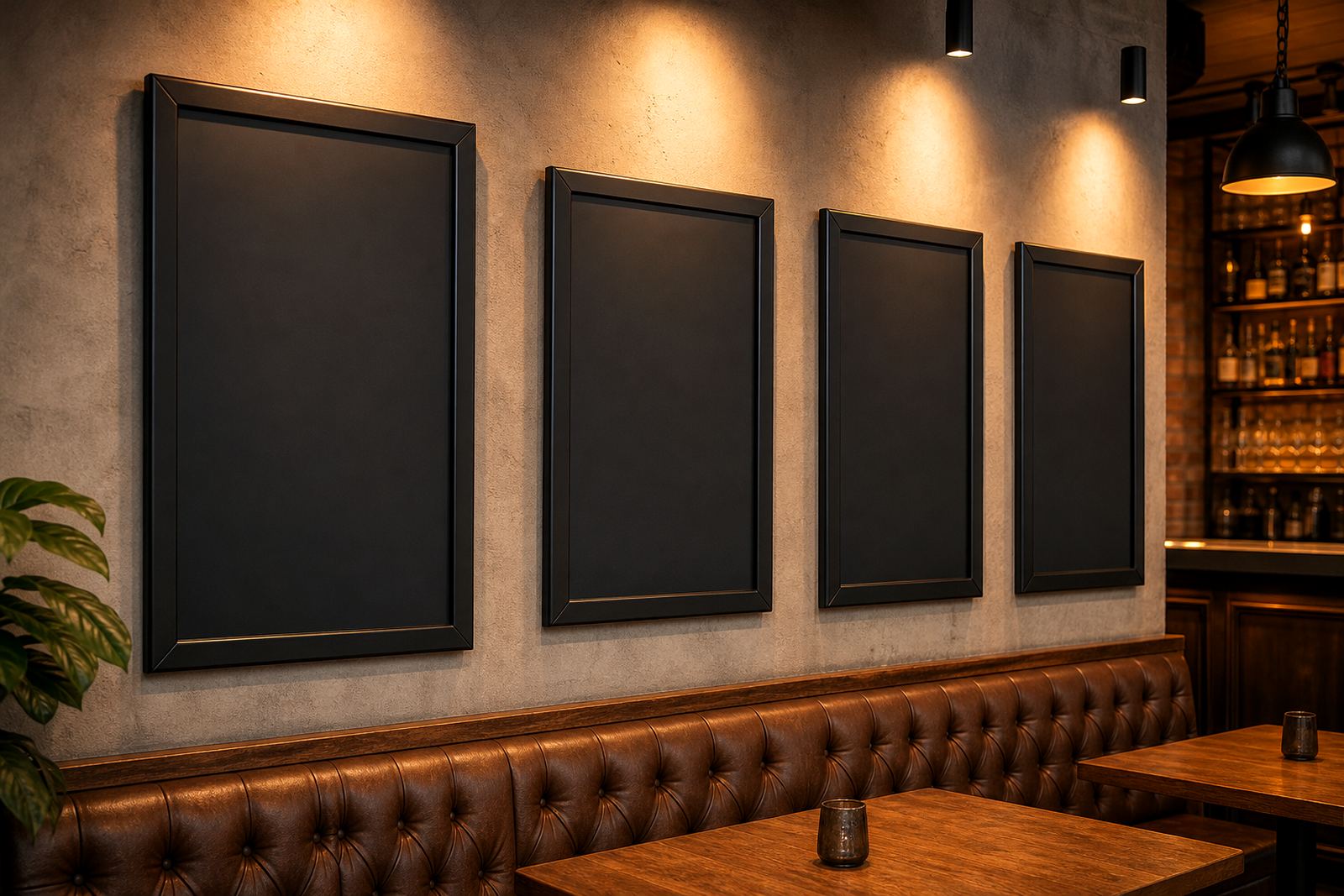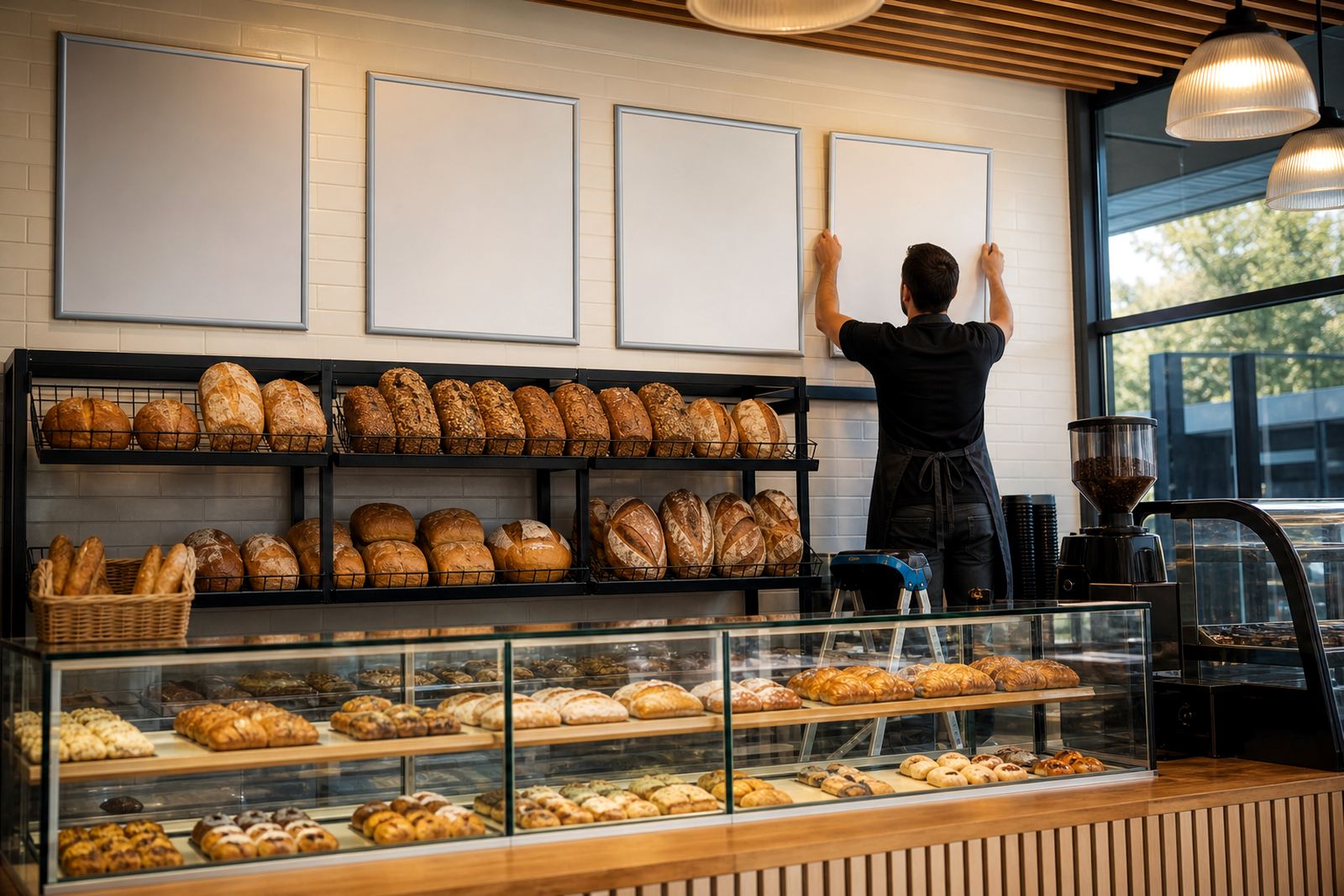

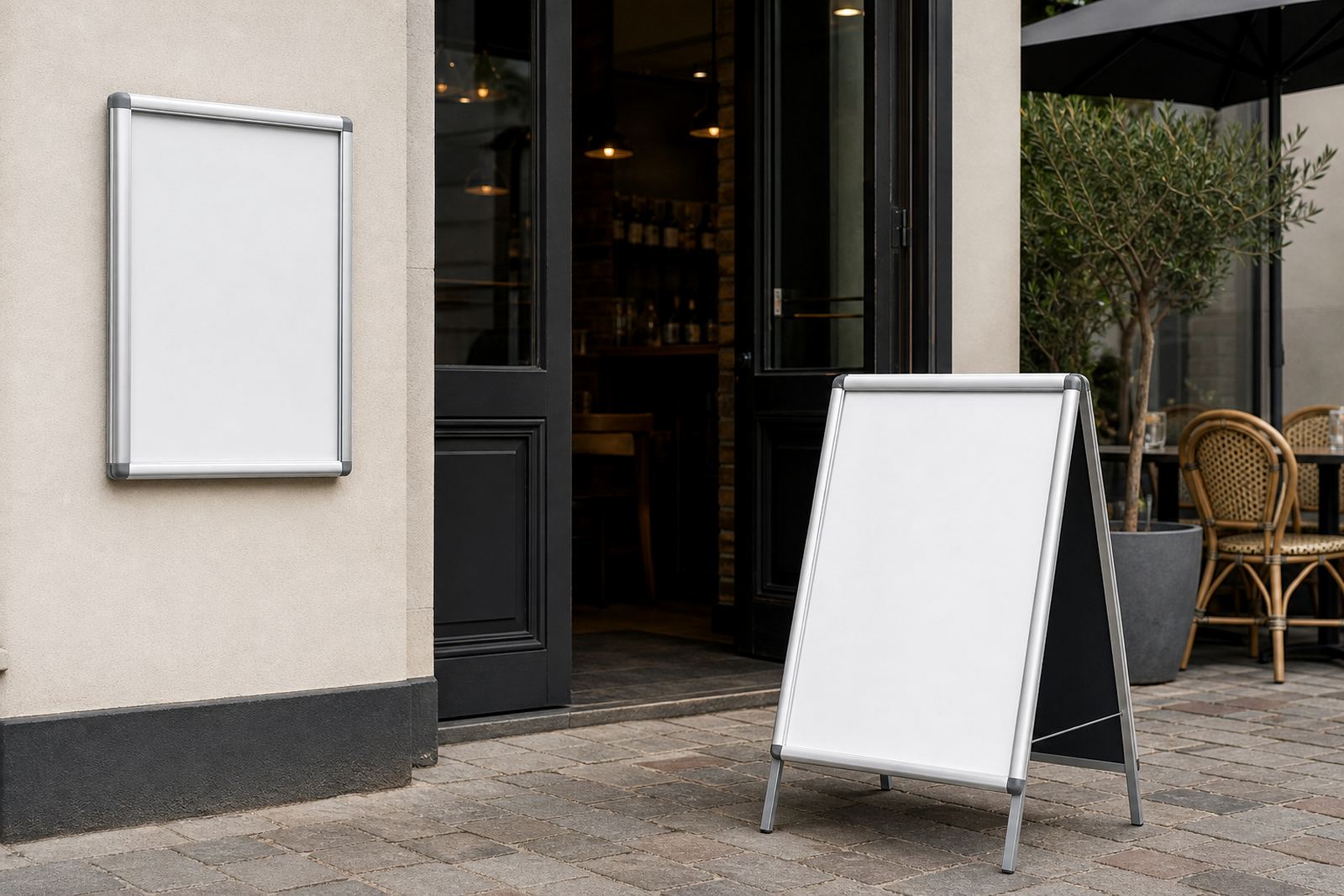
The brief at the Green Point entrance
The brief came from a neighbourhood bistro in Green Point, Cape Town, where the front-of-house team wanted the menu to be clearer from the pavement and neater at the host point. They were working with daily specials, a lunch menu and an evening list, so the display had to change often without loose clips or messy tape marks.
The frontage was narrow, with passing foot traffic, salt air and a painted wall that picked up glare in strong light. The team also wanted the menu to sit high enough to catch attention, but not so high that staff had to struggle each time a print changed. It had to look proper, and not like a temporary fix.
Space limits, light and daily changes
The wall area only allowed for a compact vertical format, so we worked with an A3 snap frame at the entrance and an A4 insert for the host stand. That mix gave the bistro a larger street-facing read, while keeping the internal host point smaller and easier to manage.
Because the site faces strong afternoon light, we specified anti-glare covers and aluminium profiles that hold the print flat. The menu sheets needed to stay legible from a short walk-up distance, with clean edges and no curling after repeated swaps.
- A3 wall display for the main entrance menu
- A4 frame for the host point and reservation area
- Anti-glare front cover to cut surface reflection
- Aluminium snap profiles for quick insert changes
- Wall mounting hardware suited to a painted interior wall
What we supplied and set up
We produced the artwork as print-ready menu templates, then checked the line breaks, pricing columns and spacing so the layout could hold up in both A3 and A4 sizes. The menu copy was proofed before print, with attention to item names, section heads and the balance between food descriptions and pricing.
For the finished set, we supplied laminated menu prints, poster insert printing for the larger display and a second insert set for the host point. The frame package included snap menu frames, a wall mount arrangement and a compact A-frame menu stand for indoor use near the entrance host spot. All items were packed for courier delivery, with corner protection so the frames arrived ready for installation.
- A3 snap frame for the main entrance menu
- A4 snap frame for the host point display
- Laminted menu prints for repeated handling
- Short run printing for the initial changeover set
- Courier packaging for local and nationwide movement
The production window and install sequence
The work ran over two weeks. Week one covered layout correction, proofing and print preparation, while week two handled finishing, packing and delivery coordination. The site install itself was straightforward because the wall measurements had already been checked and the display points were set before the frame left the shop floor.
Thabo handled the installation lead side of the job, which kept the frame aligned with the doorway sightline and clear of the door swing. The host stand was placed where staff could change inserts without crossing the guest path, and the wall frame was fixed at a height that worked for both standing guests and the serving team.
What changed once the boards were in place
The bistro gained a stronger first read from the street, and the host team no longer had to manage loose menu sheets at the doorway. The frame faces kept the print flat, the menu stayed cleaner under daily handling, and the entrance looked more ordered during busy service periods.
There was also a practical gain in how updates were managed. Specials could be swapped without tools, the print sizes stayed consistent, and the menu presentation held its shape after several changes. For a site with a narrow front and regular menu shifts, that mattered more than a decorative finish ever would.
- Cleaner entrance presentation for walk-in guests
- Faster insert changes at the host point
- Better readability in bright natural light
- Less handling damage on frequently updated prints
What we would keep on a similar brief
We would keep the same split between A3 street-facing artwork and a smaller host-point insert, because the two-view setup suits a bistro that updates menus often. We would also keep the anti-glare cover and the aluminium snap profile, because both held up well in a coastal setting with regular wiping and handling.
For the next similar job, we would still start with menu resizing and proofing before printing, then match the insert sizes to the frame rather than forcing the artwork to fit. That keeps margins sensible and avoids crowded text, which is usually where restaurant menus start to look untidy.
- Use A3 for the public-facing read and A4 for host control
- Match the artwork to the frame before final print
- Keep anti-glare covers on exposed entrance points
- Choose laminated inserts where menus change often
Key facts
| Client type | Neighbourhood bistro in Green Point, Cape Town |
|---|---|
| Project scope | Entrance menu display and host-point frame |
| Frame sizes | A3 wall frame and A4 host-point frame |
| Frame build | Aluminium snap profiles with anti-glare covers |
| Print work | Menu resizing, typesetting, proofing and short run printing |
| Timeline | 2 weeks from layout check to delivery and installation |