Picking the display that suits the counter
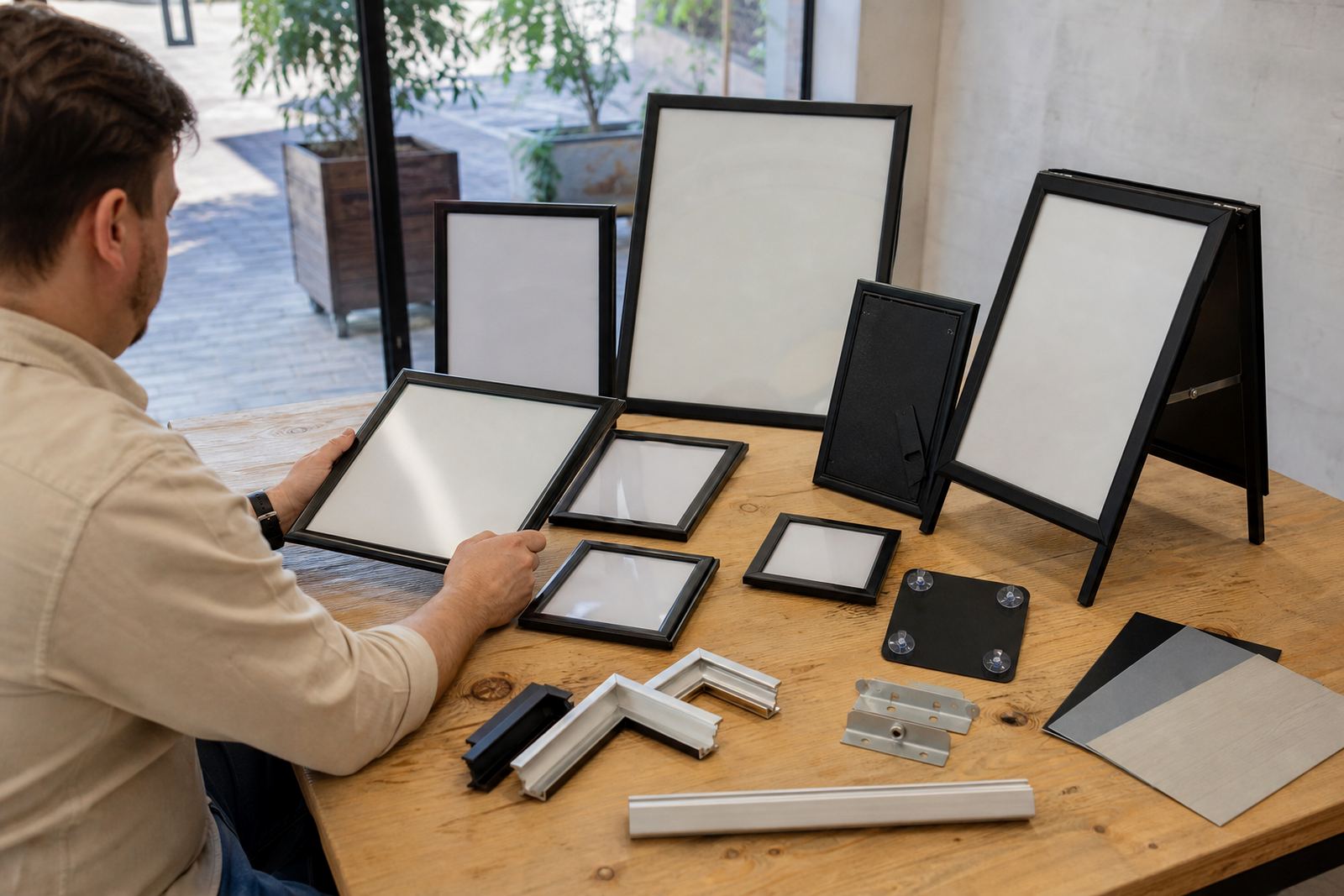
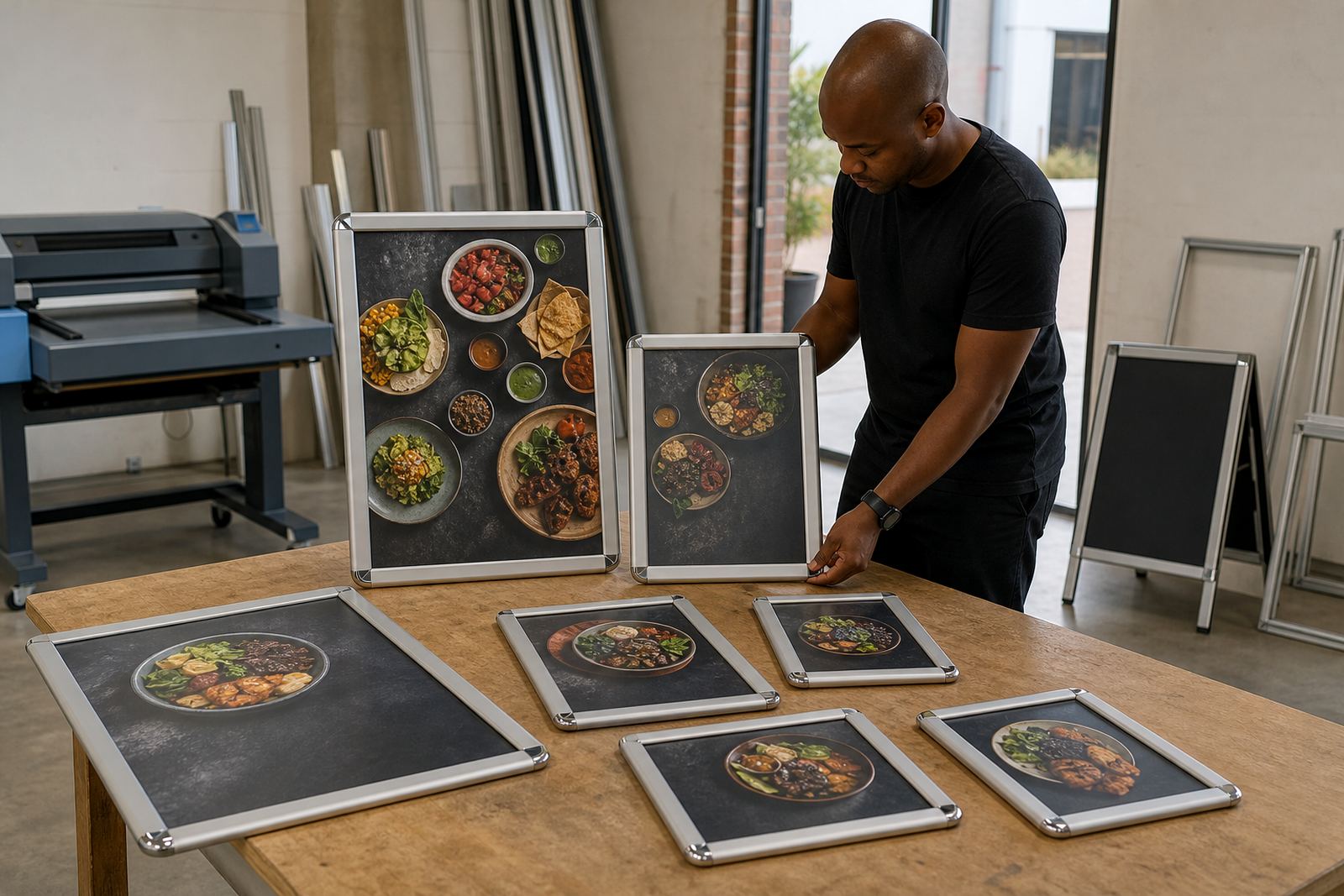
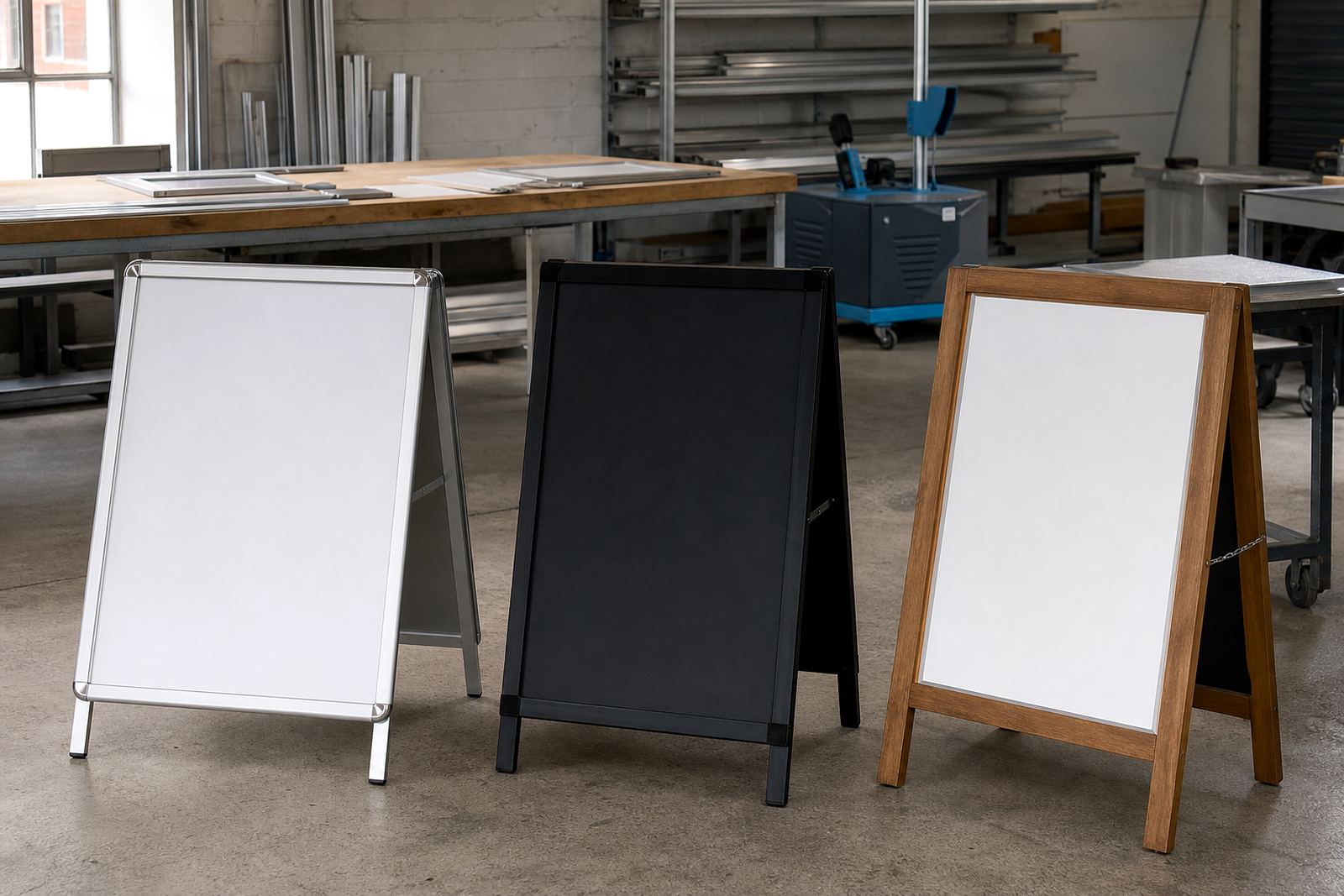
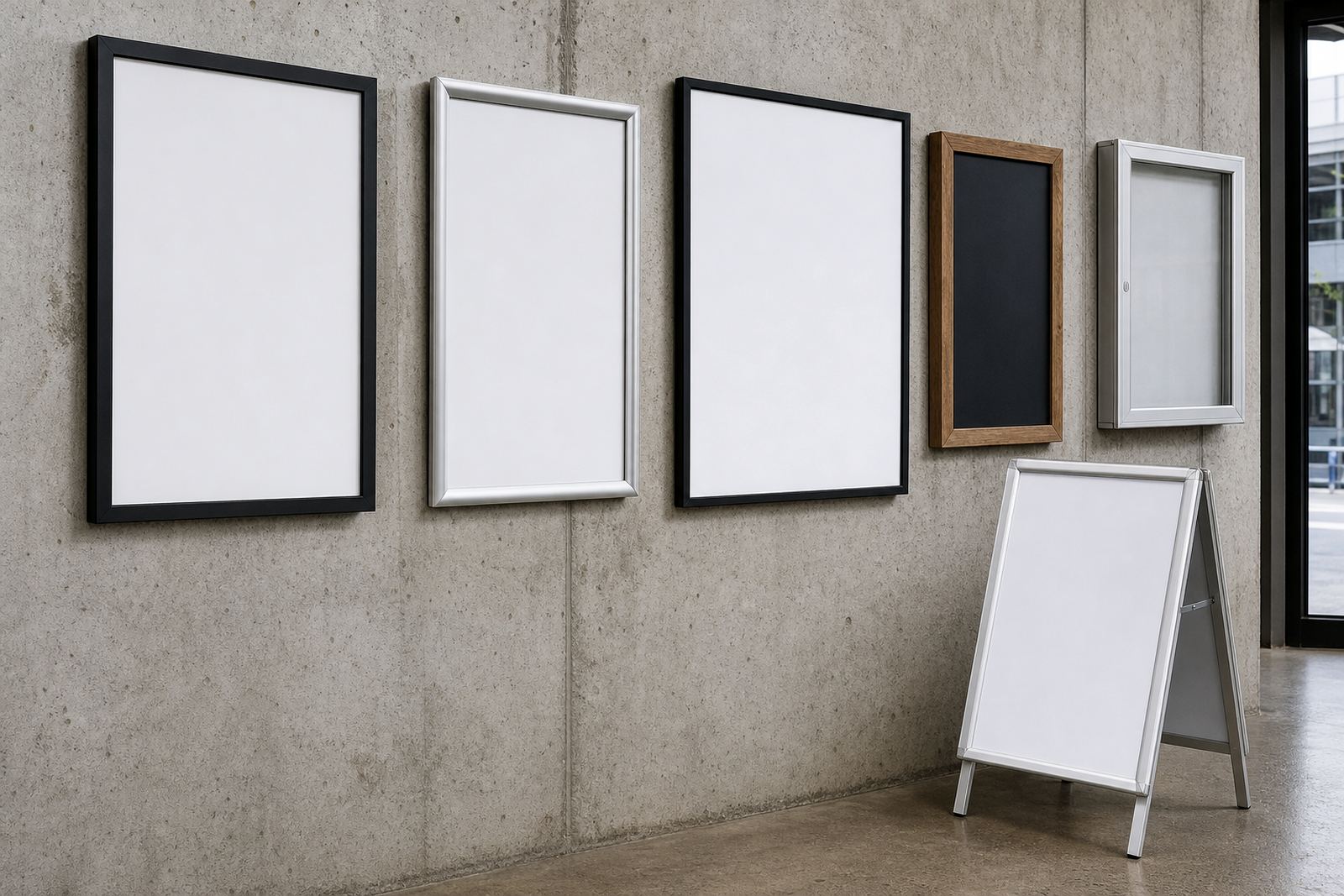
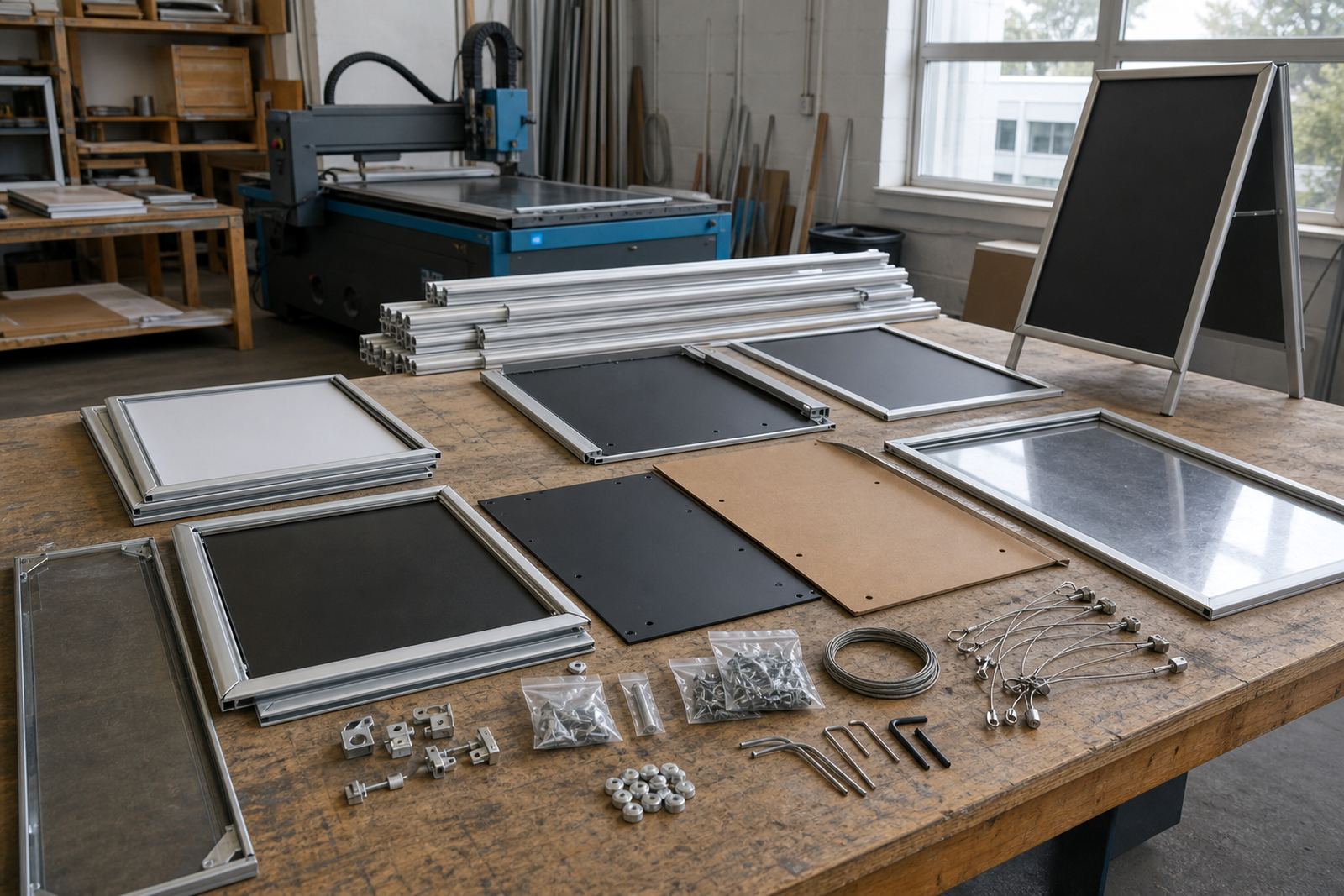
A snap frame suits venues that change specials often and want a clean front with no loose clips. The aluminium profile opens at the edges, so an A4 or A3 print can be swapped without tools. Wall boards work well where the menu must stay fixed at eye level, while an A-frame stand gives a freestanding option near a doorway, bar edge or pavement spot.
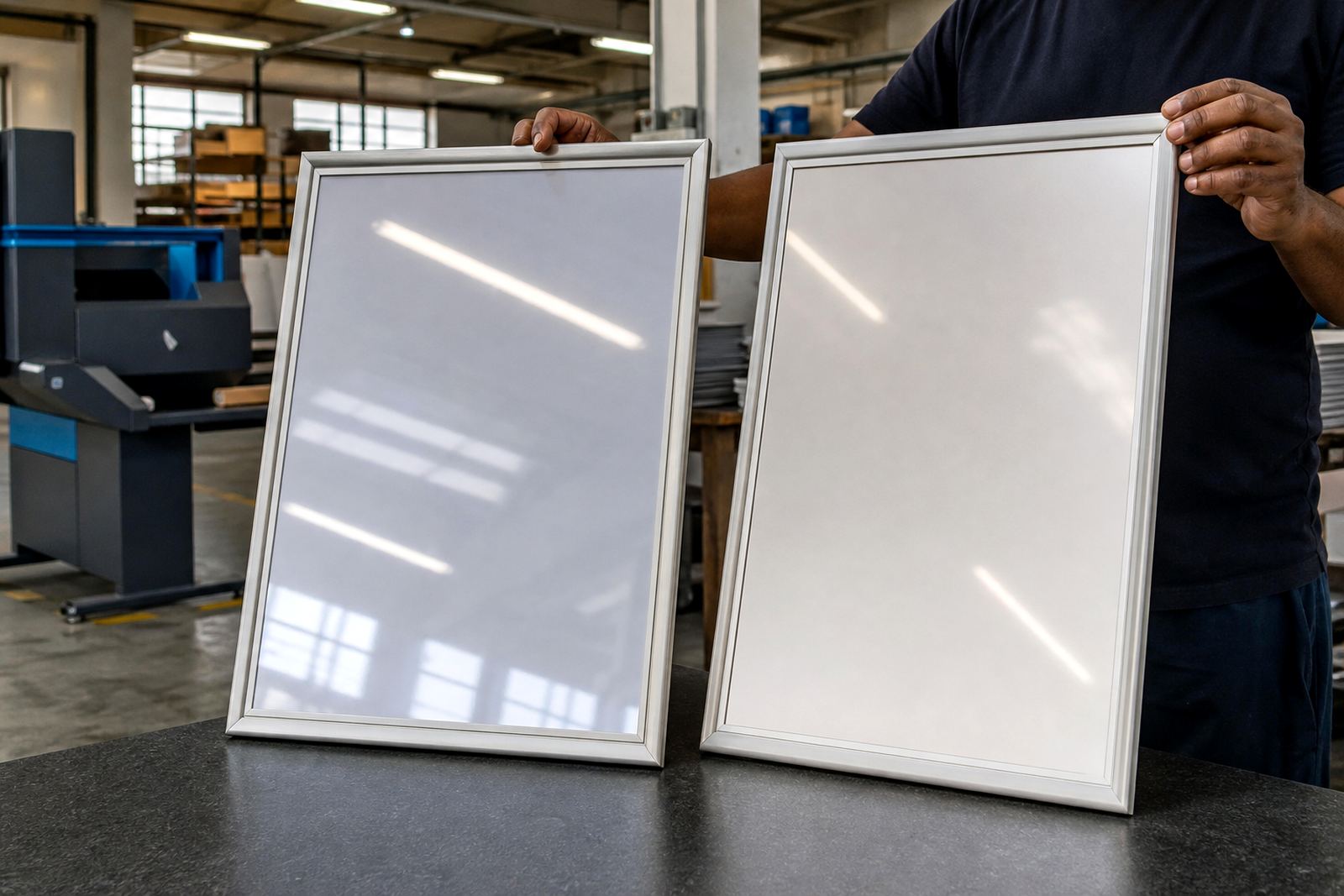
For restaurants and cafes, the first question is usually where people stand while reading. If they order at a counter, the frame needs clear viewing from close range. If the menu sits behind glass or in a window, the cover should reduce glare from daylight and street light. A chalkboard style suits handwritten specials, but it needs a steady hand and regular cleaning.
A4 or A3, and when the bigger sheet earns its place
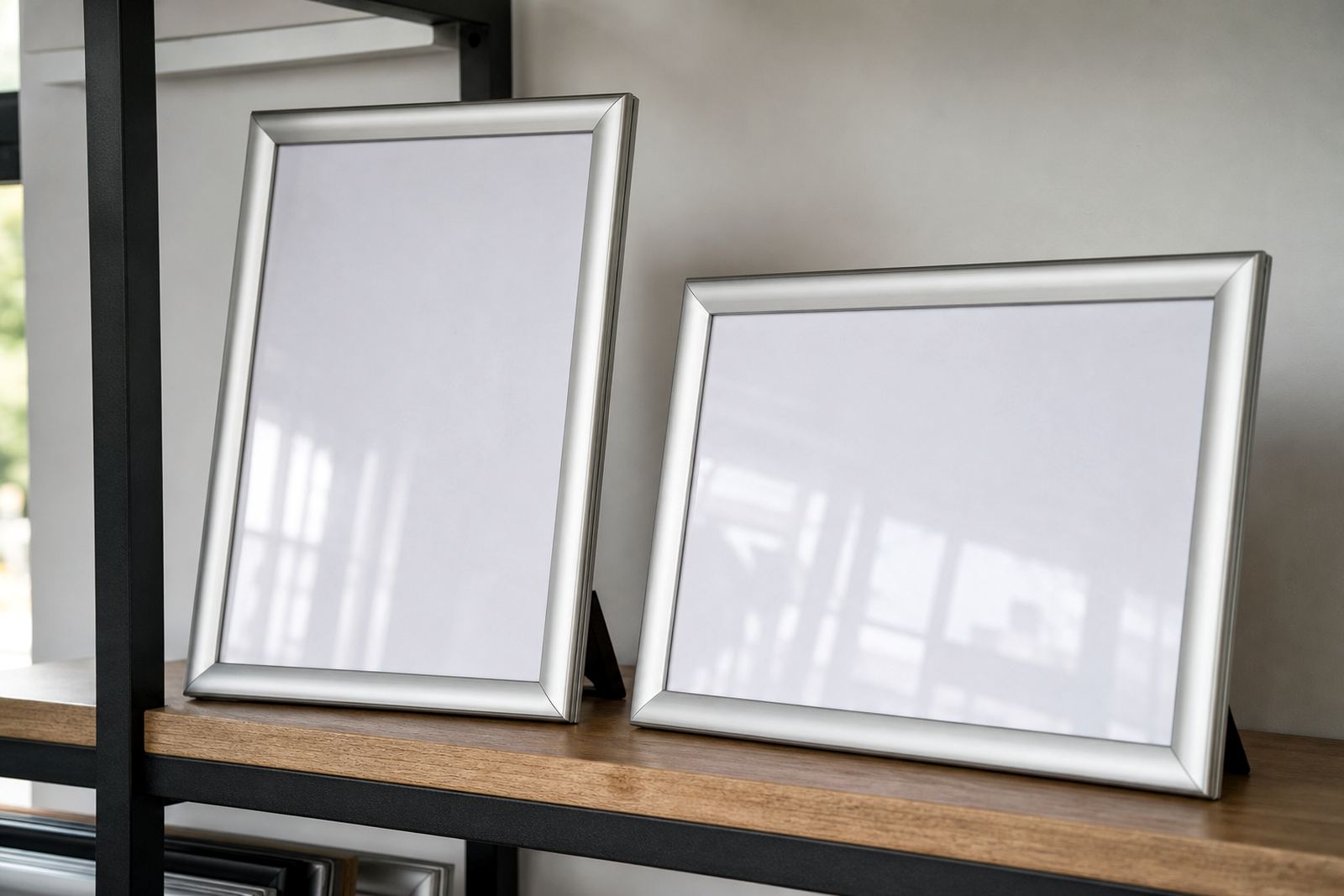
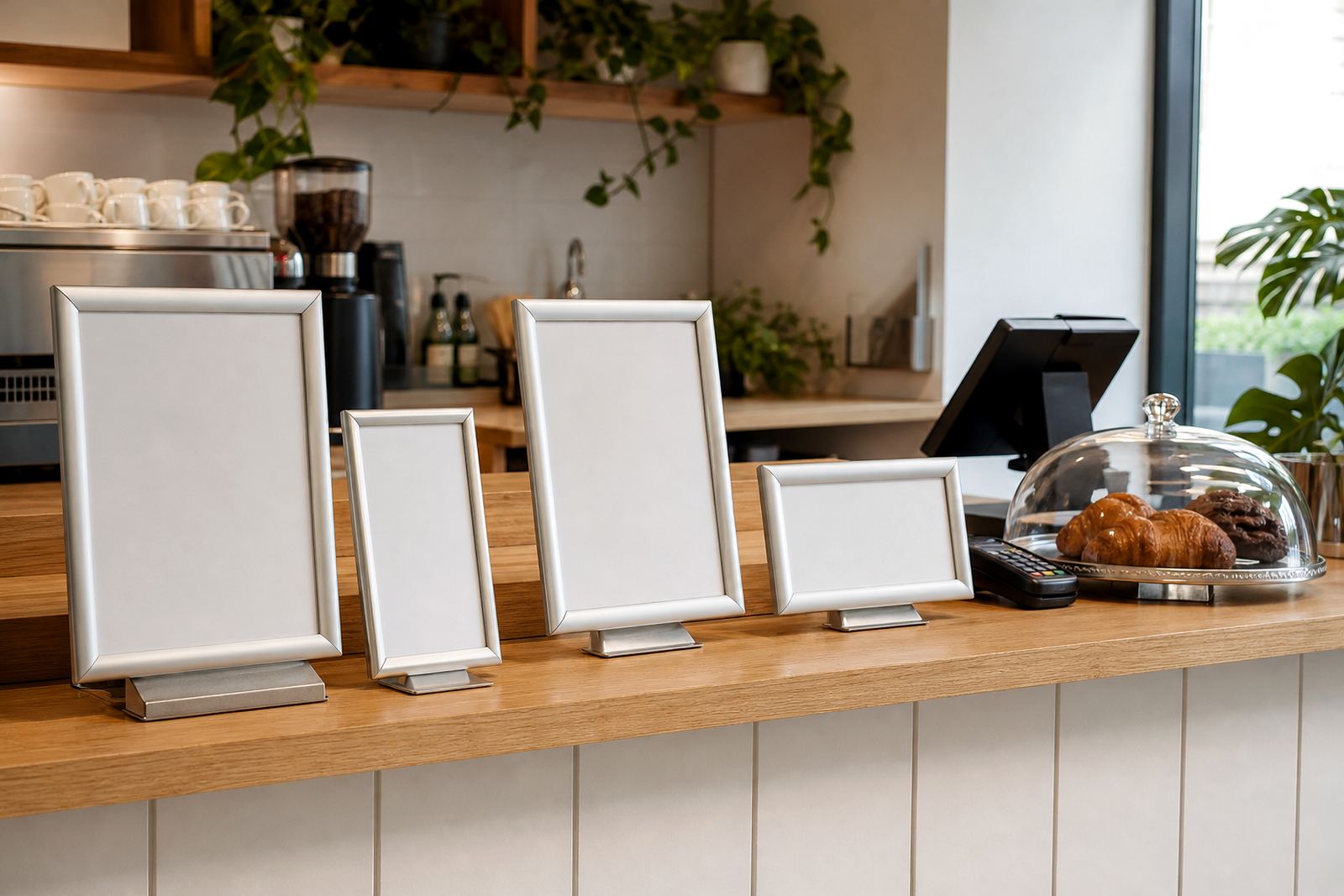
A4 is compact and tidy for short menus, daily specials and smaller inserts. A3 gives more breathing room for item names, prices and section headings, which helps when the customer reads from a little distance. In narrow spaces, an A4 frame often looks balanced. In a larger wall display or shopfront window, A3 carries better presence.
- A4 works well for compact menus, limited specials and table side notices
- A3 suits lunch boards, wider drinks lists and window displays with longer reading distance
- Mixed sizes can work across a venue, but the layout should stay consistent
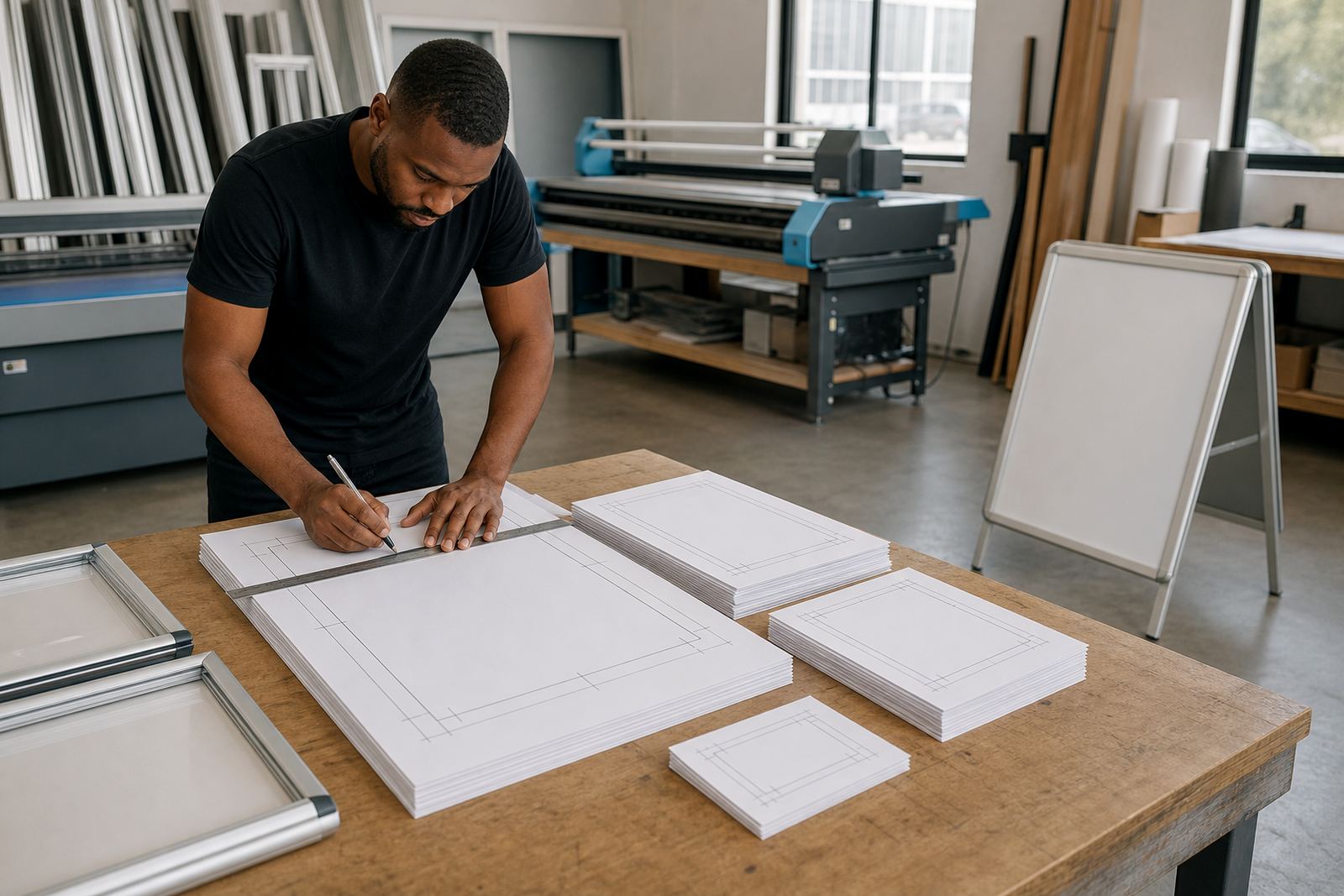
Print fit matters as much as size. A cropped menu can cut off prices or push key lines too close to the edge, which is awkward when the frame is opened and closed often. Menu resizing and typesetting help the print sit square in the frame, without awkward gaps or clipped borders.
Mounting choices for walls, glass and busy walkways
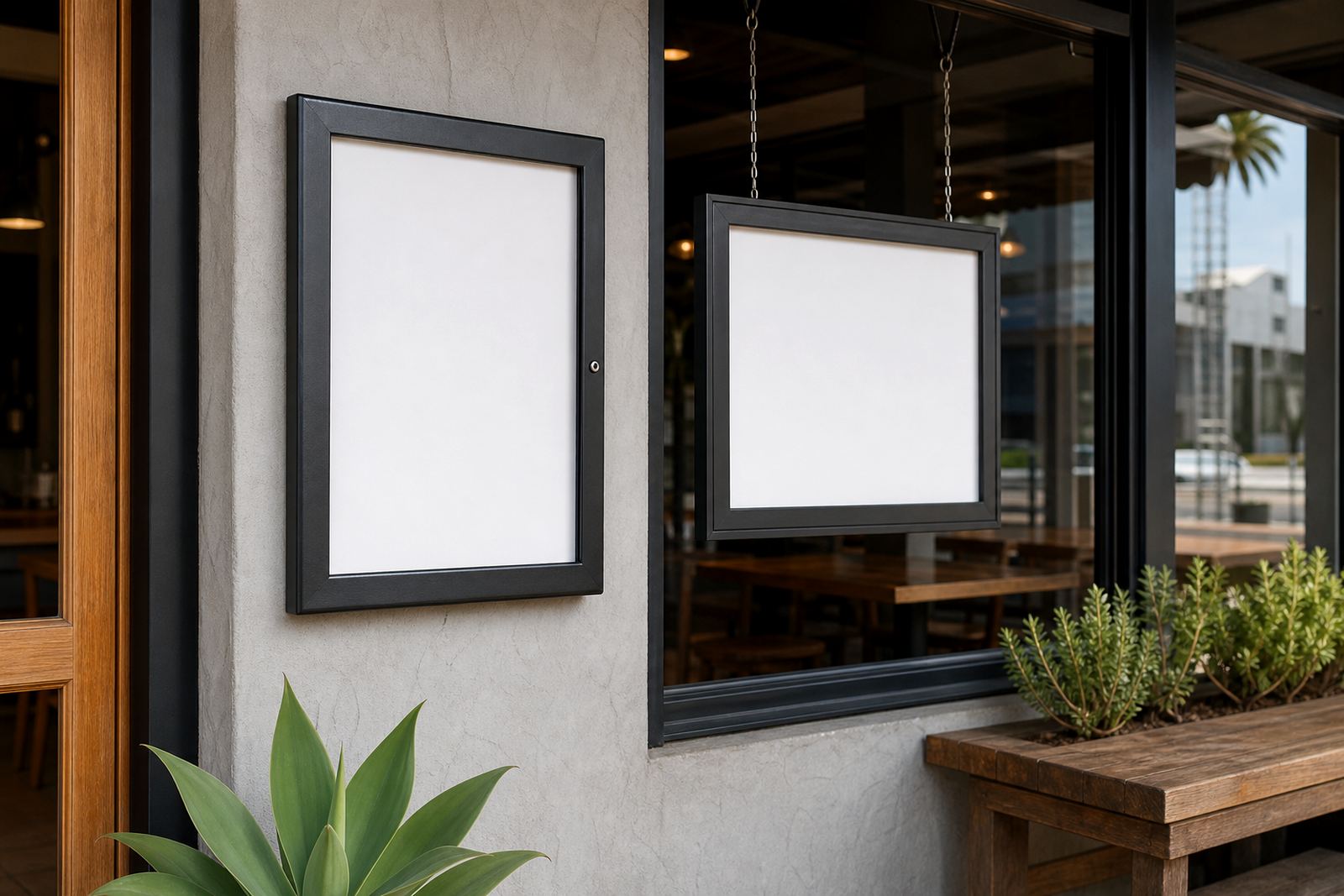
Wall mounting is the neatest option for fixed service points. It keeps the menu off the counter and makes cleaning easier around the base. Window mounting is useful when the display needs to face foot traffic from outside or catch drive-by attention. For window use, anti-glare covers help reduce reflections, especially in bright Cape Town light or a glass front that catches afternoon sun.
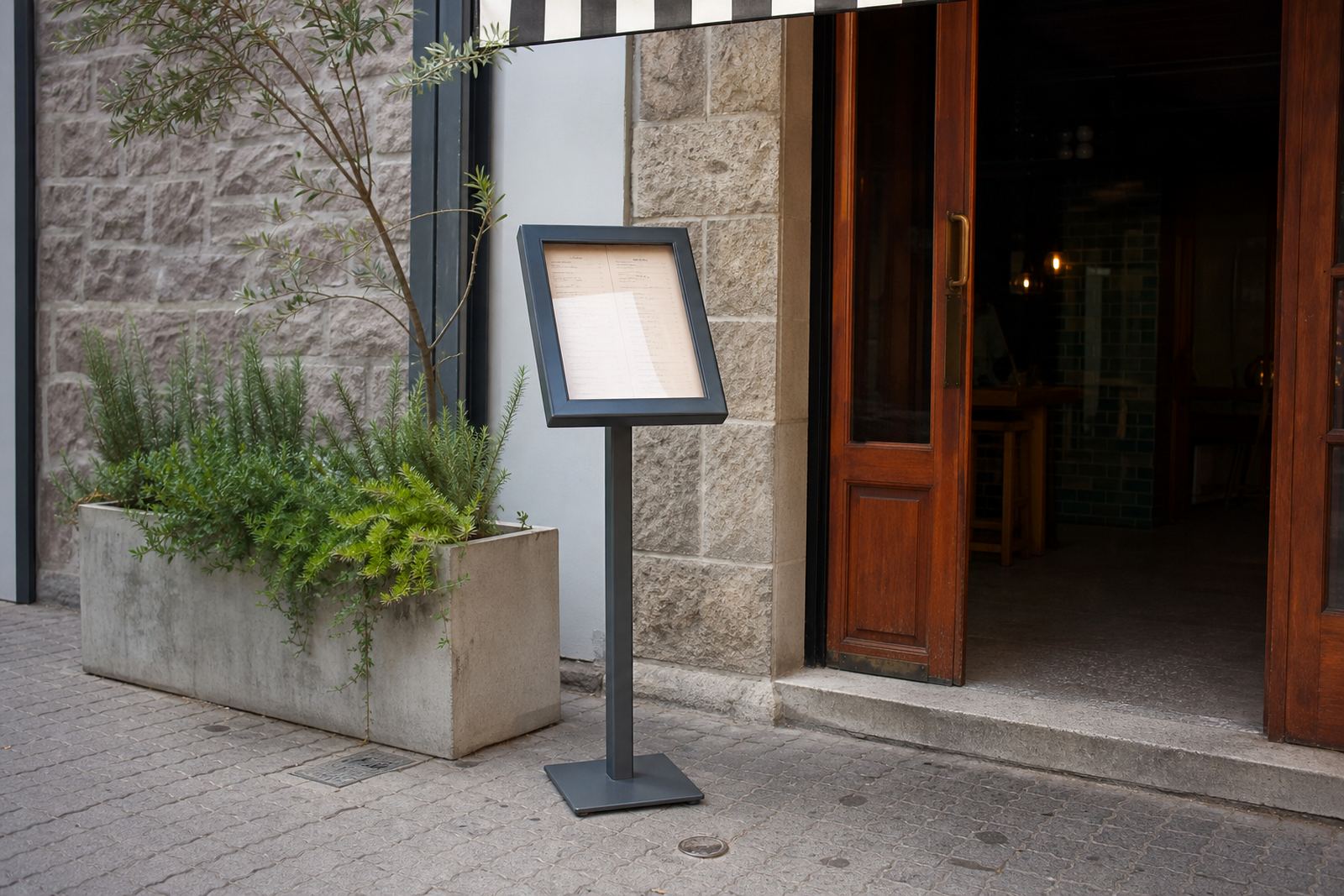
An A-frame stand is useful where the menu must move with the day. It can stand near the entrance, beside a queue or outside a takeaway counter. On windy corners, the stand needs enough weight or a sheltered position. In coastal air, the finish should be wiped down regularly so salt and moisture do not leave marks on the edges.
What a good insert needs before it goes to print
A menu insert should be set out for the frame, not just for the page. The layout needs safe margins, readable type sizes and a clear order for prices, headings and footnotes. If the menu has a logo or colour bar, the tones should stay steady across reprints so the display does not change shade from one run to the next.
- Check the final trim size before printing
- Keep key text away from the snap edge
- Use strong contrast for low light interiors
- Leave space for specials that change often
- Match the paper and laminate to the handling level
Laminated menu prints suit counters where staff handle the sheet often, and they help protect against spills and fingerprints. Poster inserts can work for larger boards, but the sheet still has to sit flat in the frame. A wrinkled insert can spoil the look even when the frame itself is solid.
How wall menu boards support everyday trading
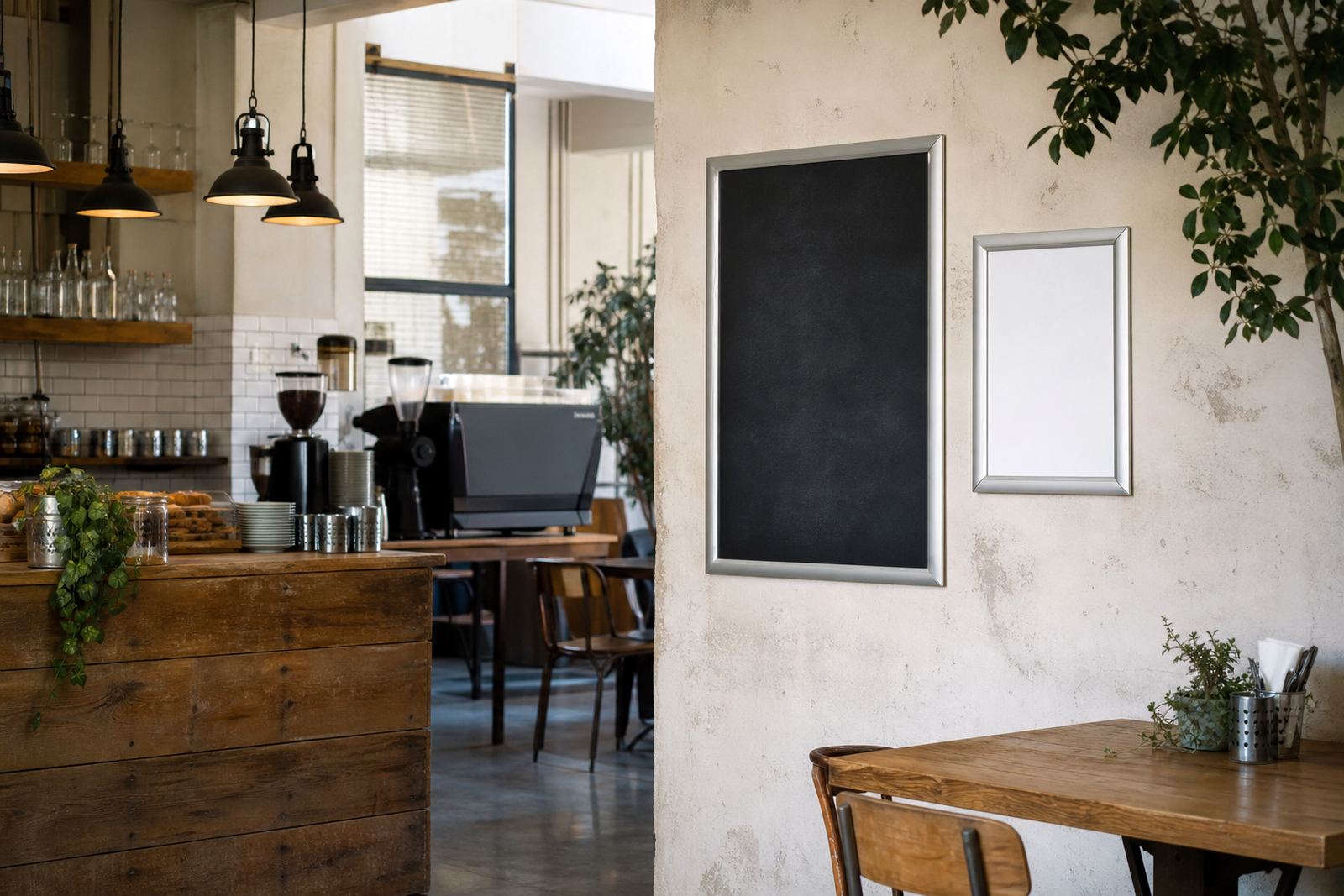
Wall menu boards are best when the menu forms part of the room rather than a temporary sign. They work in cafes, bakeries, bars and takeaway counters where customers need a quick read before ordering. A frame with a clean border keeps the menu easy to update while still looking orderly on the wall.
For venues with several service zones, one board may carry the main menu while a second holds specials, drinks or dessert choices. That split helps staff change only the section that needs it. In a busy room, fewer full reprints also means less handling, less waste and fewer chances of a misplaced line.
A few practical checks before ordering displays
The right display depends on where people read it, how often the menu changes and whether the surface is indoors or exposed to weather. A takeaway counter in Milnerton may need a different setup from a wine bar in Stellenbosch or a fast lunch spot in Gqeberha. The size, mounting and print finish should match the pace of service.
- Measure the visible area, not only the wall opening
- Decide whether staff will change the sheet daily or weekly
- Choose anti-glare covers where glass reflections are a problem
- Allow space for courier packaging if the frame travels nationwide
These guides are meant to narrow the field before the listing cards are opened. They help buyers compare the main formats without guessing which frame belongs where.