
Where a chalkboard earns its place
A chalkboard fits where the menu changes often and the message needs a quick handover. That usually means breakfast specials, soup boards, daily cakes, lunch add-ons and takeaway counters where one staff member needs to update a line before the next rush.
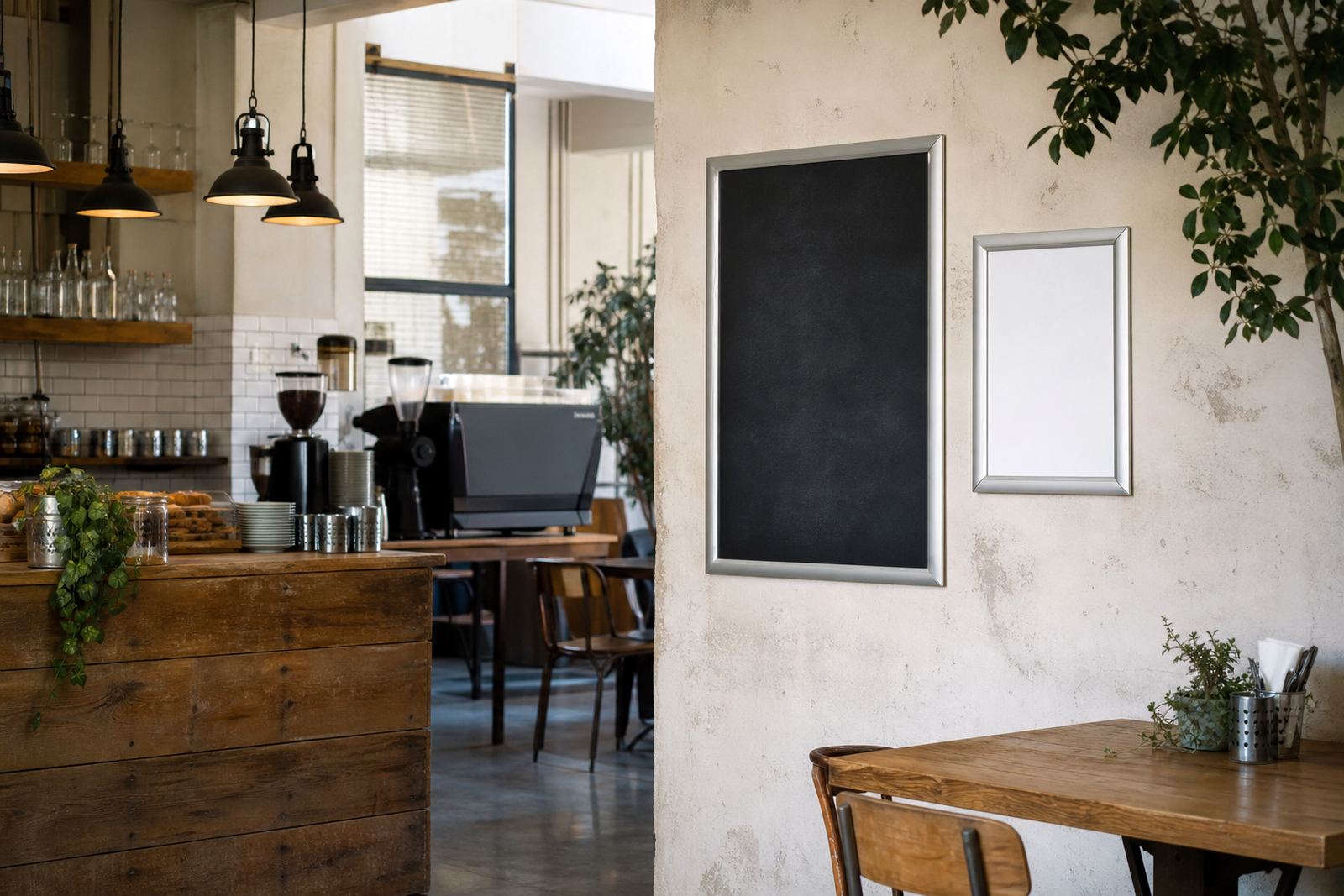
In a restaurant or cafe, the board can sit near the door, beside the till, or on a wall where guests pause before ordering. In Cape Town, Durban or Gqeberha, where humidity can affect some finishes, it helps to use a board and frame that can handle regular wiping and a clean edge around the writing area.
Pairing chalkboards with snap frames
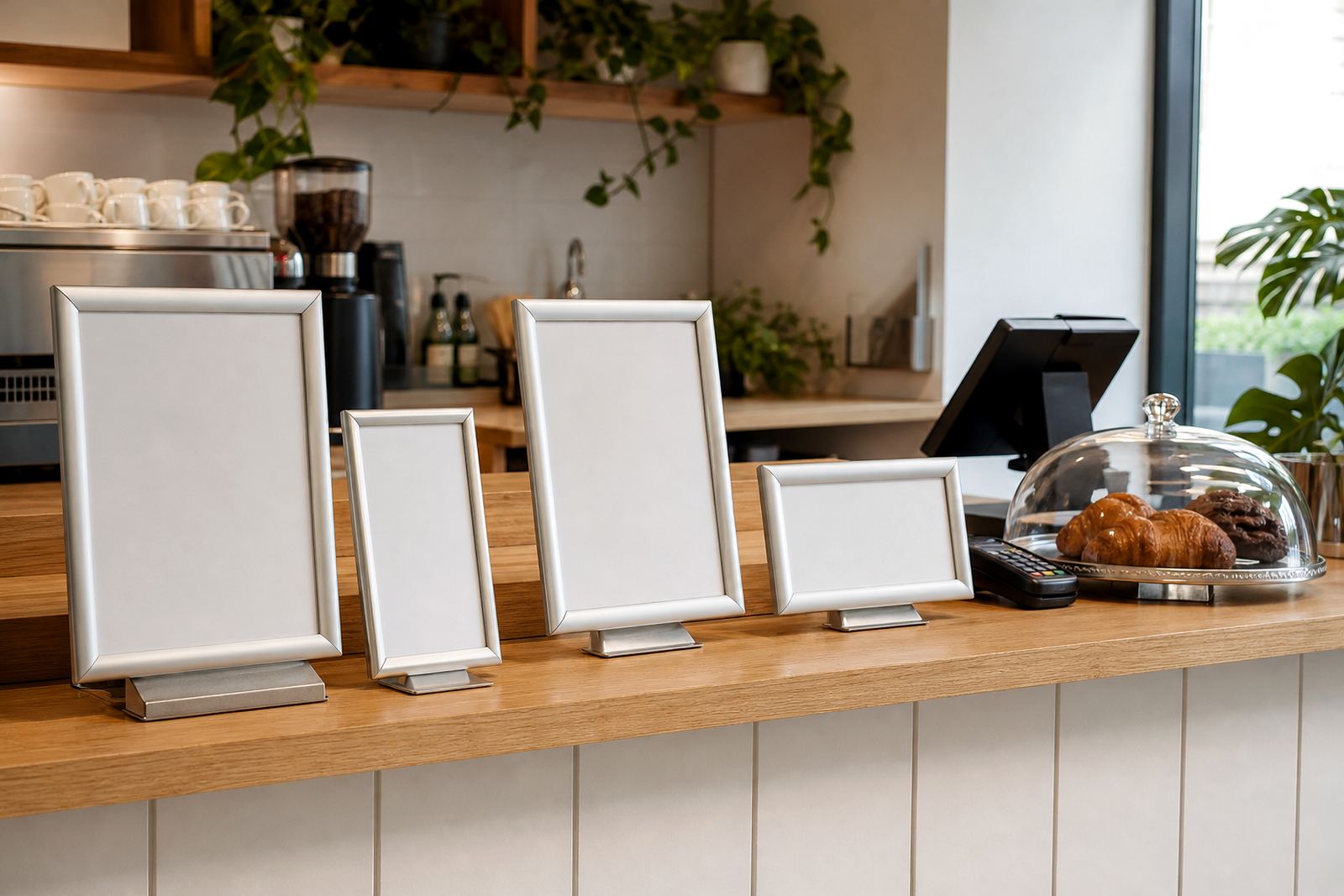
Chalkboards do not need to carry every item on their own. A printed menu in an A4 or A3 snap frame can hold the fixed list, while the chalkboard covers daily items, coffee specials or limited stock lines. That keeps the layout readable and stops the board from turning into a crowded wall of notes.
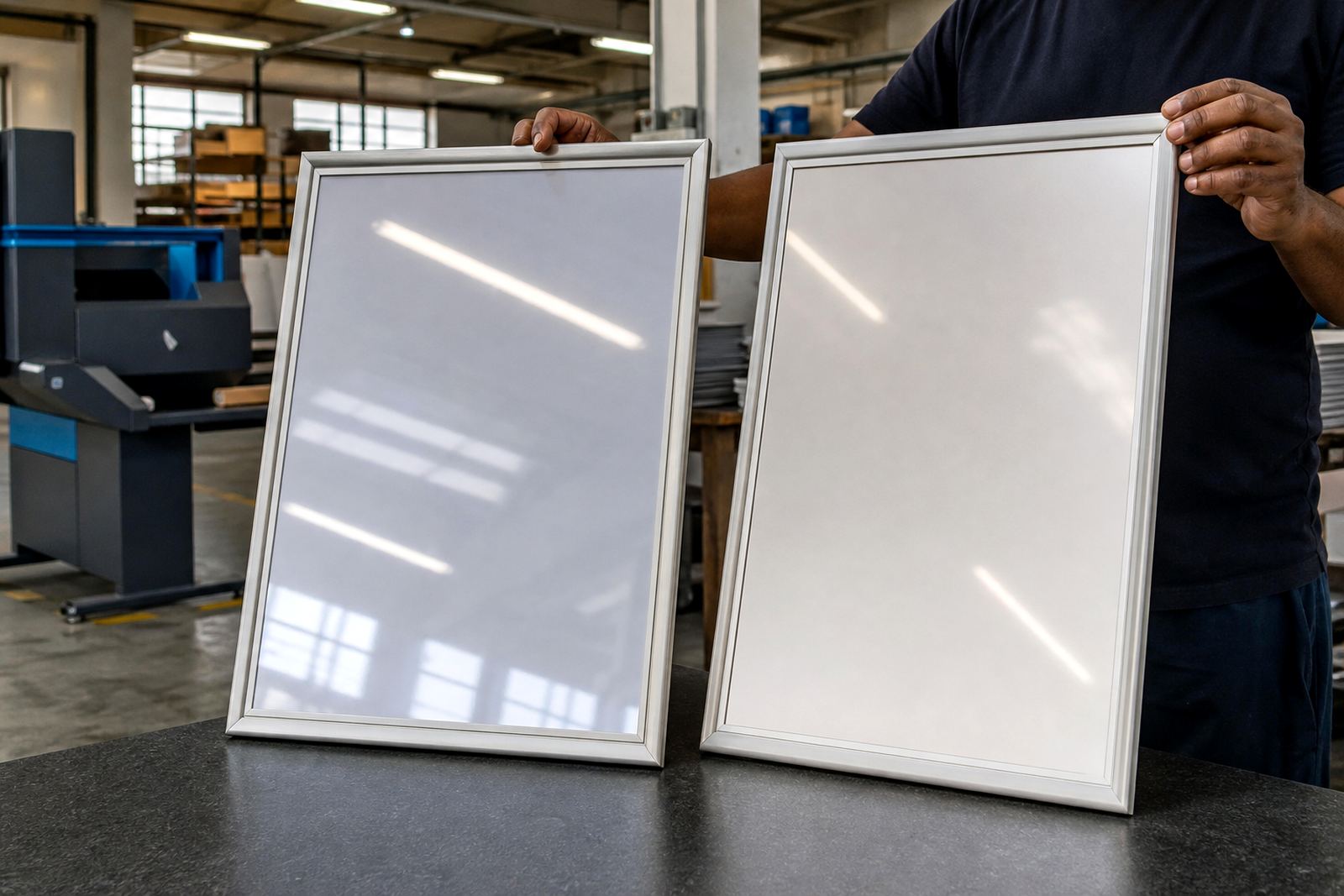
A snap frame with an anti-glare cover works well near windows and service hatches. Aluminium profiles suit wall mounting and window mounting, and an A-frame stand can sit at the entrance or pavement edge where permitted by the local municipality.
- Use the chalkboard for the moving items only.
- Keep fixed pricing on printed inserts.
- Match the board size to the counter or wall space.
- Leave space for staff to write in a steady hand.
Sizes, placement and the first sketch
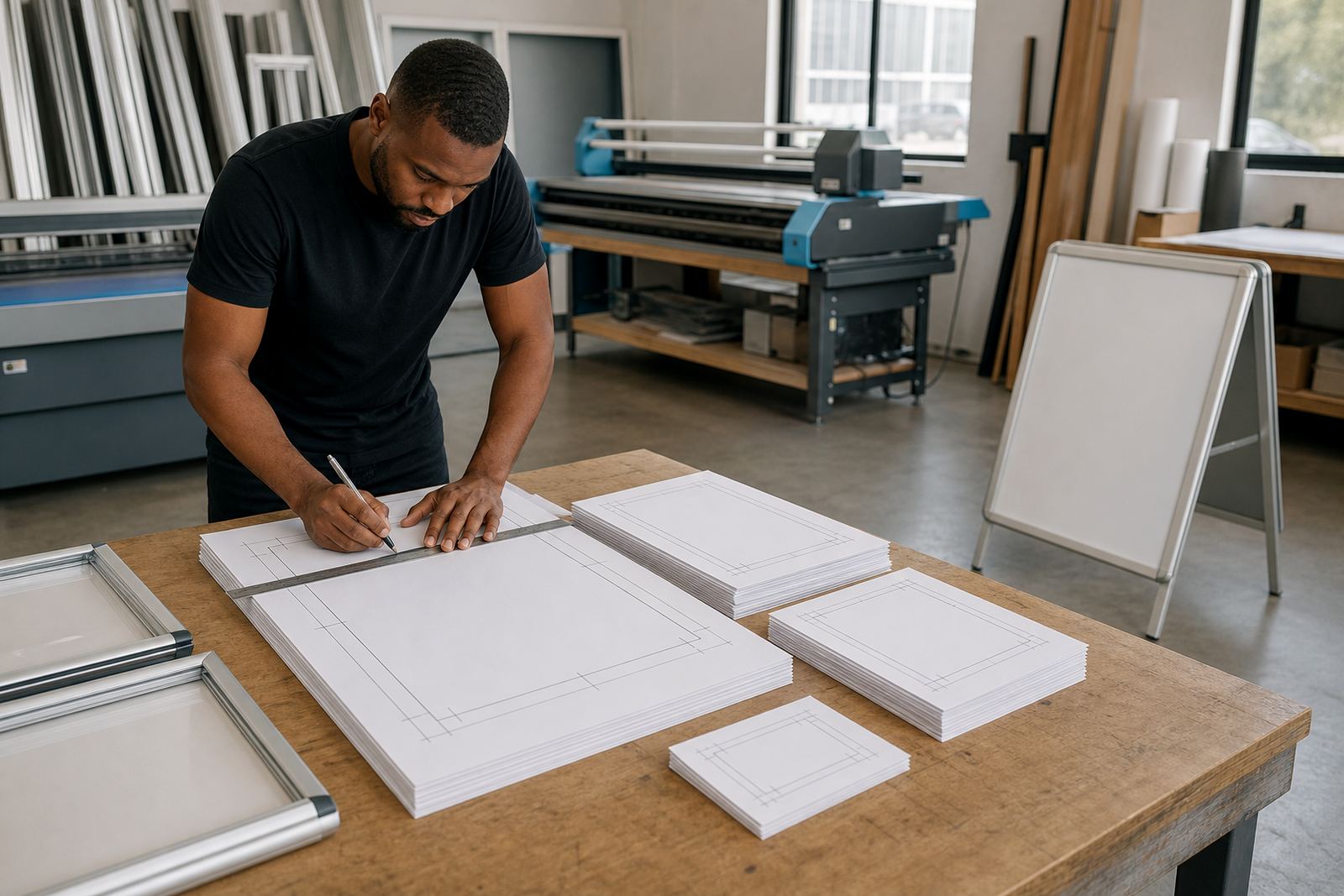
Before a board is made up, measure the wall, counter or pavement spot in metres, then decide what the customer needs to read from a few steps away. A smaller board can work for coffee counters and bakeries, while a larger panel suits burger bars, delis and venues with a wider daily offer.
A4 and A3 templates are often enough for printed inserts, but the chalkboard itself should not be forced into a narrow space where the writing becomes cramped. If the board is going into a takeaway shop in Bellville or Milnerton, check sightlines from the queue, the till and the door at the same time.
- Measure width, height and mounting height.
- Confirm whether the board hangs flat or folds out.
- Check how much space the marker or chalk needs.
- Allow for cleaning, refilling and daily changes.
What to write, and what to leave off
A good chalkboard keeps the wording short and useful. Specials, sizes, add-ons and a clear call out for the day can live on the board, while full allergens, full ingredients and long item descriptions stay on printed menus. That split helps staff update the board without rewriting half the service list.
Blackboard marker gives a cleaner look for many hospitality spaces, though traditional chalk still works for a softer finish. If the board sits in a bright room or near a window in Stellenbosch or Paarl, thicker lettering and fewer flourishes usually read better than decorative script.
- Use one heading for the day’s special.
- Keep prices aligned in a neat column.
- Write in short lines rather than long sentences.
- Leave room for the next update without overcrowding.
Printing support around the board
Chalkboards work better when the printed side is tidy. Menu resizing, menu typesetting and proofing keep the fixed sections clean, while laminated menu prints and poster insert printing help where a board sits with a frame beside it. If the menu changes by season, short run printing can carry the stable items while the board handles the rest.
Colour matching matters when the board sits next to branded walls, window graphics or a printed price list. In busy cafes and bars, that visual consistency makes the space look settled without taking away the hand written feel of the board itself.
Maintenance in a busy South African kitchen
Chalkboards need ordinary care, not special treatment. Wipe them down with the right cloth, keep the writing surface free of grease and steam residue, and check the frame for marks where hands or tray edges have rubbed against it. In coastal towns, a little extra attention helps keep the frame and fittings looking clean.
Courier packaging matters when boards or frames move between branches in Cape Town, Johannesburg, Durban and Gqeberha. If the board is being installed in more than one site, label each piece clearly so staff know what goes where and the right board lands at the right counter.
- Clean the board before each service change.
- Store spare inserts flat and dry.
- Check hanging points and stand legs regularly.
- Keep replacement writing tools close to the board.