
Start with where the stand will live
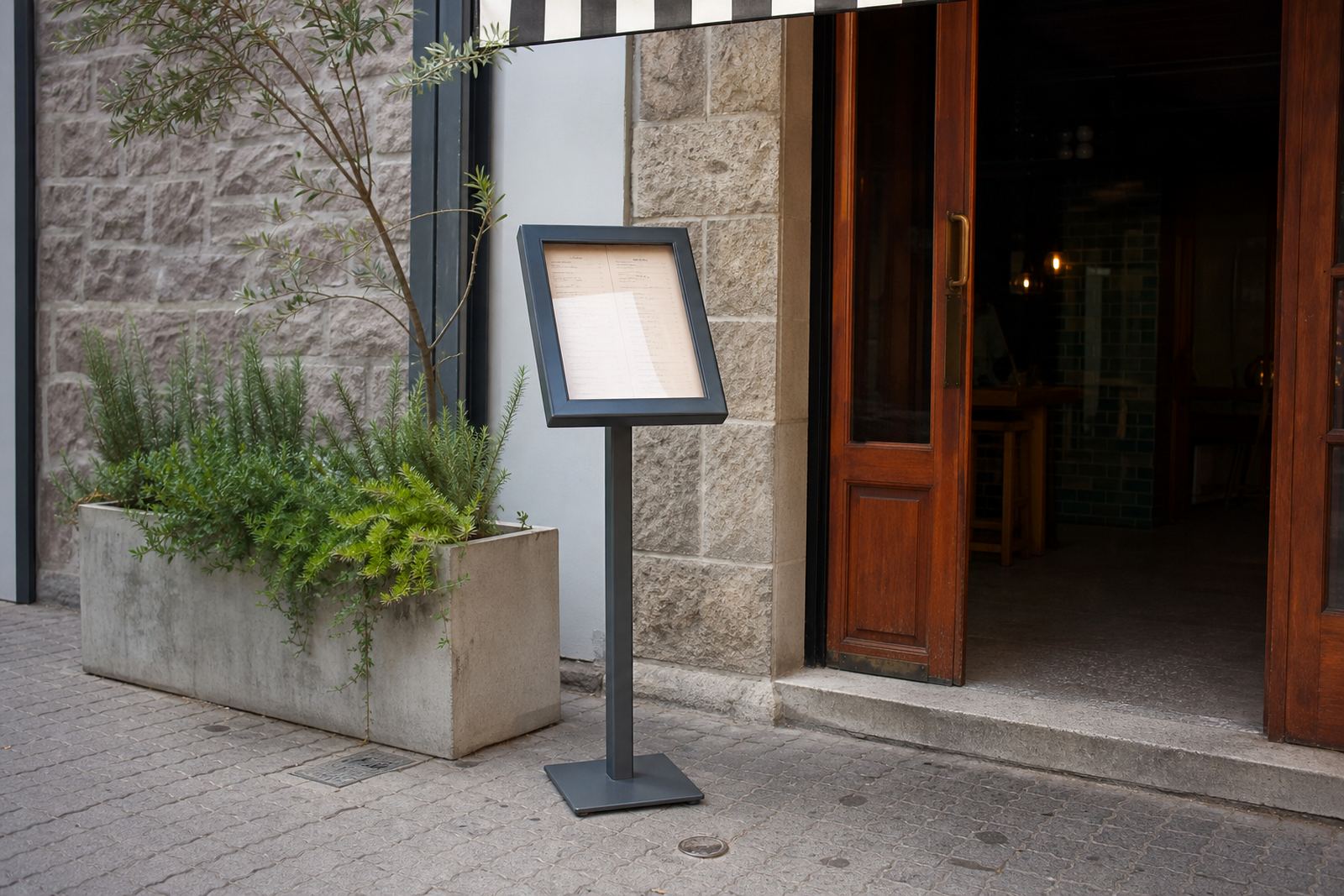
A pavement board near a café entrance faces wind, foot traffic and the odd knock from a chair or trolley. Inside a foyer or at a counter, the stand can be lighter and easier to move, while a coastal site in Cape Town may need firmer hinges and finishes that cope better with salt in the air.
Think about the ground first. Smooth tiles, rough paving, a covered walkway or a spot near a door all change how stable the frame feels. If staff need to shift it through the day, the weight must be manageable, but not so light that the board skids across the floor.
Pick the format that suits the message
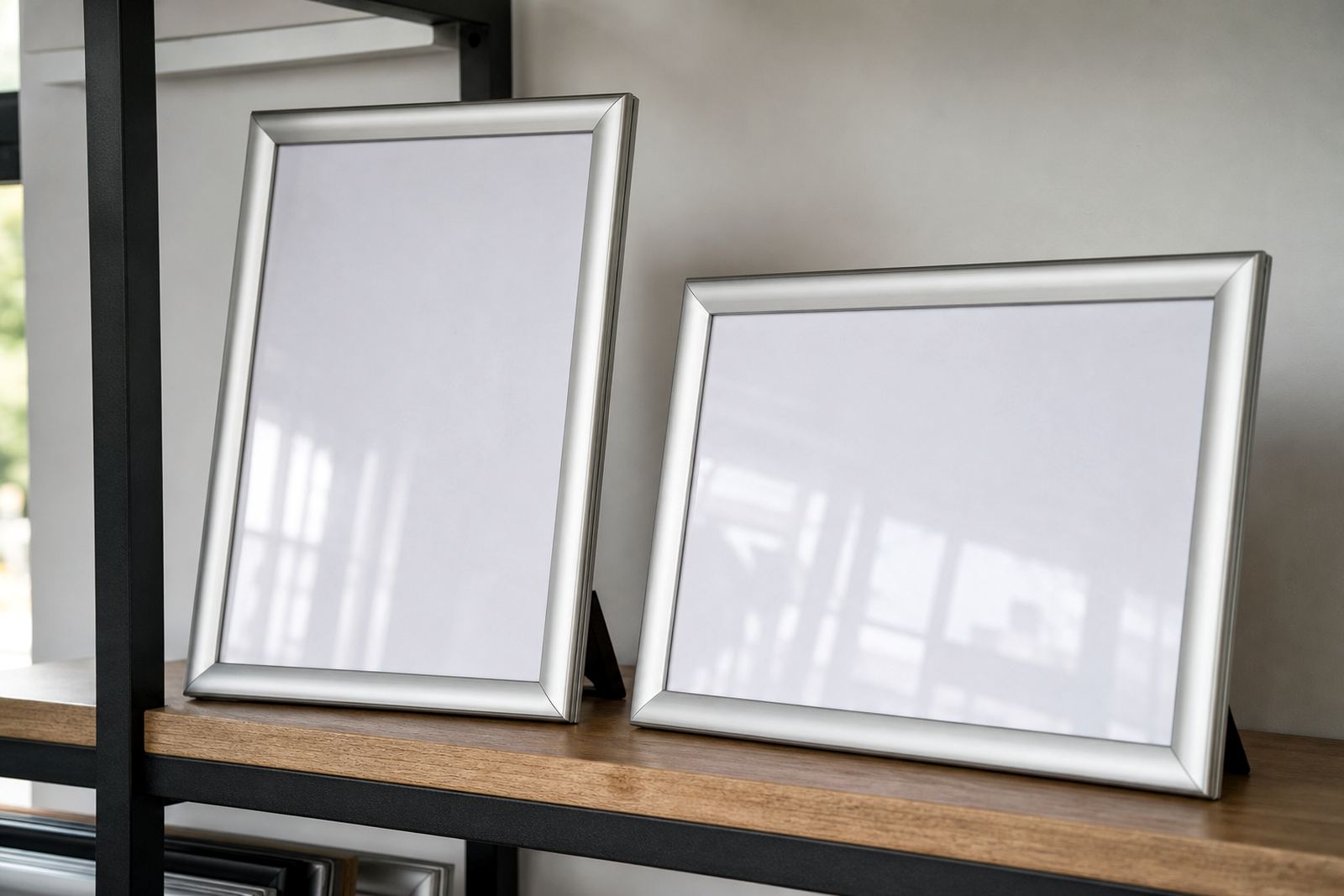
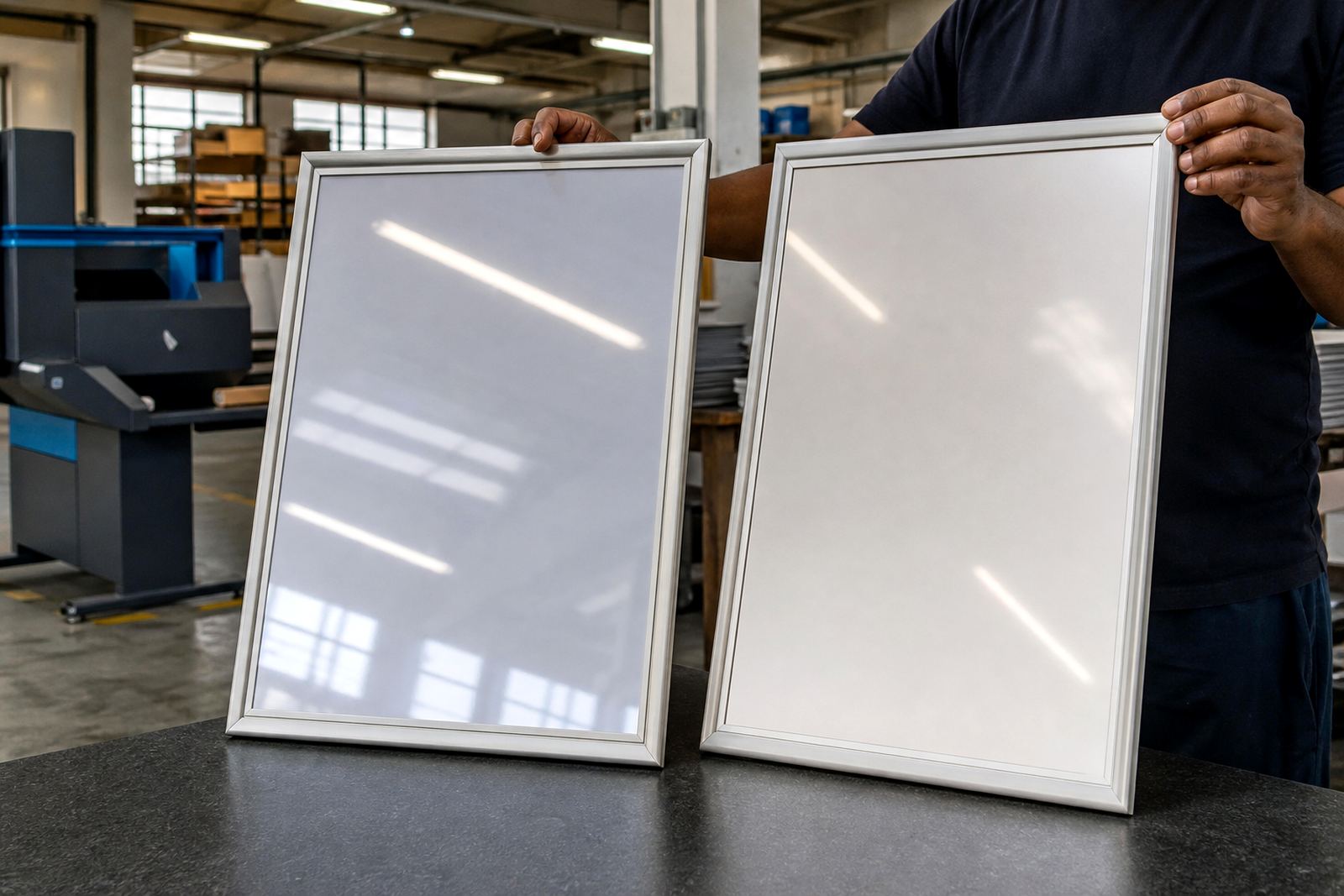
A4 works well for compact offers, table specials and short notices. A3 gives more breathing room for larger headings, price lines and clearer reading from a few metres away. For menu boards that carry several items, the larger format often keeps the layout cleaner and easier to update.
- A4: useful for narrow entrances, quick specials and smaller menus.
- A3: better when customers need to read from the sidewalk or queue.
- Double-sided boards: useful when people approach from both directions.
- Single-sided boards: handy for wall-facing spots or narrow walkways.
Menus that change daily usually work better with a layout that leaves space around each item. Crowding too much text onto one insert makes the stand look busy and the prices harder to scan.
Frame parts that make a daily difference
Good snap frames use aluminium profiles that open and close along the edge, so inserts can be changed without tools. Anti-glare covers help when sunlight hits a window display or an outdoor stand, and they reduce the shine that can make text hard to read. On a windy street, a firmer back panel and a weighted base are worth paying attention to.
Check the hinge action too. If the frame pinches too hard or feels loose, daily use becomes awkward. For a restaurant team changing breakfast, lunch and evening inserts, the action should feel steady with no fighting the corners.
Choose the right style for your frontage
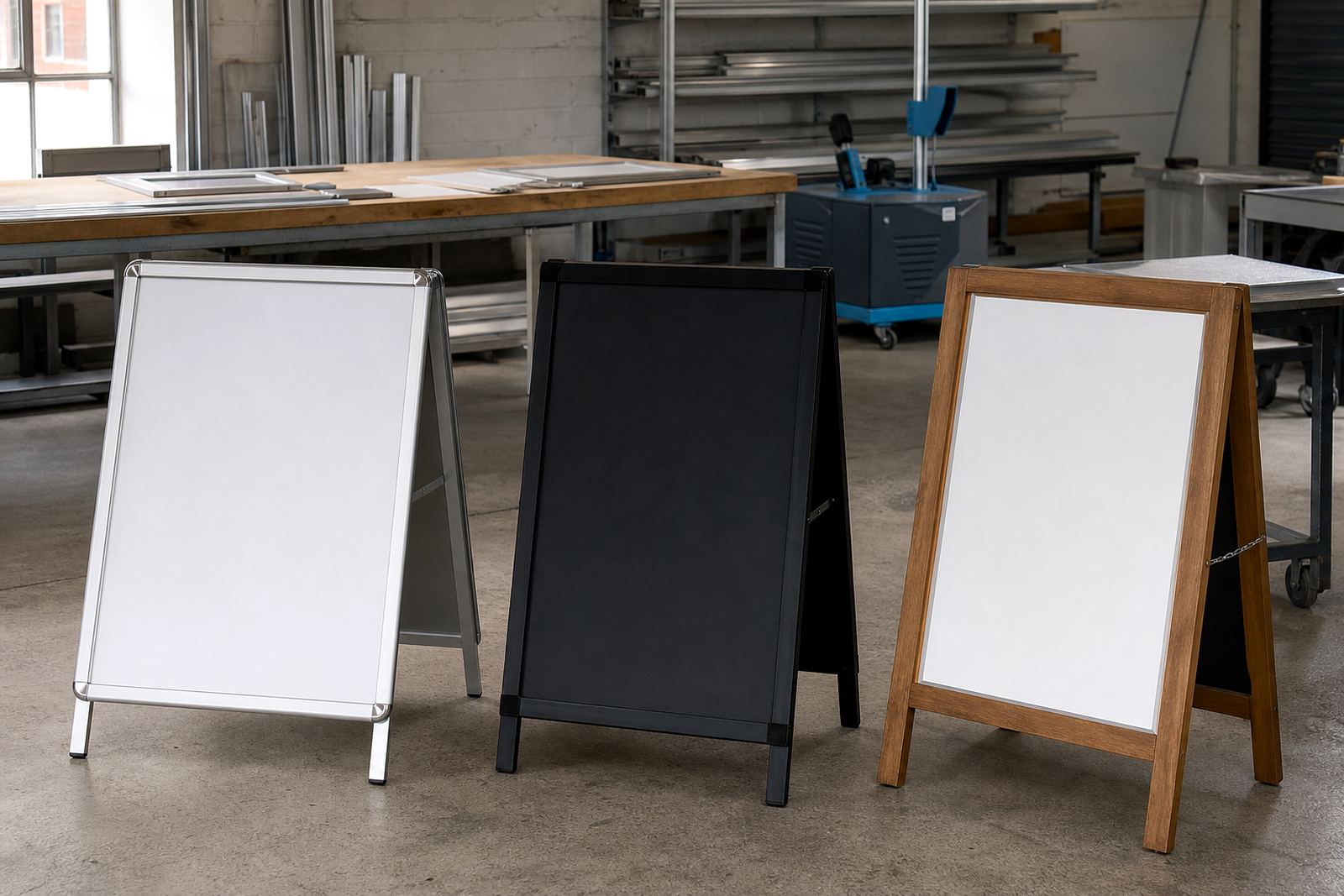
Different sites need different stand styles. A chalkboard suits handwritten offers and changing drinks lists, while a snap frame suits printed menus that need clean edges and a sharper look. Some businesses use a combination: a chalkboard for the daily special and a snap frame for the full menu.
- Chalkboards suit short handwritten notes and quick price changes.
- Snap frames suit printed menus, cleaner branding and repeated updates.
- Window mounting helps when floor space is tight.
- Wall mounting keeps the board fixed near the entrance or counter.
Where the frontage is narrow, a wall board can keep the path clear. Where the menu needs to face people walking past, a folding stand gives better visibility and can be moved to catch more eyes at lunchtime.
Plan the print before the stand arrives
Printing and frame size should be planned together, not one after the other. A menu sized for A4 will not sit neatly in an A3 board without new margins and spacing. If the menu needs multiple versions, short run printing and menu resizing can keep the set tidy across breakfast, lunch and specials.
For clear results, keep the text blocks balanced and leave enough space around prices, headings and product names. Laminated menu prints help with handling, and poster insert printing works well where the board carries a larger promotion or a photo-based offer.
A quick checklist before you place the stand
A short check saves frustration once the stand is on site. It also helps the printed insert fit properly, which matters when staff are changing boards between service periods.
- Measure the available floor or wall space in millimetres.
- Confirm whether the board will sit indoors or outdoors.
- Decide if one-sided or double-sided viewing is needed.
- Choose A4 or A3 based on reading distance.
- Check whether the menu will be handwritten, printed or both.
- Allow for courier packaging if the stand is going to another city.
In busy branches across Cape Town, Stellenbosch, Johannesburg, Durban and Gqeberha, a consistent format helps staff update menus with less fuss. It also keeps the same look across different counters, which matters when customers move between rooms or queues.
When a folding stand is the better call
An A-frame suits businesses that change offers often and need the menu to sit where people naturally look. It works well for restaurants, cafes and takeaway counters that want something movable, readable and easy to refresh. For outdoor specials, the stand can be positioned at the right angle without fixing it permanently to the wall.
If your menu changes by season or by time of day, the frame should support that rhythm. The best choice is usually the one that keeps print changes neat, keeps the board steady, and does not make staff wrestle with corners before service starts.