
Start with the shelter above the frame
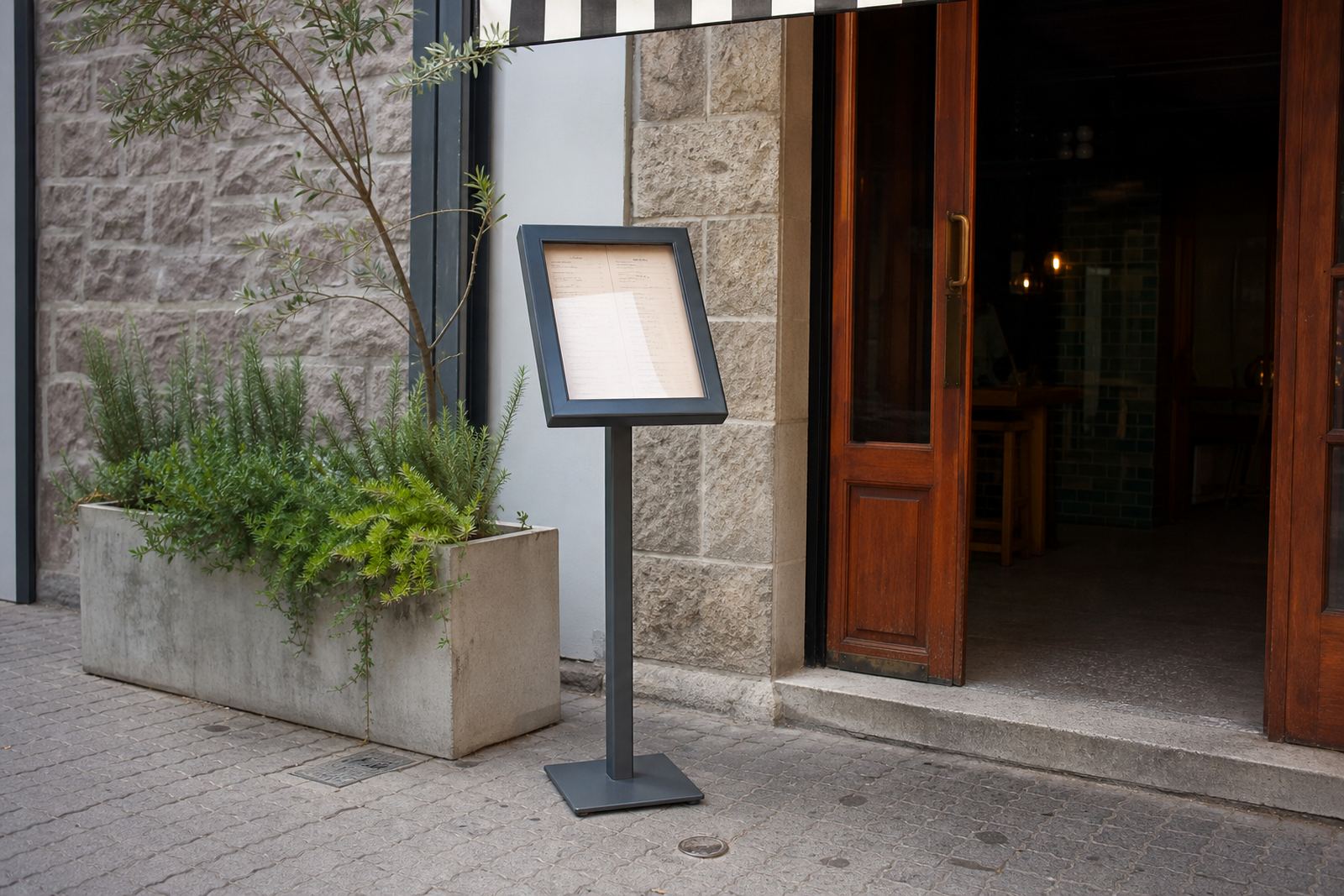
Covered outdoor areas are not the same as indoor service points. A roof edge, awning or verandah can block direct rain, but side wind still carries moisture, dust and salt into the frame. In coastal areas like Paarden Eiland, Milnerton and Gqeberha, that mix shows up quickly on unprotected metal, paper and fixings.
Check the path of water during heavy rain. If puddles form on the floor or water runs off the roofline onto the board, move the frame before fitting the prints. A wall mounted unit needs enough clearance so water does not sit behind it. An A-frame needs a firm surface that stays level after washing and foot traffic.
- Look for roof run-off, not only direct rain.
- Check side wind near corners, gates and passageways.
- Keep printed inserts away from splash zones.
- Allow space for staff to open and close the frame.
Choose the right frame size for the viewing distance
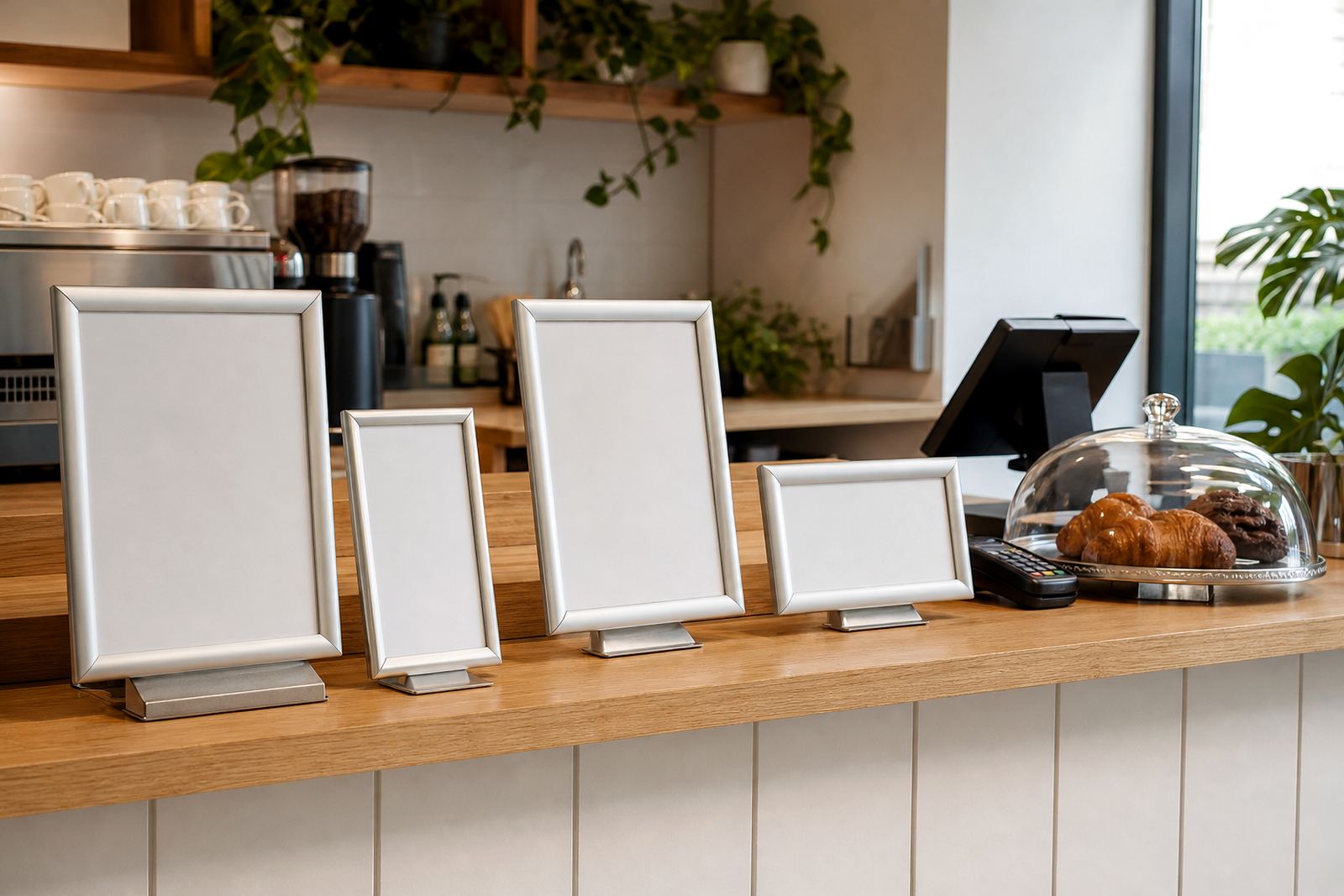
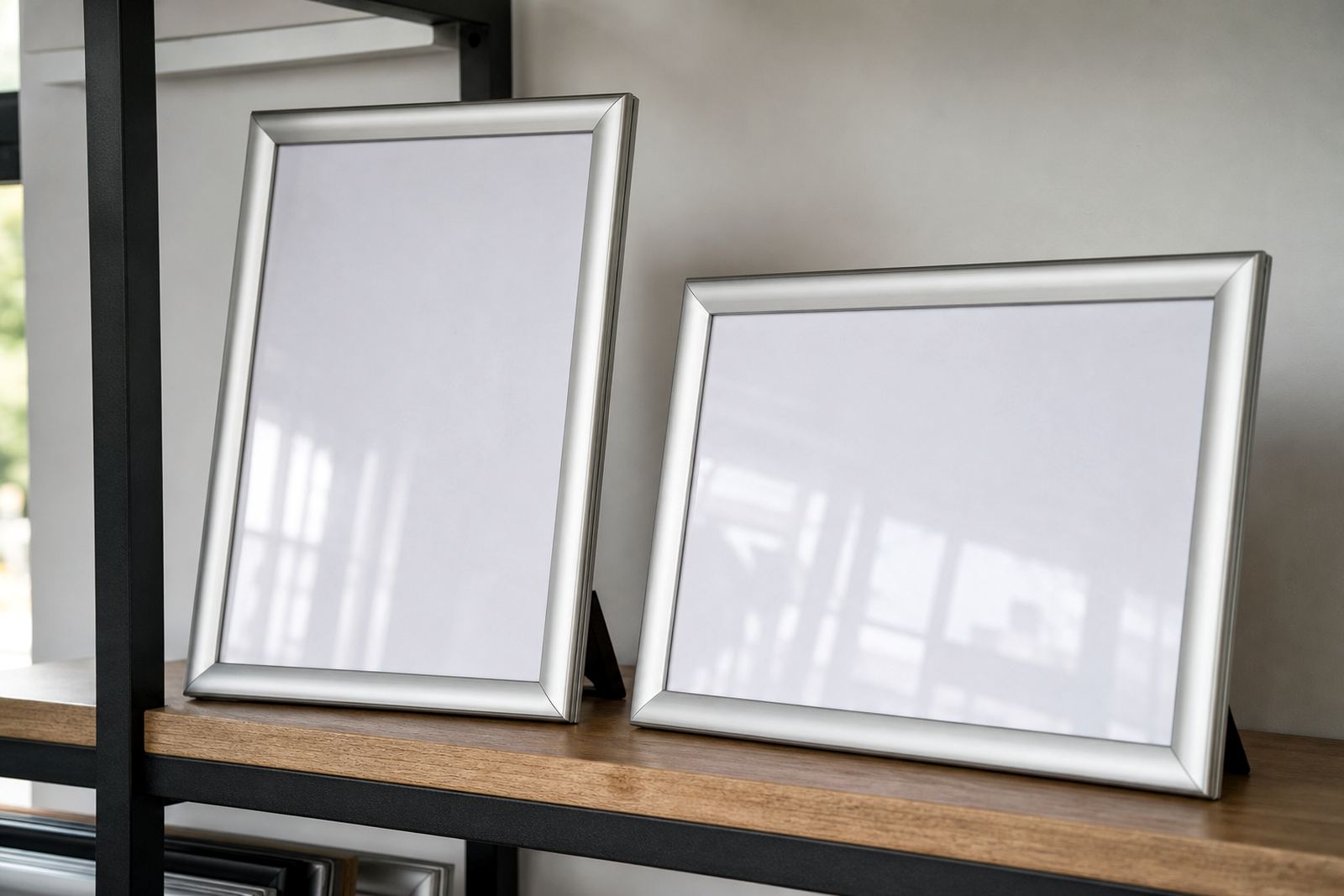
A4 menu inserts suit tighter counters and smaller beverage lists. A3 works better where people stand a little farther away, such as takeaway windows or queue points. If the board faces a busy walkway, larger type and simpler layout help more than extra decoration.
For covered exterior use, the aluminium profile should close evenly on all four sides. That keeps the cover flat and helps reduce flutter in light wind. Anti-glare covers are useful where daylight falls across the menu at an angle, especially in the afternoon. Clear covers can still work, but reflections are harder to manage when the sun shifts.
- A4 for short lists, specials or tight wall space.
- A3 for wider reading distance and busier displays.
- Anti-glare covers help where sunlight is uneven.
- Simple type sizes improve speed at the counter.
Fixing methods that cope with wind and foot traffic
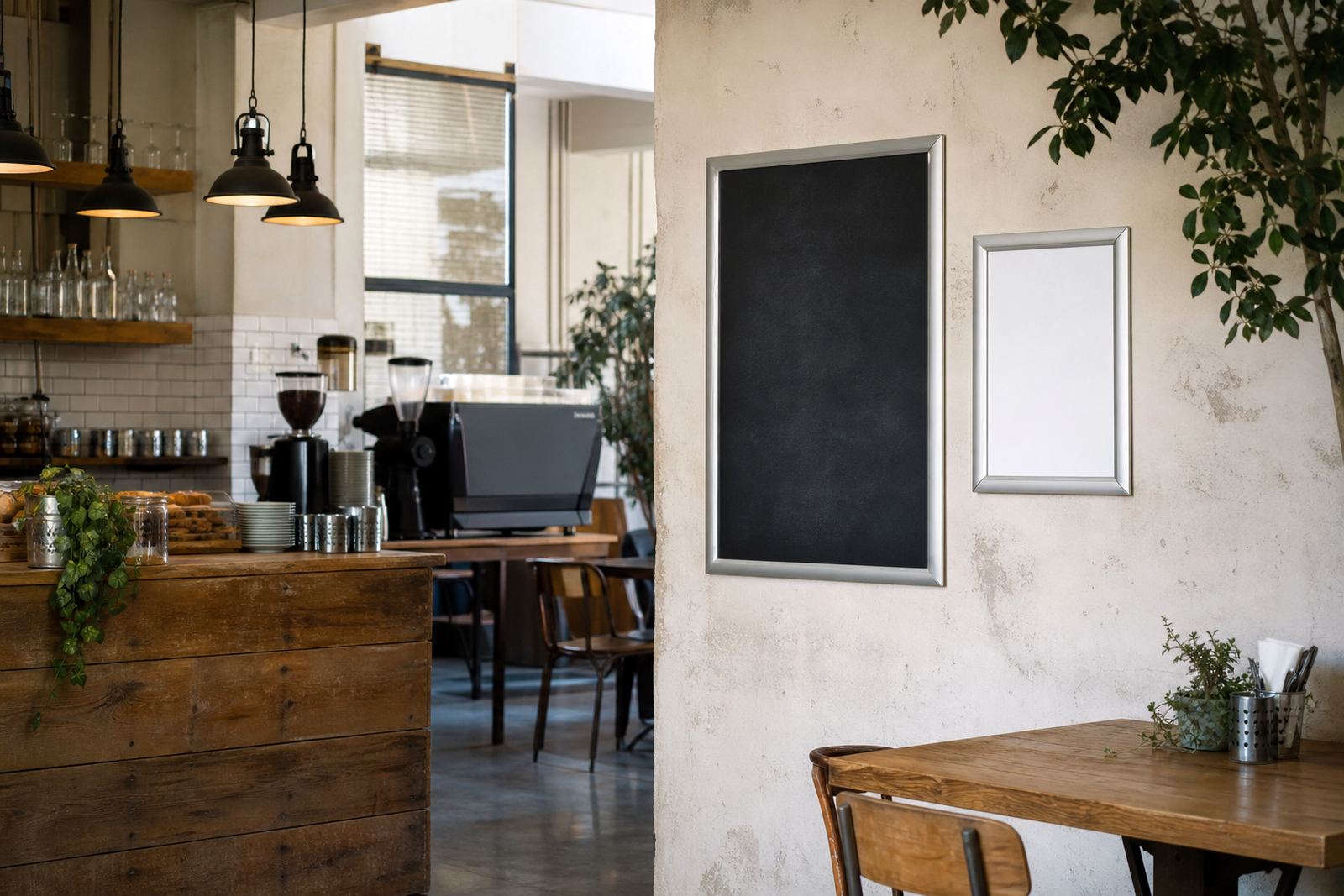
Wall mounting is best when the menu must stay in one place and remain clear of passing trays, bags and mop buckets. Use anchors suited to the wall surface, then check that the frame sits level. If the wall has loose plaster or uneven cladding, the fixing points need extra care or the frame will twist over time.
A-frame stands suit patios and shop entrances where the menu needs to move between trading areas. The stand must open fully and lock into place. On polished tiles, a light frame can shift in wind, so a heavier base or a sheltered corner is worth planning for. If the area has cleaning hoses or frequent spillage, choose a position that keeps the legs out of standing water.
- Test the frame for wobble after mounting.
- Keep hinges and corners clear of obstruction.
- Use a position where staff can swap inserts safely.
- Check that the stand does not block access routes.
Prints that hold up better near the door
Menu prints in covered exterior areas need stronger finishing than a sheet used once indoors. Laminated menu prints help resist fingerprints, light moisture and repeated handling. Poster insert printing suits larger pricing boards or promotional panels, while shorter inserts are easier to change when items move in and out of stock.
Colour matching matters when a menu board sits near strong daylight or warm evening lighting. Reds can shift, greys can flatten and dark text can lose contrast. A proof should be checked under the same sort of light where the board will hang. If the frame sits near a kitchen pass or braai area, keep finishes clean and avoid very glossy surfaces that pick up glare.
- Use laminated prints where hands touch the menu often.
- Check colour under the lighting used on site.
- Match the print size to the frame opening.
- Keep text larger for fast reading at a distance.
Cleaning routines for dust, salt and food marks
Outdoor-facing menus collect more dust than people expect, even under cover. In a seaside strip, fine salt can settle on the cover and dull the print edge. In busy food areas, sauce marks, grease and fingerprints build up faster on the lower corners and along the opening edge.
Wipe the cover with a soft cloth and a mild cleaner that suits clear plastics. Avoid harsh solvents, because they can haze the anti-glare layer or mark the aluminium. When changing inserts, check the corners of the frame for grit before closing it. Small particles trapped inside can scratch the print or stop the snap edge from sitting flat.
- Clean covers with a soft, non-abrasive cloth.
- Remove grit before closing the snap edge.
- Check lower corners where marks collect first.
- Inspect the frame after windy or wet weather.
A quick pre-opening check for exterior menu points
A short inspection before service prevents most issues. Open the frame and confirm the insert is seated correctly. Close each edge with even pressure, then check that the cover sits flush all around. On an A-frame, make sure both sides show the same menu version and that the board is not leaning into the walkway.
Use this check when the menu stand lives near a patio, a pavement edge or a takeaway counter that faces outside air:
- Frame sits level and does not rock.
- Cover is clean, clear and properly closed.
- Print edges are straight inside the profile.
- Mounting points or legs are secure.
- Menu text can be read from the normal viewing point.
When the display needs a layout change
Menus change more often in exterior service areas than people plan for. A coffee list may stay steady, while breakfast items, specials or takeaway bundles move daily. That is where snap frames save time, because the insert changes without tools and without taking the whole unit down.
If a board needs a new size, the print layout should be adjusted before it goes to production. A4 to A3 resizing needs careful spacing, margin control and readable type. For window mounting or wall mounting, the final fit should leave enough border for the frame edge to close cleanly. When the menu becomes too busy, split it into sections rather than forcing too much copy into one sheet.
For covered exterior use, less clutter usually works better than packed tables. Keep prices legible, use clear headings and leave room for the eye to move across the page.