Start with the spot where orders are read
Look at the wall or counter first, not the artwork. A menu that sits too high, too far from the queue or under harsh light becomes hard to read, especially when the room is busy and people are turning to place an order.
For narrow service areas, a single A4 or A3 snap frame can do the job neatly. It keeps the menu close to eye level and lets you change prices or items without tools. Where the counter is wider, grouped frames create a cleaner order than a single crowded board.
- Measure the usable wall width in metres, then leave breathing space at the edges.
- Check whether the menu needs to be read from 1 metre or 3 metres away.
- Allow for glare from windows, pendant lights and polished tiles.
Single snap frame or grouped boards
A single frame suits short menus, daily specials and seasonal boards. It keeps printing simple and works well for coffee counters, dessert lists and bar service points where the offer changes often. Aluminium profiles and anti glare covers help the insert stay neat in busy rooms.
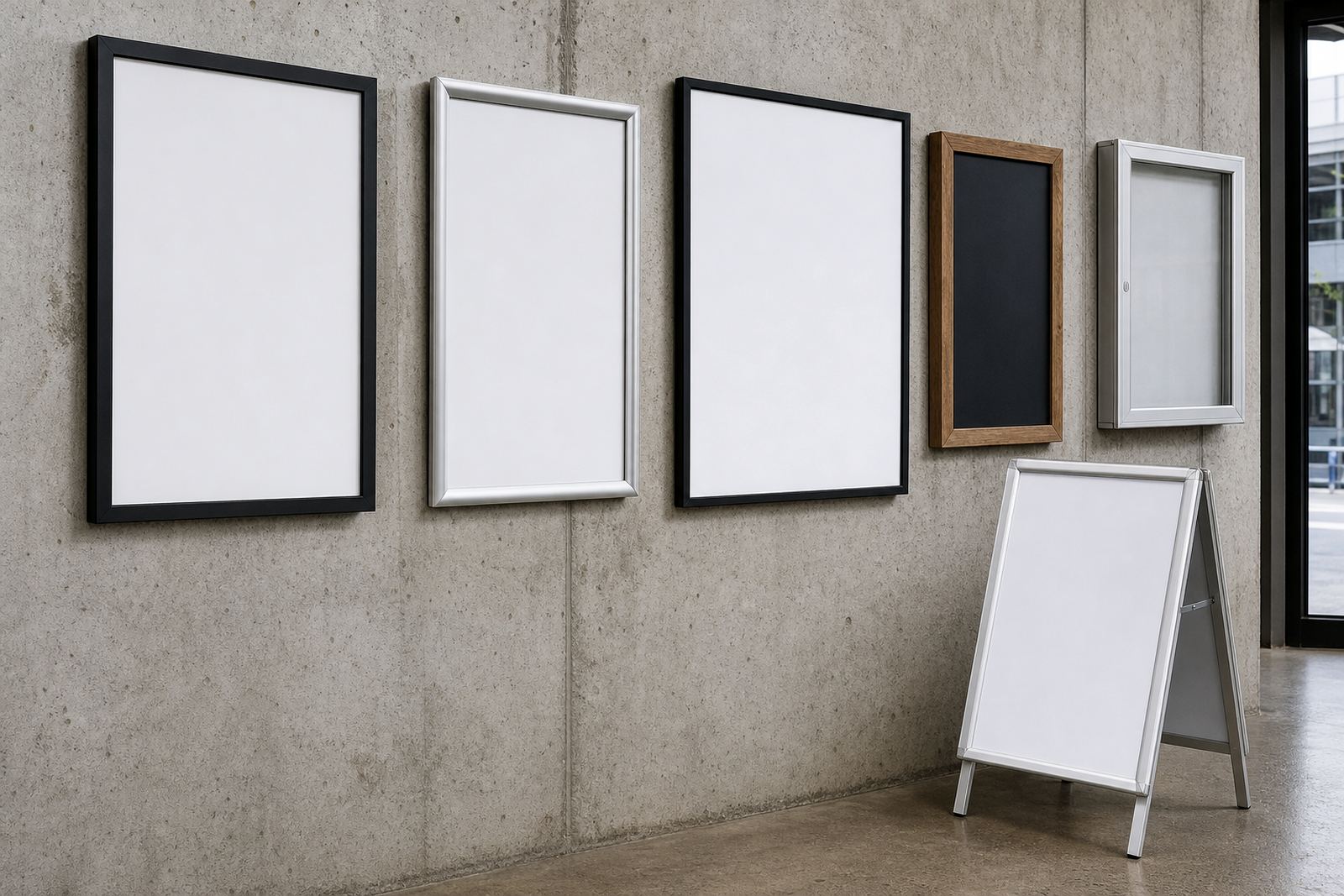
Grouped boards make more sense when the menu is split across sections such as food, drinks and extras. Three aligned A4 frames can be easier to scan than one wide page with tiny type. In a takeaway counter, that layout also helps staff point to the right section without slowing the queue.
- Use one frame when the list is short and changes often.
- Use grouped boards when categories need clear separation.
- Keep spacing even so the wall reads as one system, not a patchwork.
When a larger fixed display earns its place
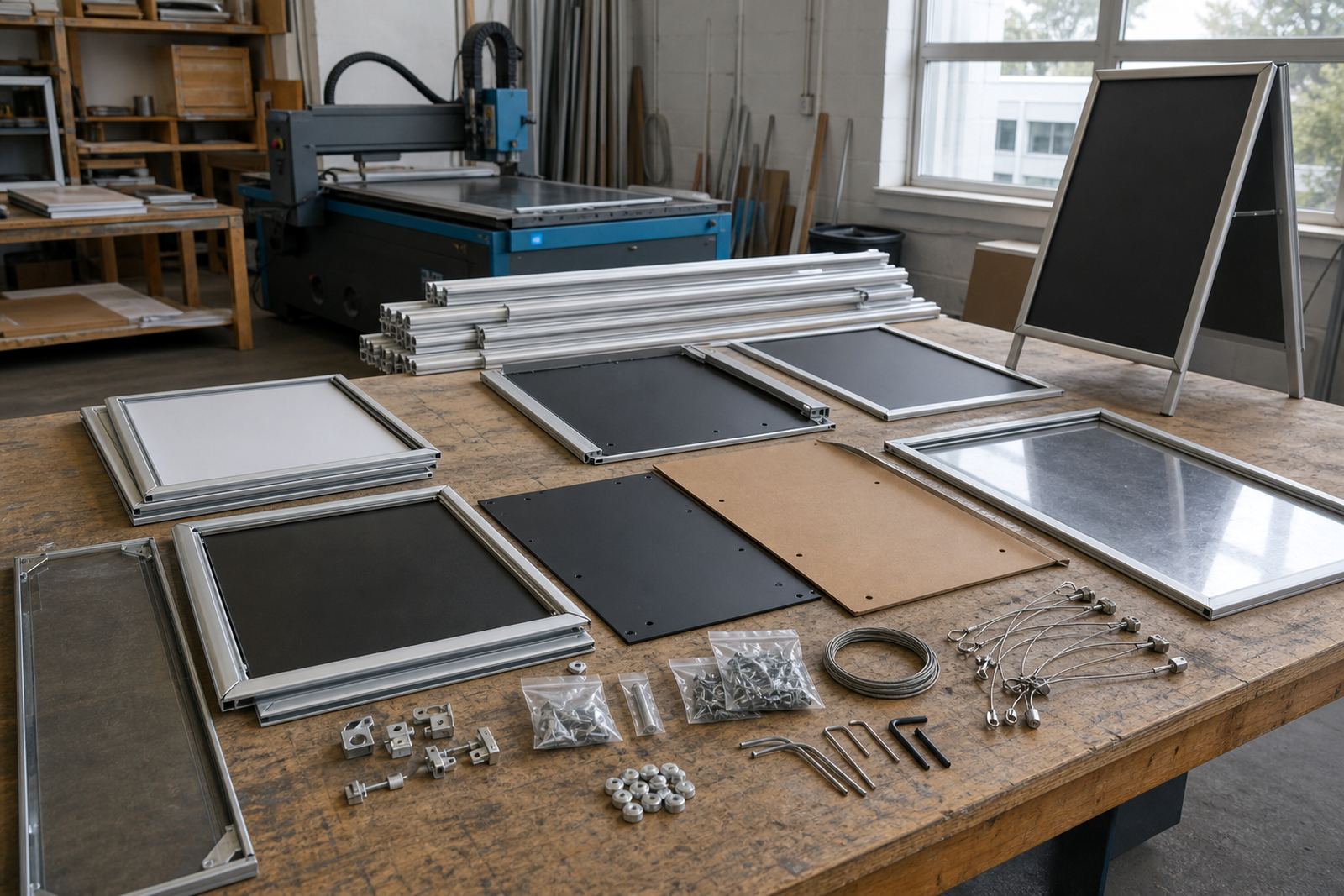
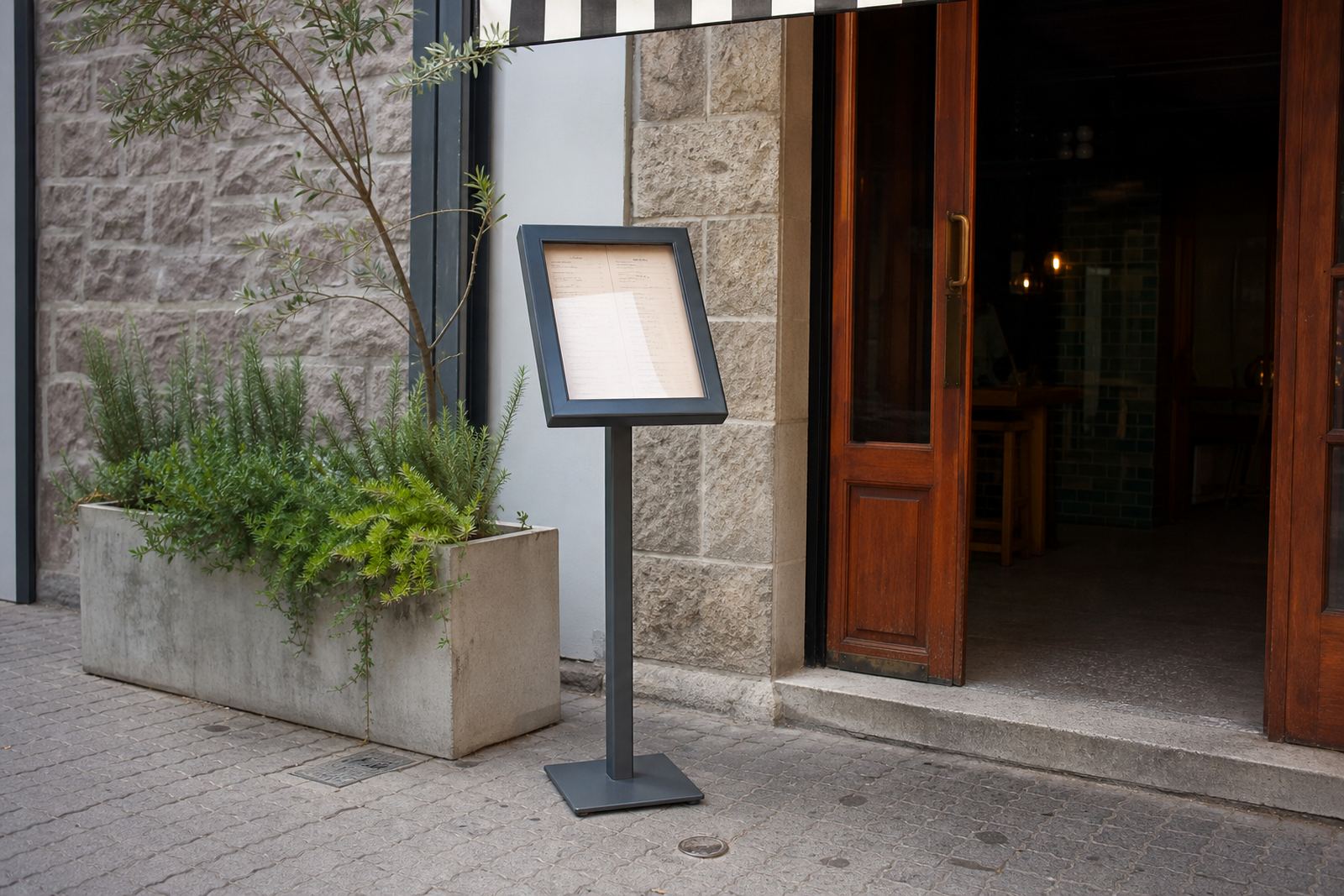
A larger fixed menu display suits venues with long menus, shared specials or a wall that carries the main order point. It can hold multiple inserts, poster panels or laminated sheets in one frame structure. That helps where the menu needs a stronger visual block and the list is too long for small frames.
These displays work well near entrances, waiting lines and window-facing counters. They can be mounted on the wall or set as a window facing board if the layout needs street visibility. For coastal sites in Cape Town or Durban, choose materials and finishes that handle humidity and regular cleaning without the frame looking tired too quickly.
Pick the size that matches the print, not the other way round
A4 is best for compact menus, specials and quick updates. A3 gives more room for sections, larger type and stronger spacing between items. If the print has to be read from a little further back, the larger size usually saves the layout from becoming cramped.
We also handle menu resizing and typesetting so the text sits properly in the chosen frame. That matters when the original artwork was built for a poster, a leaflet or a different ratio. Clean margins, proper line breaks and sensible font sizes make the insert easier to use every day.
- A4 suits specials, drinks and short lunch boards.
- A3 suits fuller food menus and busier queue areas.
- Resizing helps when an existing menu has to fit a new frame size.
Mounting choices for walls, windows and counters
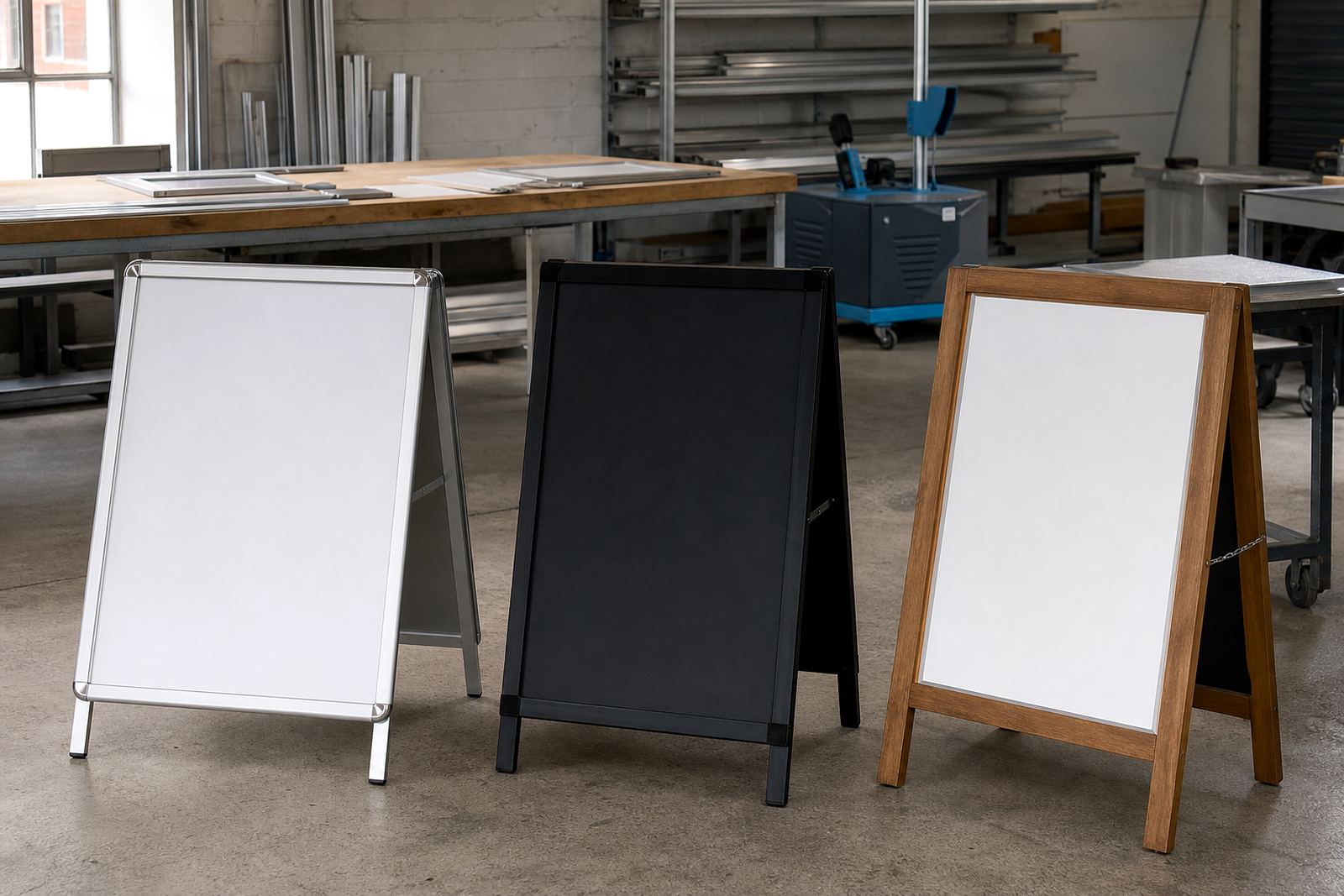
Wall mounting gives a fixed reading point and keeps the menu off the counter. Window mounting works when the front of the shop needs to carry the message to people outside as well as inside. A-frame stands are useful when the menu has to move with trade patterns or sit at the pavement edge for takeaway service.
Choose the format that suits the way customers approach the order point. A chalkboard can work for daily changes, but a snap frame is better when inserts need to be swapped cleanly and the print must stay protected. If the space changes often, a movable stand is easier to reposition than a fixed board.
A quick checklist before you settle on the layout
Once you know the space, the menu content and the reading distance, the choice becomes clearer. The right board is not always the biggest one. It is the one that keeps the menu legible, the service point tidy and the update process manageable.
- Count how many menu sections need their own space.
- Decide whether the menu changes daily, weekly or less often.
- Check if glare, humidity or traffic will affect the print.
- Choose whether the board must sit on a wall, in a window or on the floor.
- Match the frame size to the print size you plan to use regularly.
For venues in Stellenbosch, Johannesburg, Milnerton, Bellville, Paarl and Gqeberha, courier packaging helps the frames arrive ready for handling and fitting. Our contact form is the place to send dimensions, menu pages and the mounting idea, so the board can be set up around the actual space rather than a guess.