Start With The Spot It Has To Fit
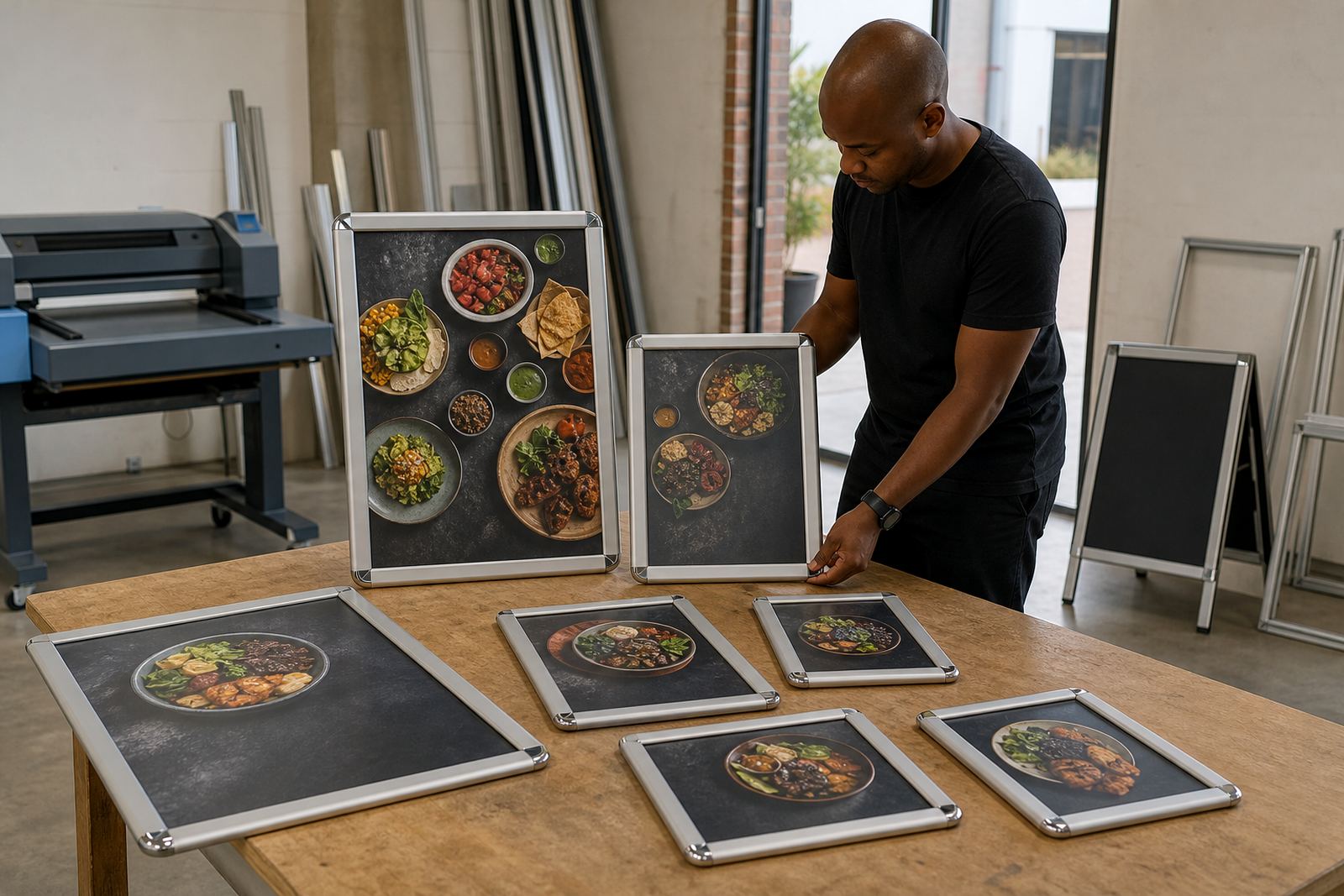
Before you decide on frame size, look at the actual place where the menu will live. A wall beside the till, a window panel facing the street, or a counter-top display all ask for different proportions and different levels of visibility. In a tight cafe near the counter, A4 often sits neatly beside specials boards and payment points. In a larger dining room or bar, A3 gives the menu more presence and helps text breathe.
Measure the usable space, not just the wall. Leave room for the frame edge, the opening flap and any nearby shelves, lights or notices. If the menu sits in a narrow passage or at eye level near a queue, slimmer framing usually works better. If the same board must be read from a few metres away, A3 is the safer choice.
- Measure the width and height of the open area
- Check how close customers stand when reading it
- Note any handles, rails, switches or displays nearby
- Decide whether the frame must hang portrait or landscape
A4 For Tight Menus And Quick Reads
A4 suits shorter menus, drinks lists and day-time specials where the customer only needs a few items at a glance. It works well for coffee counters, dessert inserts and takeaway menus with clean pricing. When the design uses generous spacing and a strong heading, A4 can still look neat and easy to follow without taking over the wall.
This size also helps when your menu changes often. A4 insert sheets are quicker to reprint, easier to sort and more economical for short runs. For a menu that changes by breakfast, lunch and evening service, the smaller format keeps each version manageable. If the print includes photos or long item descriptions, though, A4 can feel crowded very fast.
- Best for shorter item lists and specials
- Good for window displays and compact counter walls
- Works well for laminated menu prints and poster inserts
- Handy when frequent menu updates are part of service
A3 When The Menu Needs More Breathing Room
A3 is worth choosing when the menu has more sections, longer item names or several prices that must be read without strain. It gives the type more space, and that makes a difference in bar areas, bistros and busy service counters. If the frame is mounted a little higher, or viewed from a queue, the extra size helps the layout stay clear.
For wall menu boards, A3 also gives room for category breaks, icons and larger headings. That is useful when a venue wants one board for food and another for drinks, or when the menu needs to be visible across a wider room. In coastal areas like Cape Town, a larger frame can also make it easier to keep the print protected under an anti-glare cover while still reading it in bright light.
A3 works best when the artwork is prepared properly. If text is lifted from an older leaflet or an image file, the layout can lose clarity once enlarged. Clean typesetting, checked spelling and correct line spacing matter more as the frame gets bigger.
Wall, Window Or A-Frame: Pick The Mount Before The Size
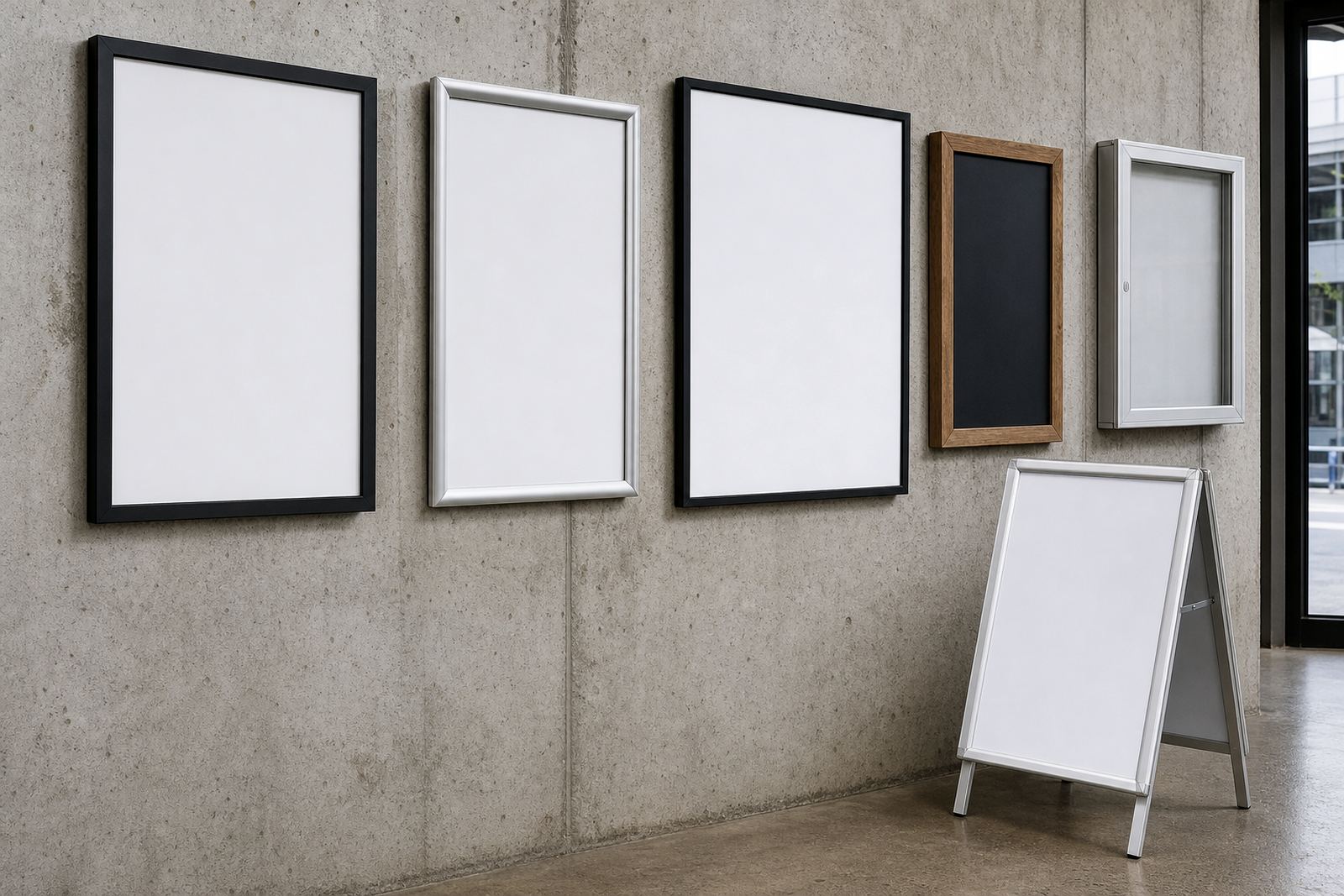
The mounting method shapes the size choice almost as much as the menu content. Wall-mounted frames are usually the most straightforward for indoor service areas. Window-mounted frames need enough visibility from outside and enough glass area around them so they do not look squeezed. A-frame menu stands need balance, legibility and enough footprint to sit safely on the floor without crowding the walkway.
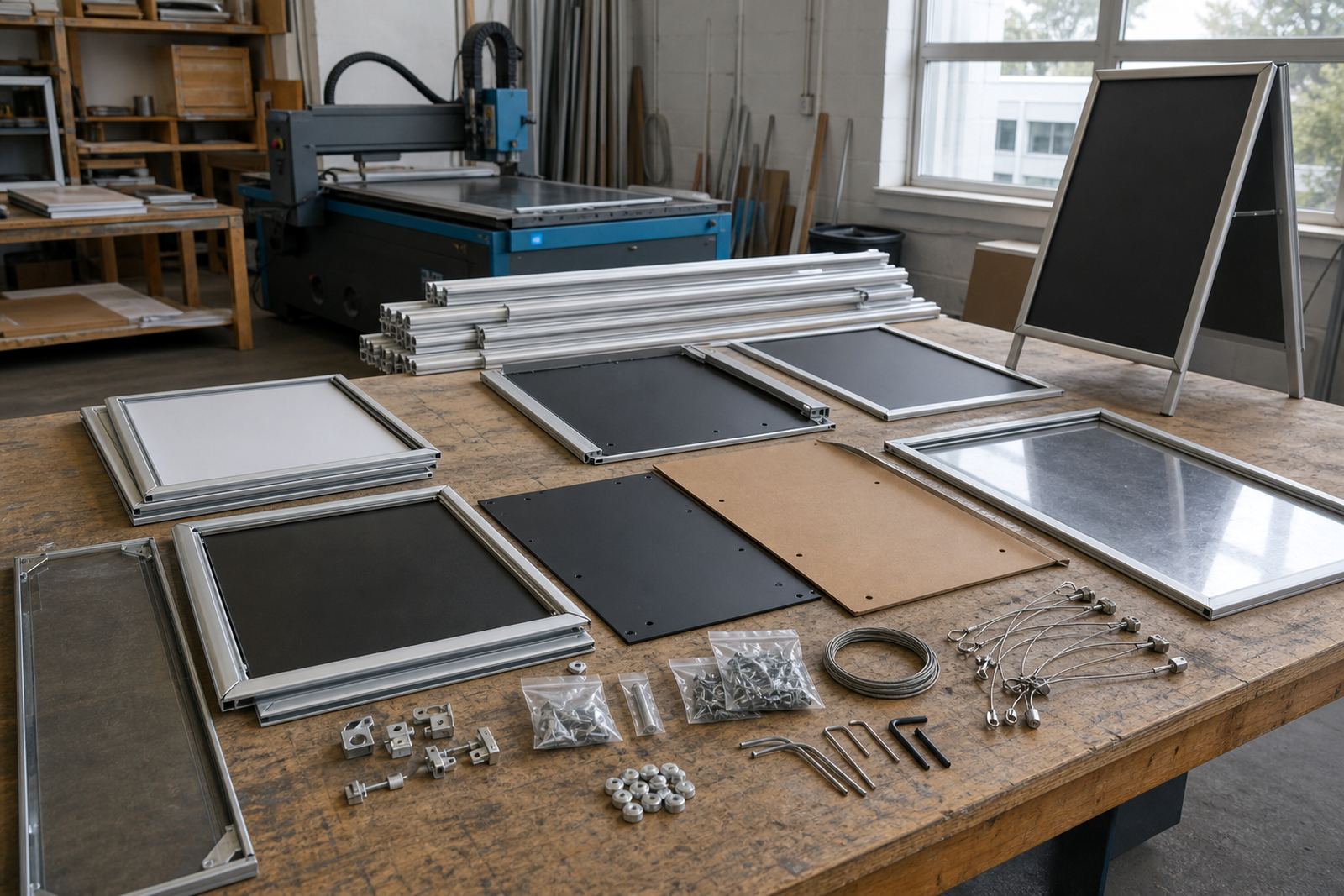
If the board is for a pavement-facing entrance, think about wind, foot traffic and how often staff must move it. A-frame stands usually work better with A3 panels because the larger face is easier to read from a distance. For indoor counters, A4 can be tidy and practical where space is limited. Aluminium profiles are common for both sizes because they hold the print flat and make poster changes much simpler.
- Wall frames suit fixed menus and cleaner interiors
- Window frames need strong contrast and anti-glare covers
- A-frame stands should allow enough viewing distance
- Choose the mounting style before final artwork is set
Match The Print To The Frame, Not The Other Way Around
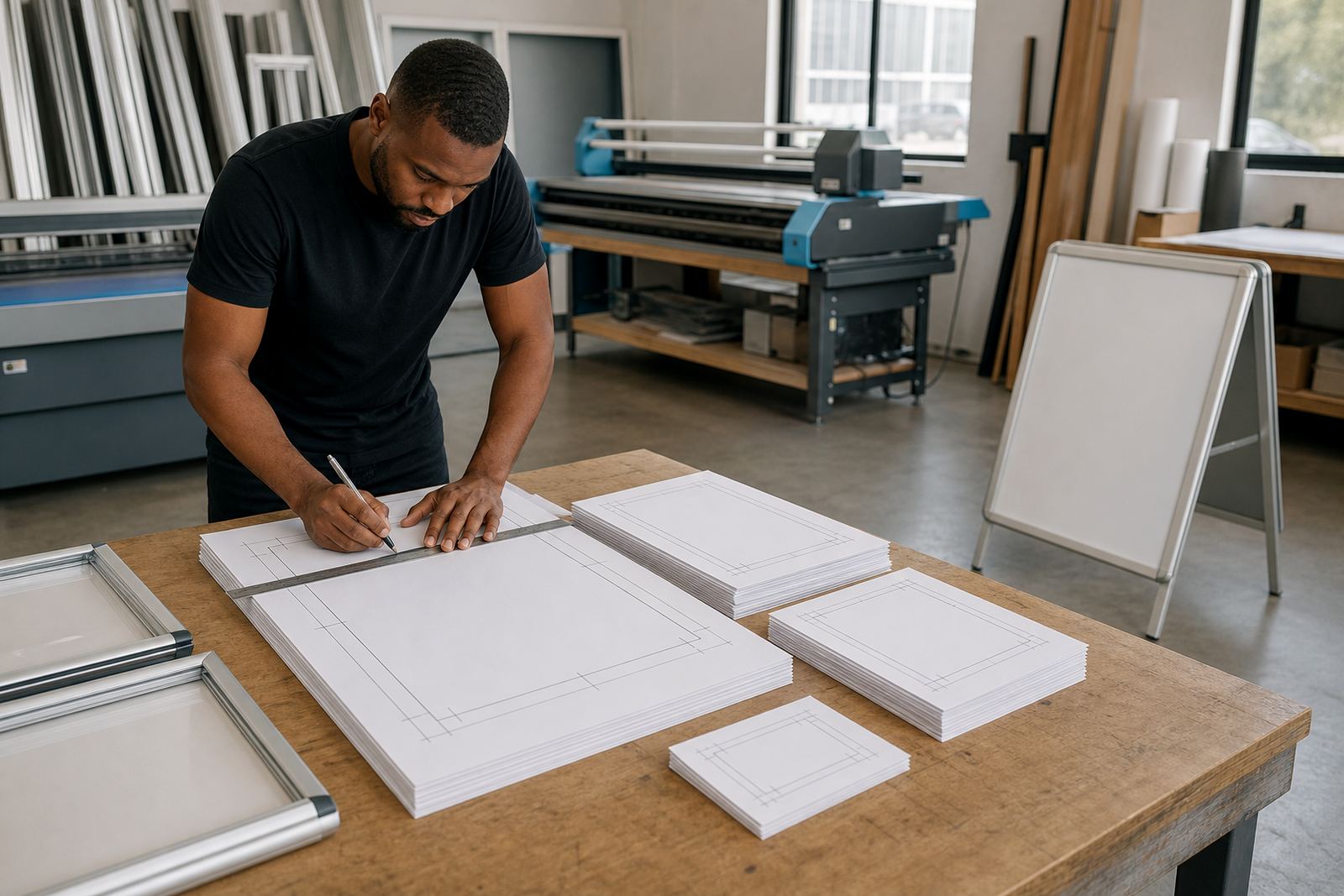
Frame size should follow the artwork, not force the design into a shape that does not fit. A4 templates work well for concise menus, while A3 templates suit fuller layouts with more sections and larger headings. If your existing artwork is the wrong size, menu resizing and proofing help keep the text balanced rather than stretched or trimmed in a hurry.
Short run printing is useful when you want to test a new layout or swap seasonal items without committing to a heavy print quantity. Laminated menu prints and poster insert printing also help in busy hospitality spaces where surfaces get touched often. A clean finish, accurate colour matching and proper trimming can make a small menu feel considered, while a poor crop can make even a good design look careless.
For takeaway counters, think about fast scanning. The customer should find the price, item name and add-ons without hunting across the page. In a restaurant or cafe, the same frame may need to hold a lunch menu in the week and a smaller drinks list at night, so the format should stay flexible enough to handle those shifts.
A Practical Check Before You Order Anything
Once the size is chosen, run through the details that affect the final result. Confirm whether you need portrait or landscape layout, how the frame will be fixed, and whether the artwork is ready for print or still needs typesetting. If your menu changes often, ask for a setup that makes insert swaps easy and keeps the edges neat after repeated opening.
Courier packaging matters too, especially when frames are going to Johannesburg, Durban, Gqeberha or smaller towns across the country. A snug pack reduces scuffs and protects the covers in transit. In Cape Town, Stellenbosch, Milnerton, Bellville and Paarl, the same attention helps when frames are collected or installed for a chain of branches that need matching sizes and matching finish.
- Confirm A4 or A3 before artwork is finalised
- Check portrait or landscape orientation
- Make sure the print size suits the aluminium profile
- Ask for proofing if the menu has many prices or sections
- Include any wall, window or floor mounting detail