
A compact frontage that had to work hard
The brief came from a small cafe in Sea Point, Cape Town, where the front area had limited wall space and a steady walk past from the pavement. The team wanted menu points that could be read quickly, then updated without pulling the whole display apart. That meant choosing frame sizes that fitted the wall and window line properly, while still leaving room for specials and a daily board.
The space had a narrow service counter, a bright shopfront and not much spare wall depth, so every display piece had to sit flat and stay tidy. Coastal air can leave glass and metal looking dull if the finish is poor, so the selection needed clean edges, firm clips and covers that keep glare down during the day.
- Wall frames for core menu items and pricing
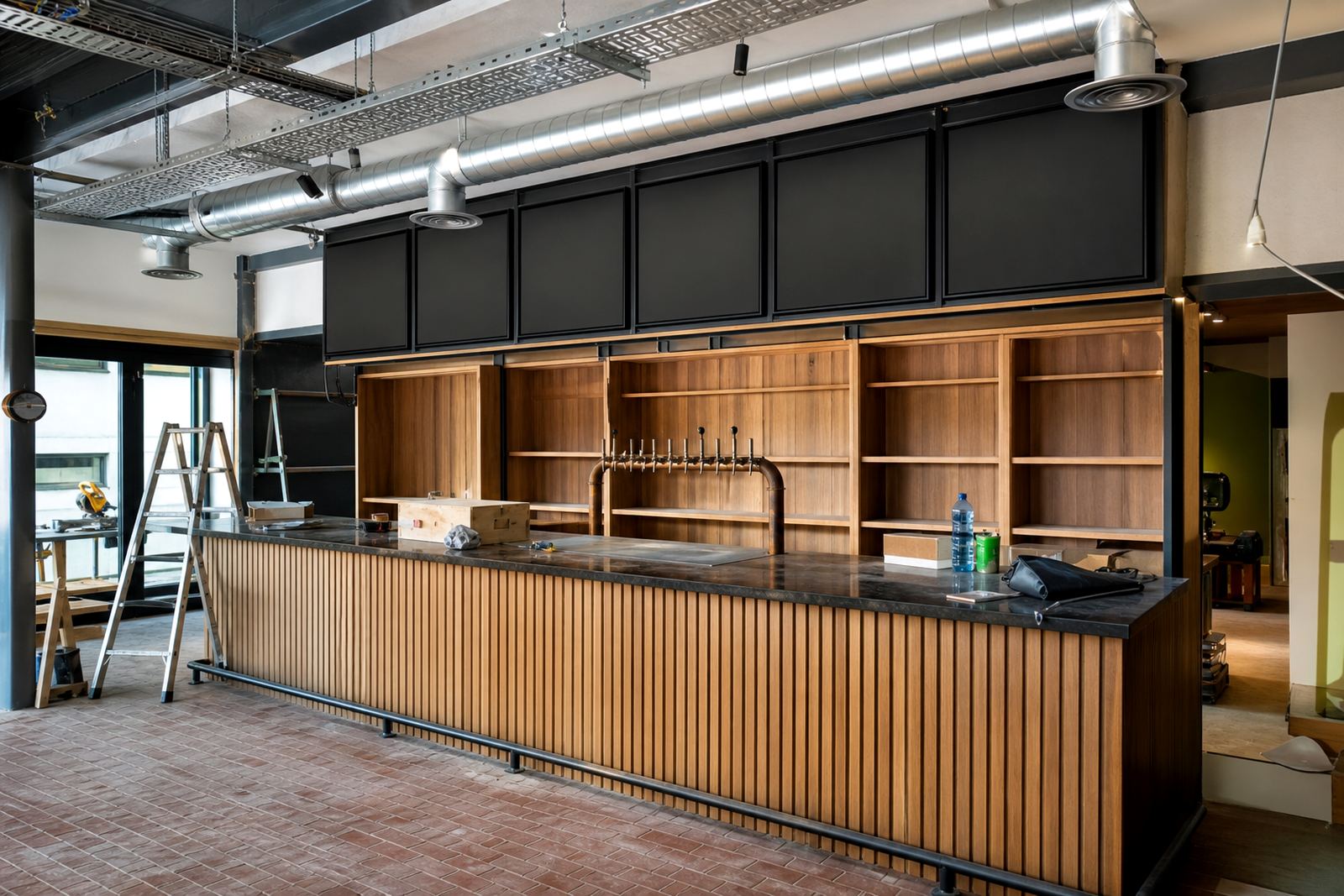
- A chalkboard for daily specials and short notes
- A street-facing A-frame for passing foot traffic
What the fit-out needed to solve
The owner wanted the menu to change with stock and trading patterns, but without tools or loose fasteners lying around the counter. The frames needed to open and close smoothly, hold printed inserts flat, and keep the menu sheet protected from fingerprints and moisture near the serving area. The board also had to suit a busy cafe rhythm where staff are swapping inserts while customers are ordering.
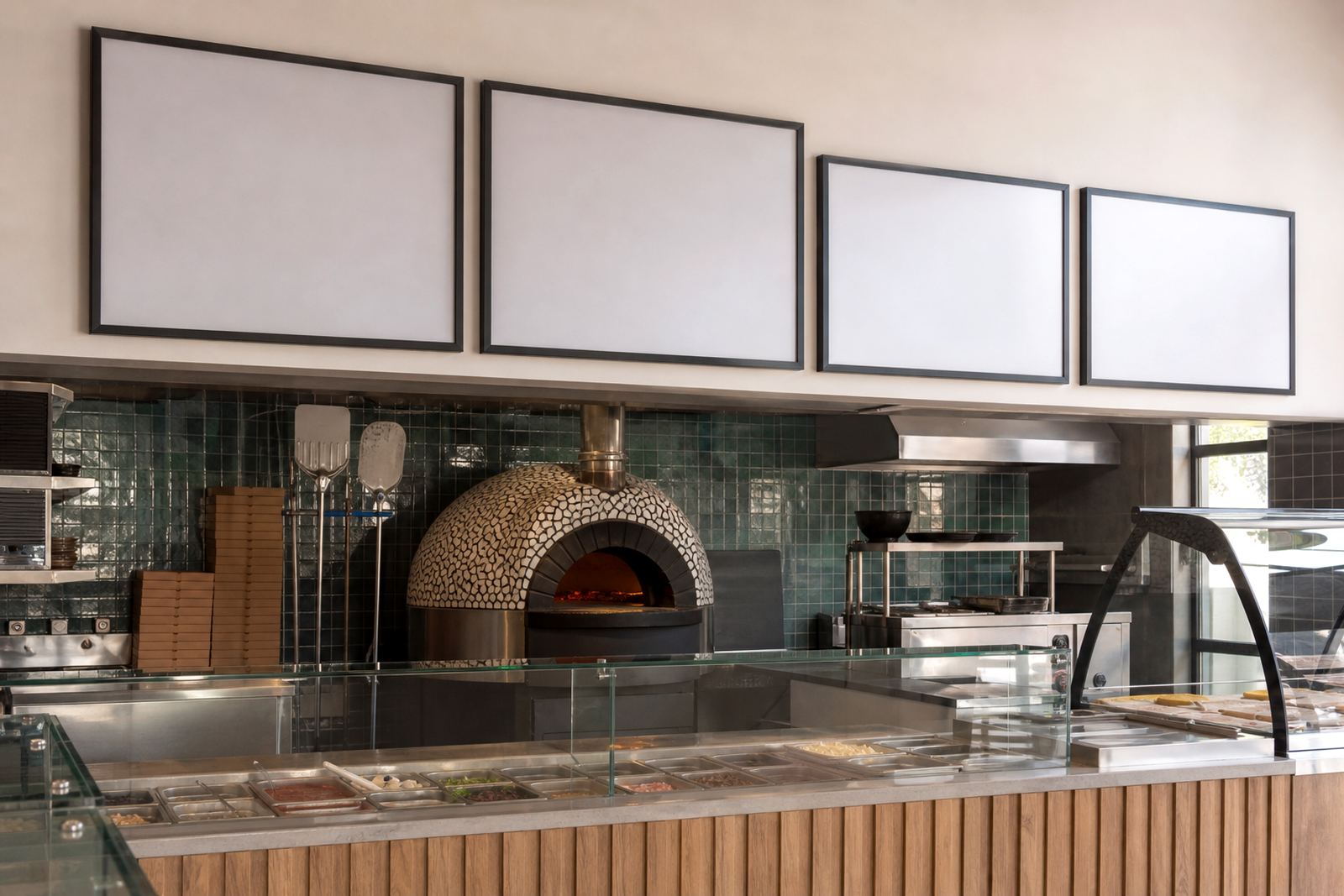
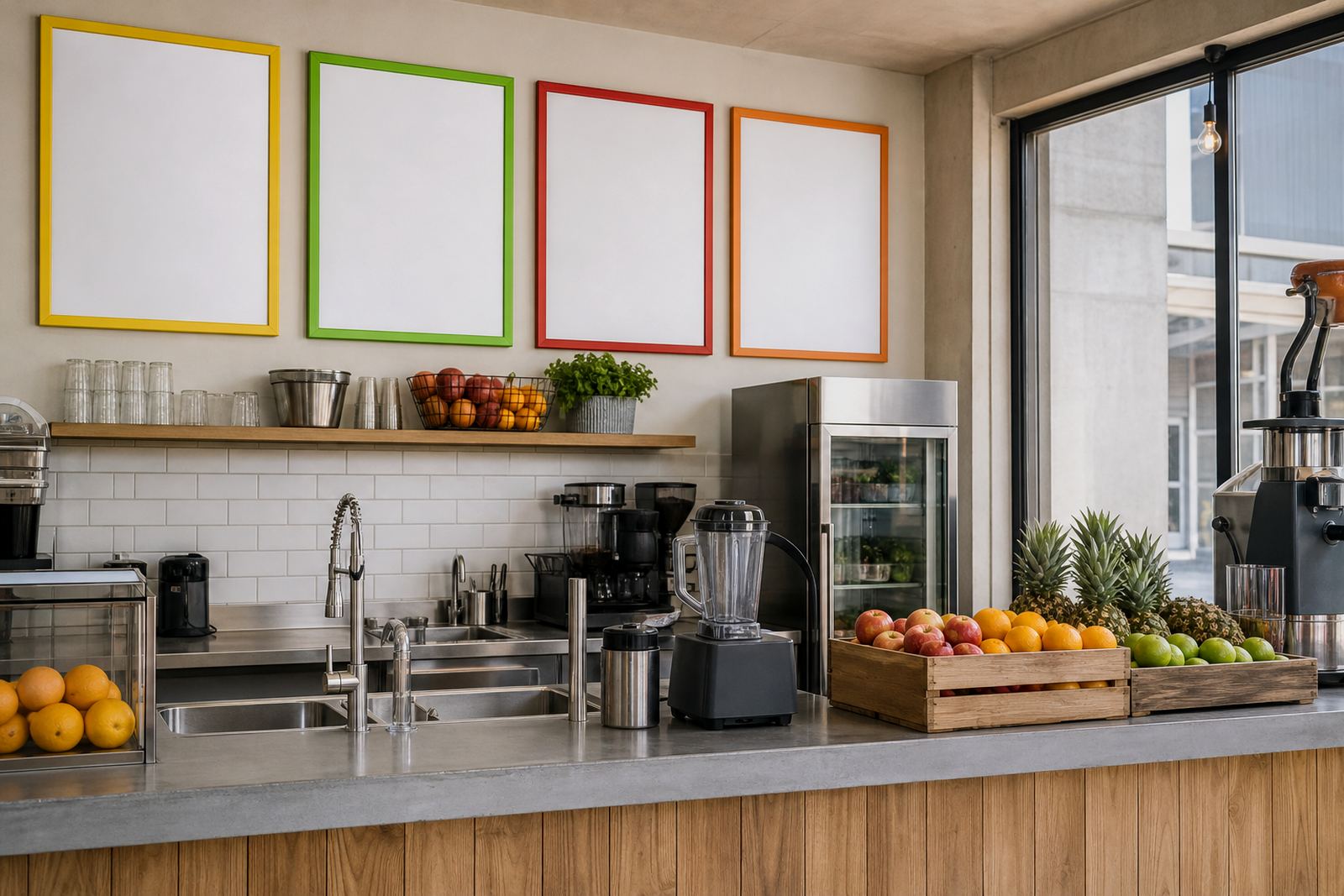
Because the shopfront is visible from the pavement, the display had to look balanced from a few metres away and still work at close reading distance. We set up a layout that used A4 and A3 proportions where they made sense, with a mix of portrait and landscape views to match the wall width. The chalkboard added a softer handwritten point for specials, while the A-frame carried the day trade message to the street.
- A4 snap frames for tighter wall sections
- A3 snap frames for the main menu panels
- Anti-glare covers to reduce reflection near the window line
- Wall and window mounting suited to the shopfront layout
Frames, boards and inserts we supplied
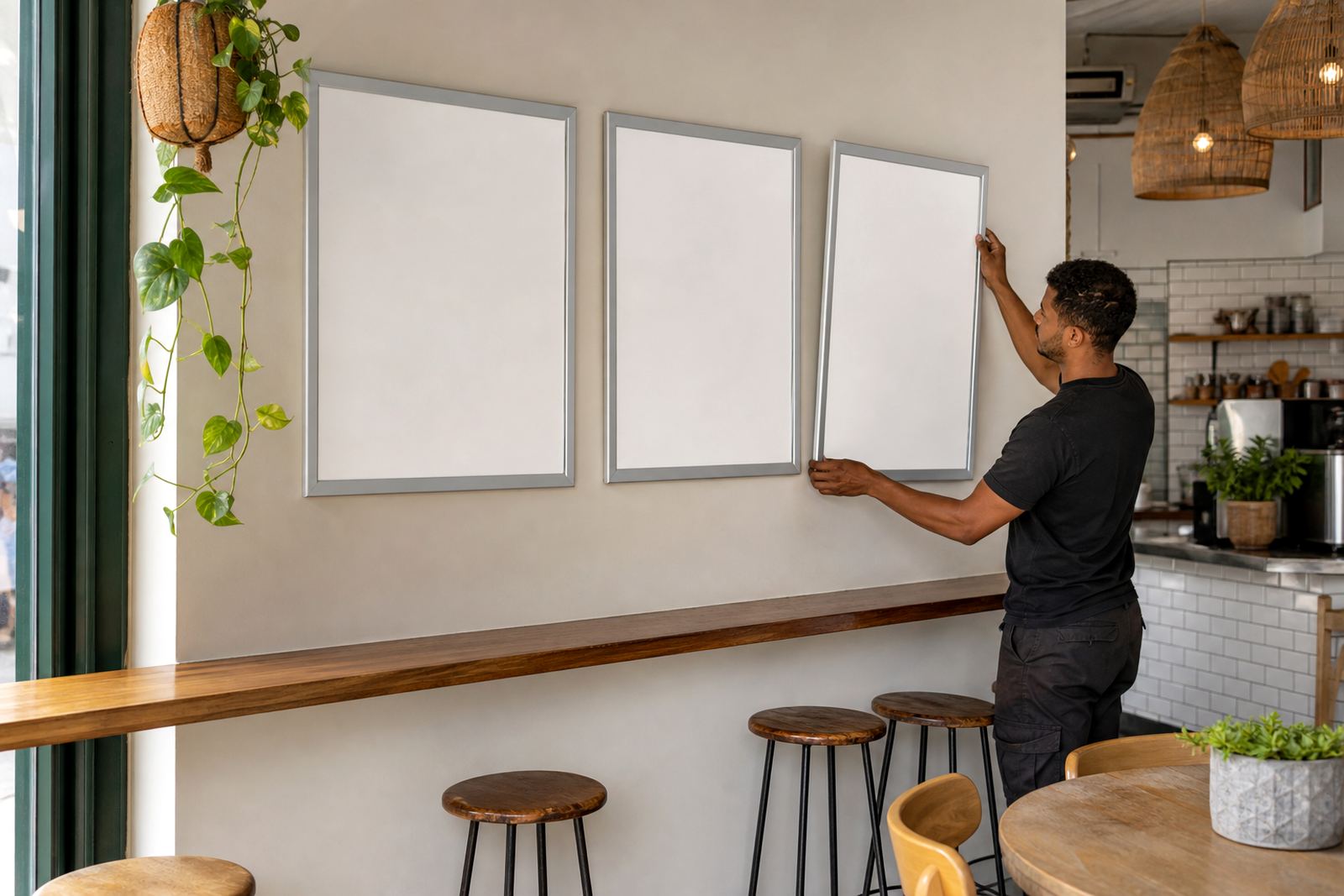
We supplied aluminium snap frames with a clean profile, so the inserts could be changed fast and the front face still looked sharp. The frames used spring-closing edges and clear protective covers, which kept the printed sheets in place and made the menu easier to read under indoor lighting and daylight. For the chalkboard section, we used a board surface suited to short specials and price notes, with enough contrast for chalk markers and standard chalk.
The A-frame stand was set up for pavement visibility and easy movement at opening and closing time. It was sized to suit the cafe frontage without blocking the entrance path. We also prepared print-ready templates so the menu text sat correctly inside the frame sizes, which helped avoid cramped lines and awkward cropping. The final inserts were proofed, trimmed and packed for courier delivery with the frame set.
- Aluminium profile frames with snap edges
- Menu inserts sized for A4 and A3 layouts
- Laminated menu prints for handled areas
- Courier packaging for the frame set and inserts
The working rhythm on site
The project ran over two weeks from layout sign-off to dispatch, with production steps kept in a practical sequence. First came the sizing and typesetting, then proofing and print finishing, then the frame assembly and packaging. The cafe team needed the menu set to be ready for launch week, and the sequence had to allow for one or two content changes after the first proof.
The shopfront was not deep, so the wall pieces were positioned to keep sightlines open behind the till area. The A-frame had to sit where street traffic could notice it without the stand creeping into the doorway path. That gave the space a neater front, and the menu lines now read as one system rather than a mix of separate signs.
For a compact site like this, the value is in small details. Straight text blocks, clear spacing and a proper fit inside each frame stop the display from looking busy. The cafe could update a breakfast item, shift a lunch special or replace a price line without dismantling the whole setup.
What changed after the install
The new menu layout gave the frontage a cleaner rhythm and made the pricing easier to scan. The wall frames handled the core menu boards, the chalkboard carried the changing notes, and the A-frame brought the daily special out to the pavement. Staff no longer had to juggle loose posters or tape sheets over worn displays.
It also made menu maintenance more orderly. Inserts can be resized, reproofed and reprinted as the offer changes, and the frame format stays the same. That matters for a cafe where a few lines of text can shift often, especially when breakfast, lunch and takeaway counter items all need different emphasis.
Sea Point brings a mix of coastal light, foot traffic and tight shopfronts, so the practical finish counts. In this case the display now suits the room, holds up to daily use and keeps the front counter looking settled rather than patched together.
What we would keep on a similar cafe job
We would keep the same approach on another small cafe frontage: frame sizes matched to wall width, anti-glare covers for daylight, and a chalkboard reserved for the items that move most often. The printed inserts should be planned alongside the frame sizes from the start, not squeezed in after the layout is already fixed.
We would also keep the menu language short and the spacing generous. A compact cafe has only a few seconds to catch a passer-by, so the board has to carry the right information without clutter. That combination of snap frames, chalkboard and A-frame gives a business enough flexibility to change the offer, while the shopfront still looks orderly.
For other cafes in Cape Town, Stellenbosch, Johannesburg, Durban or Gqeberha, the same structure works well when the menu needs to move between wall display, counter display and street visibility. The formats stay easy to update, and the courier packing keeps the pieces protected in transit.
Key facts
| Project | Sea Point Cafe |
|---|---|
| Location | Sea Point, Cape Town |
| Display set | Wall snap frames, chalkboard, A-frame stand |
| Frame sizes | A4 and A3 |
| Materials | Aluminium profiles with anti-glare covers |
| Timeline | 2 weeks from sizing to dispatch |