
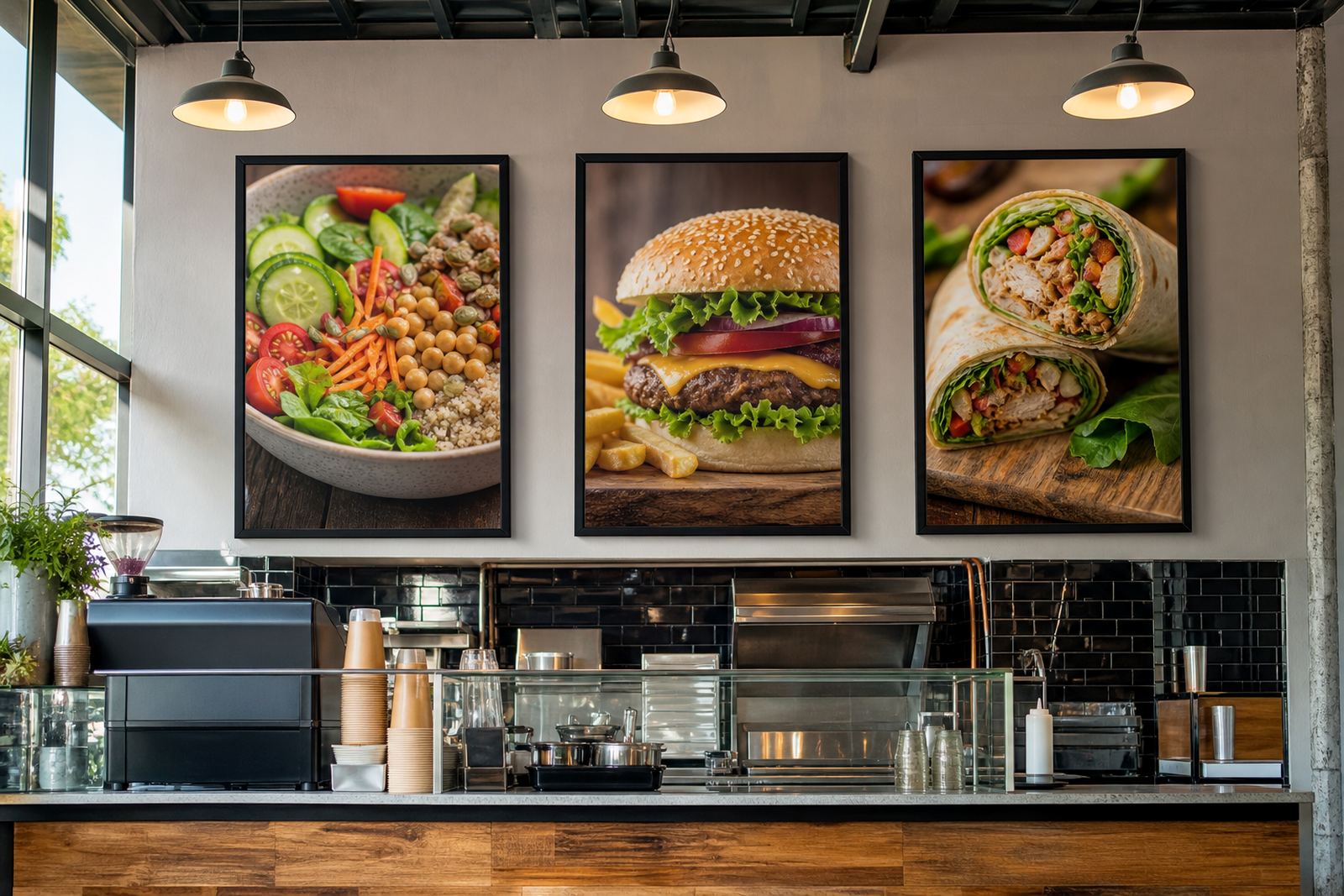
Start with the way customers read the counter
Most people do not study a menu from top left to bottom right the way a designer might. They scan for breakfast, mains, drinks, desserts or specials, then they decide what to ask for at the till. A multi panel board works best when that reading habit is respected. One panel can hold the day items, another the meal choices, and a third can carry drinks or add-ons.
That split also helps in busy Cape Town takeaways where the queue moves fast and staff need the menu to do the organising for them. If the eye can land on a section without crossing too many lines, the board feels calmer and the counter looks better kept.
Use panel breaks to create order, not decoration
Multi panel boards should solve a layout problem first. The gaps between panels can separate parts of the menu, but they should not create noise. Keep the spacing even and leave enough breathing room around each section title. When the headings, prices and item names line up neatly, the whole wall reads faster.
- Group related items together, such as burgers, toasted sandwiches or hot drinks.
- Use one visual style for all panel titles so the eye moves predictably.
- Keep price columns in the same position across each panel.
- Leave the busiest special offers for the most visible panel, not every panel.
On A4 and A3 inserts, the balance of text and blank space matters more than squeezing in one extra line. A crowded panel can make a short menu feel harder than a longer one with better spacing.
Match the board size to the menu size
A three-panel board is often enough for a compact café menu, while a larger restaurant board may need more room for extras, sides and drinks. The choice usually comes down to how many sections you need to separate, and how often the menu changes. A4 inserts suit tighter menus and smaller wall spaces, while A3 pages work better when a customer needs to read from a distance.
Our team sees a lot of mixed layouts in Paarden Eiland and along the broader Cape Town route, where one board may serve a window, a wall and an A-frame stand on the same site. The print size must suit the viewing angle as much as the amount of text. A board near the till can carry finer detail, while an A-frame outside should stay bolder and simpler.
- A4 suits price lists, smaller food boards and counter-facing inserts.
- A3 gives more room for section headings and larger price text.
- Window-mounted boards need strong contrast for daylight viewing.
- A-frame stands work better with shorter lists and fewer line breaks.
Keep the menu easy to swap when stock changes
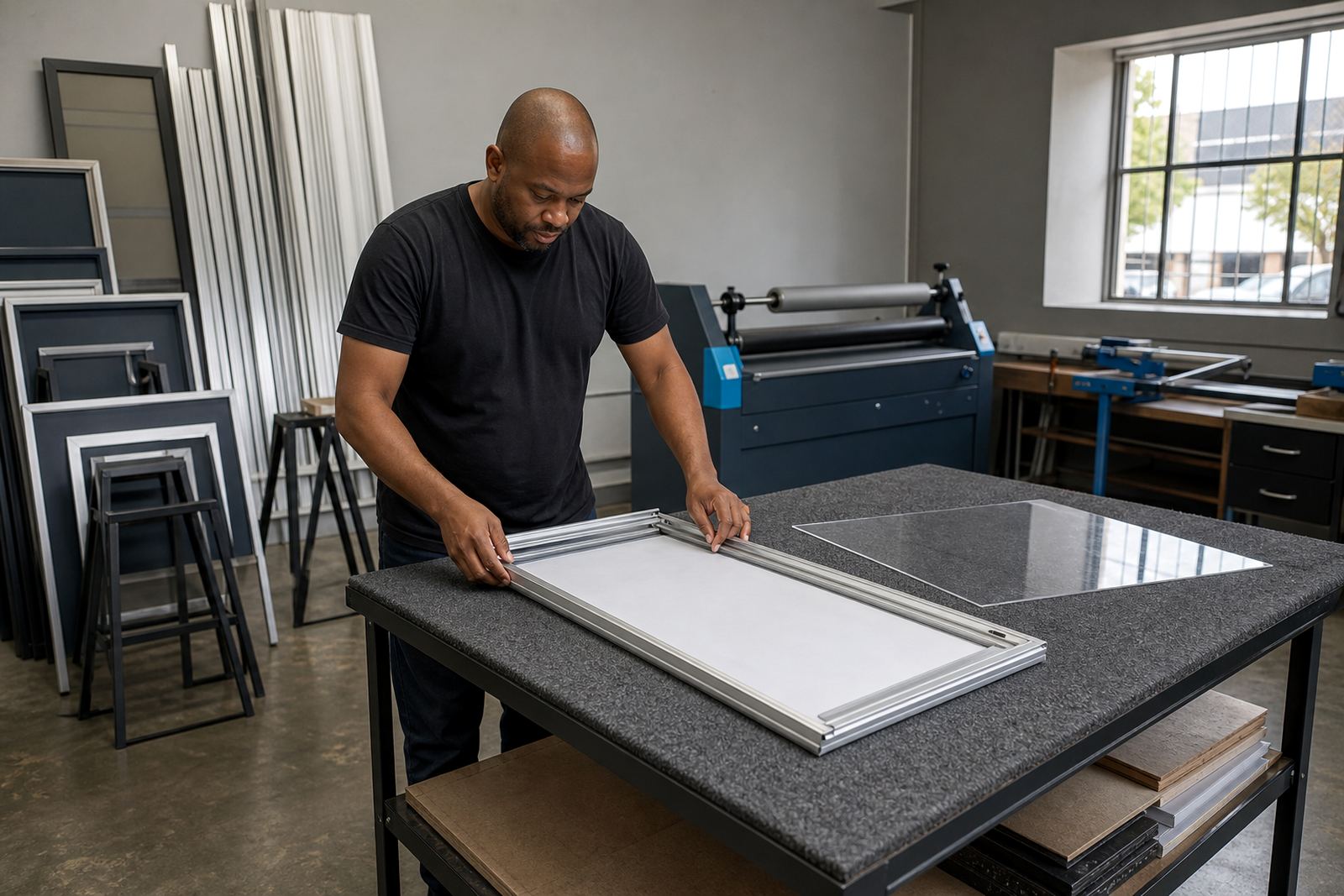
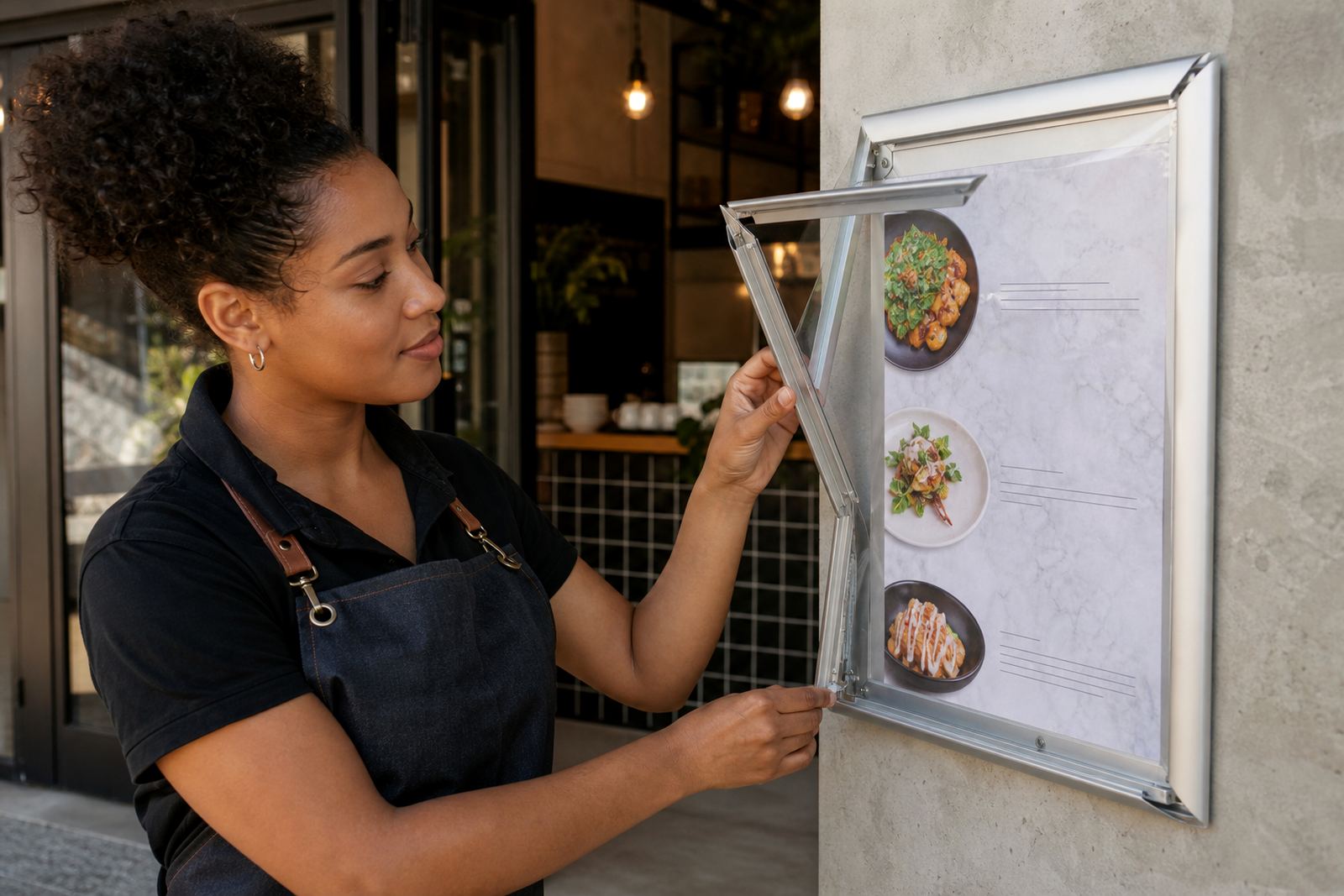
Multi panel boards work well when the menu needs frequent updates. Snap menu frames let printed sheets slide in and out without tools, which is useful for daily specials, lunch boards and takeaway counters where stock shifts during the week. Laminated inserts can also help when a menu sees regular handling, though the layout still needs to stay clean before any finishing is added.
For a restaurant in Stellenbosch or Gqeberha, the useful question is not only what fits today. It is whether the board can handle a small change next week without the whole display needing a rebuild. Short run printing, menu resizing and print proofing all help keep the sections consistent when prices or items move around.
Build around walls, windows and walkways
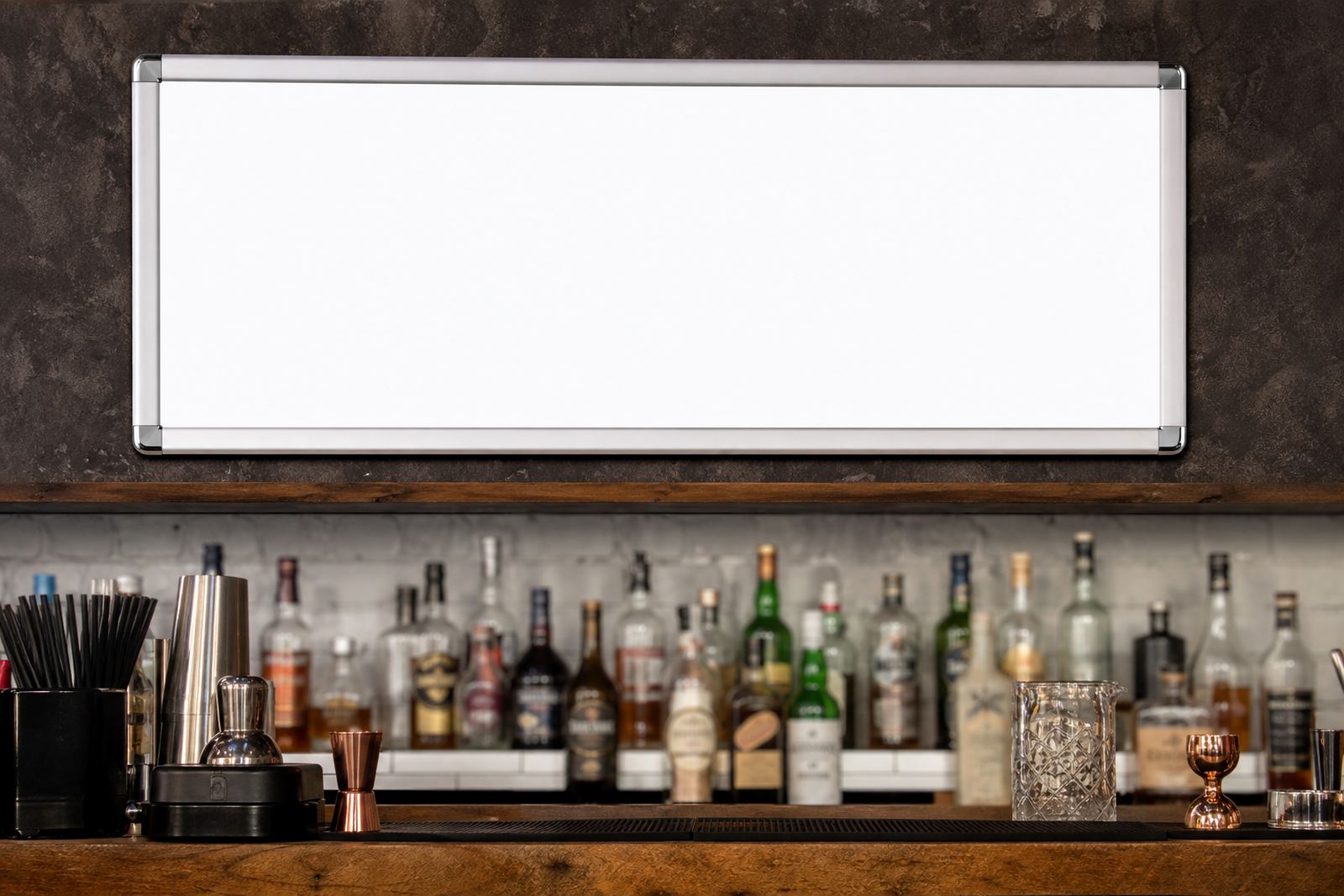
The same menu can read very differently on a wall, in a window or on a freestanding A-frame. Wall boards suit eye-level reading, while window mounting is useful where the counter opens onto a pavement or forecourt. A-frame stands work best when the menu has to catch passing traffic without blocking movement near the entrance.
In a narrow takeaway counter in Bellville or Milnerton, the board should never force customers to stop in the wrong place. Keep the largest items at the natural eye line, and use the lower panels for details that can be read once the main choice is made. Aluminium profiles and anti-glare covers help when sunlight shifts across the front of the shop during the day.
A practical layout for a local lunch board
A simple lunch board for a café in Durban or a bakery in Paarl might use three panels. One panel can hold breakfast until midday, one can show main meals and one can carry drinks, extras and takeaway add-ons. If the specials change daily, keep that panel separate so the rest of the board stays stable. That reduces clutter and saves staff from reworking the full display each time.
Colour matching matters too, especially where one panel must carry a chalkboard style section next to printed inserts. The difference between a tidy board and a messy one is often not the number of items, but how well the spacing, type size and finish are controlled.
- Use one panel for repeat items that stay up longer.
- Use a second panel for daily or weekly specials.
- Reserve the third panel for drinks, sides or dessert choices.
- Keep the most important prices in the boldest line weight.
At SnapperFrame Menus in Paarden Eiland, we prepare menu templates, menu updates and courier packaging for jobs headed to Cape Town, Stellenbosch, Johannesburg, Durban and Gqeberha. The aim is plain: a menu that splits neatly, reads quickly and still looks balanced when the board is full.