A menu that changes without dragging the shift
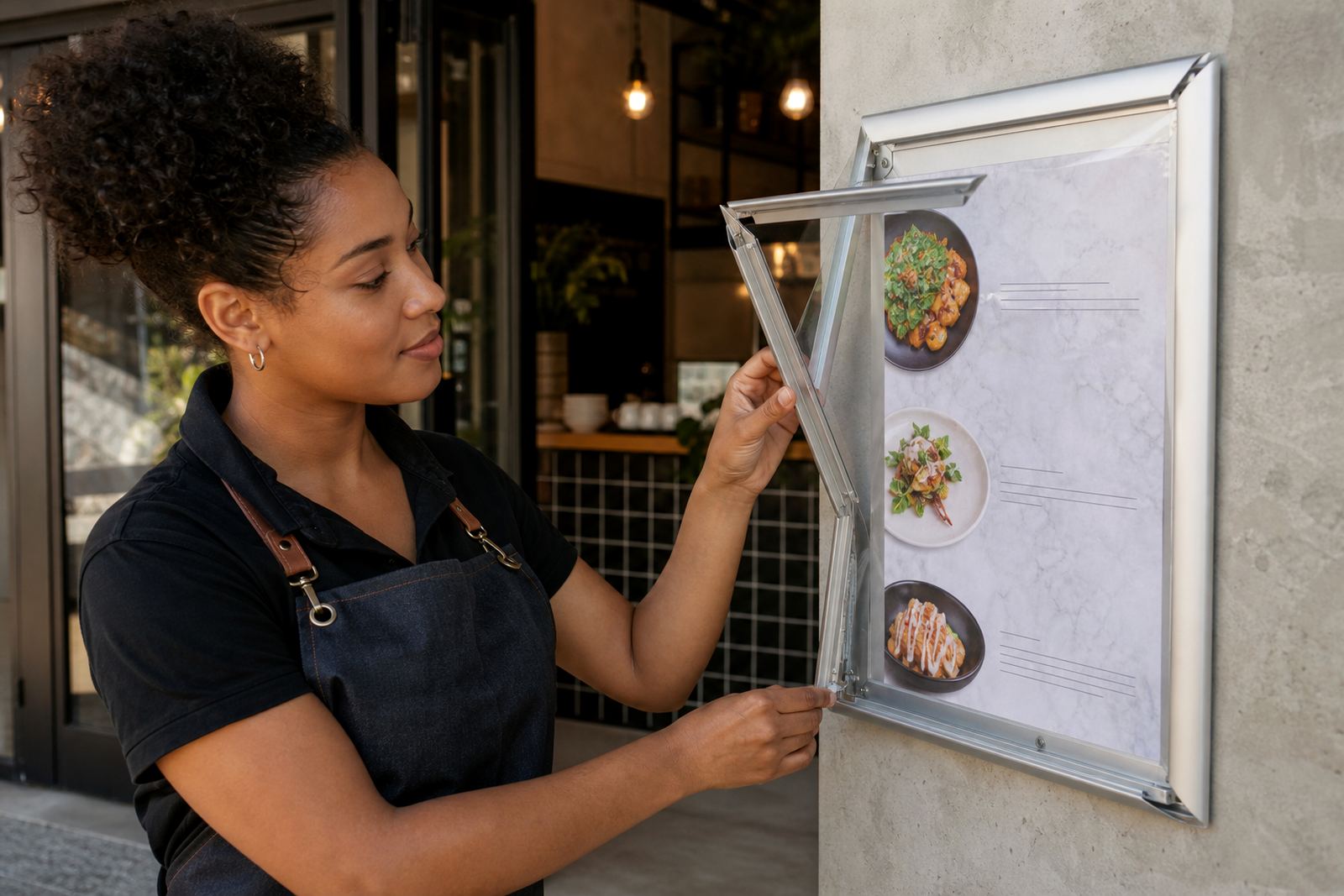
In a busy restaurant, café or takeaway counter, the menu has to keep up with what is available right now. A snap frame gives you that movement without asking staff to peel tape, pull out screws or wrestle with a heavy board between service rushes.
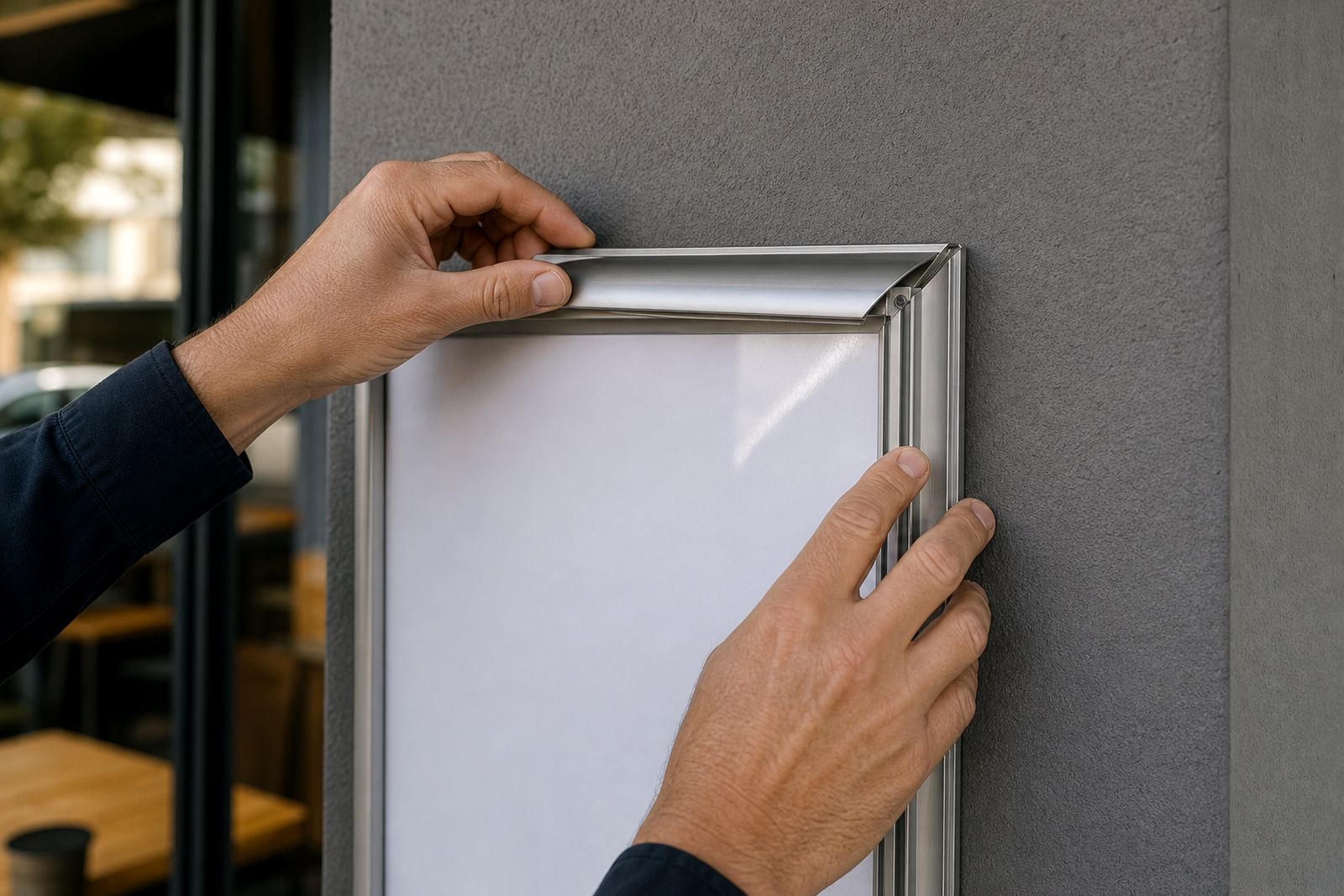
The aluminium profile grips the print around the edge, then opens again for the next insert. That matters when breakfast ends, the lunch board starts, or a daily special needs to move into the front window before the next customer walks in.
It is a small detail, but it saves clutter. The frame stays fixed on the wall, in a window or on a stand while the artwork changes inside it, which keeps the room looking orderly even when the menu shifts often.
The frame does the holding, not the staff
What makes snap menu frames practical is the way they reduce handling. The poster or menu insert sits behind an anti-glare cover, so the printed sheet is protected from fingerprints, splash marks and the constant handling that comes with counters and serving points.
- A4 suits narrow specials, tasting notes and short price lists.
- A3 gives more room for category breaks and larger lettering.
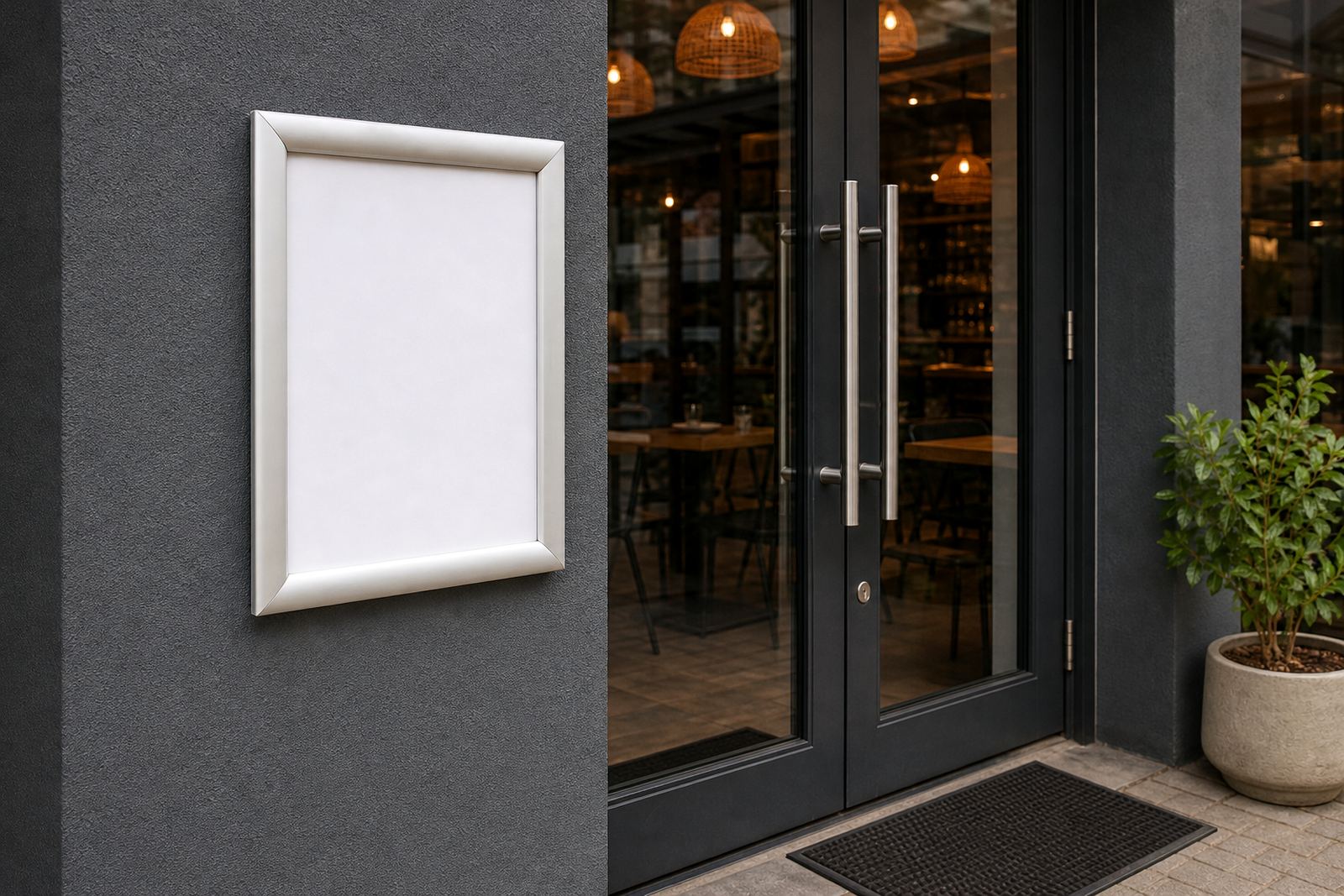
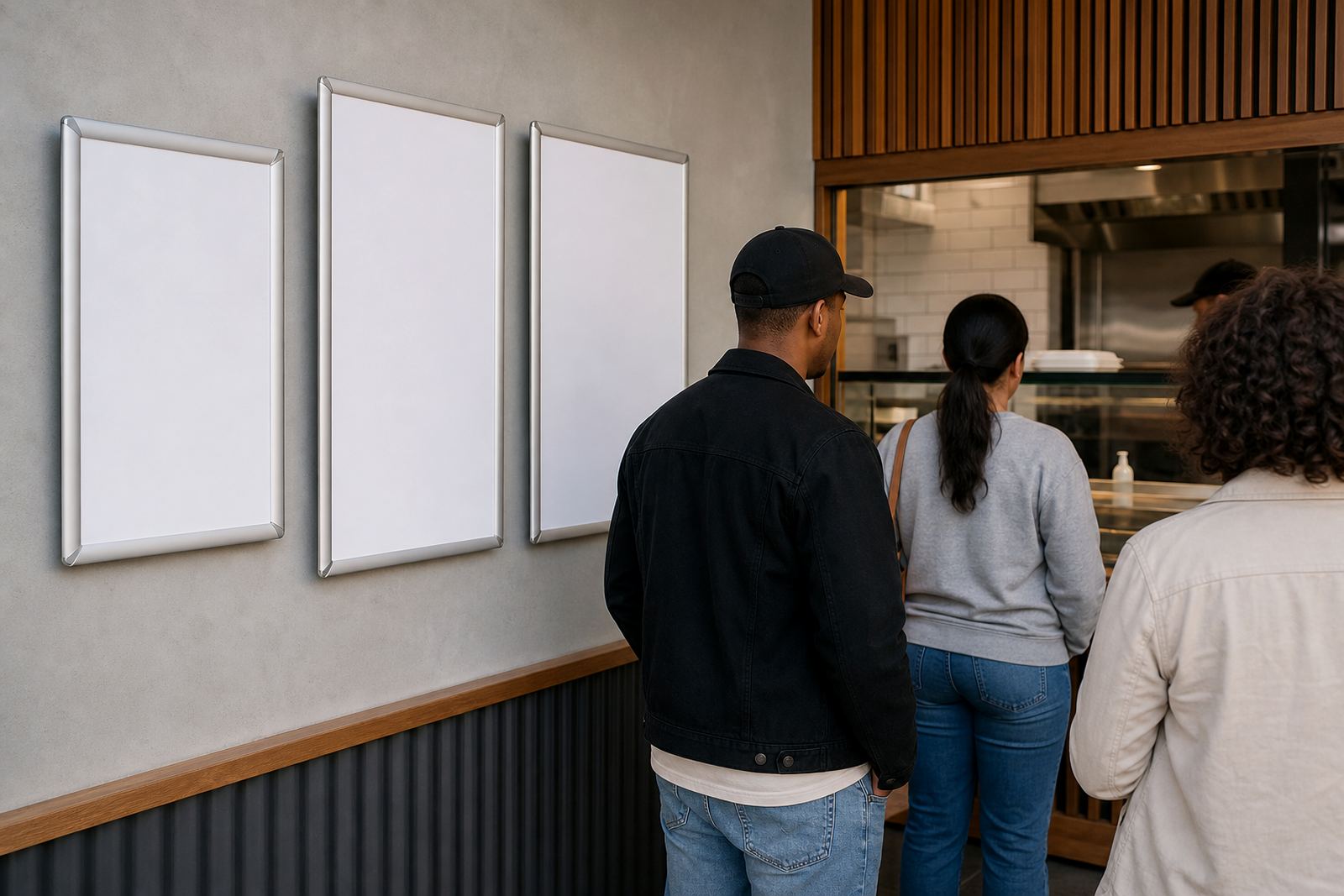
- Wall mounting works well beside tills and service doors.
- Window mounting is useful where passers-by need a quick read.
- Anti-glare covers help in bright Cape Town frontage areas and sunny shop windows.
For venues near the coast, the frame also keeps the display neater in humid air than loose laminated sheets clipped to a board. The insert stays flat, the edge is held evenly, and the notice looks intended rather than patched together.
A-frame stands for foot traffic and pavement visibility
A-frame menu stands help when the first sale happens before anyone reaches the counter. On pavements, forecourts and takeaway entrances, the angled board catches the eye without needing a large footprint.
That makes it useful for cafés in Milnerton, Bellville or Paarden Eiland where people pass on foot and by car. A daily menu, lunch special or weekend offer can sit at the entrance while the same content is repeated inside on a wall frame, which keeps the message consistent.
Many operators also use A-frame stands for chalkboard notes when the wording changes often. Others keep a printed insert in place and swap it out for a new sheet when the menu is updated. Either way, the stand gives the message a fixed position at the front of the business.
Print sizes, inserts and the clean edge around the artwork
Snap frames are only as good as the print that goes into them. If the artwork is cut too small, the border can look uneven. If it is oversized, the corners wrinkle and the message loses its sharp edge.
That is why menu resizing and typesetting matter. A4 and A3 templates help keep margins, line spacing and logo placement in order before printing. Short run printing is useful when the menu changes often, while laminated menu prints and poster insert printing suit displays that need a tougher surface.
- Menu proofing checks the wording before paper is used.
- Colour matching keeps brand colours steady across new inserts.
- Print finishing trims the sheet to the right edge.
- Courier packaging protects the frames and inserts in transit.
When the print fits properly, the frame closes cleanly and opens the same way each time. That makes the whole display easier to manage through a week of small menu changes.
A local example from Paarden Eiland to the rest of South Africa
In Paarden Eiland, where many food businesses work with compact counters and constant movement, a wall-mounted frame can sit beside a coffee machine one hour and carry a lunch list the next. The same setup works just as well for a Stellenbosch café, a Durban takeaway counter or a Gqeberha bar that changes its specials board for the evening service.
The strength of the system is not in showiness. It is in repetition. Staff learn where the insert opens, customers know where to read the menu, and the display stays in place while the content changes around it.
For multi-branch businesses, this also helps with consistency. A template prepared in Cape Town can be used again for Johannesburg, Durban or a smaller branch in Paarl, with only the menu text and pricing updated for each location.
Where snap frames fit into the service routine
Snap frames work best when the team wants a display that can be changed without slowing down the floor. The frame opens, the insert slips in, and the board closes again with a firm edge. There is no need for tools, no loose clips to hunt for, and no risk of bending a board while the queue builds.
That is useful for restaurants with rotating specials, cafés with breakfast and lunch shifts, and takeaway counters where prices move with the day. Wall boards, window boards and A-frame stands each solve a slightly different part of the same problem: the menu has to stay readable while the offer keeps changing.
SnapperFrame Menus works from Paarden Eiland, Cape Town, with print-ready templates, menu resizing, menu updates and courier delivery across South Africa. That means a simple display choice can be built around the way the room actually works, not around a fixed poster that has to carry every notice forever.