The counter slows down where the menu gets messy
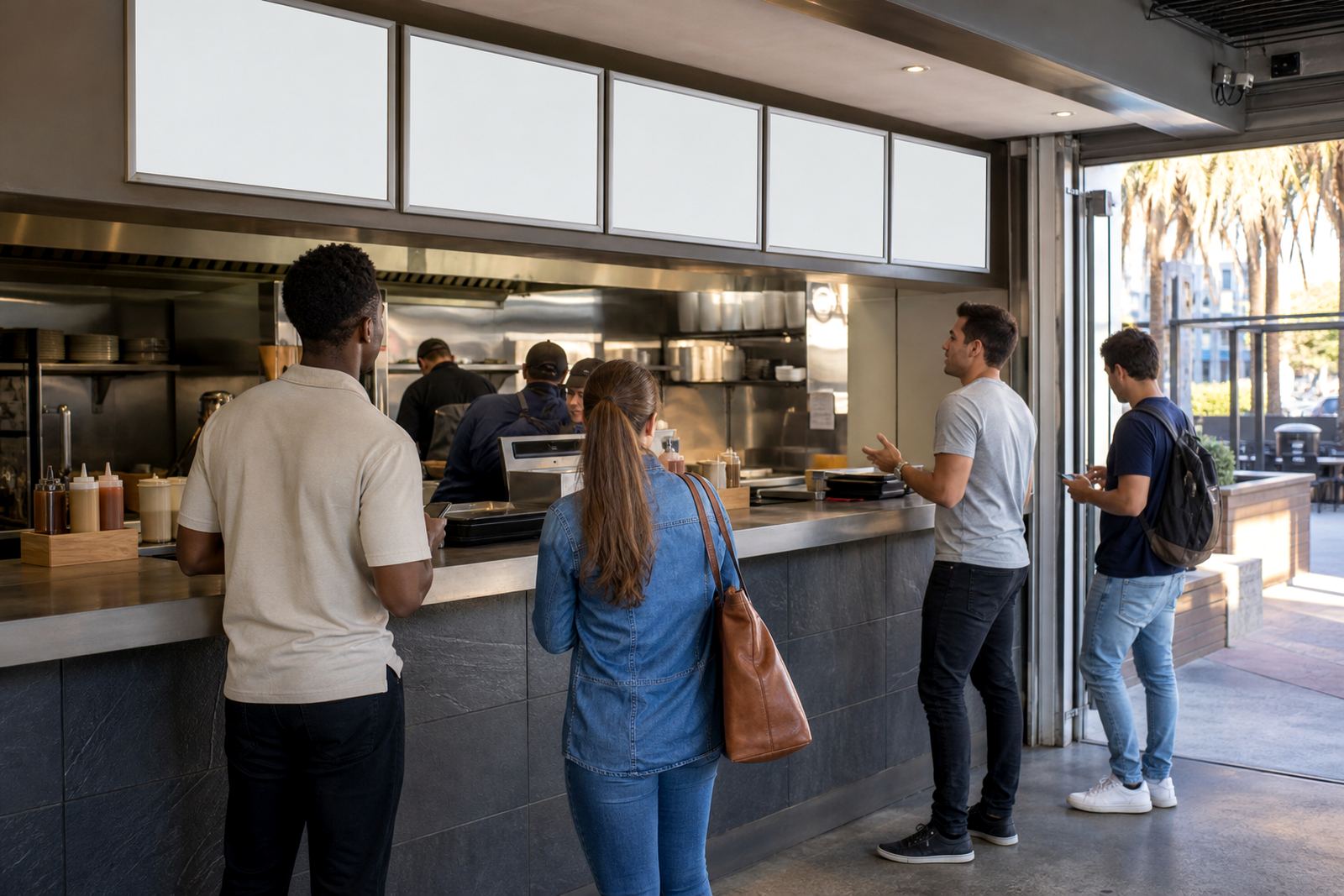
In a takeaway shop, speed is rarely lost at the fryer or the coffee machine. It slips away at the front counter when the menu is too small, crowded, or split across too many places. A customer who has to read twice will often ask a question, and each extra question adds a pause to the line.
Visible menu boards help by putting the common choices at eye level, with the prices and portions easy to read from the queue. For shops in Cape Town, Stellenbosch or Durban, that matters even more when the lunchtime rush hits and people are moving fast, checking phones, and trying to order without holding up the next person.
- Large headings reduce second-guessing.
- Short item names are easier to scan.
- Clear pricing removes awkward back-and-forth.
Snap frames keep the display changing without tools
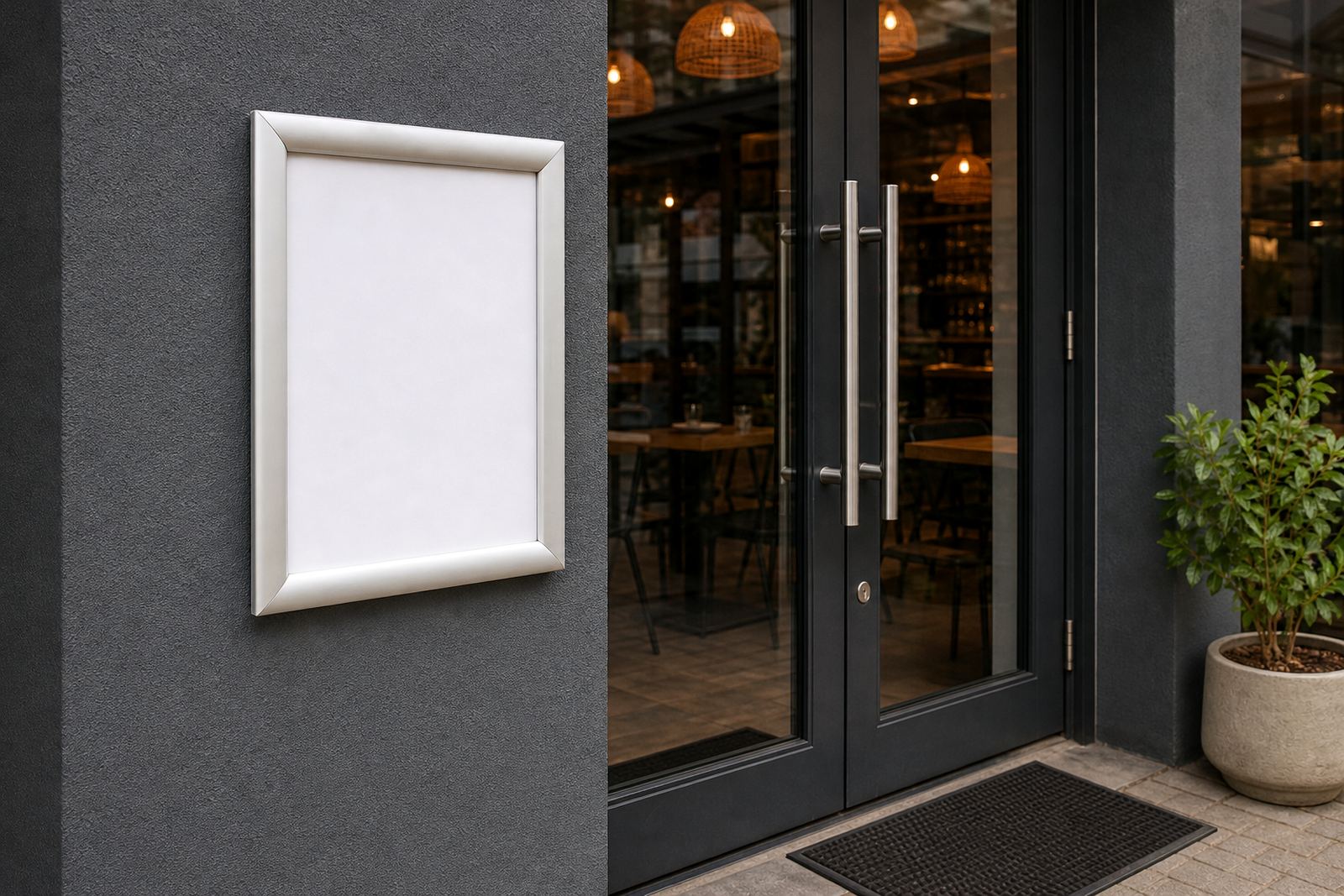
Snap menu frames are useful when specials change often, or when a printed insert needs to be replaced before the next service. The aluminium profile opens at the edge, the print slides in, and the cover closes back down without screws or loose clips. That keeps the board neat and cuts the time spent fiddling behind the counter.
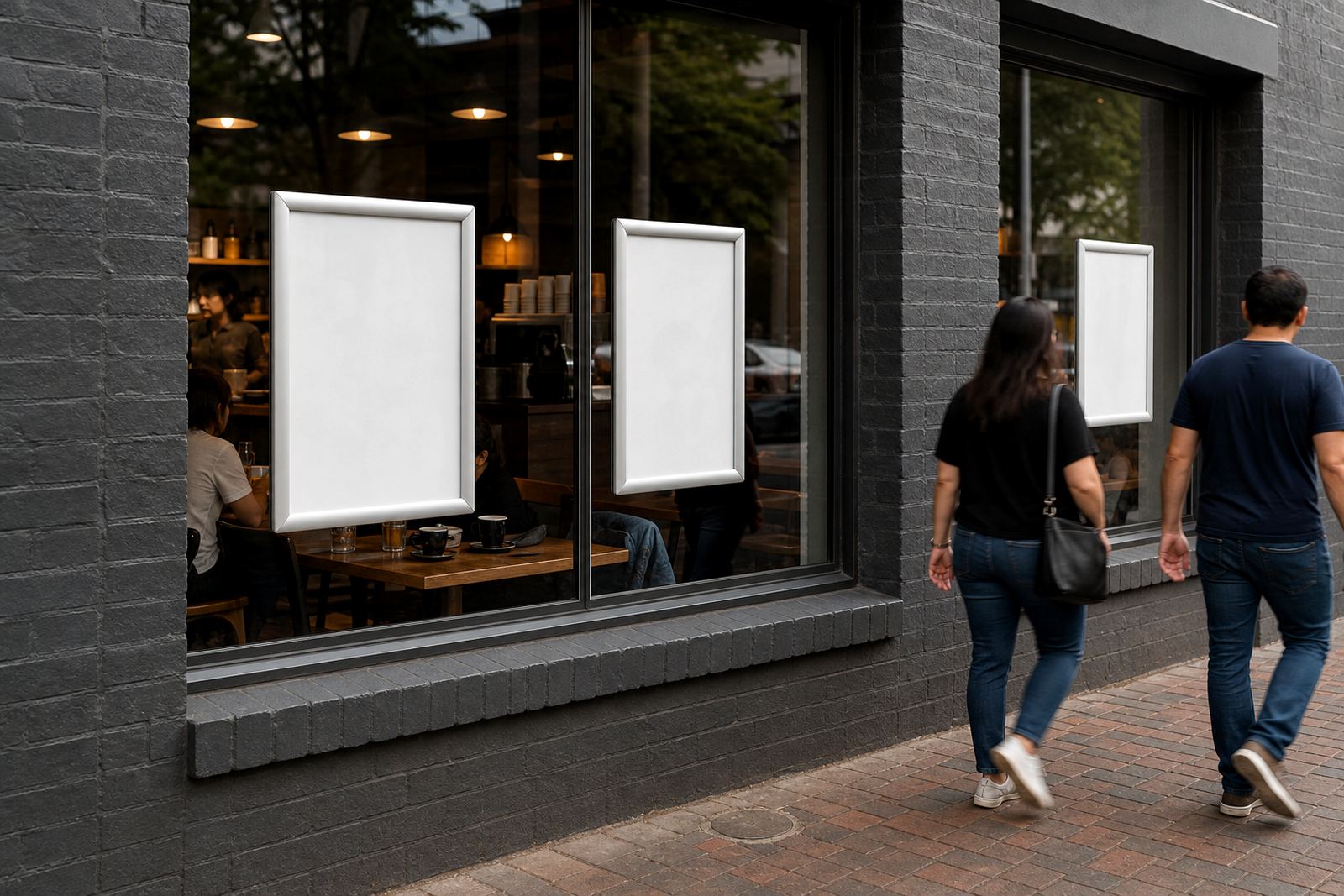
A4 and A3 sizes work well for different parts of the shop. Smaller boards suit daily specials, dessert add-ons, or a compact drinks list. Larger frames hold the main takeaway menu where more items need to be grouped clearly. Anti-glare covers help under strip lighting and bright window light, which is useful in street-facing spaces and mall kiosks.
- A4 suits notices, specials, and add-on items.
- A3 gives more space for grouped meal choices.
- Wall and window mounting keeps the board in view.
A-frame stands work when the queue starts outside
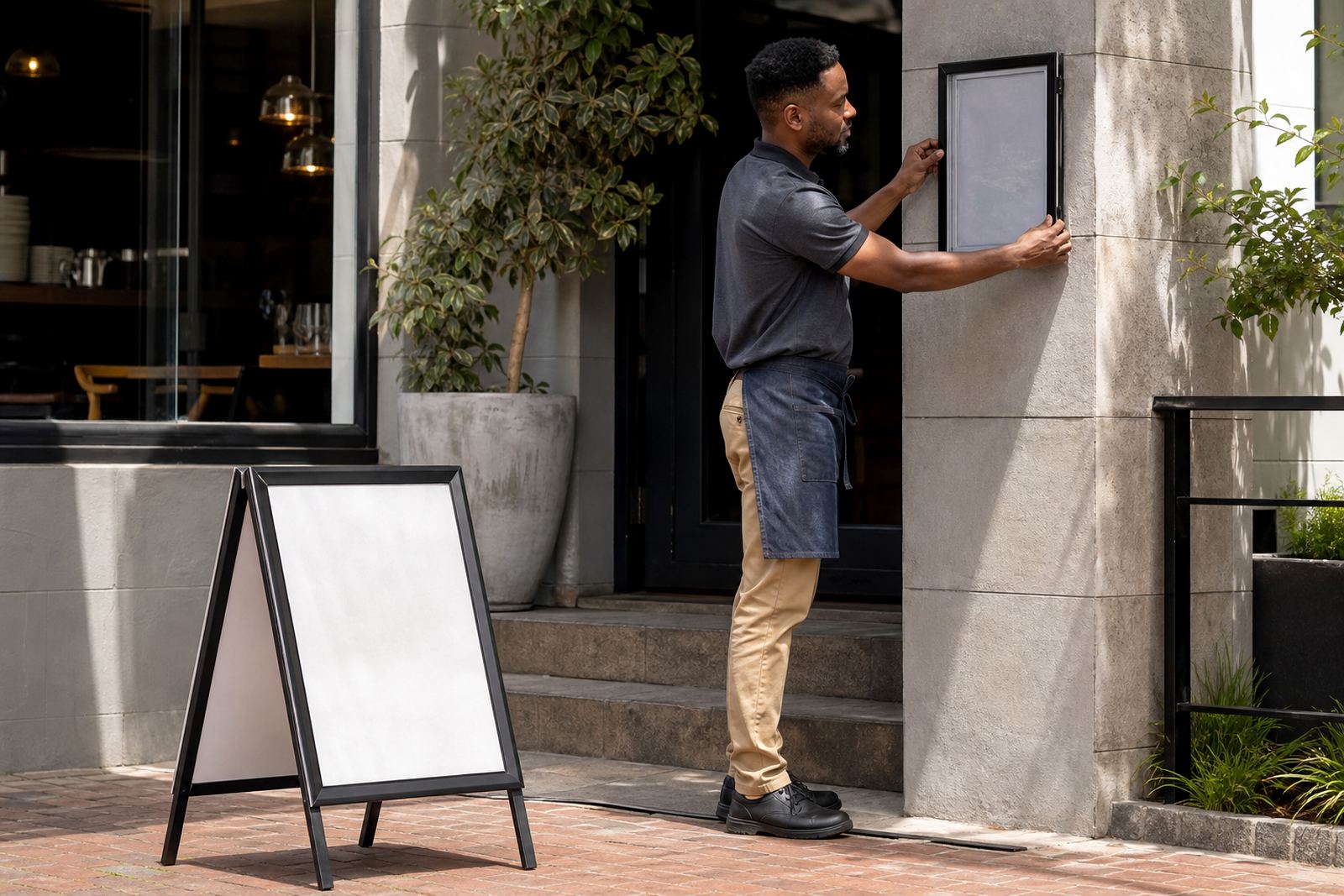
When a takeaway counter gets busy, an A-frame stand can pull some of the ordering work away from the till. Placed near the entrance or at the edge of the pavement, it gives people a chance to check the menu before they reach the counter. That means fewer delays when the cashier starts the transaction.
For shops near a parking area, a school gate, or a service road, the stand can carry the main offers of the day, the meal deals, or a limited lunch list. Chalkboards are useful where hand-written specials change often, while printed inserts are better when the wording must stay precise and tidy. In windy spots near the coast, a heavier frame and sensible placement help keep the board stable.
- Use the A-frame for the first glance, not the full story.
- Keep the message short enough for walk-by reading.
- Reserve the counter board for details and final choices.
Layout choices that shorten the conversation
A menu board can look good and still be hard to read, which slows a shop down more than a plain one. The point is not decoration alone. It is quick reading under pressure. Grouping burgers, wraps, toasted items, chips and drinks into clear blocks helps customers decide before they reach the till.
Menu typesetting plays a real part here. Font size, spacing, and line breaks all affect how quickly a person can find the item they want. Print-ready templates for A4 and A3 menus make it easier to keep the same layout across branches in Milnerton, Bellville, Paarl, Johannesburg, or Gqeberha, even when the wording changes a little for local offerings.
- Keep item names short and direct.
- Place add-ons near the main item.
- Use one clear price line per section.
A Paarden Eiland counter with less hesitation
In Paarden Eiland, a takeaway counter serving trade staff, delivery drivers, and passing customers often has only a small window to move each order along. A practical setup might use a main wall menu above the till, a smaller A3 board beside the drinks fridge, and an A-frame stand near the entrance for daily specials. That way the customer can read before speaking, and the cashier does not need to repeat the full list.
Printed inserts also make sense where prices change, or where laminated menu prints need to survive frequent handling. Courier packaging is useful for sending framed boards and inserts to branches across South Africa, including Cape Town, Stellenbosch, Johannesburg, Durban and Gqeberha, so the same layout can be used across several counters without starting over each time.
For shops that need a cleaner front area, wall mounting and window mounting both help. The display stays where customers can see it, and the counter itself stays open for the order slip, card machine, and food handover.
Practical details that help the order move faster
Speed at the counter is usually won by small details rather than one big change. A menu board that is readable at a glance, mounted in the right place, and updated without fuss can reduce the little stops that build up across a lunch rush. The same applies whether the shop sells toasted sandwiches, chicken portions, coffee, or packaged meals.
When a display is planned properly, staff can point once and move on, which is exactly what a busy takeaway needs. At SnapperFrame Menus, the work includes menu resizing, menu proofing, colour matching, print finishing, and short run printing for shops that need inserts to stay tidy and consistent. The result is a front counter that feels ordered, even when the queue is not.
- Choose one main menu point at eye level.
- Use a secondary board for specials and extras.
- Keep printed sizes consistent across branches.