Street-facing glass needs a different reading distance
When a menu sits on glass, the first job is legibility from outside. People walking past in Cape Town, Stellenbosch or Durban usually have only a few seconds to notice the board, read the headline and make a decision before they move on. That means the layout has to work at a glance, with strong contrast and a clear size choice.
A4 suits shorter messages, trading hours or a compact specials list. A3 gives more breathing room for food ranges, drinks, combos and larger type. On a glass surface, smaller text can disappear once daylight hits the window, especially if the street is bright or the sun lands directly on the pane.
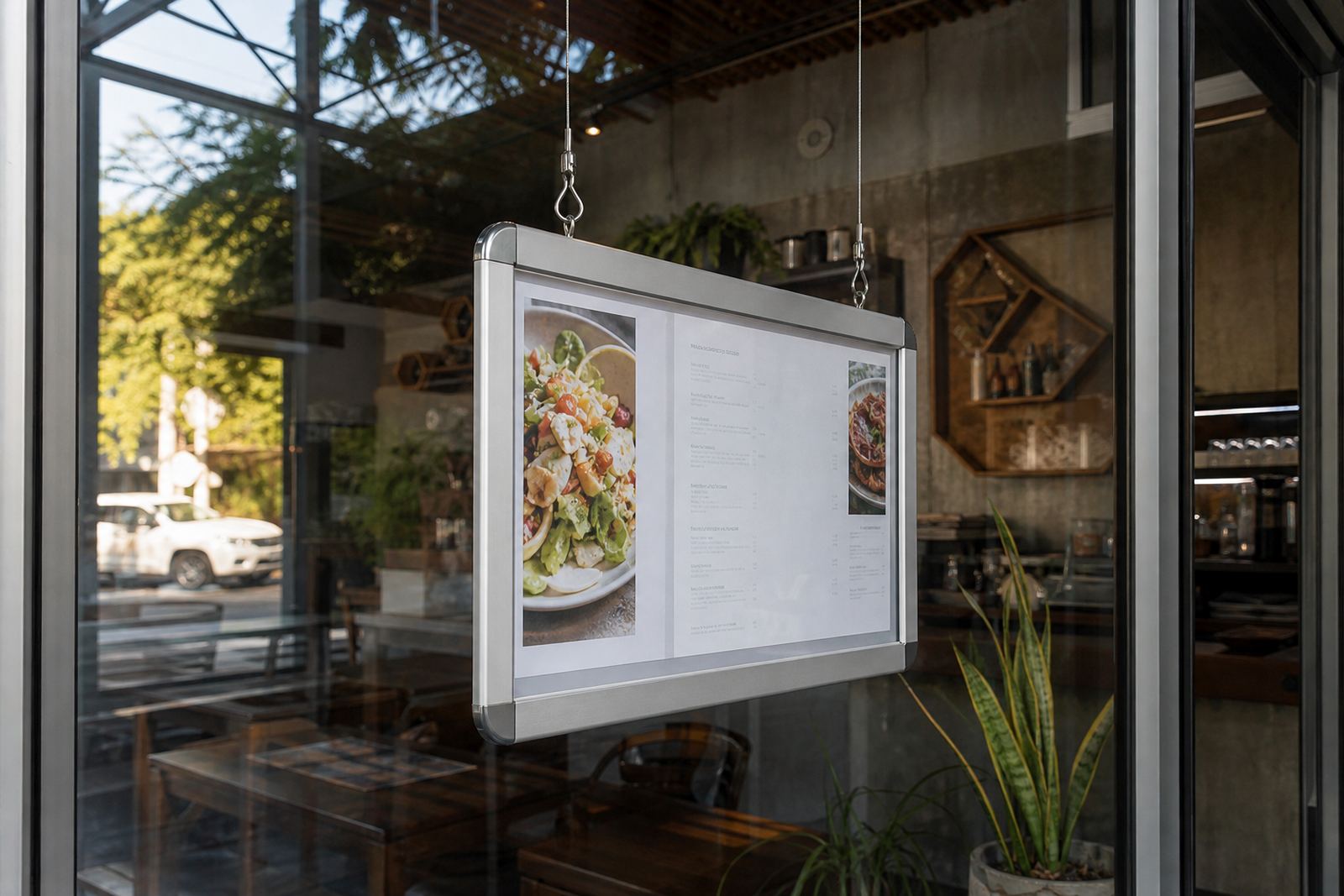
For takeaway counters and café windows, the most useful rule is plain enough, keep the message short and let the frame do the holding. A clean snap frame with anti-glare cover reduces reflections and keeps the sheet visible from the pavement.
The fixing method should match the pane and the traffic
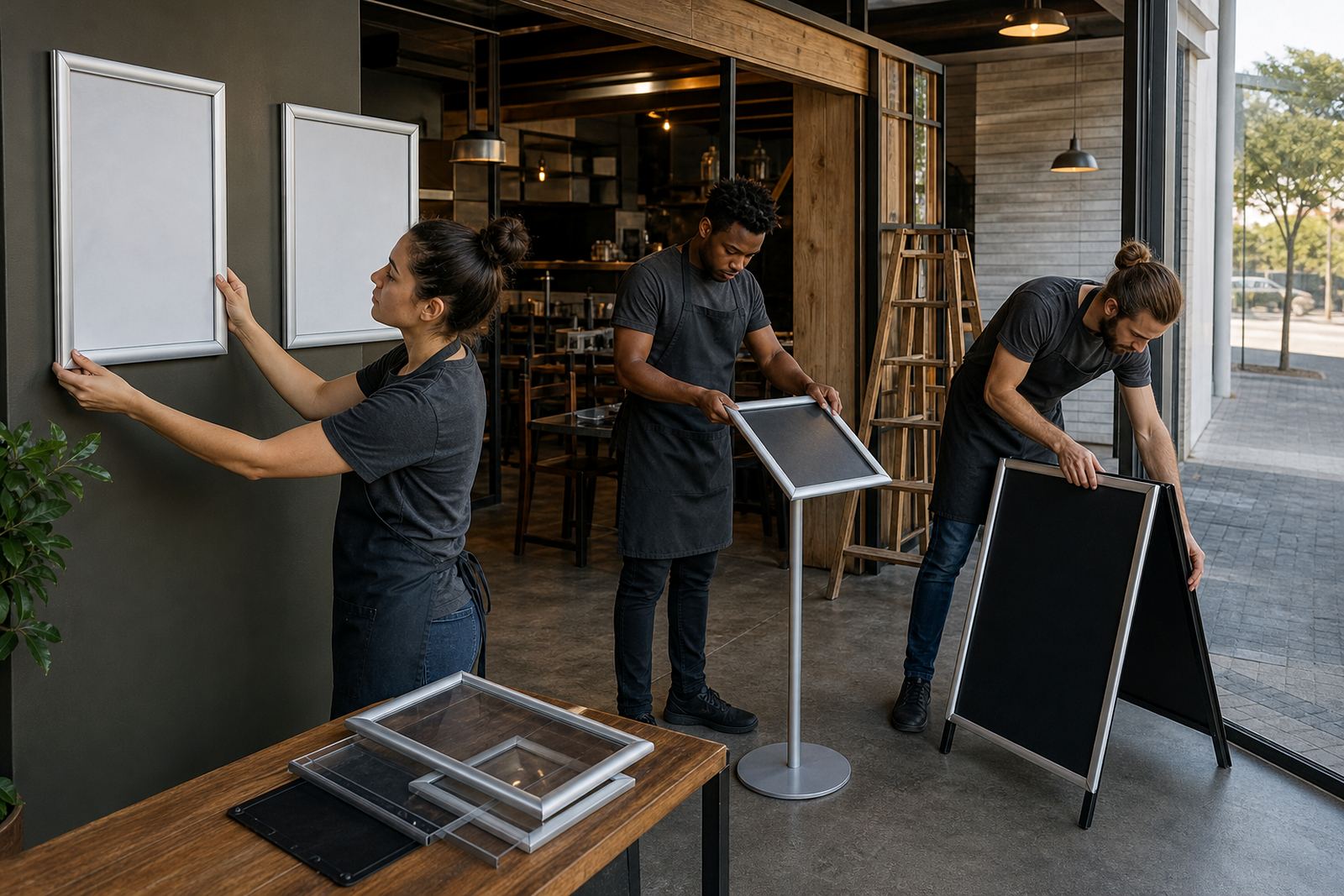
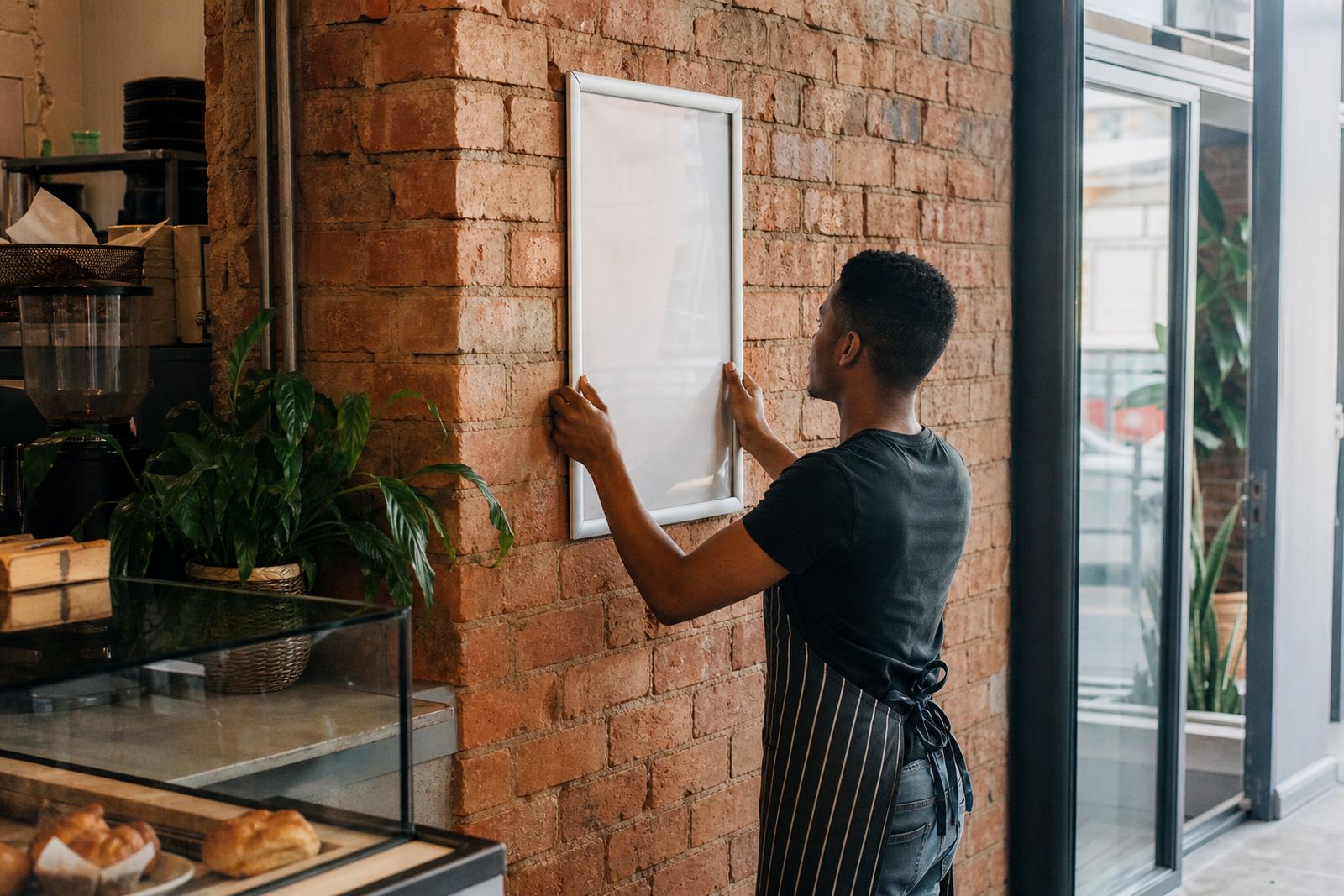
Glass mounting is not one-size-fits-all. A slim aluminium snap frame can be fixed directly to a window with suitable brackets or hung from a suspension point where the panel layout allows it. Some shops use window stickers for small notices, but a proper frame gives you a neater finish and makes sheet changes far easier.
If the menu needs to face the street, think about where pedestrians stand and where vehicles stop. A board placed too high can miss eye level, while one too low may sit behind reflections from passing cars. In Paarden Eiland and along busier retail strips, that placement matters more than most people expect.
- Check the viewing height from outside before drilling or fitting brackets.
- Leave enough space for the glass to be cleaned without fighting the frame.
- Use a cover sheet that cuts glare rather than adding shine.
- Match the frame size to the print size, not the other way round.
A-frame stands help when the glass is not enough
Some restaurants and cafés want the menu visible before a customer reaches the door. That is where an A-frame stand earns its place near the entrance, pavement edge or forecourt. It creates a second point of contact, while the glass-front display handles the main street-facing notice.
A-frame menu stands work well for daily specials, breakfast boards and short lunch offers. If the shop front has a deep set window or busy reflections, a pavement board can do more work than a window poster ever will. In coastal areas, metal hardware needs proper finishing so humidity does not leave marks on the frame or fasteners.
For busy takeaways, the best setup is often a split display: one board on the glass for core information, then a stand outside for rotating items. That way the board at the window stays cleaner and the pricing sheet can change without disturbing the rest of the frontage.
Printing for glass needs the right colour and size control
Window-facing menus need clean colour matching because the light behind the print changes the way it reads. A pale cream that looks fine indoors can wash out on glass, while a dark title can lose edge detail if the print is too busy. Sharp type, clear section breaks and proper spacing all matter.
When menus are resized for A4 or A3 frames, the artwork should be checked again before printing. A typeset sheet that worked on a counter menu may not work on a shopfront once the reading distance changes. Short run printing helps when a café in Bellville wants a small batch for a seasonal change or a lunch update.
- Keep the most important item names in larger type.
- Use high contrast between text and background.
- Leave room around logos and headings so the sheet does not feel cramped.
- Proof the final layout at the exact frame size before print finishing.
Cleaning, humidity and daily handling shape the final choice
Glass-mounted boards sit in a tough spot. They are cleaned often, touched by staff and exposed to fingerprints, salt air and dust from the road. An anti-glare cover helps, but the frame also needs to open and close neatly so the insert can be changed without scratching the sheet or cracking the corners.
In places like Gqeberha and Durban, coastal moisture can affect paper stock, especially if the menu insert is changed often. Laminated menu prints can hold up better for smaller notices, while poster inserts suit larger specials or seasonal graphics. The choice depends on how often the menu changes and how much handling the board gets.
Courier packaging matters too when the frames are travelling to Stellenbosch, Johannesburg or another branch. A proper pack keeps the corner profiles from bending and protects the glazing cover from scuffs before the frame even reaches the wall or window.
A Cape Town shopfront example with one clear sightline
A café in Paarden Eiland may need the menu visible from the pavement, the parking edge and the doorway. A practical setup would be an A3 snap frame on the glass for the main breakfast and lunch sheet, plus a smaller A4 frame for trading hours or a short notice. If the frontage catches strong afternoon light, the anti-glare cover stops the sheet from flashing back at passers-by.
Where the shop also serves takeaway counters, a second board can sit just inside the glass line so staff can update it during the day without stepping outside. That keeps the front tidy and gives the customer a clear read before joining the queue. The same approach works in Milnerton, Paarl and along roads with steady foot traffic, provided the menu sizes are kept simple and the lettering is not too fine.
For businesses that change specials often, our contact form is the place to send the frame size, mounting preference and print format in one message. That makes it easier to match the glass, the view line and the insert size before production starts.
What a glass-mounted menu package usually includes
A sensible order for glass mounting often includes the frame, the cover sheet, the mounting method and the print insert. Some shops only need a single A4 board, while others want a set of matching frames across the front window and the indoor counter. Menu proofing is useful when the shopfront must carry the right item names, prices and headings without crowding the glass.
- A4 or A3 snap frame for the main menu sheet.
- Anti-glare front cover for clearer street viewing.
- Wall or window mounting hardware suited to the pane.
- Menu resizing and typesetting for the selected format.
- Short run printing for specials, inserts or updated sheets.
- Courier packaging for delivery across South Africa.
For restaurants, cafés and takeaway counters, the goal is not decoration for its own sake. It is a front window that carries useful information cleanly, with enough structure to keep working through daily use.