Start with the same board every day
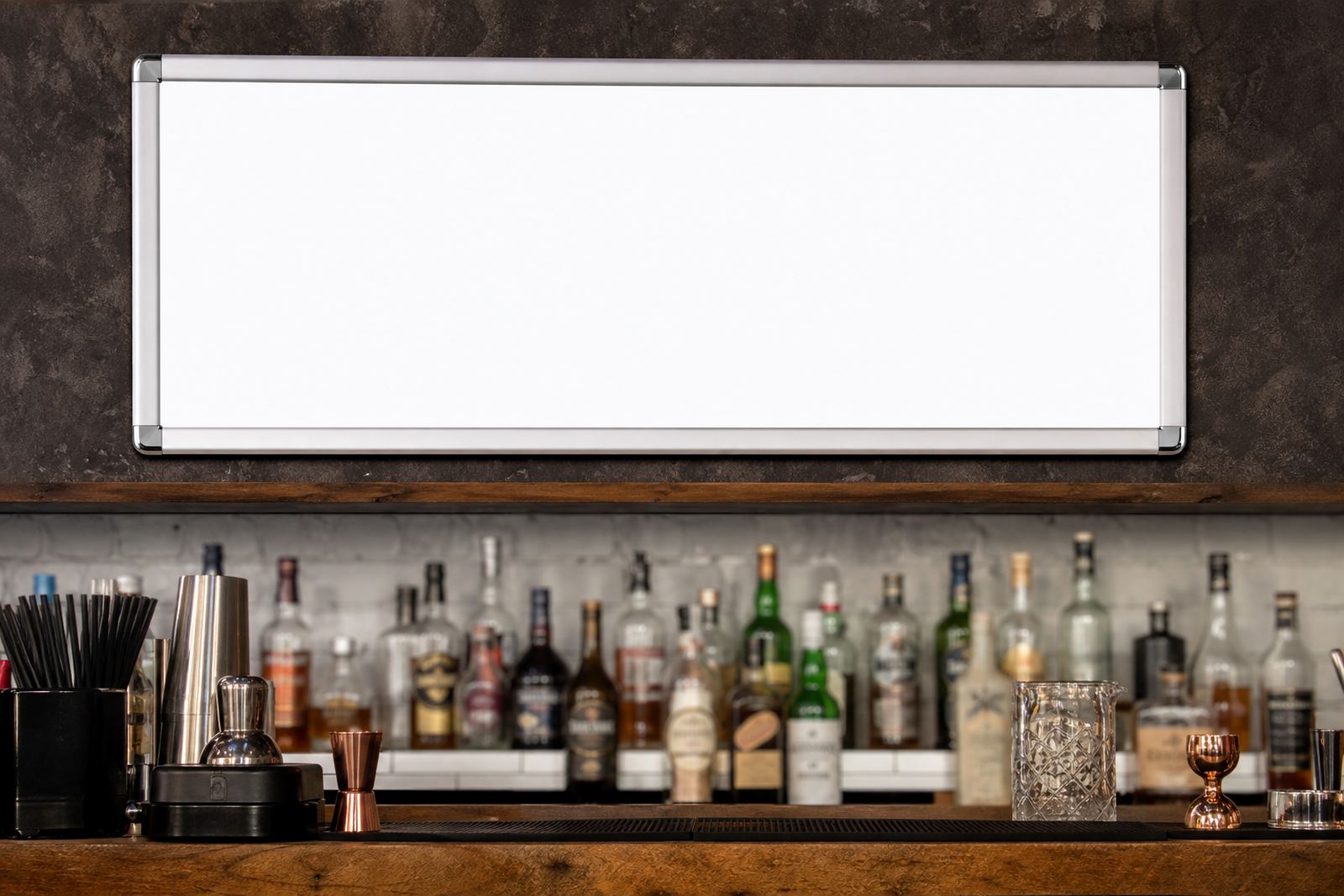
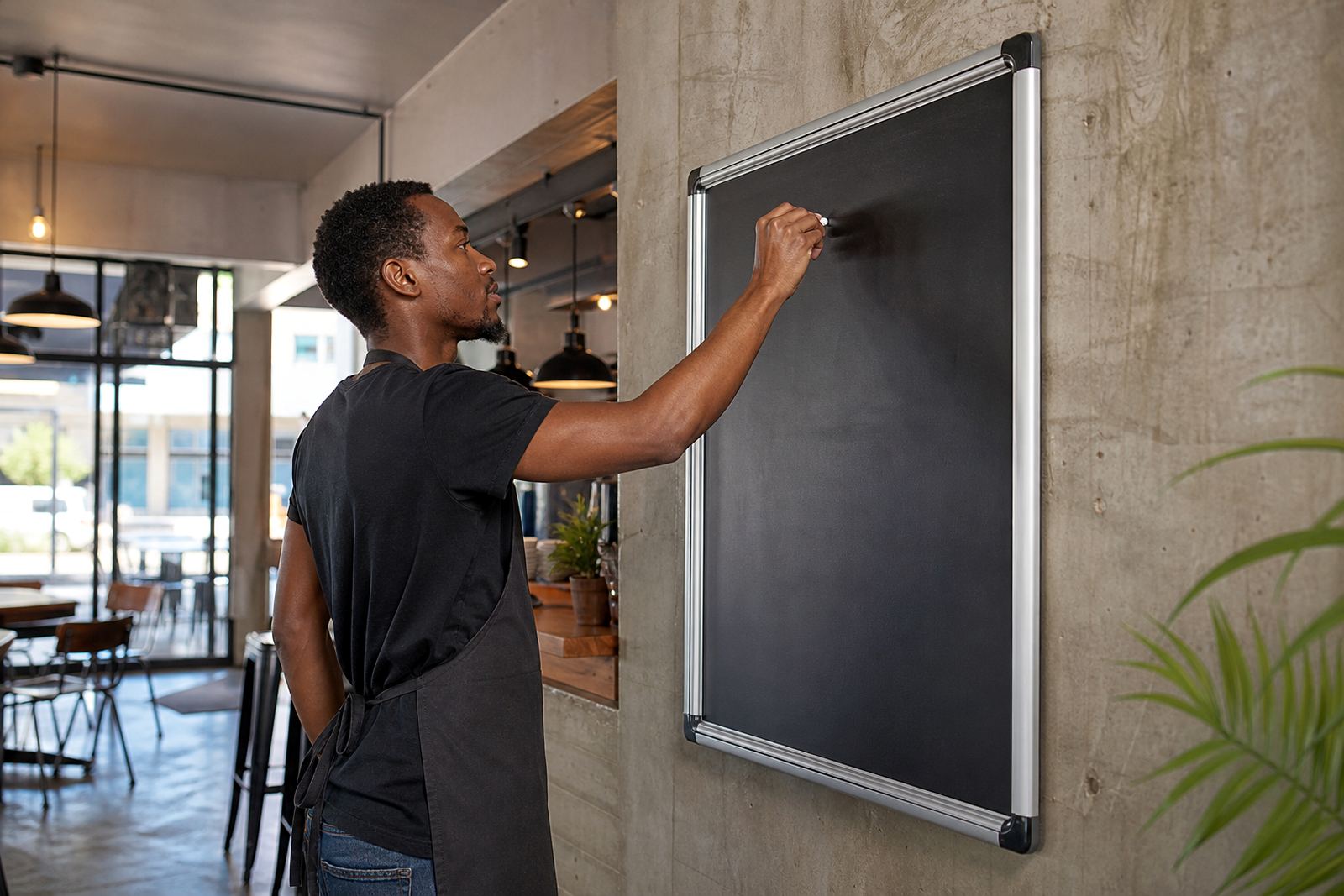
A specials board routine begins with a fixed surface and a fixed place in the room. Some teams prefer a chalkboard near the till, while others use an A3 snap frame on the wall or a window mounted board where passers-by can see the day’s offer. The point is consistency, because staff should not be guessing where the lunch special lives just before the first coffees go out.
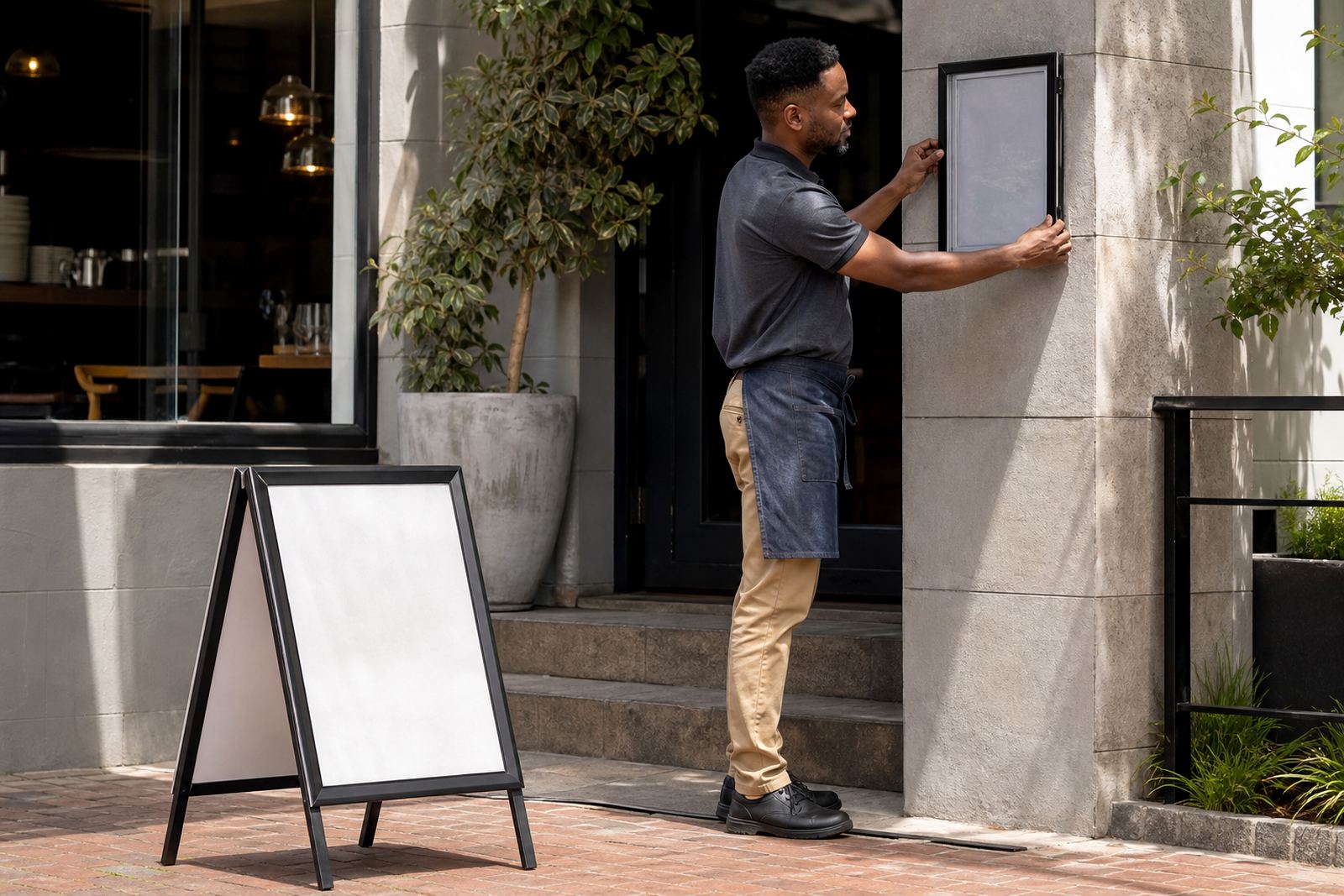
For compact takeaway counters in Paarden Eiland or Bellville, a wall frame near the queue works well. In a café in Stellenbosch, a standing A-frame by the entrance can catch foot traffic before people settle at a table. The board itself should be easy to read at arm’s length, with enough space for the main special, the price and one short line on what changes through the day.
Set the layout before the first cup is poured
Good specials boards are not crowded. The best boards keep the same structure from one day to the next, so the team only changes the words, not the whole layout. That means a clear heading, a main offer, a price line and a smaller note for add-ons or serving times. If you use printed inserts, keep the menu size matched to the frame so nobody is trimming corners with scissors during the rush.
- Use one heading for the day, such as lunch special or breakfast special.
- Leave space for prices that may change with portion size.
- Keep handwriting or print style consistent across the board.
- Match A4 or A3 inserts to the frame size, not the other way round.
- Use anti-glare covers where sunlight catches the window.
A clean layout also helps when the board changes twice in a day. A breakfast special can move into a curry, toastie or burger offer without the whole board being remade. That saves time and keeps the front of house area looking orderly, even when the kitchen is moving fast.
Choose the right surface for the way you trade
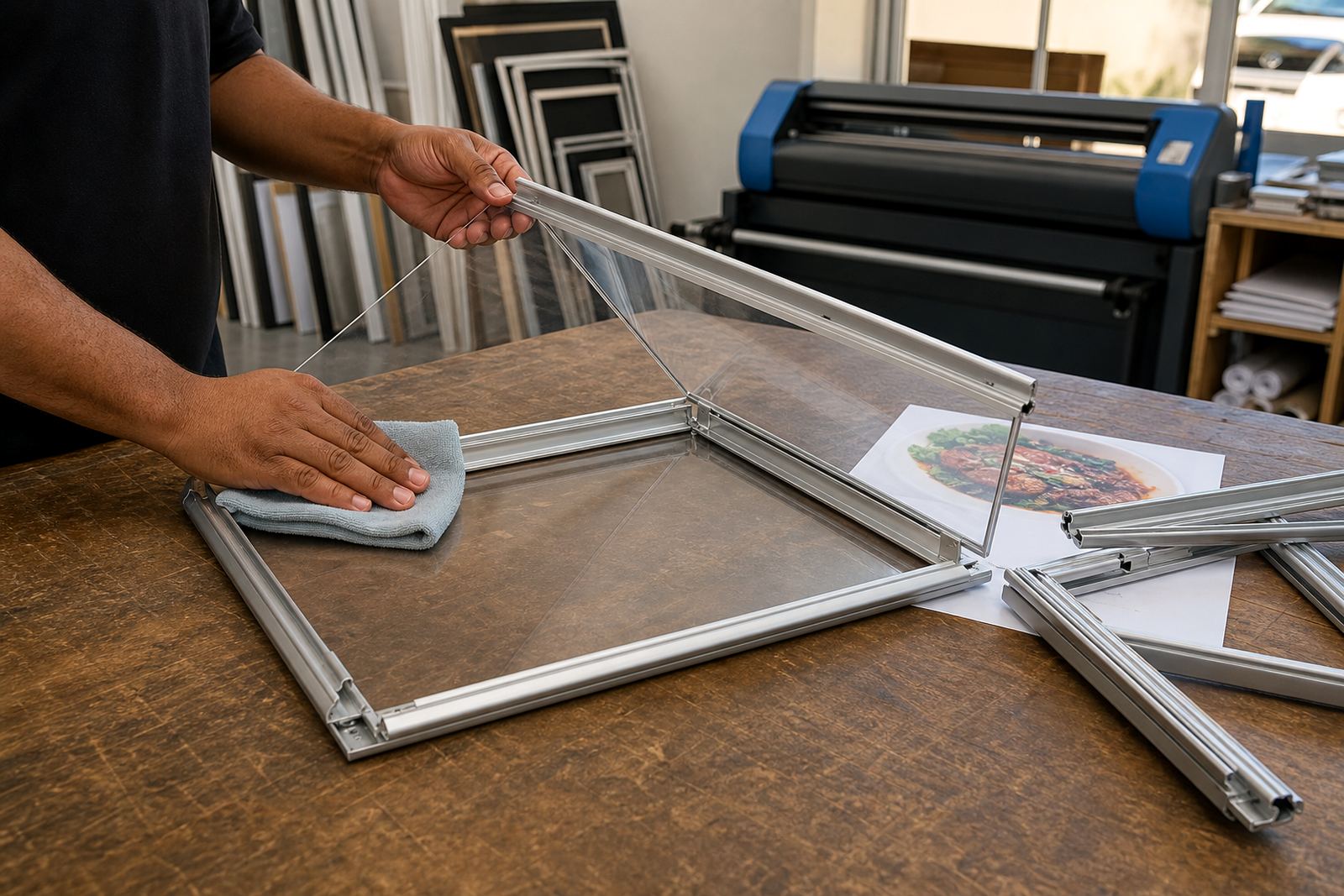
Different counters need different board styles. Chalkboards suit handwritten daily specials, especially where the offer changes often and the team wants a casual feel. Snap menu frames work better when you want printed inserts that stay neat, with aluminium profiles that open and close without tools. A-frame stands are useful for pavement or foyer use, while wall and window mounting suit fixed points inside the shop.
For coastal businesses in Durban or Gqeberha, the frame finish matters because humidity can affect cheaper fittings and warped backing boards. In inland areas such as Johannesburg or Paarl, glare and dust can matter more than sea air, so a cover that stays clear is worth paying attention to. The right surface is the one that lets the board be updated without fuss, while still standing up to daily handling.
Menu boards can also be prepared in print-ready template sizes, which makes it easier to keep specials aligned with the rest of the menu boards around the shop. If the specials board sits beside a wall menu, the spacing and font size should feel related, not copied from a different room.
Keep the update routine in one hands-on sequence
A reliable update routine works best when the same steps happen in the same order. That cuts down on missed items and keeps staff from doubling up on tasks. It also helps new team members learn the board without asking three different people where the marker pens are kept.
- Wipe the board or open the frame and remove yesterday’s insert.
- Check spelling, prices and portion notes before placing anything.
- Match the special to the correct menu size or board space.
- Close the frame firmly so the insert sits flat.
- Step back and read the board from the customer side.
When a board is checked from the front of house side, small problems show up fast. A line can be too long, a price can sit too close to the edge, or a chalk mark can disappear in bright light. That last look only takes a moment, but it often saves embarrassment during service.
A local example from a busy Cape Town morning
Picture a breakfast counter in Milnerton with early office traffic and a few takeaways moving out the door. The specials board sits near the till, while an A-frame at the entrance shows the day’s sandwich and coffee deal. Before opening, the team swaps in fresh printed specials, checks the pricing and makes sure the chalkboard has only one main offer written large enough for people standing in line.
By mid-morning the same business may shift to toasted lunches and a new soup special. Because the board was set up with a fixed layout, only the centre panel changes. No one is trying to redraw a whole list while customers wait, and the board still looks clean enough for a late-morning walk-in from across the road. That sort of routine suits Cape Town trading where a morning can move from quiet to busy very quickly.
Printing, inserts and finish details that hold up
Printed specials need a finish that matches the way the board is used. Short run printing suits daily or weekly changes, while laminated menu prints and poster insert printing help protect the sheet from fingerprints and moisture. If the board is near a doorway or window, a matt cover can reduce glare and make the text easier to read from a distance.
Colour matching matters too, especially when the specials board sits beside a larger menu wall. A red price line, black body text and a clear heading can be enough. The cleaner the finishing, the less time staff spend fixing curled edges or reprinting a page that arrived cut slightly off. Courier packaging also matters for businesses ordering to Stellenbosch, Johannesburg, Durban or Gqeberha, where a flattened insert or bent corner would slow the next service cycle.
When the board needs to match the rest of the room
A specials board should feel like part of the room, not a separate notice stuck on later. If the main menu uses A4 inserts in snap frames, the specials board can follow the same sizing and finish so the counter looks planned. If the shop uses chalkboards for handwritten changes, the same style should carry through the seating area and the service point.
For restaurants, cafés and takeaway counters, this kind of discipline helps staff move through service without confusion. It also gives customers a steadier read on what is available, whether they are ordering in Bellville, passing through Paarl or picking up food in Gqeberha. At SnapperFrame Menus in Paarden Eiland, our contact form is used for menu updates, resizing, proofing and courier packaging when a board or insert needs to fit the way a business already works.