The first stop at the door
In busy restaurants and cafes, the host point carries a lot of pressure. Guests want to know whether they wait inside or outside, whether table service is available, and which menu items are ready now. A snap frame or wall menu board gives that information a clean place to sit, instead of relying on a handwritten sheet that curls at the corners or fades in sunlight.
For a restaurant entrance in Milnerton, a framed notice can hold the day’s breakfast window, lunch cut-off times, and a short note on seating rules without crowding the counter. The point is not to overload people. It is to make the decision at the door easier, especially when the room is full and the staff are already sorting bookings and walk-ins.
Which frame suits which front counter
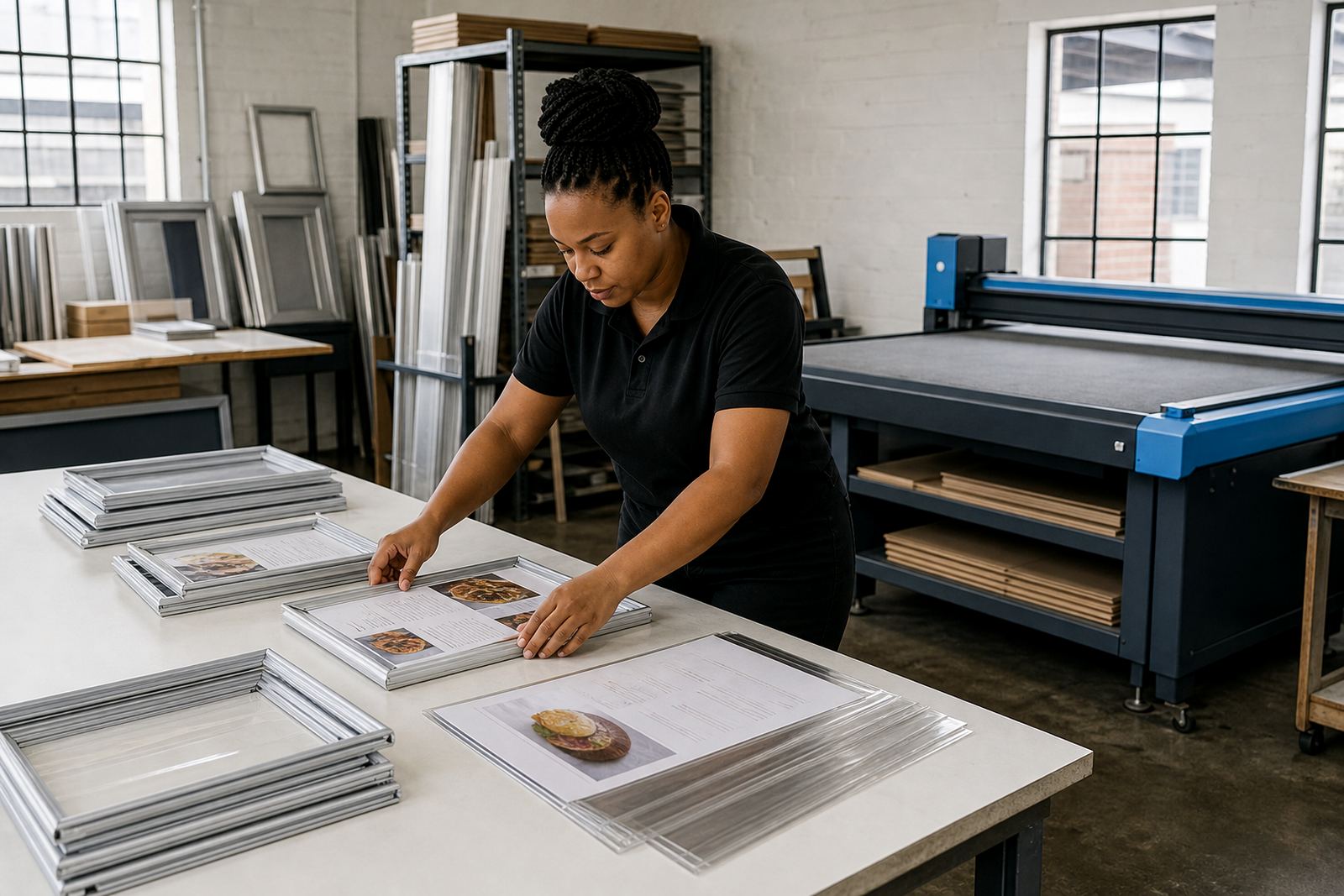
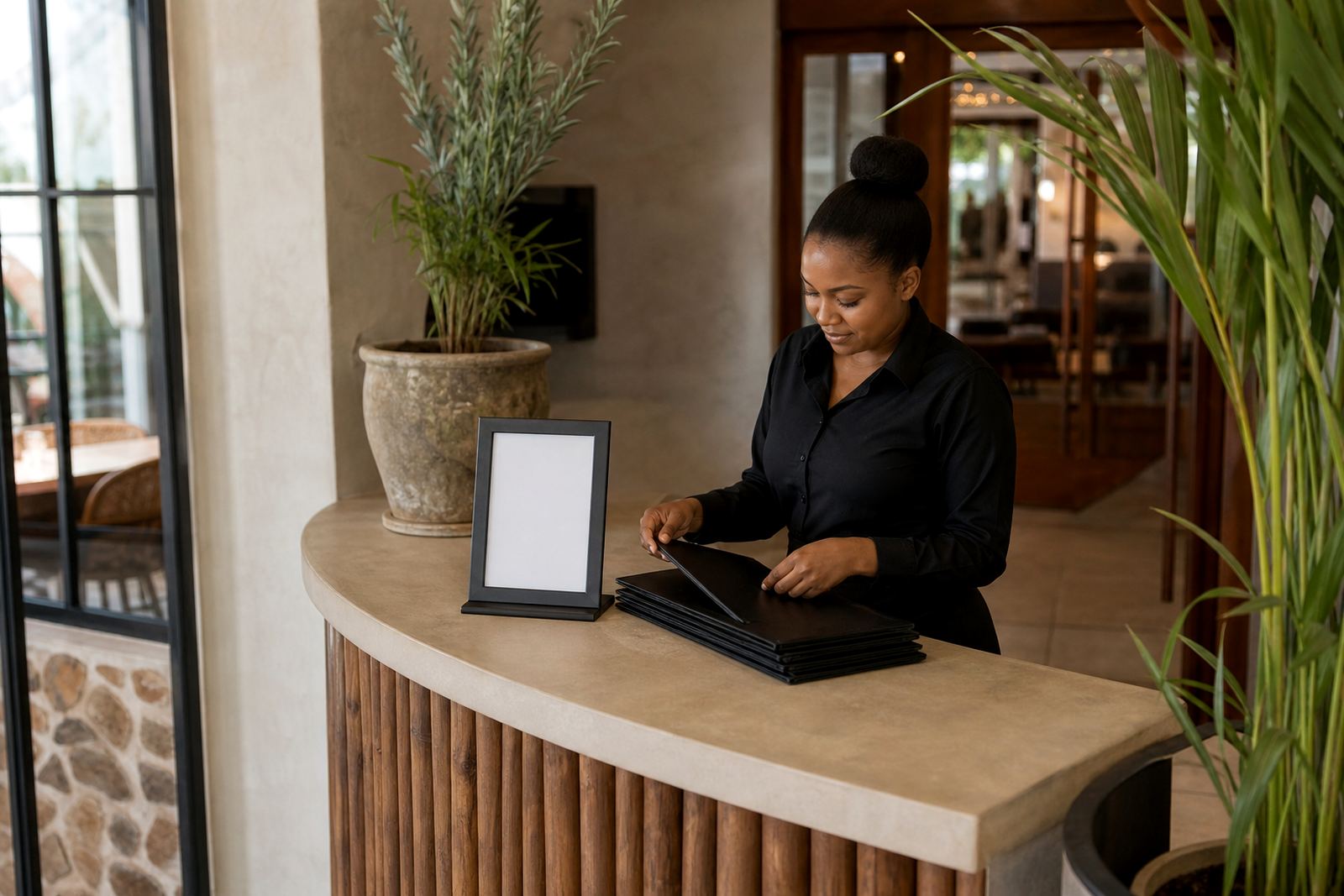
A4 and A3 snap frames work well where the message changes often. The aluminium profile opens at the edge, so printed sheets can be swapped without tools. That matters for specials boards, service hours, table rules and short menu highlights that move with the day.
- A4 suits narrow wall space, till points and side windows
- A3 gives more room for menu highlights and clearer type from a few steps back
- Anti-glare covers help when a front window catches morning sun
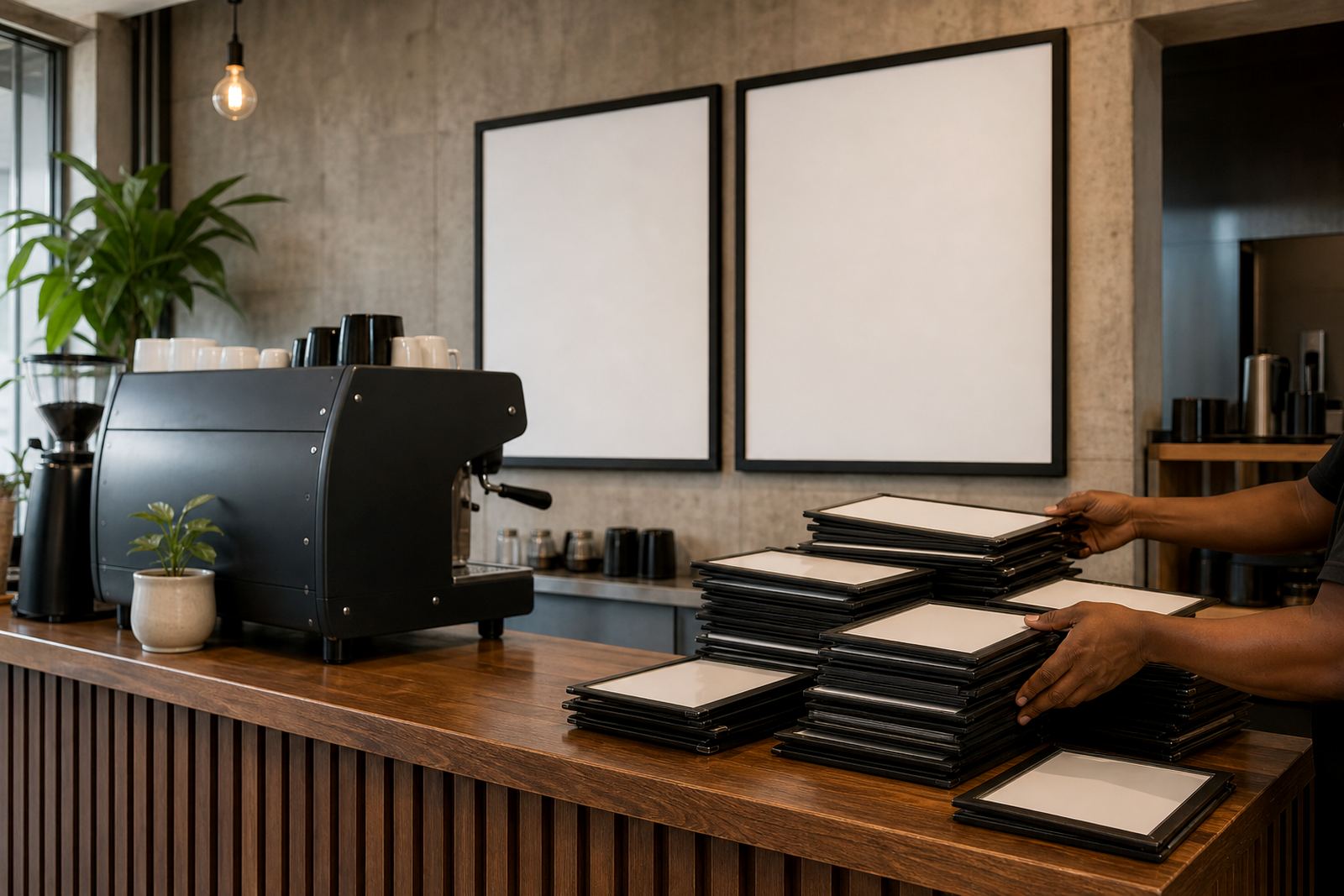
- Wall mounting keeps the notice steady in a tight host area
- Window mounting works well when passers-by should read the offer before entering
In a takeaway counter, an A3 frame can carry a simple breakfast list in the morning and a shorter lunch notice later. For smaller cafes, an A4 board near the door may be enough if the text is planned properly and the line spacing is not cramped.
What belongs on a host point board
A host point is not the place for every detail from the kitchen. It works better as a short, practical board that helps guests settle in. Seating policies, opening times, payment notes and a few highlighted items are usually enough. If the board is too crowded, nobody reads it properly and staff still have to explain the basics at the counter.
For example, a Cape Town cafe may need to show that breakfast orders close at a certain time, that outside seating is weather dependent, and that a few hot items are available all day. A printed insert inside a snap frame gives that message structure, while still allowing the team to update the text when the menu changes or a special runs out.
- Seating notes for indoor, patio or counter service
- Trading hours and kitchen cut-off times
- Short menu highlights such as breakfast, lunch or daily specials
- Queue guidance for busy periods
- Payment or takeaway collection notes
Print sizes that read properly
Menu printing size changes the whole feel of the front area. Small type in a large frame looks lost, while overfilled pages look crowded and hard to scan. A4 templates work well for concise notices, while A3 gives more breathing room for item names, prices and a short note on seating or service times.
Where the board faces a walkway, larger type and stronger spacing help. Where it sits beside the till, a tighter layout can work if the details are limited. In practice, the best front counter boards are usually the ones that combine one clear heading, a few lines of useful text, and enough white space for the eye to settle.
We prepare menu templates, menu resizing, menu typesetting and proofing so the printed insert fits the frame properly. Short run printing, laminated menu prints and poster insert printing also help when the same menu needs different versions for the wall, the window and the counter.
A-frame stands for pavement notices
An A-frame menu stand has a different job from a wall frame. It catches people before they reach the door, which is useful on busy pavements and shared retail fronts. In places like Stellenbosch or Durban, where foot traffic changes through the day, an A-frame can point guests toward a breakfast special, a lunch board or the host point inside.
These stands are handy when the message needs to face both directions or move with the flow of people. Chalkboards can work for handwritten specials, while printed inserts give a neater finish for stable notices and branded menu highlights. The right choice depends on whether the content changes daily or stays fixed for longer.
- Use chalkboard panels for fast handwritten specials
- Use printed inserts for trading times and seating notices
- Place the stand where foot traffic slows naturally
- Keep wording short so the board can be read in motion
A local example from the Paarden Eiland side
In Paarden Eiland, a small food counter serving trade workers and nearby offices might need a front notice that does three things at once. It welcomes guests, shows the day’s service window and points out the dishes that move fastest. That can be done with one wall frame at the entrance and a smaller A-frame outside for the pavement side.
On windy days near the coast, a framed insert stays tidier than loose paper. Anti-glare covers help where morning light hits the front glass, and aluminium profiles hold up well in regular handling. If the menu changes often, the team can keep one master layout and update only the parts that need to shift, such as specials, hours or seating rules.
SnapperFrame Menus works from Paarden Eiland, Cape Town, with courier delivery across South Africa, including Cape Town, Stellenbosch, Johannesburg, Durban and Gqeberha. The same approach suits a single entrance board or a wider set of frames for wall, window and counter use, with print-ready templates to keep the layouts consistent.
Keeping the front neat without losing the message
A good host point board should make life easier for both guests and staff. It needs a firm frame, readable text and a layout that does not fight with the rest of the entrance. Once the notice is in place, the counter feels more organised and the first questions at the door are easier to handle.
The team behind the work includes Marius Mlambo, Anele Zondo, Bianca Ebrahim, Thabo Kajee, Liam Mkhabela and Zanele Wessels, with services that cover colour matching, print finishing and courier packaging. That matters when one branch needs a wall-mounted frame, another needs a window insert, and a third wants an A-frame stand for the pavement.
For host point information, the best board is usually the one that does not ask for attention longer than it should. It gives the guest a quick read and leaves the rest of the space to the room itself.