Start with the frames that carry the most change
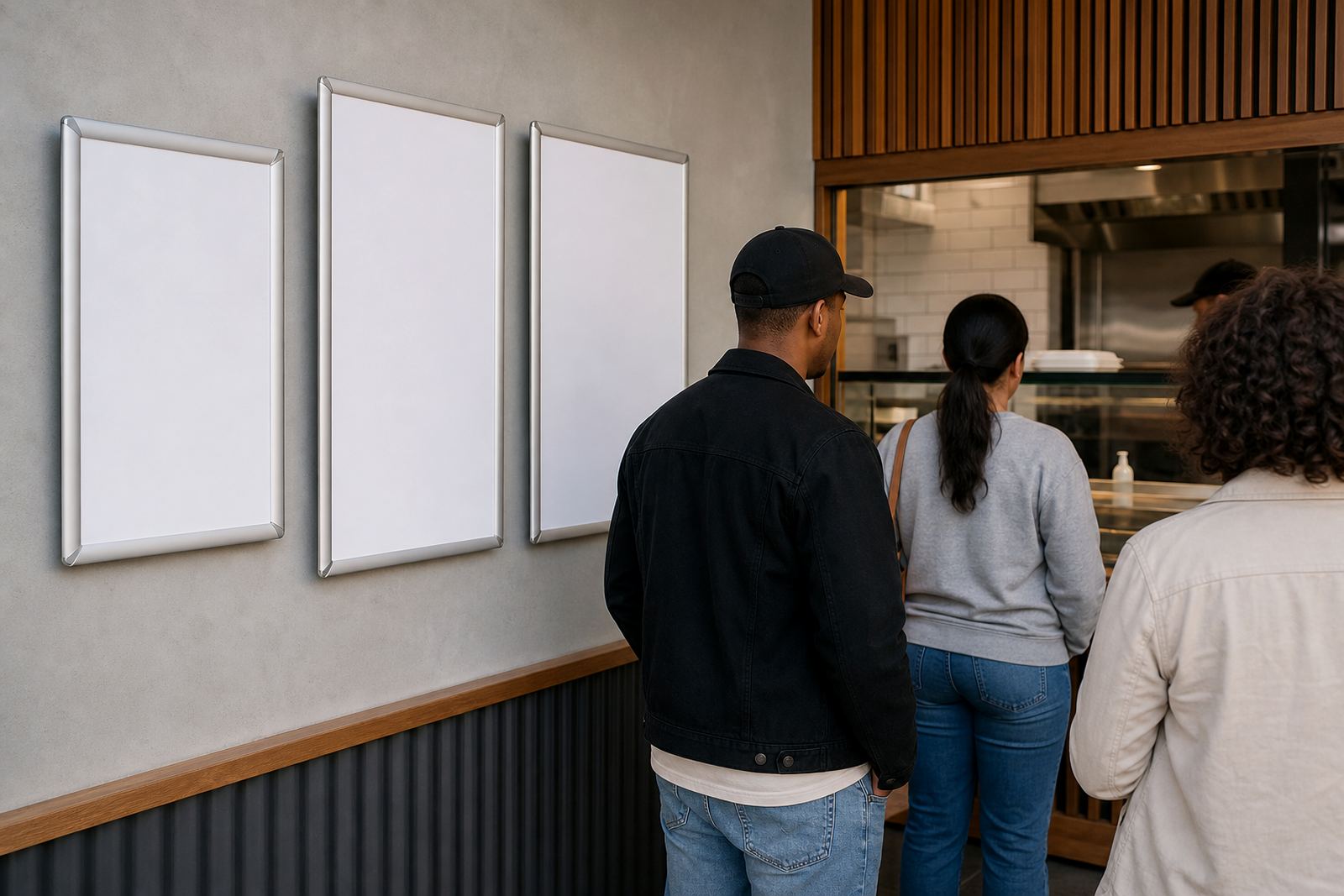
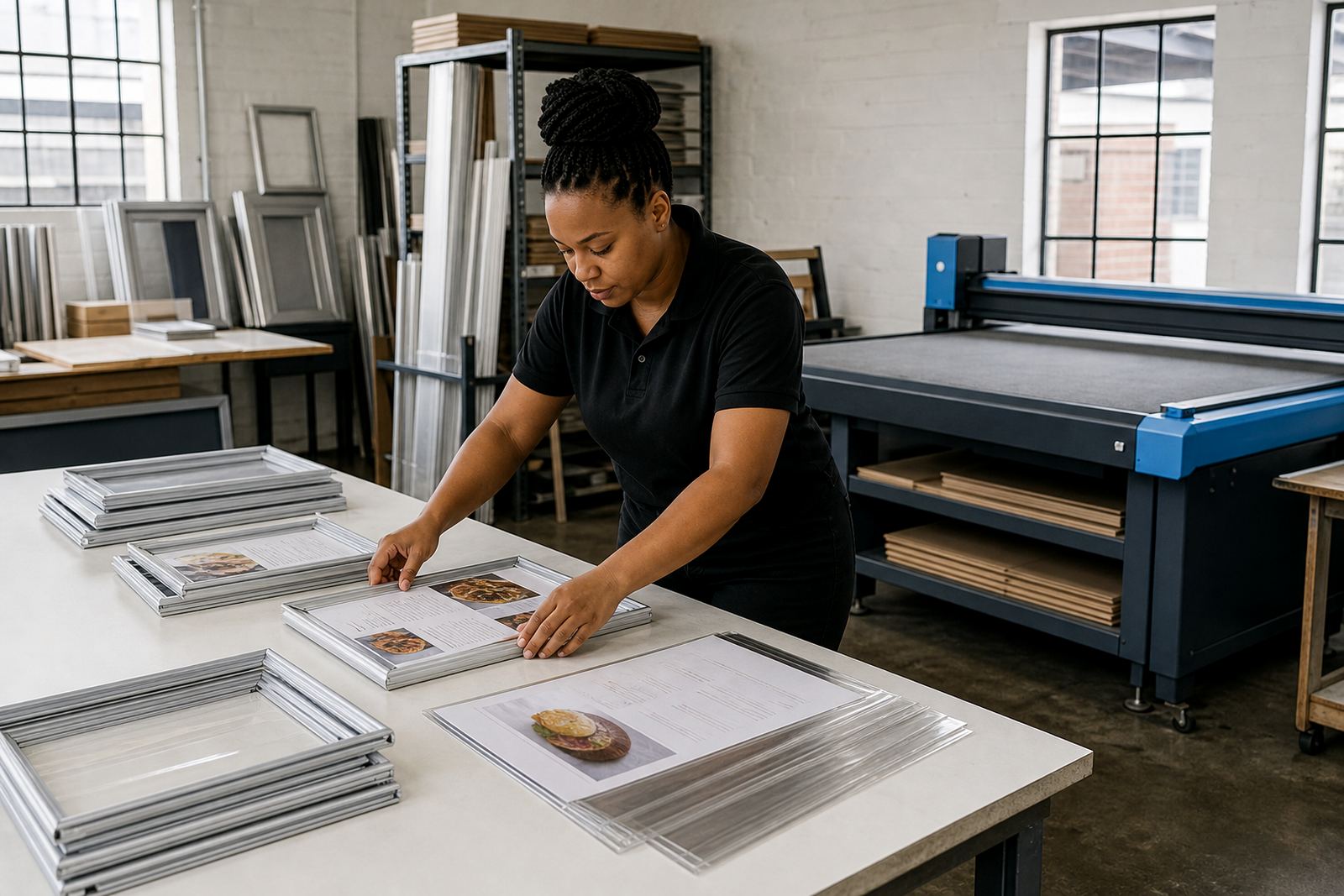
A menu system works best when the busiest items sit in the easiest-to-update frames. A4 snap frames suit narrow boards, specials and short lists, while A3 frames give more room for lunch menus, drinks or a fuller takeaway board. When the same size appears across several walls and counters, a team can swap inserts without hunting for the right fit.
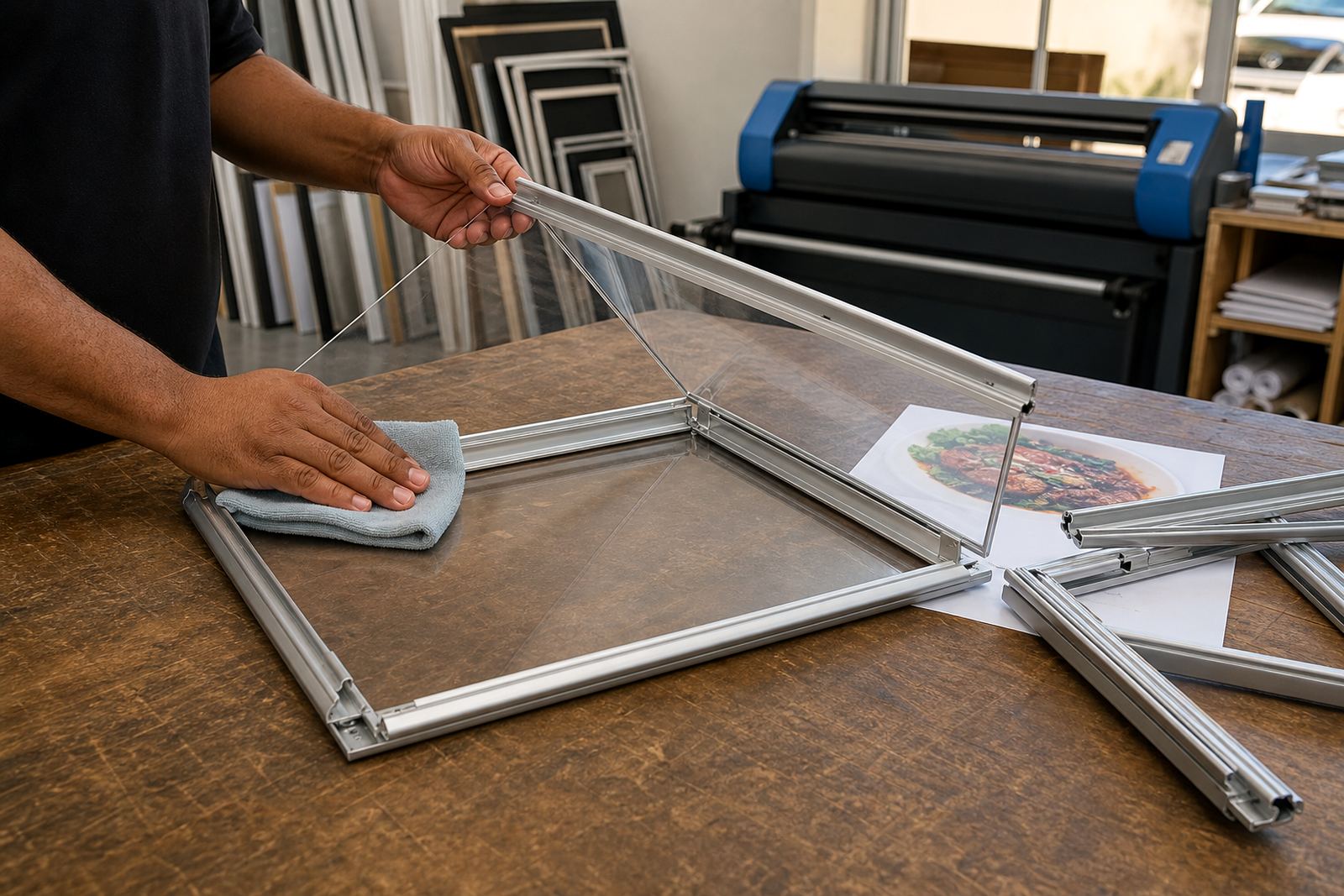
Aluminium profile frames with clear anti-glare covers help keep the printed sheet flat and legible under strong light. In Cape Town and Stellenbosch, where sunlight can hit a front window hard, the cover matters as much as the print. For restaurants near the coast, a tidy edge finish also helps the frame stay neat in humid air.
Build one master layout, then trim it for each spot
Many menu delays happen when every board is treated as a fresh start. A better routine is to build one master layout and then resize it for the places it will live. That keeps type, spacing and logo placement steady from the wall board to the A-frame stand outside the door.
- A4 inserts work well for short daily specials and tasting notes.
- A3 inserts suit larger wall boards and street-facing signs.
- Menu resizing keeps the same content readable after a format change.
- Menu typesetting helps line breaks sit cleanly across the page.
When the artwork is set properly, the same menu can move between a shop front in Milnerton and a takeaway counter in Bellville without looking patched together.
Proof the insert on paper before the first print run
Printed menus often look fine on screen and awkward on paper. A proof catches crowding, missing accents, awkward line breaks and item names that run too close to the edge. It also helps when colour matching matters, especially where a brand uses a deep red, warm grey or soft black across several boards.
Short run printing is useful when the menu is still being tested or when one branch needs a smaller batch than the rest. Laminated menu prints and poster insert printing add another layer of control, because the sheet can stand up to handling, light cleaning and repeated inserts. That matters at a counter where staff handle menus many times a day.
Use a replacement rhythm that matches trading patterns
A good update routine follows the way the venue trades. A cafe may change breakfast and lunch inserts once a day, while a bar may keep a drinks board in place for longer and only swap specials boards on selected nights. Takeaway counters often need a split system, with one frame for core items and another for rotating deals.
- Keep a printed master set in the same order as the frames on site.
- Store spare inserts flat in labelled sleeves.
- Match each board to a size note, not a guess.
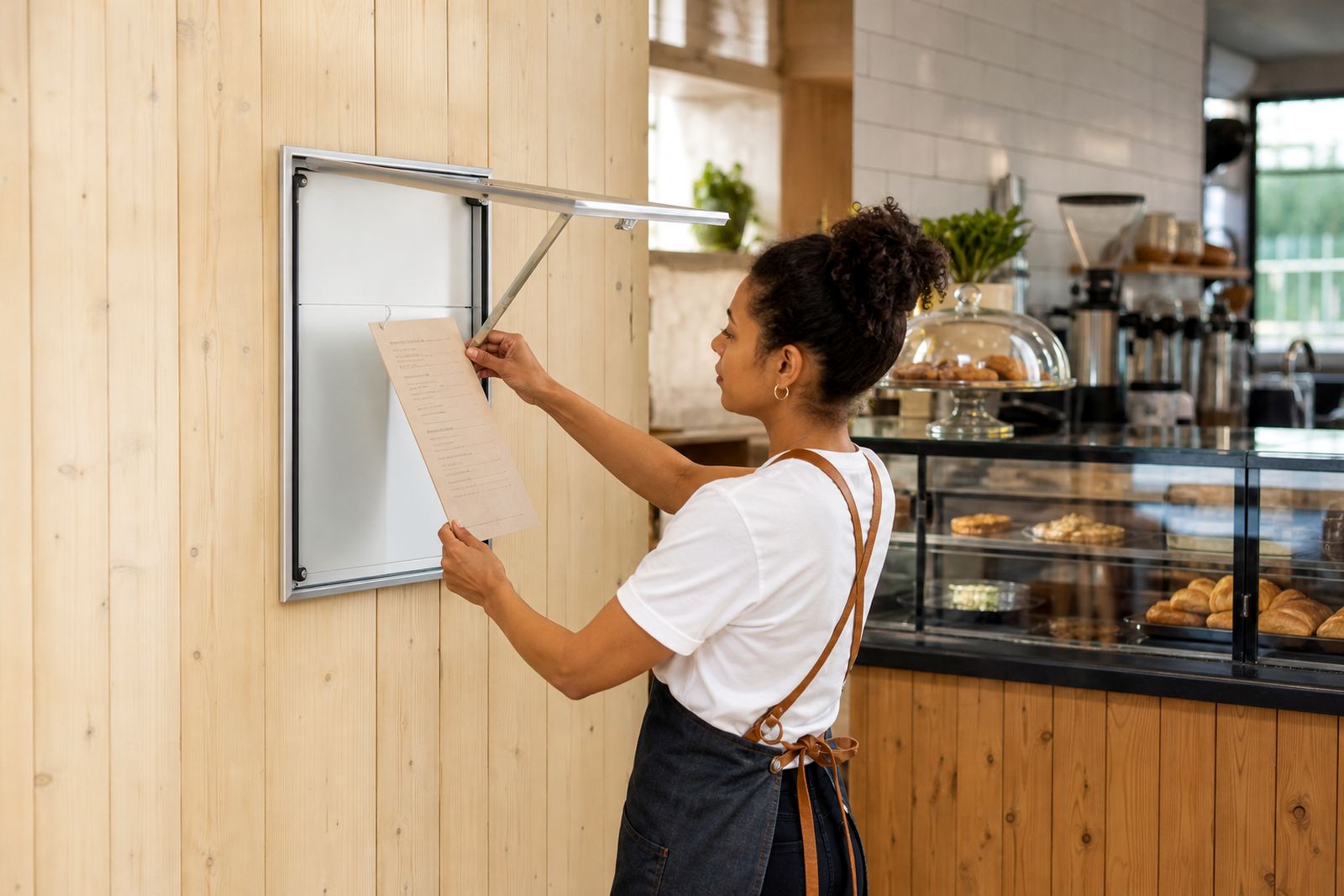
- Check the edge clips before inserting the new sheet.
That small routine saves time and cuts down on crooked prints, missing pages and last minute panic before service.
A-frame stands need different handling from wall boards
A-frame menu stands sit in wind, foot traffic and dust, so their inserts need more care than a wall board. The print must be cut square and packed so the corners stay crisp. On exposed pavements in Cape Town or Gqeberha, courier packaging has to protect the board from bending while still keeping the frame easy to open on site.
Window mounting, wall mounting and floor-standing frames all ask for a slightly different layout. A board near glass may need stronger contrast. A stand at the pavement edge may need larger type. A wall board behind the counter may need tighter spacing so staff can read it at a glance, without leaning in over the till.
A local example from Paarden Eiland to the branches
A practical example is a small group with one kitchen in Paarden Eiland and service points in Cape Town, Durban and Johannesburg. The main team keeps the master menu set in one format, then sends regional inserts for drinks, local specials or priced items that differ by branch. A4 templates cover the counter boards, A3 templates handle the main wall menus, and the A-frame stand carries the daily offer outside.
When the files are prepared in one sequence, the printing, finishing and packing all follow the same order. That makes it easier to send out menu updates to Stellenbosch, Paarl or Bellville without mixing versions. It also helps when a venue needs new laminated menu prints after a short run promotion has ended and the next insert has to slot in cleanly.
Keep one person on the menu side of the counter
Most menu systems work better when one person watches the full flow from file to frame. In a busy venue, that role may sit with the manager, the front-of-house lead, or the person who signs off the board changes before service. At SnapperFrame Menus, the team in Paarden Eiland handles the process from typesetting through to courier packaging, with each job set up for the frame size that will hold it.
That kind of routine keeps the printed menu calm and consistent, even when the board content changes often. It also makes future updates easier because the sizes, notes and finishing choices are already in order.