Lists that change with the pour
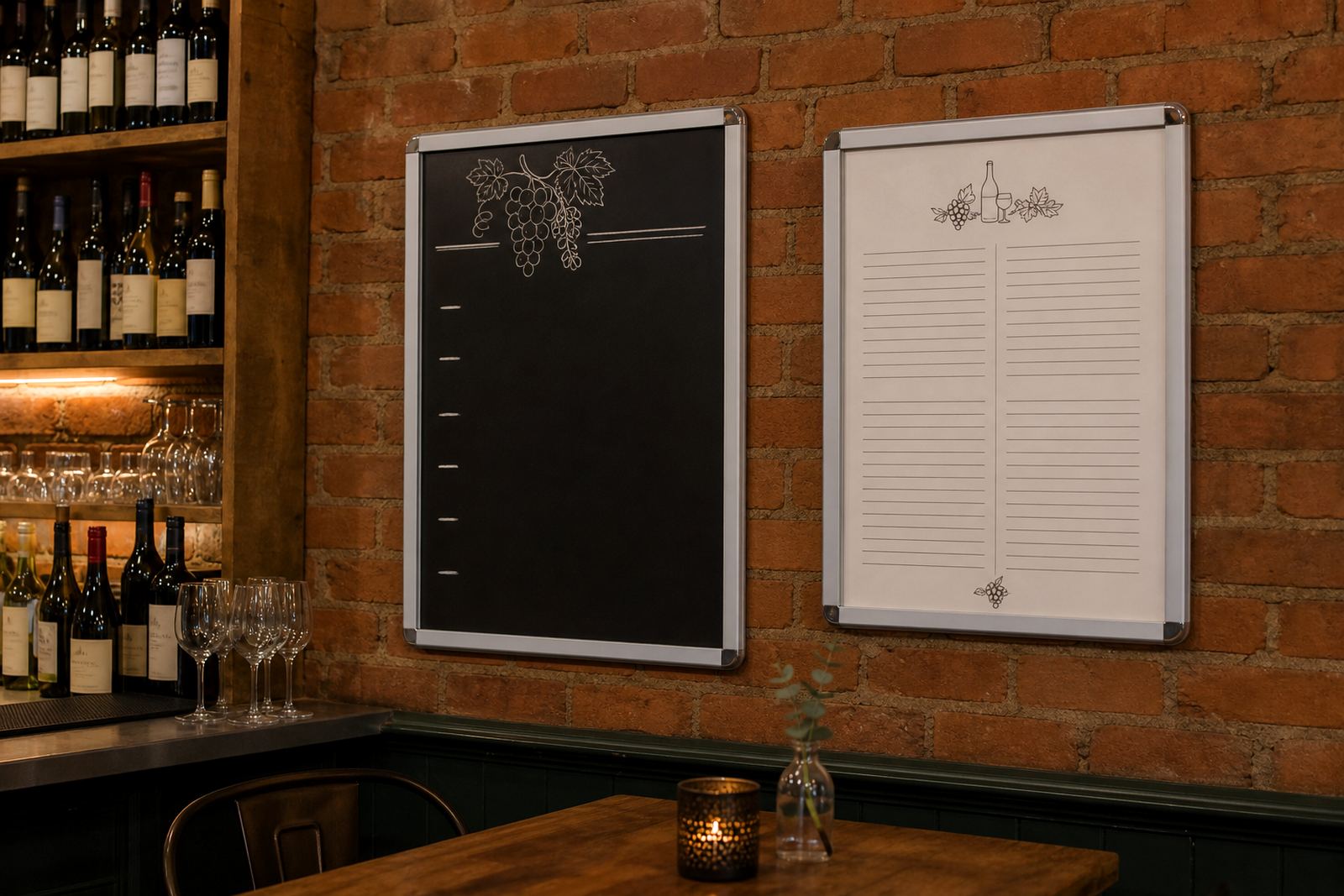
A wine bar usually needs more than one display point. The front door may carry a welcome board, the tasting counter needs a clean by-the-glass list, and the wall behind the bar often holds food pairings, cellar picks or a short flights board. Snap frames suit this because the insert can be changed without tools, which matters when a Chardonnay runs out and a new Cabernet is added before the evening crowd arrives.
For most wine bars, the best starting set is one or two A3 snap frames for headline lists and smaller A4 frames for specials, staff notices or table-side features. If the room has moisture from an ice well, an open cellar door or coastal air in places like Cape Town and Gqeberha, a covered frame with an anti-glare sheet keeps the print readable and cleaner for longer.
The mix that works on a tasting floor
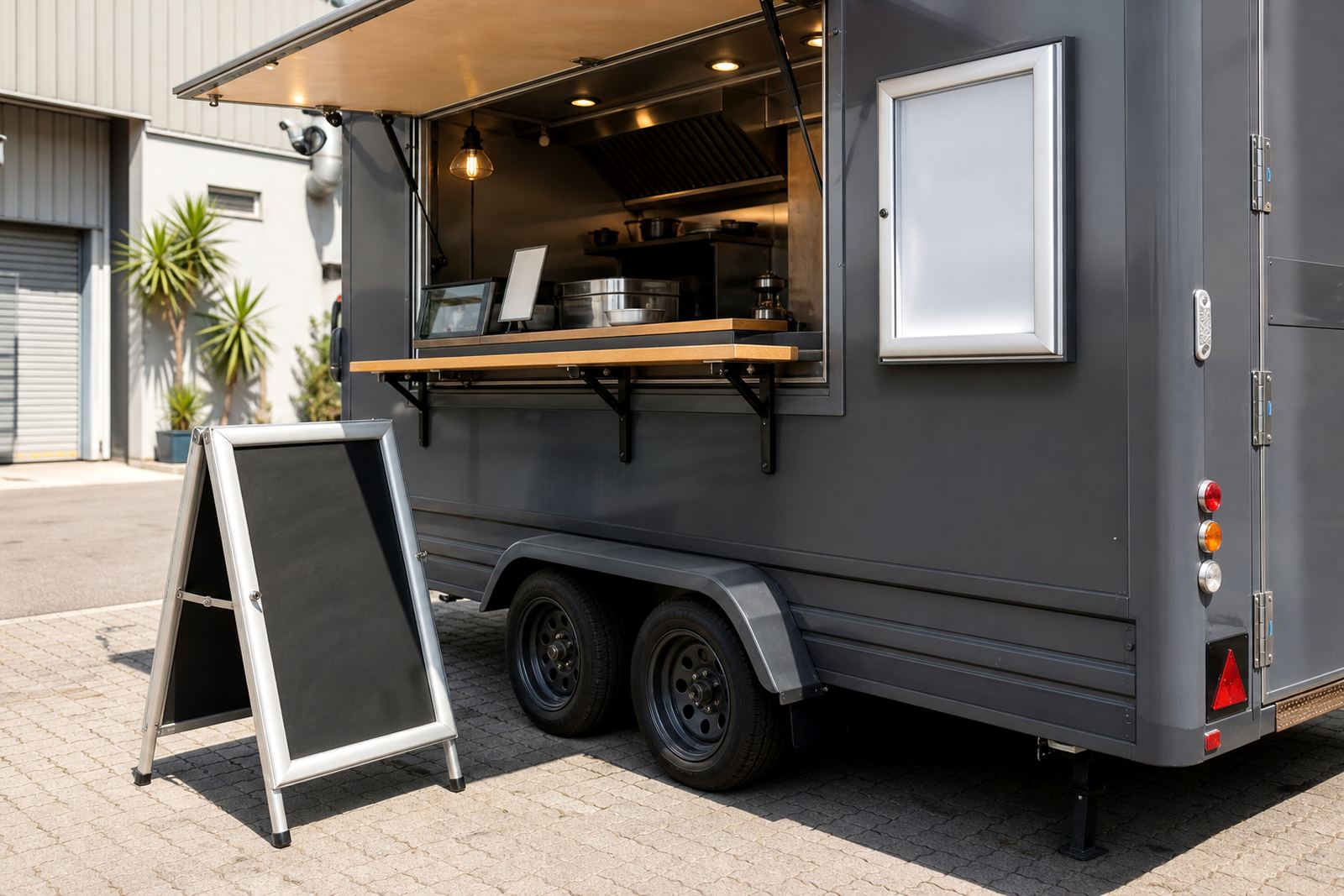
Menus in wine bars are rarely one-size-fits-all. A chalkboard works well for a short rotating tasting board, while printed inserts suit fixed lists that need sharper typography and more control over spacing. A-frame menu stands can be placed at the pavement edge, on a stoep, or near the host point where a passer-by can see the evening specials without stepping inside.
- A3 snap frames for tasting menus, by-the-glass lists and pairings
- A4 snap frames for bottle features, dessert boards and small notices
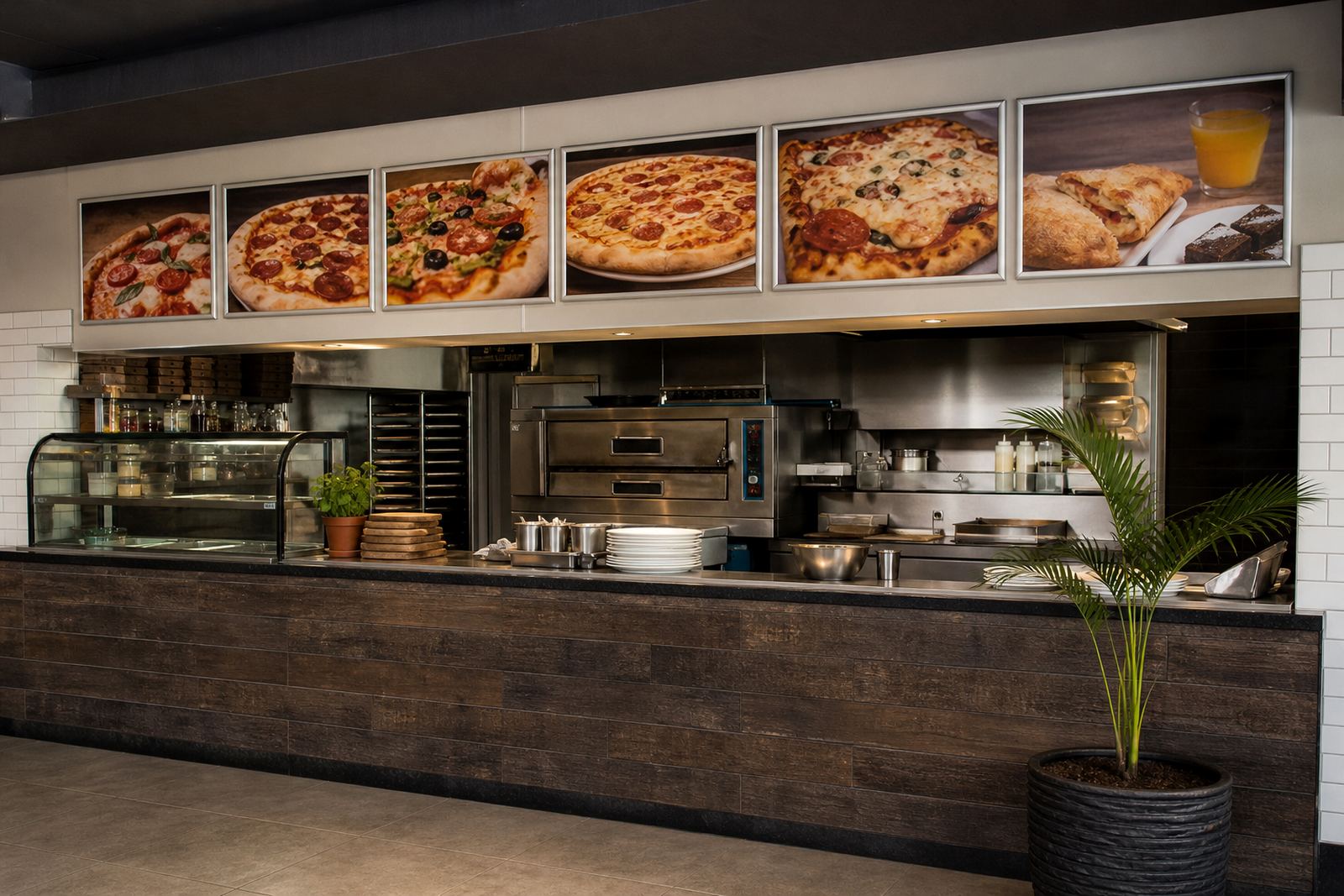
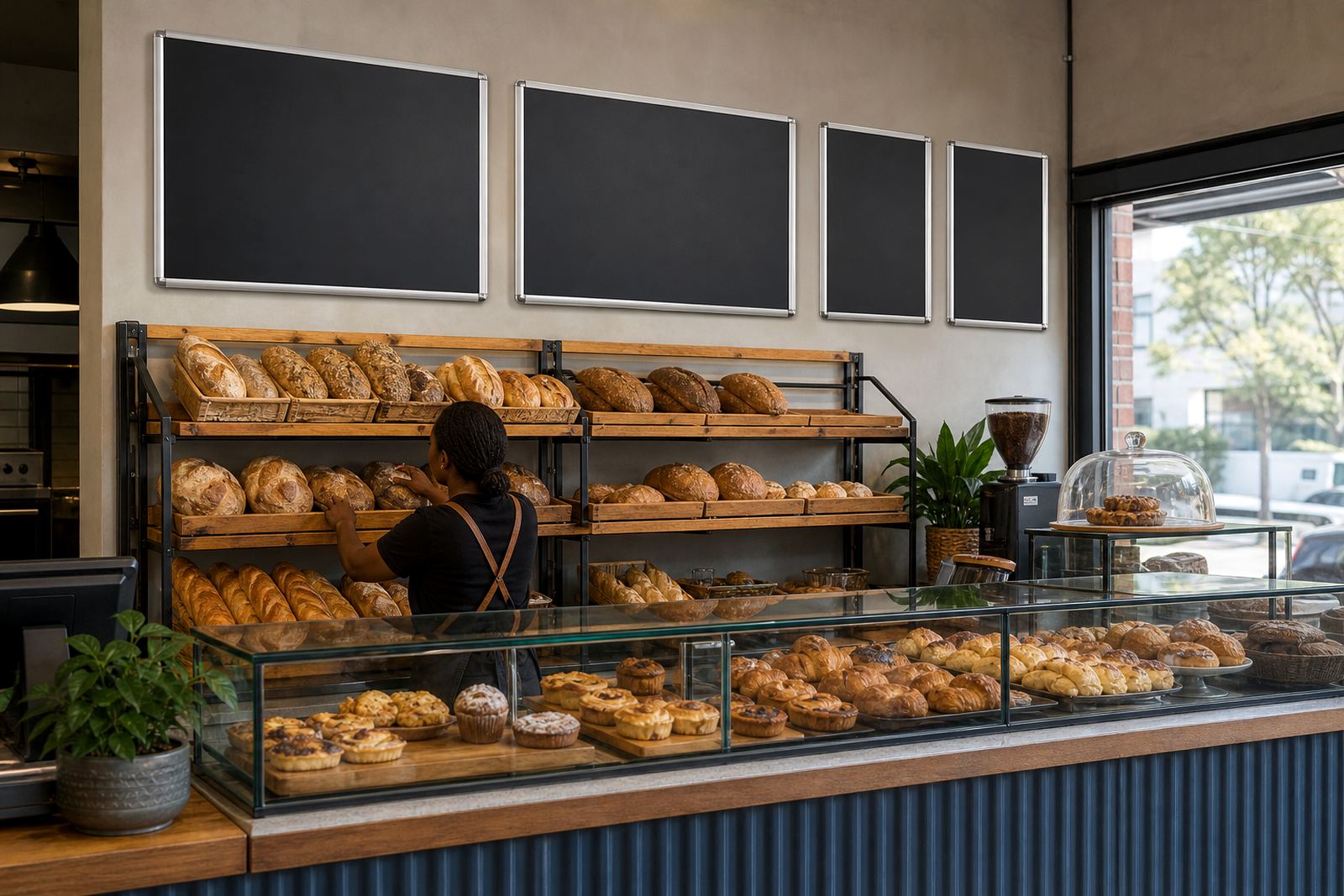
- Wall-mounted menu boards for the back bar or serving station
- Window-mounted displays for street visibility in busy areas
- A-frame stands for entrances, courtyard areas and sidewalk use
- Chalkboards for short handwritten wine notes and seasonal callouts
Where the list changes often, we usually suggest keeping the format simple. Too many text blocks make a wine card hard to scan at a glance, especially during a Friday service when the room is full and staff are moving quickly.
Mapping the menu layout before printing starts
Menu boards work better when the layout is planned around eye level, lighting and walking distance. A wall frame above the bar should be easy to read from a short step back, while an entrance A-frame needs larger type and fewer items. If the bar has mixed lighting, gloss finishes can throw reflections across the page, so an anti-glare cover is often the safer choice.
Our team in Paarden Eiland sets up print-ready templates for A4 and A3 formats, then adjusts the type and spacing so the wine names, vintages and tasting notes sit properly inside the frame. Menu resizing matters when a restaurant moves from a long printed list to a shorter seasonal sheet. If the copy is cramped, the final board feels rushed and that shows straight away.
For room planning, the practical questions are usually about where a guest first notices the menu, where the server stands, and which boards need to be updated most often. That is usually enough to decide whether a wall frame, a chalkboard or a freestanding A-frame carries the job best.
Print choices for bottles, pours and pairings
Wine bars often need a combination of laminated prints, poster inserts and short-run printing. Laminated menu prints hold up well on tables and counters where glasses, condensation and light wiping are part of the night. Poster insert printing suits a frame where the entire page can be swapped when the list changes. If the bar uses tasting flights or seasonal pairings, a separate insert can keep those notes apart from the main wine list.
Colour matching matters more than many owners expect. Burgundy, charcoal, cream and deep green can look very different once printed under warm bar lighting. A proof helps keep the final tone close to the intended look, especially when the list carries a logo, cellar notes or a neat border that needs to stay sharp.
- Short run printing for weekend specials and seasonal wines
- Laminated sheets for table use and bar-side handling
- Menu updates when vintages, prices or pairings shift
- Print finishing for trimmed edges, clean folds and neat corners
- Courier packaging for single sites and multi-branch groups
Common mistakes that make the list harder to read
The most common problem is trying to fit too much into one board. A long wine list with small type becomes tiring to read, and the detail gets lost under dim light or reflections from glassware. Another mistake is using a plain board for a menu that changes every week, then spending too much time reprinting the whole sheet instead of swapping only the insert.
It also helps to keep the format consistent across the venue. A chalkboard at the door, a snap frame at the bar and a laminated table card can work together, but each one should carry a clear role. Mixing different sizes without a plan leaves the room feeling scattered. In Stellenbosch, Cape Town, Johannesburg, Durban and Milnerton, we see that same issue when the entrance board and the bar menu say different things.
If the bar serves food as well, separate the drinks board from the pairings board. Guests should not have to search through three columns to find a glass pour or a tasting note. That small change saves staff time and keeps the front-of-house flow calmer during busy service.
Budget ranges for wine bar menu displays
Budgets depend on size, finish and how many boards the room needs. A basic A4 snap frame setup for a small wine bar can start around R350 to R700 per frame, while larger A3 frames and better finishing push the range higher. Wall boards, chalkboards and A-frame stands usually sit in a wider band because the frame style, board surface and print method all affect the final figure.
For a modest wine bar package with a few wall frames, one entrance A-frame and printed inserts, many jobs sit in the R1 500 to R4 500 range before large-scale installations. A more complete setup with multiple menus, window-mounted pieces and proofing across several print sizes can move into the R5 000 to R12 000 range. Courier packaging adds cost when the frames are going to Stellenbosch, Durban, Gqeberha or further inland, and it is worth planning that into the order from the start.
If a venue updates often, it can be cheaper over time to keep a consistent frame size and only replace the inserts. That reduces waste and makes future menu changes easier to manage, especially when the wine list shifts with the season.