Menus that still read past the oven heat
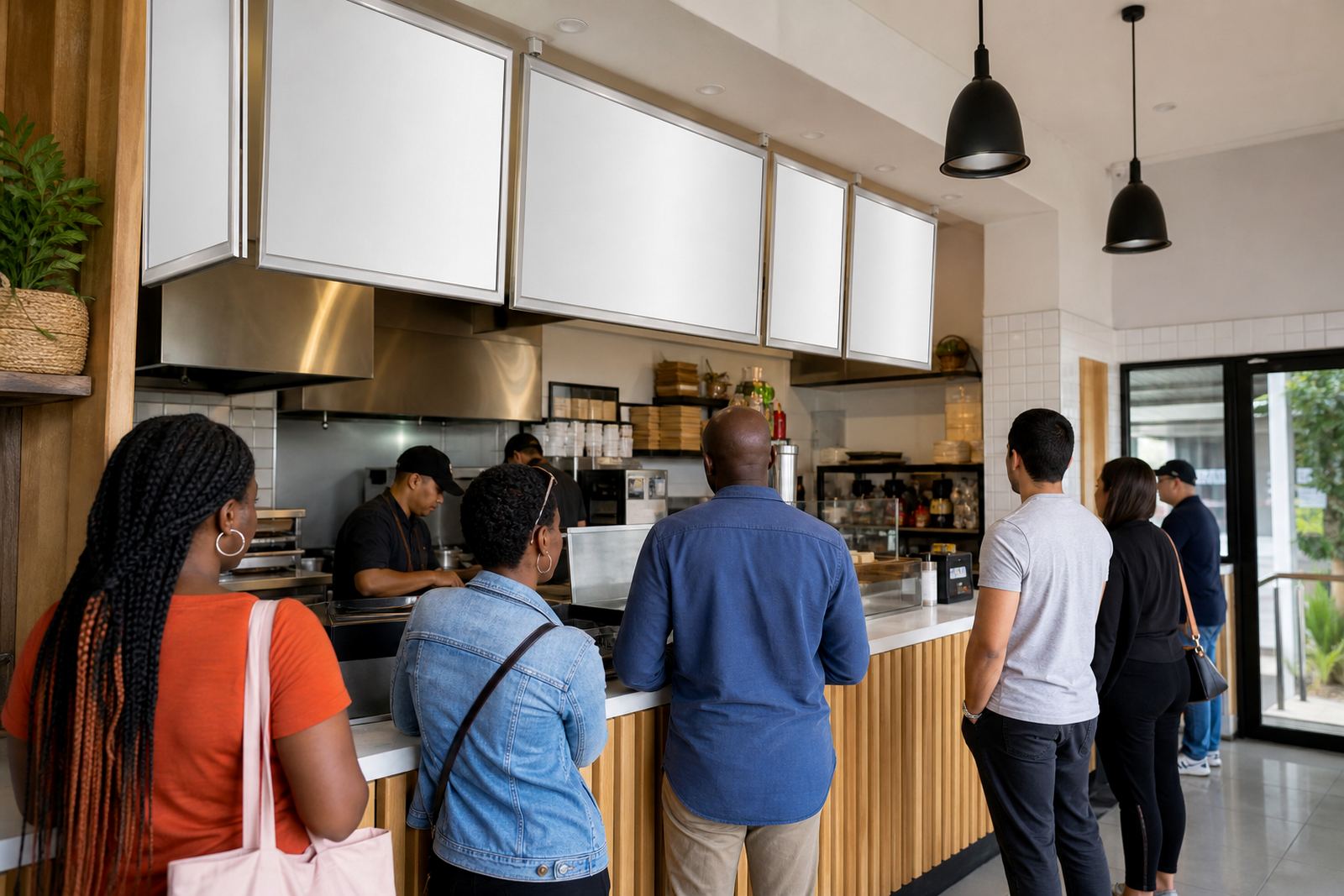
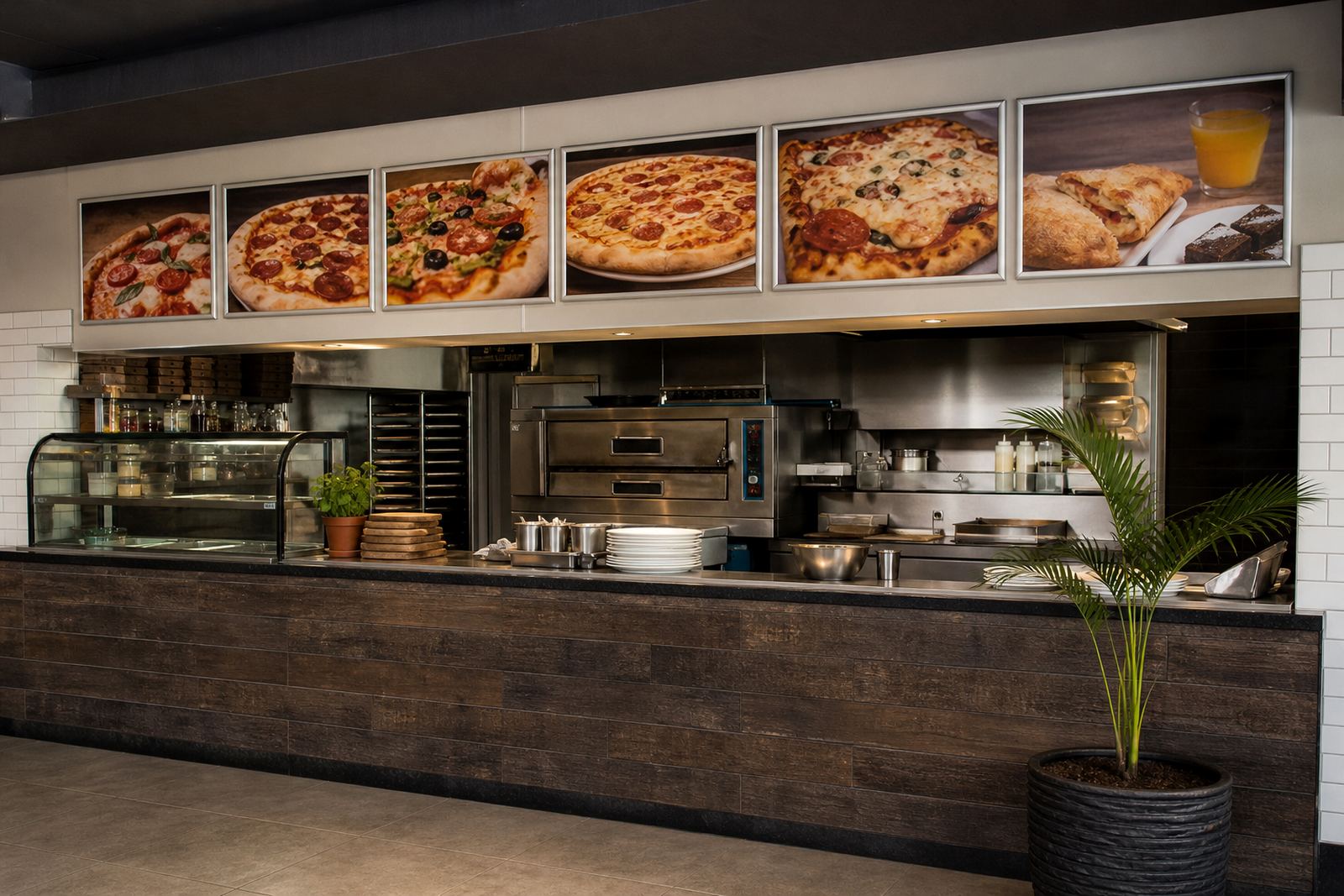
A pizza shop usually has a busy front counter, a warm prep line and customers moving in a tight flow, so the menu has to do its job fast. Large A3 and A4 snap frames work well for specials, while wider wall boards suit the main pizza list, sides and collection deals near the oven line. In Cape Town, coastal humidity and kitchen steam can curl lighter prints, so laminated inserts and anti-glare covers are worth planning for.
We often see shops use one long wall board for the core range, then smaller frames for lunch specials, dips, drinks and takeaway bundles. That keeps the big items steady and lets the fast-moving pricing change without redoing everything on every update.
- A3 snap frames for the main pizza list
- A4 frames for specials, add-ons and notice points
- Anti-glare covers for bright counters and window light
- Wall mounting for fixed menu zones
- Window mounting for promotion boards facing passers-by
What the usual pizza shop set includes
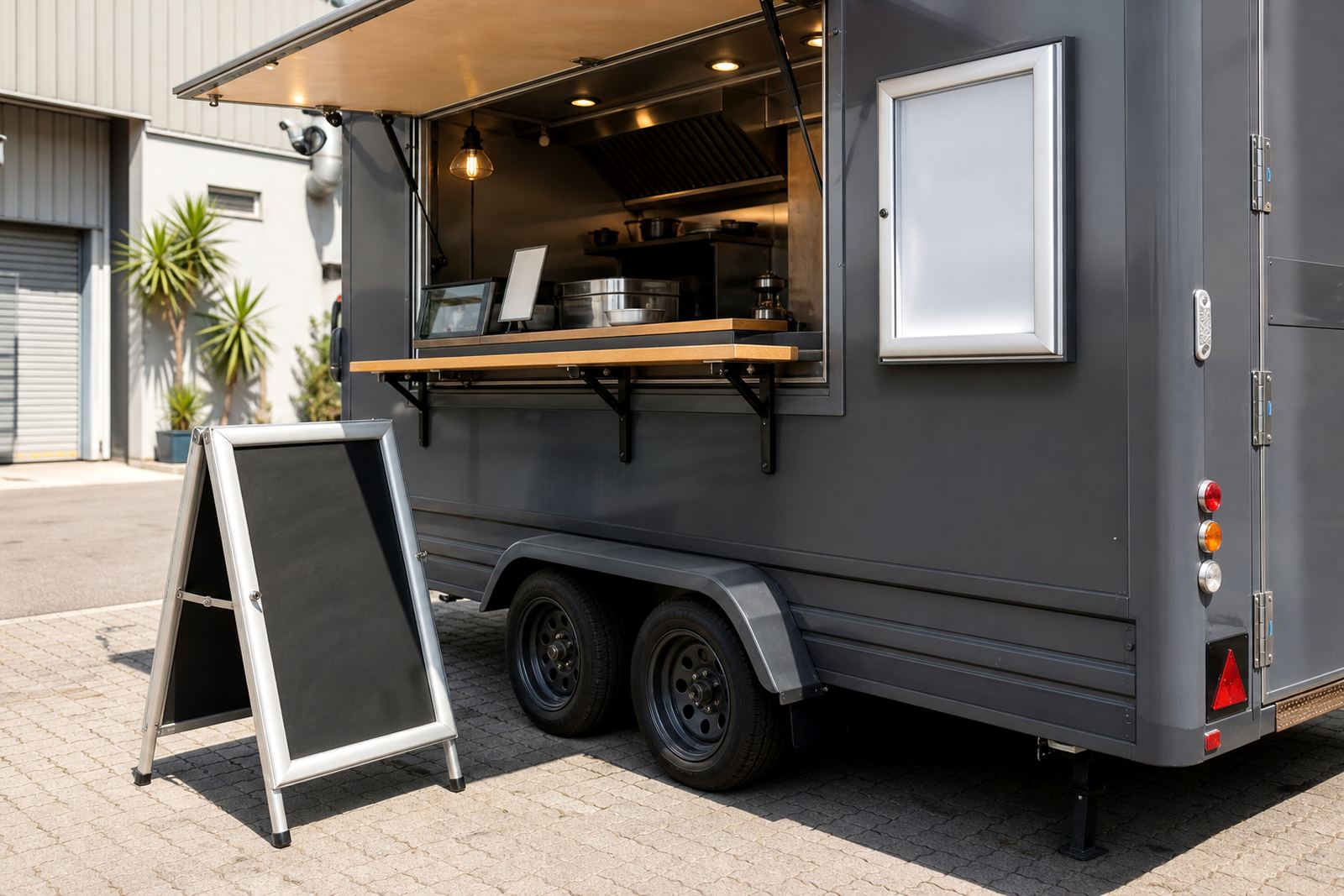
A practical set for a pizza shop usually starts with aluminium snap frames, a few poster insert boards and one or two A-frame stands for pavement use or entry points. Aluminium profiles hold up well in busy areas because the inserts can be changed without taking the whole board apart. For takeaway counters, an A-frame can carry the collection menu, slice deals or lunchtime specials where people queue.
Some shops also add chalkboards for daily offers, but chalk needs a steady hand and a board that is cleaned properly. For printed menus, A4 and A3 sizes cover most needs, though larger wall layouts can be built from multiple panels if the range is wide.
- A3 wall frames for full pizza ranges
- A4 inserts for sides, extras and drink lists
- A-frame stands for pavement or entrance specials
- Chalkboards for changing daily deals
- Poster insert printing for clean, sharp menu pages
Layout choices that work near the counter
Pizza menus work best when the eye moves in a straight line. Put the most ordered pizzas first, then line up sizes, bases and toppings in a way that keeps decisions simple. If your shop sells by the slice, separate those items from whole pizzas so the queue does not slow down. Keep collection specials in a separate block near the till or pickup point, where regulars can spot them quickly.
Spacing matters as much as wording. Too much text turns the board into a wall of noise, and too little detail leaves staff answering the same questions over and over. A good layout gives each section enough breathing room, with bold item names and smaller supporting text beneath.
- Group pizzas by size or style
- Separate slices, sides and extras
- Use one block for collection specials
- Leave clear room around prices
- Keep the top line visible from the queue
Printing choices for greasy hands and steam
Pizza shops need prints that stay neat after handling, wiping and the odd splash near the prep counter. Laminated menu prints work well because the surface can be wiped without the page looking tired too quickly. If the board sits close to heat or steam, anti-glare covers help reduce shine and make the text easier to read under kitchen lighting.
Short run printing suits shops that test new toppings or rotate specials every few weeks. Menu proofing is useful when prices shift, because one missed digit can cause trouble at the till. Colour matching keeps the brand tone steady across the main board, the A-frame and the smaller side inserts, even when the order is split over several pieces.
Common slip-ups we see on pizza menus
One common mistake is trying to fit too many toppings into one block of text. The result looks busy and customers stop reading before they reach the price. Another problem is using a single small frame for a menu that should really sit on a wider wall board. That creates a cramped layout and staff end up pointing at items instead of letting the board do the work.
Some shops also forget to plan for updates. If a menu changes often, the system needs easy access points and sensible sizing. A snap frame makes that much easier than a fixed poster, and menu updates are far cleaner when the print sizes were chosen with the counter layout in mind.
- Avoid tiny text on long topping lists
- Do not mix specials with the full menu
- Leave space for price changes
- Match frame size to viewing distance
- Use mounting points that suit tiled or painted walls
Budget ranges for pizza shop signage in Rand
For a small pizza counter, a basic set of A4 and A3 snap frames with printed inserts can start in the low hundreds per item, depending on size and finish. A larger wall menu with multiple frames, laminated inserts and better finishing moves into the mid hundreds to low thousands, especially when the shop wants a cleaner front-of-house look. A-frame stands and courier packaging add to the total, but they also make the system easier to move and place where customers actually see it.
When the menu is wider, the price depends on how many panels you need, whether the artwork must be resized, and whether the order includes proofing or poster inserts. Shops in Stellenbosch, Johannesburg, Durban and Gqeberha often ask for courier delivery, while Cape Town stores may also want wall mounting or shop fit-out support in Paarden Eiland, Milnerton, Bellville or Paarl.
A sensible starting budget for a pizza shop is usually to decide first on the main board, then add the smaller frames after the core range is settled. That keeps the spend tied to the parts customers read most often, not the bits that only change once in a while.