
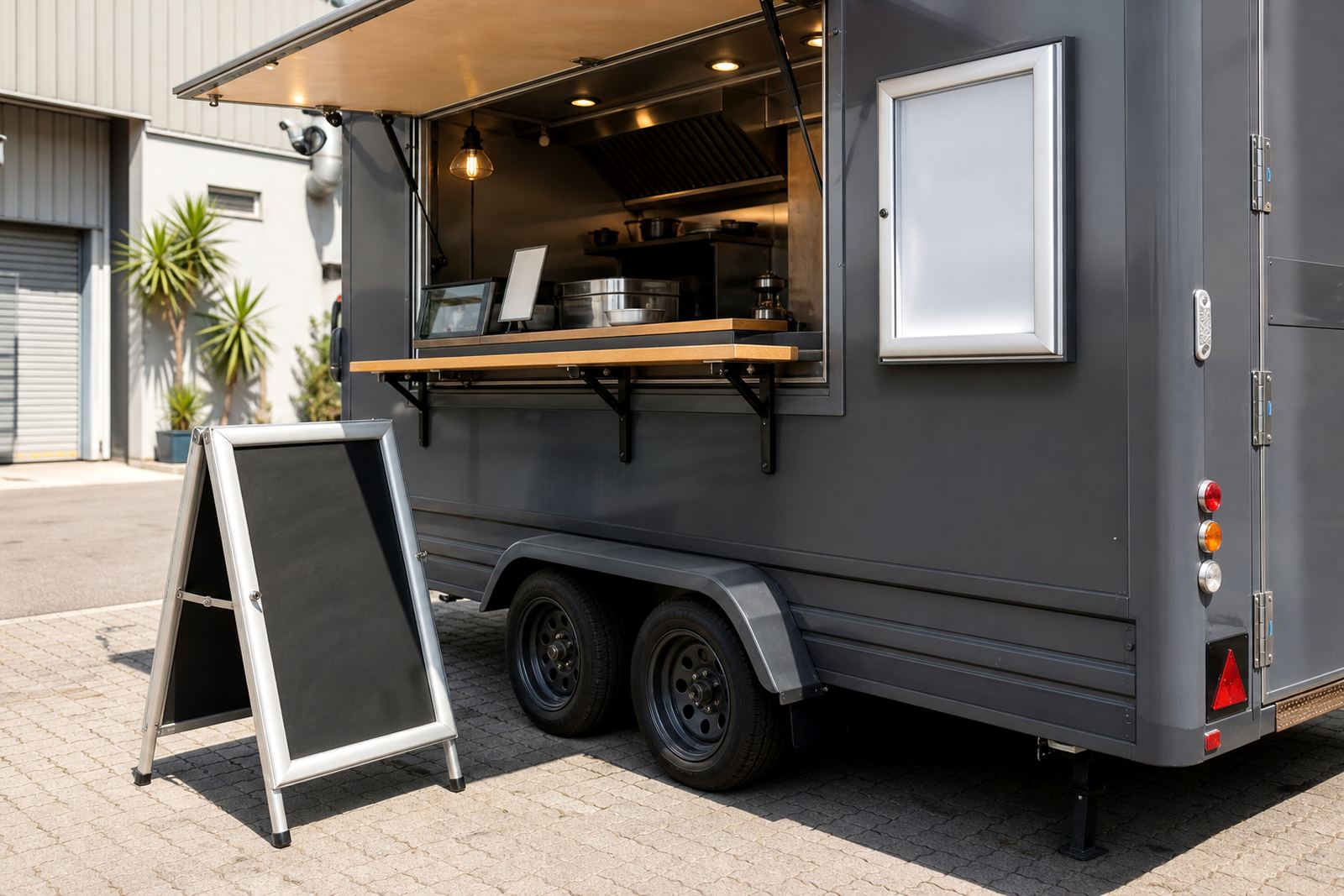
Menu boards that can handle the parking bay
Food truck counters work in tight space, with people queuing close and wind moving through parking areas, markets and event sites. A snap frame in A4 or A3 gives a clear, hard-wearing way to hold printed menus behind an anti-glare cover, while an A-frame stand puts the offer where customers can see it before they step up to order.
For trucks that change menus often, the main advantage is speed at the board itself. Printed inserts can be swapped without tools, which helps when breakfast moves into lunch, or when one truck runs a smaller list for a weekend market and a wider list during the week.
- A4 frames suit specials, add-ons and compact price lists.
- A3 frames work better for main menus with larger item names.
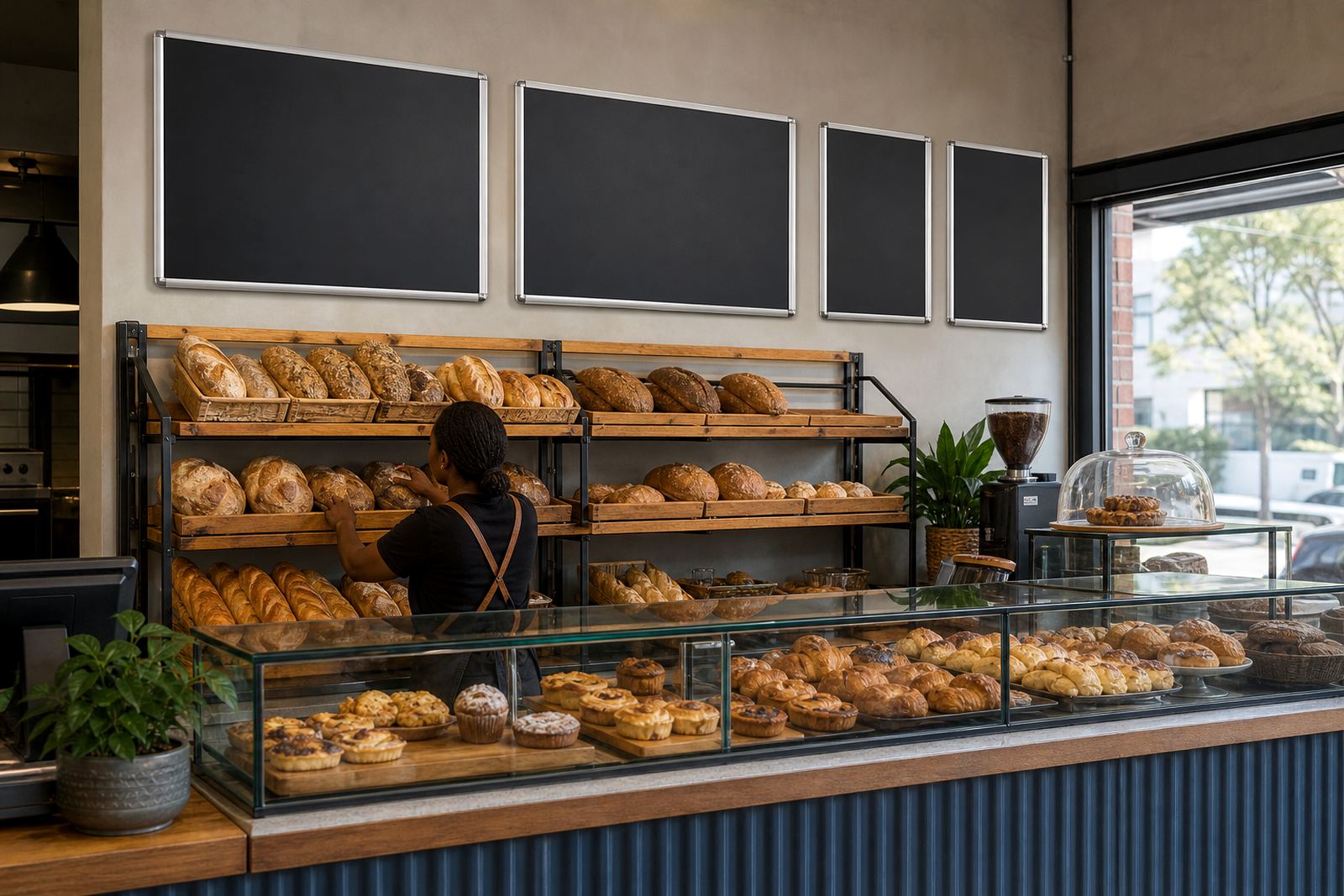
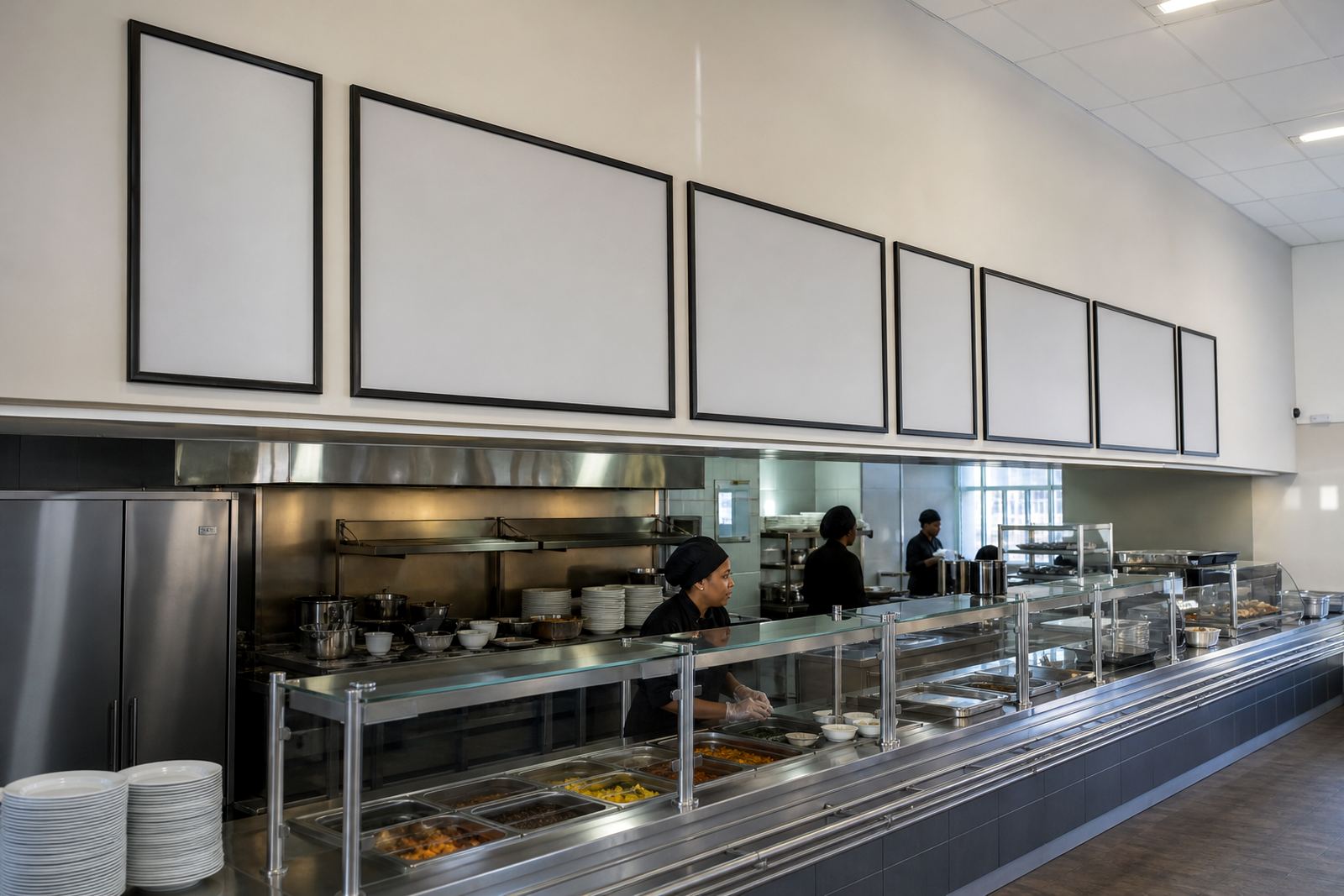
- Wall mounting suits fixed service hatches and rear kitchen doors.
- Window mounting helps where the menu must face the queue directly.
Layouts that work beside a service hatch
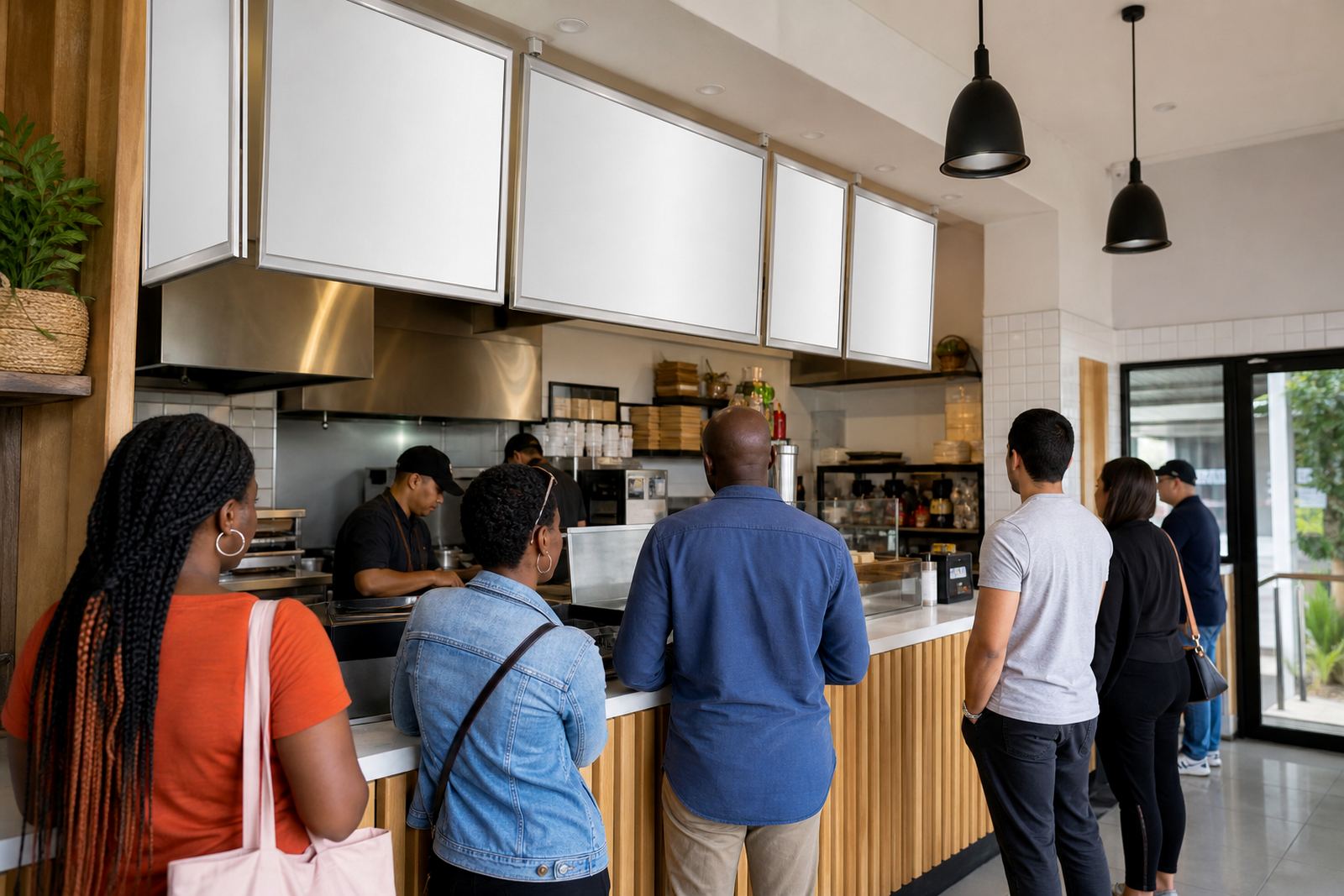
The best food truck setup keeps the menu close to the point of ordering and away from splashes, heat and repeated handling. A wall board beside the hatch usually carries the core menu, while a second frame can hold specials, combo meals or hygiene notices. If the truck parks in different spots each day, an A-frame stand gives more flexibility because it can be placed where the line forms.
Good planning starts with reading distance. Customers standing one to two metres away need larger type than diners at a café table, so menu sizes and line spacing matter more than decorative detail. We also look at the direction of light, because glare on a clear cover can make smaller text harder to read in bright Cape Town sun.
- Keep the main meal names at the top of the board.
- Group burgers, wraps, drinks and sides in separate blocks.
- Leave space for daily specials and price changes.
- Use colour matching where the brand needs a consistent look across several boards.
Materials that stay neat on the move
Aluminium profile frames are a practical fit for mobile food service because they are light, neat and easy to open when inserts need changing. Anti-glare covers reduce reflections, which helps in outdoor queues, under canopy lighting and at late-afternoon events. For trucks that use a chalkboard surface, handwritten specials can sit alongside printed menu boards for a more flexible front-of-house display.
Short-run printing is useful when the menu is still changing. A laminated menu print can give extra protection against fingerprints and light moisture, while poster insert printing suits larger boards that need one strong image or a simple list. If the layout needs to be trimmed for a smaller frame, menu resizing and menu typesetting keep the wording balanced and readable.
- Laminate smaller inserts where handling is constant.
- Use print finishing to keep edges tidy and flat.
- Courier packaging protects frames and printed menus in transit.
- Proofing helps catch pricing slips and cropped text before production.
Typical mistakes on mobile food counters
A common mistake is trying to fit a full restaurant menu onto one small board. That usually creates tiny text, cluttered pricing and poor reading distance. Another problem is putting the board too far from the queue, which forces people to step in closer and slows the order flow. In windy coastal areas, loose posters or unframed sheets can move about and look untidy within minutes.
Some food truck owners also forget to plan for menu changes after trading starts. If the board cannot be updated easily, staff end up working around it with handwritten notes or temporary signs. That is where snap frames and a well-sized A-frame stand make the day easier, especially when one menu line sells out before the rest.
- Do not overload one board with every item.
- Do not use small print for a standing queue.
- Do not place loose sheets where wind can catch them.
- Do not leave no room for sold-out notes or specials.
Budget ranges for a food truck menu set
For a basic food truck setup, a single A4 snap frame or compact chalkboard can start at the lower end of the budget, while larger A3 boards, printed inserts and a sturdy A-frame stand move the figure upward. A small starter package for one hatch may sit in the low thousands of Rand, while a fuller set with several boards, resized artwork and courier packaging can sit higher depending on the number of menus and finishing choices.
Where the truck needs both indoor and outdoor use, it is worth planning for a mix of wall-mounted frames and portable stands. That way the front counter stays clear, the menu remains readable, and new prints can be swapped without disturbing service. For teams working across Cape Town, Johannesburg, Durban, Gqeberha or Stellenbosch, nationwide courier delivery also keeps the setup practical for more than one location.
- Single board setups suit trial menus and pop-up trading.
- Multiple boards suit trucks with breakfast, lunch and drinks sections.
- Printed inserts help when pricing changes often.
- Colour matching helps keep the menu presentation consistent across sites.
What food truck crews usually send through
When a truck needs new boards or replacement inserts, the useful starting point is the menu copy, the sizes needed and the mounting method. If a board is going on a hatch wall, the opening space matters. If it will stand outside, the base and viewing height matter more. That is also the point where our contact form becomes useful, because the details can be kept together before printing begins.
We work with A4 menu templates, A3 menu templates, menu updating, menu proofing, laminated menu prints and short run printing for mobile food service setups. The aim is a clean board that suits the truck, the queue and the weather, without excess bulk at the serving point.