Menus that change with the tray line
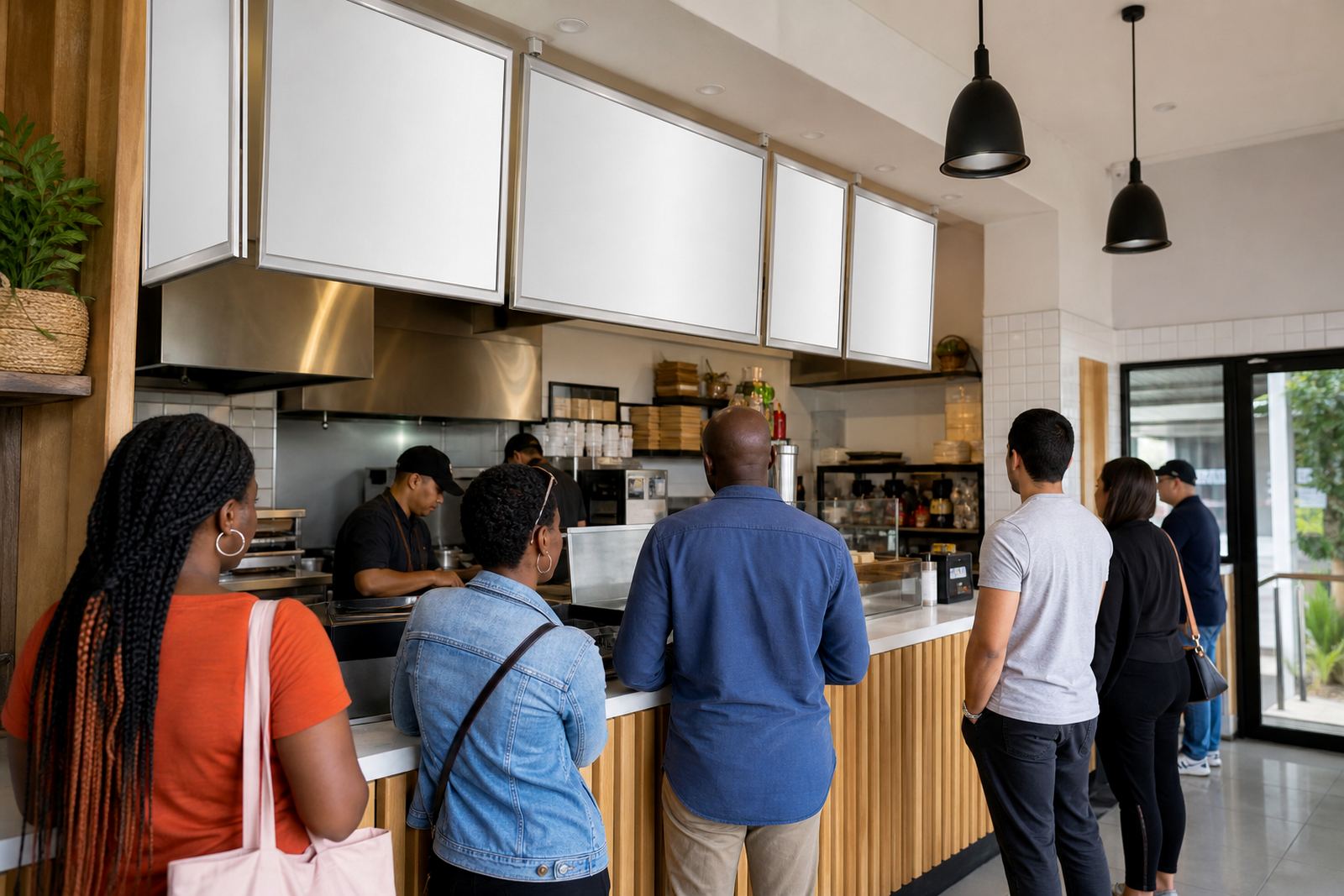
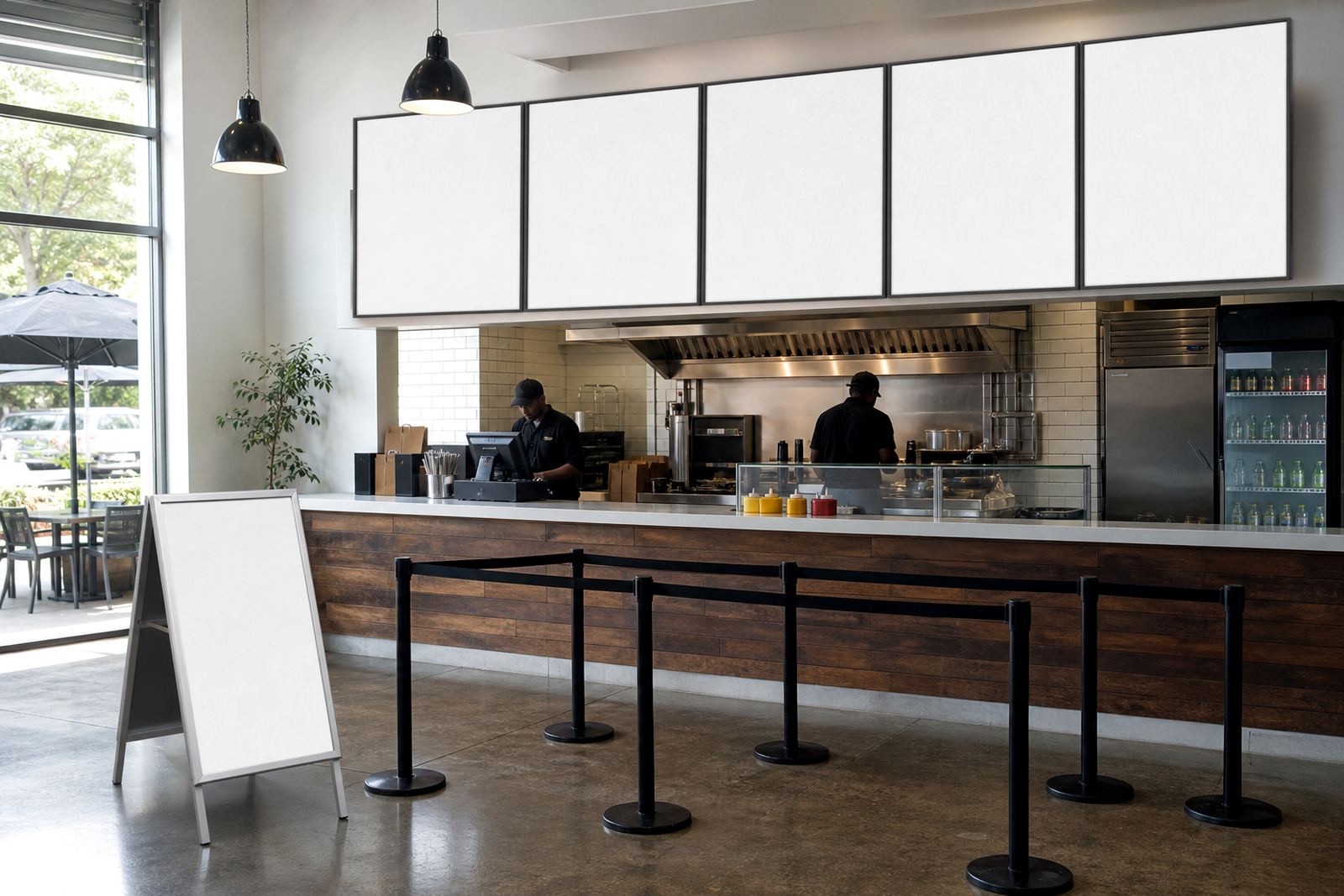
A canteen usually needs more than one display point. The hot counter may show the full meal list, the till point may carry prices and combo notes, while the entrance or serving hatch carries the day’s specials. Snap menu frames suit that rhythm because staff can open the aluminium profile, swap the print and close it again without tools.
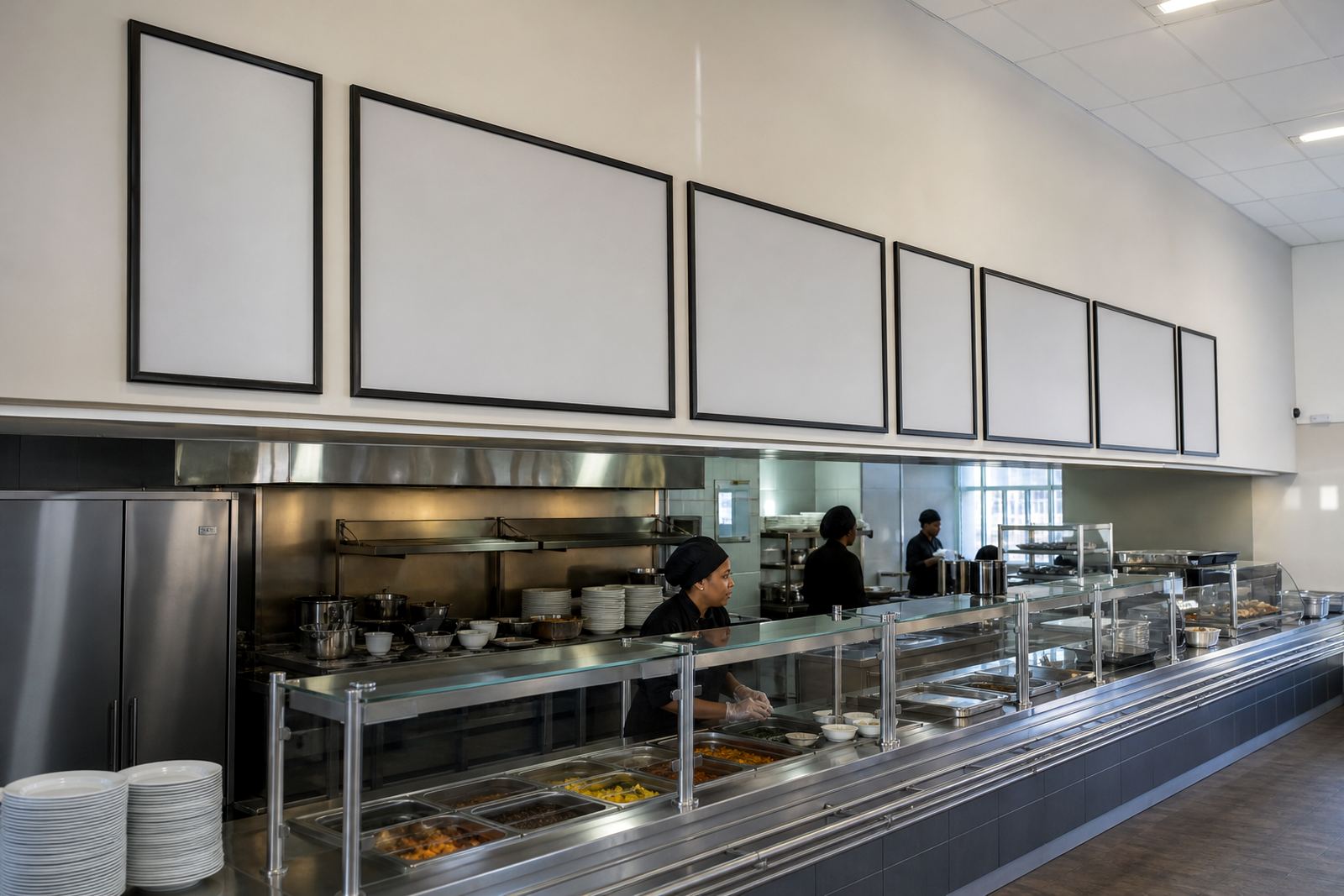
For staff dining rooms, schools and simple rotating meal services, A4 frames work well for item lists, allergen notes and short notices. A3 frames suit wider counters or walls where people need to read from a few metres away. Window mounting helps when the serving point faces a passage or canteen entrance, and wall mounting keeps the layout neat where counter space is tight.
- A4 for prices, meal options and short notices
- A3 for daily specials, menus and larger headings
- Wall, window or free-standing placement depending on the counter
- Anti-glare covers help under bright canteen lighting
A practical set for a busy serving point
Most canteen fit-outs work best with a small set of matching items instead of one oversized board. A wall frame can hold the standard lunch list, a second frame can carry rotating specials, and an A-frame stand can sit near the queue or entrance for the day’s soup, dessert or meal deal. Where staff need a chalkboard feel, a chalkboard surface can carry hand written notes, but printed inserts usually look cleaner for prices and portion details.
Aluminium profiles are the usual choice because they stay neat and the corners are easy to open and close. Anti-glare front covers make the text easier to read under fluorescent lights, and laminated prints hold up better where fingers, steam and regular wipe-downs are part of the day. For canteens that shift between breakfast, lunch and early supper, poster insert printing gives a tidy way to rotate the message without replacing the whole board.
- Snap frames for changeable printed menus
- A-frame stands for floor level visibility
- Menu boards for specials, notices and allergen details
- Laminated inserts where cleaning is frequent
Layout notes for school halls and staff dining rooms
The best layout usually starts with where people pause. In a school hall, the board should sit where the queue forms, not where people only notice it at the end of the line. In a corporate dining room, the main menu is often best near the serving tray stack, with a second board near the collection point for sides, desserts or beverages. A canteen with a long counter may need repeated signs rather than one large sign, so everyone sees the same prices and items from different angles.
Print size matters more than people think. A4 is enough for short lists, but it can look cramped if the text has too many lines. A3 gives more breathing room for longer menus or bilingual wording. Keep the type large, use strong contrast and leave enough white space around the meal names. If the menu changes often, it helps to plan around standard sheet sizes from the start, because that keeps reprints tidy and cuts waste.
We often see canteens run into trouble when the board carries too much detail in one block. Long paragraphs, tiny fonts and too many price lines make the frame harder to use. A cleaner plan is to separate breakfast, lunch and special items into their own panels, then keep the main prices in one place.
Common slips that make canteen menus harder to read
The most common mistake is choosing the wrong size for the distance. A frame that looks fine at the counter may disappear once it is fixed above eye level or at the far end of the serving line. Another slip is using low contrast printing, which becomes a problem under bright indoor light or near reflective glass. Anti-glare covers and sensible colour matching help, but the real fix is usually a simpler layout.
Menus also go off track when the board is not matched to the way the service changes. If the kitchen updates the lunch list twice a day, the display should be quick to open and quick to reset. If the canteen runs the same items for a week, a more permanent board with smaller update zones may be better. The equipment should suit the rhythm of the serving point, not the other way round.
- Too much text on one insert
- Fonts that are small from a standing distance
- Boards placed where glare hides the wording
- Mixing permanent notices with daily specials on one sheet
What a canteen project usually costs in Rand
Budget depends on the number of displays, the size of each frame and whether the job needs printing, finishing and courier packaging. A simple A4 snap frame setup for a small staff dining room can start in the low hundreds of Rand per unit, while larger A3 boards, anti-glare covers and extra finishing steps move the total up. An A-frame stand usually sits higher because it includes a freestanding structure, and printed inserts add to the overall amount if the menu needs several versions.
For a modest canteen update, many clients plan from about R900 to R2 500 for a small set of wall frames and printed inserts. A fuller setup with multiple A3 frames, an A-frame stand and laminated menus can sit from about R3 000 to R8 000, depending on the layout and the number of versions required. Larger school or corporate canteens with several service points may go beyond that when the boards need matching sizes across more than one area.
Courier delivery across South Africa can be arranged for Cape Town, Stellenbosch, Johannesburg, Durban and Gqeberha, with packaging that keeps the frames and inserts flat in transit. If the canteen sits in Milnerton, Bellville or Paarl, the same sizing rules still apply, and the best approach is usually to match the frame set to the serving line and the print rhythm, not to overbuy on the first round.
What to send for a cleaner menu plan
A workable brief usually includes the meals, the number of daily changes and the place where each display will sit. That gives enough detail to set up the right mix of A4 and A3 frames, a wall board or two, and an A-frame stand if the queue needs a floor sign. If the menu includes staff meals, school portions or takeaway counter prices, it helps to note which items must stay fixed and which ones change often.
We also look at whether the print will be swapped by kitchen staff, front counter staff or a facilities team. That affects the choice of frame opening style, the amount of lamination and the size of the inserts. For canteens with lots of traffic, a clearer layout usually saves time at the serving point, and fewer changes to the board mean fewer mistakes on the day.
- Menu items and daily specials
- Preferred frame sizes, A4 or A3
- Wall, window or floor placement
- Any wording that must stay fixed