Counters that need quick reading at busy lunch times
Burger stores usually deal with short decision times, a narrow counter area and a queue that keeps moving. A menu board has to carry the core range without turning into a wall of text, and the layout should make it easy to scan burgers, add-ons, chips and drinks in one glance.
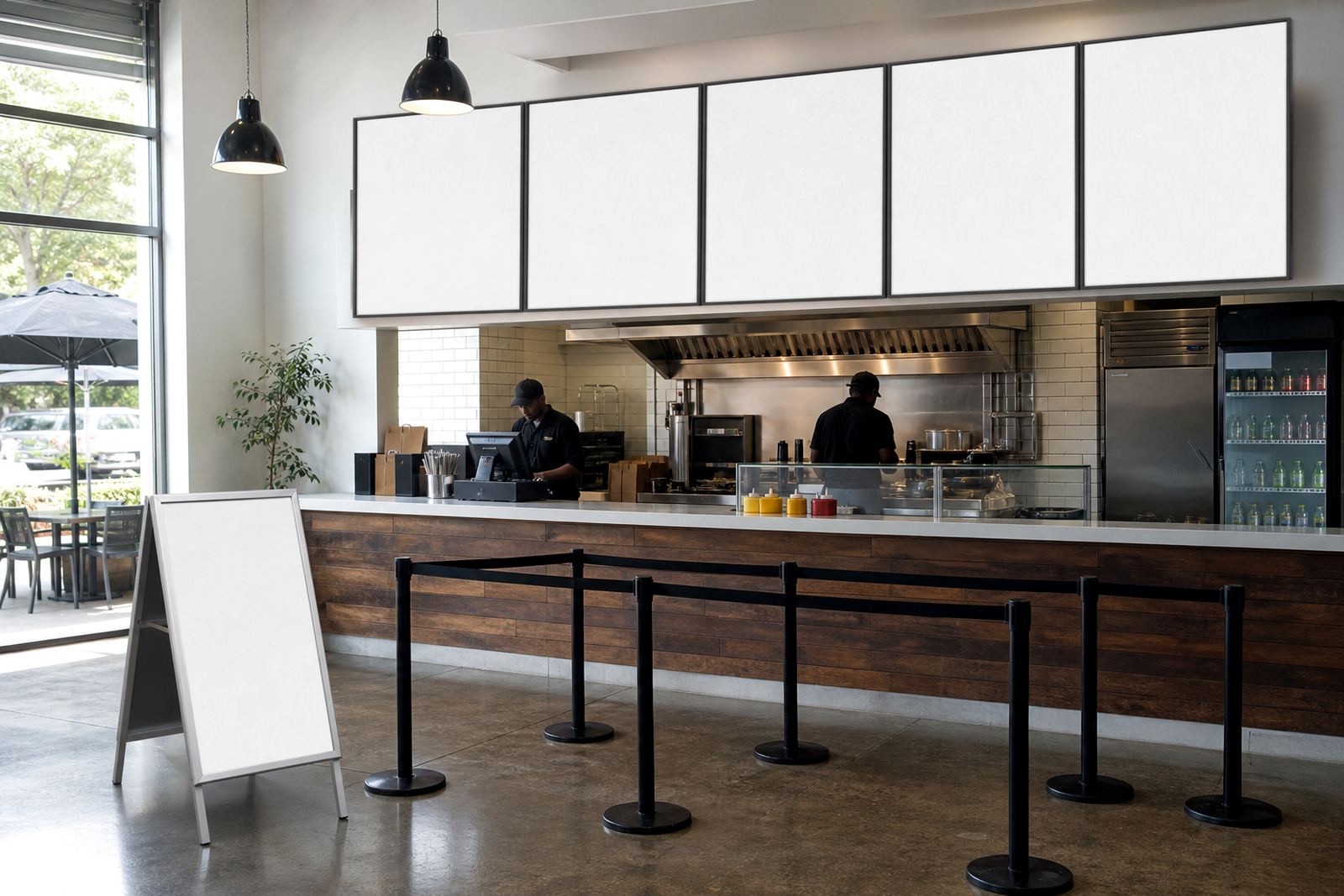
For that setting, snap frames work well because printed inserts can be changed without removing the frame from the wall. A4 suits smaller price lists and specials, while A3 gives more room for combo sets, meal upgrades and clearer spacing between items. Where the menu shifts often, the frame format keeps the board looking orderly even when the list changes week by week.
- A4 and A3 snap frames for wall mounting near the counter
- Window-facing frames for specials, trading hours or combo boards
- A-frame stands for entrance points, queues and pavement placement
- Anti-glare covers for brighter shopfronts and glass-fronted areas
What usually sits on a burger store menu set
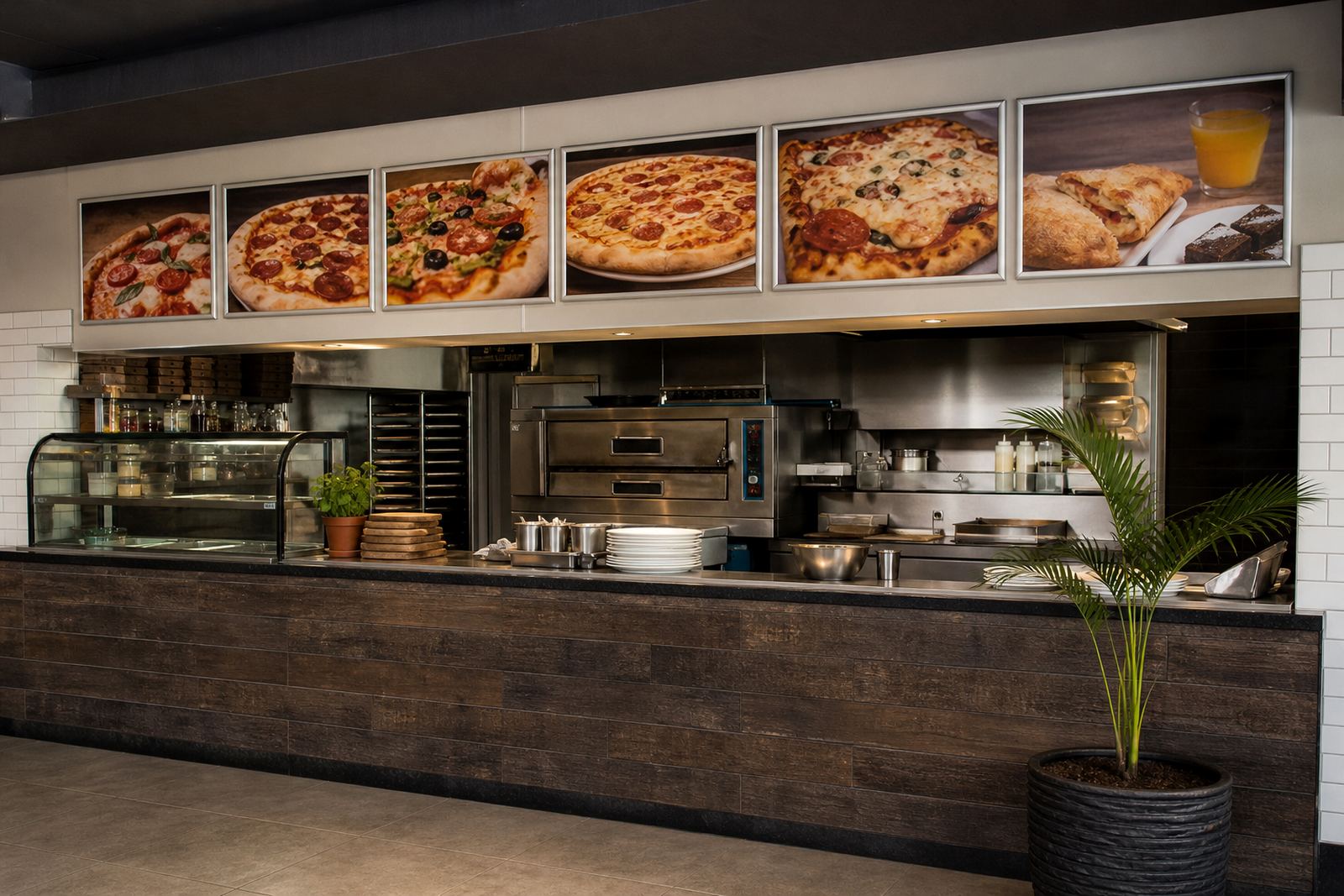
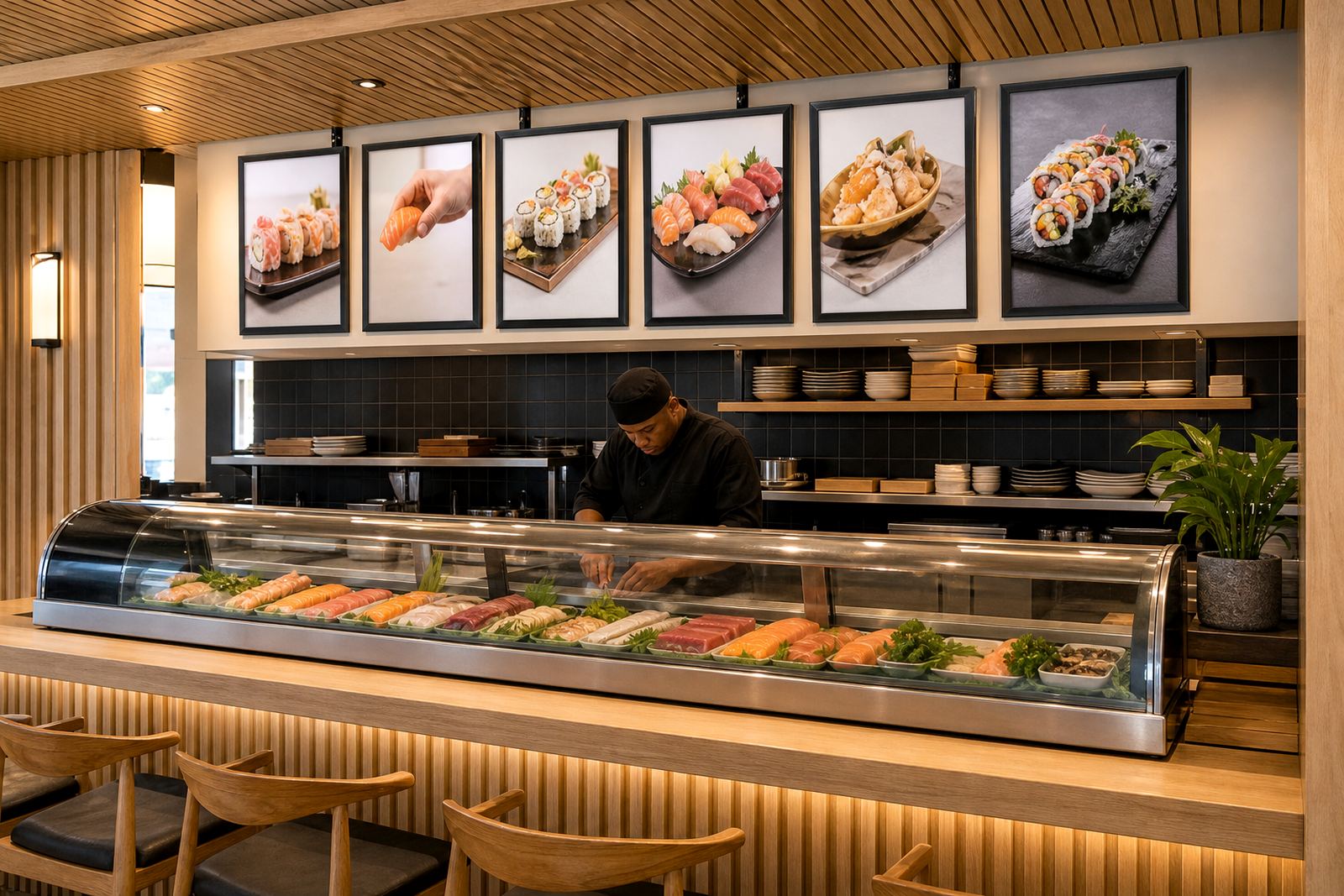
A typical burger store set has one main price board, one specials board and one or two smaller boards for extras or sides. Some stores also need a window insert near the entrance, especially where passing foot traffic decides before the door opens. The aim is to keep the order path clear, from burger choice to drinks to add-ons.
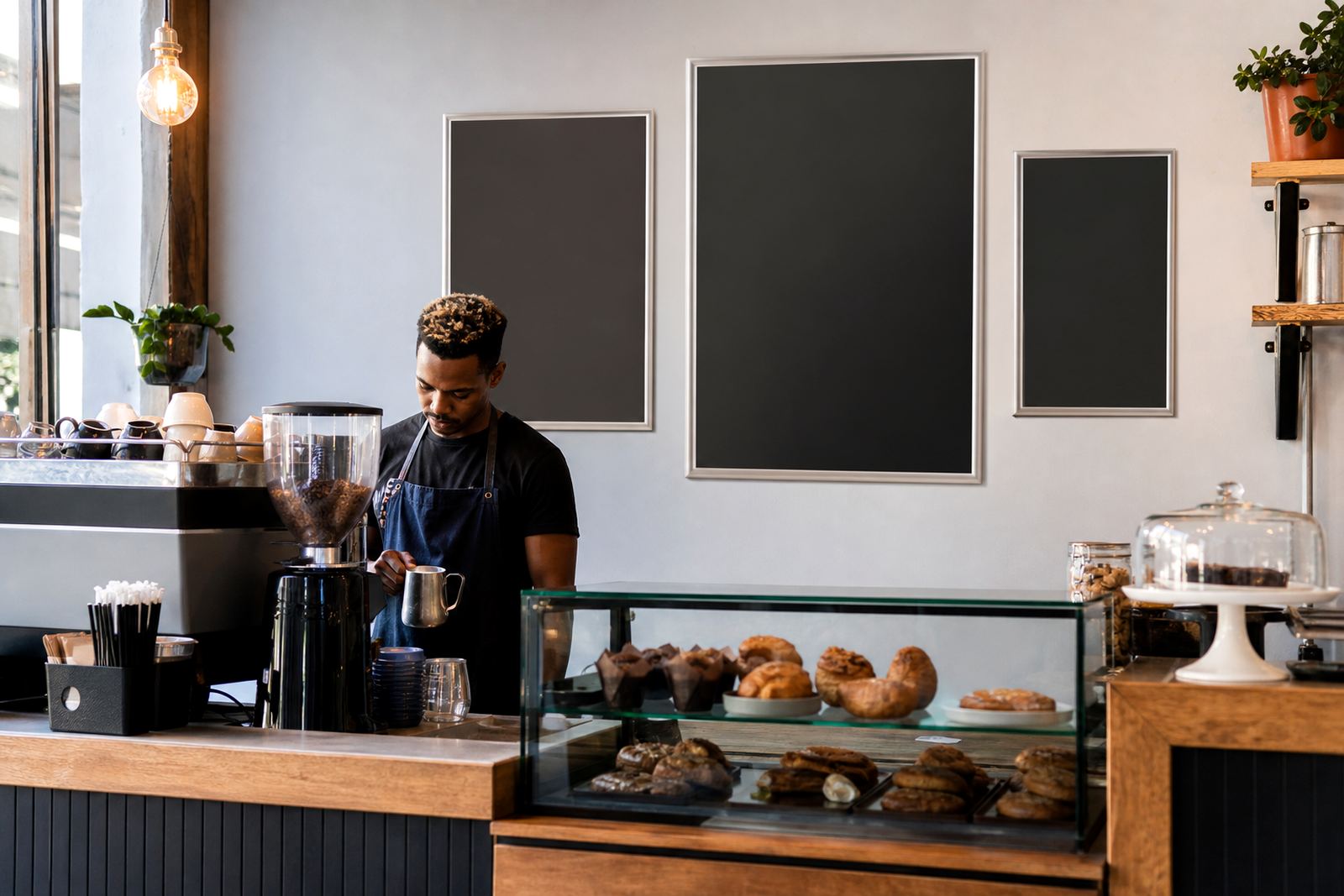
Aluminium profile frames suit this type of use because they stay neat around the edges and hold inserts firmly. For wall boards that face direct light, an anti-glare cover helps reduce shine from lights, glass and midday sun. If the store uses hand-lettered specials, a chalkboard panel or mixed board set can sit beside the printed menu so the main price list stays consistent.
- Core burger list with combo pricing and add-on lines
- Boards for takeaway, sit-down and delivery counter use
- Poster insert sizes for repeated specials and limited runs
- Chalkboard panels for changing daily items or meal deals
Sizing the layout around the counter flow
Menu sizing matters when a burger store has more than one point of decision. A board placed too high is missed, while a board placed too low gets hidden by the queue. In practice, the best position is usually where the customer can read the list before reaching the till, not while standing right on top of the counter.
We commonly work with A4 and A3 menu templates, plus resized artwork where a larger board has to fit a narrower wall section. Menu typesetting needs enough breathing space for headings, combo names and price columns, because burger menus can become crowded very quickly. A clean hierarchy helps the eye move from the main burger line to sides and then to drinks, without making the board feel packed.
- Keep the top line for the main burger range
- Group combo meals together instead of spreading them across the board
- Leave space between prices so customers do not read across the wrong line
- Use the same type size for matching items across all boards
Printing choices that suit grease, heat and regular swaps
Burger counters see fingerprints, steam and a fair bit of movement around the service area. Laminated menu prints help when the board is handled often, while short run printing suits test specials and seasonal items. If a store likes to change offers by suburb or time of day, print-ready templates make the update process easier because the same layout can hold new wording without a full redesign each time.
Colour matching is worth doing carefully on burger menus, especially where the brand uses a strong colour block for headings or combo panels. A mismatched print can make one board look separate from the rest, and that breaks the rhythm across the wall. Courier packaging also matters when boards travel between Cape Town, Johannesburg, Durban, Stellenbosch or Gqeberha, because bent inserts and dented corners are costly to fix.
- Laminated inserts for repeated handling
- Short run prints for trial specials or limited menu periods
- Poster insert printing for larger wall frames
- Courier packaging for flat boards and protected inserts
Common mistakes burger stores make with menu boards
The biggest problem is cramming too many choices into one frame. A burger store may want every sauce, every patty and every side listed at once, but the result is usually hard to scan. Another issue is mixing old prices with fresh ones across different boards, which makes the counter look untidy and causes confusion at ordering time.
It also helps to avoid placing glossy prints where the lights bounce straight off the surface. Even a strong layout can become difficult to read if the finish catches reflections from the window or ceiling lights. When a store uses both wall frames and A-frame stands, the wording should stay aligned so the customer does not read one price outside and another at the counter.
- Too many items in one frame, with no clear hierarchy
- Different fonts or sizes on matching boards
- Glossy print facing direct light without anti-glare protection
- Separate versions of the same combo on wall, window and stand
Budget bands for burger store menu setups in Rand
Budget depends on how many boards the store needs, the size of each insert and whether the order includes printing, finishing and courier packaging. A small setup with one or two A4 frames and printed inserts sits at the lower end. A larger front-of-house set with A3 frames, an A-frame stand and multiple menu updates moves higher, especially if the store wants resizing and proofing before print.
For a basic burger store menu refresh, many jobs sit around R1,500 to R4,500. A more complete counter set with several frames, laminated inserts and a stand often runs from R4,500 to R12,000. Larger layouts with custom resizing, poster inserts and repeated menu boards can move above that, depending on the number of print versions and finishing choices. Final cost shifts with the volume of inserts, the size mix and how much courier packaging is needed for out-of-town delivery.
Paarden Eiland production for Cape Town and beyond
Our Paarden Eiland team handles menu boards for burger stores across Cape Town, Stellenbosch, Milnerton, Bellville, Paarl, Johannesburg, Durban and Gqeberha. Marius Mlambo oversees the team, while Anele Zondo manages production, Bianca Ebrahim handles sales, Thabo Kajee leads installations, Liam Mkhabela coordinates print work and Zanele Wessels supports customers through the enquiry form on our contact page.
For burger stores, the useful part is not just the frame itself but the way the insert, finish and mounting style fit the room. A counter with limited wall space may need a narrower A3 board and a pavement-facing A-frame, while a larger shop can use multiple snap frames to separate burgers, drinks and extras. The aim is steady reading, tidy changes and a layout that does not fight the queue.