Fast-changing sushi lists need cleaner menu hardware
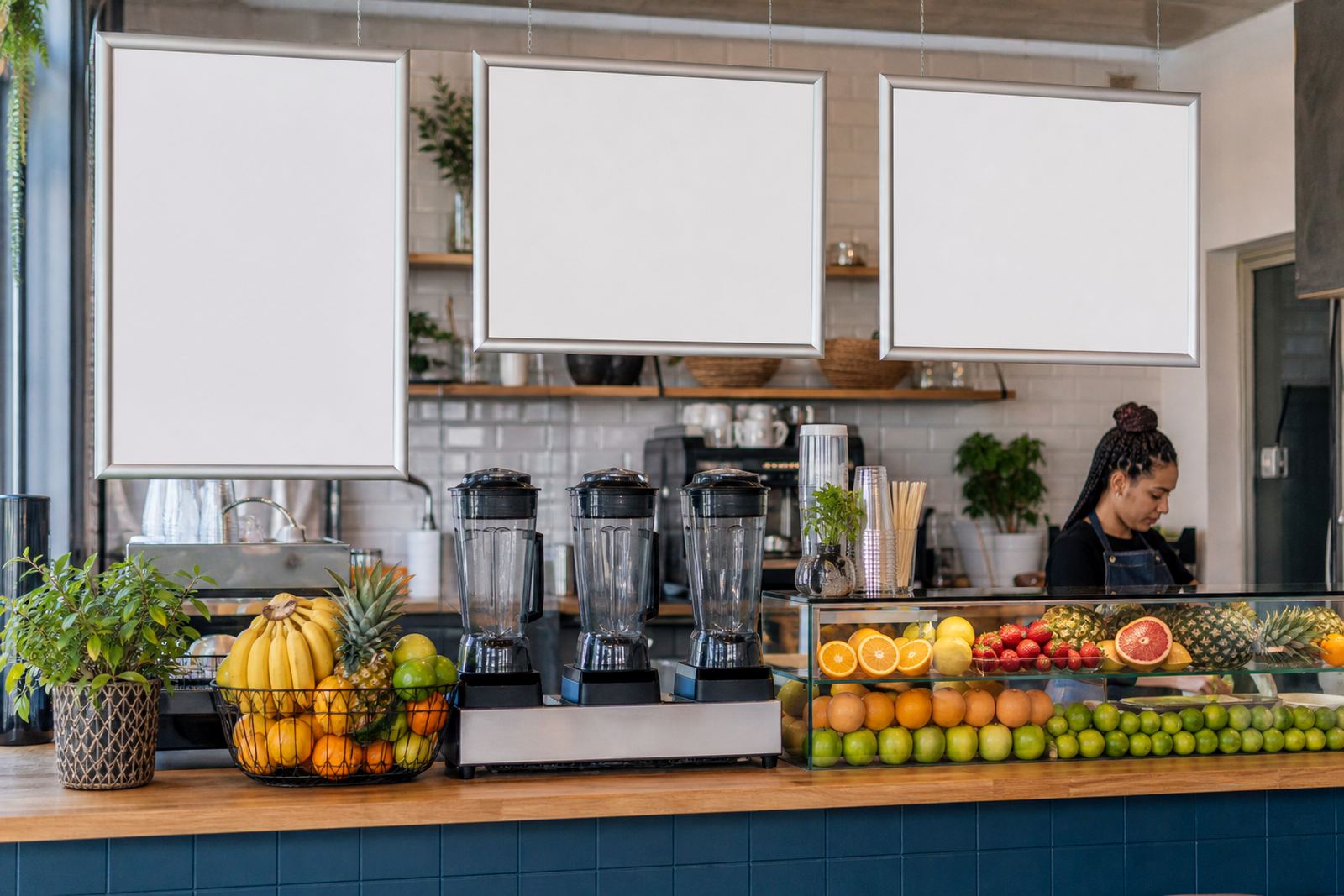
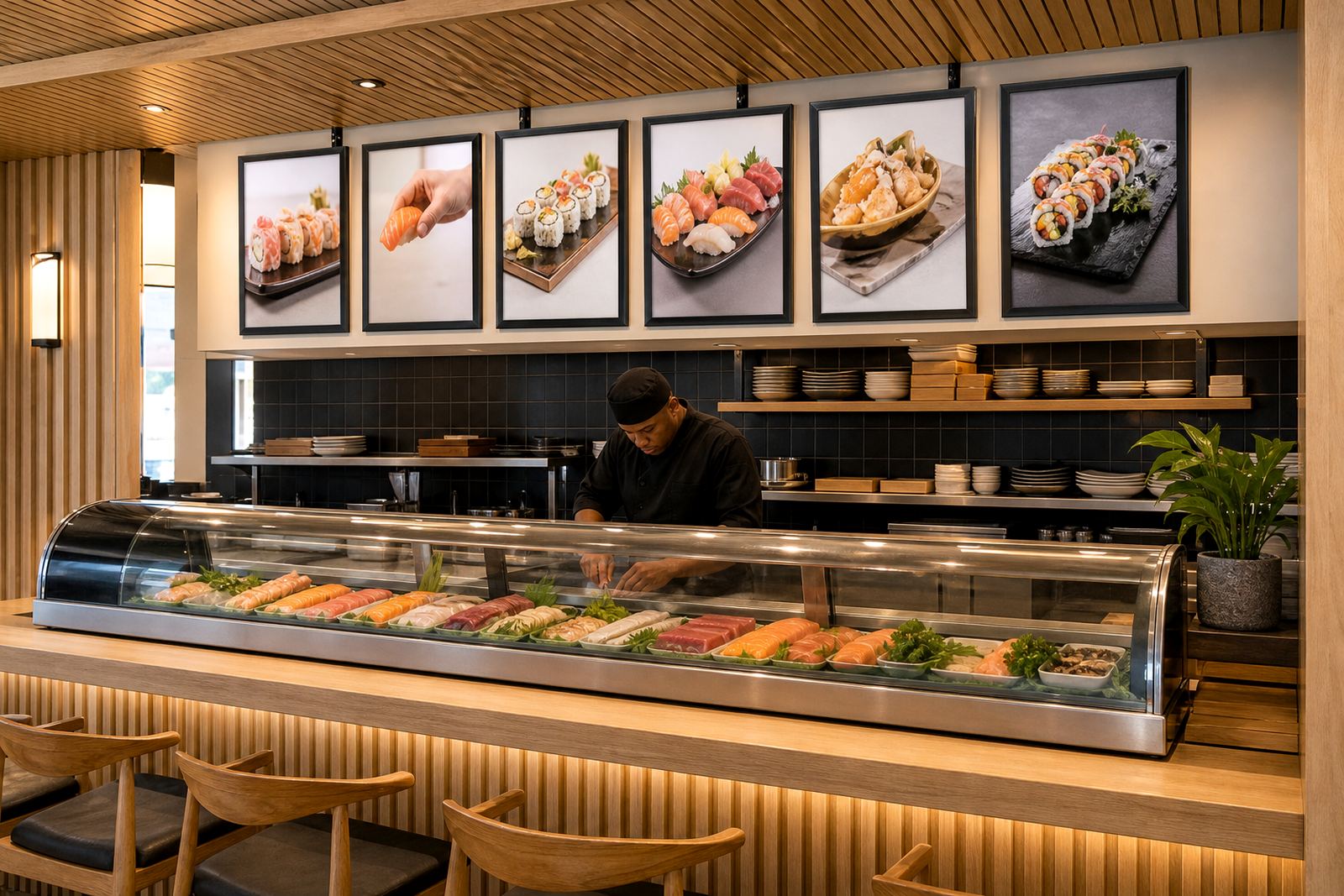
A sushi bar works with a short counter, a narrow pass, and a menu that changes with stock, lunch specials and platter combinations. That means the display has to stay clear even when the list grows into starters, maki sets, sashimi portions and takeaway boxes. A snap frame gives you that control without pulling a board off the wall or lifting out old inserts by hand.
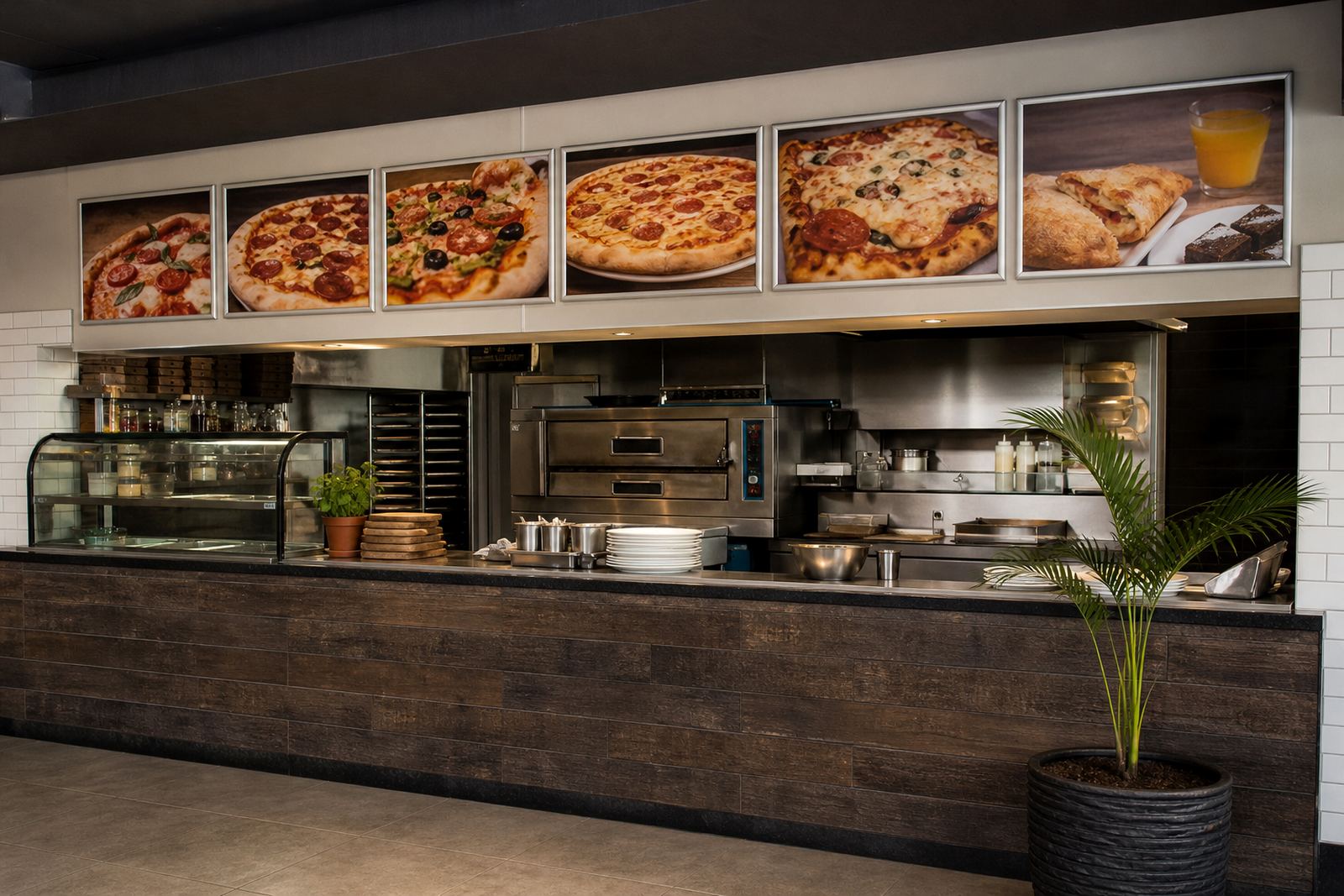
For this kind of counter service, the best fit is usually an A4 or A3 snap frame with a front-loading aluminium profile and an anti-glare cover. It keeps the print flat and readable under bright lights, and the price points stay easy to change when a roll becomes unavailable or a lunch special shifts. On a small wall, a single frame may hold the main menu, while a second one carries platters, drinks or set boxes.
Where window space is available, a window-mounted frame can help catch passing foot traffic without crowding the till area. In a tight shop, that can be the difference between a clean service line and a cluttered one.
Typical hardware for a sushi counter or takeaway hatch
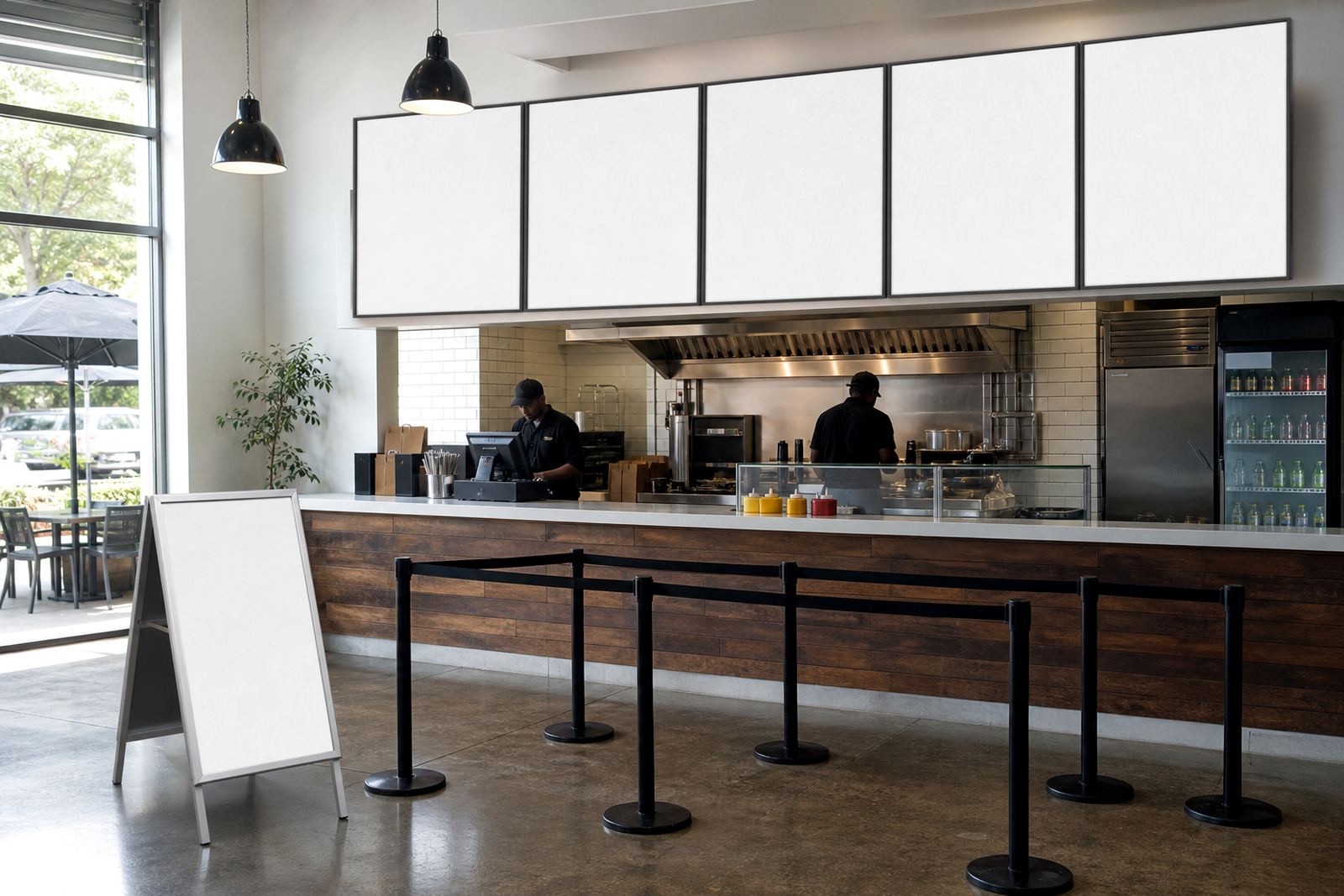
Most sushi bars use a mix of wall frames, counter-facing boards and a compact A-frame near the entrance or serving point. Chalkboards still have a place for daily fish specials, but they work best beside a printed board, not instead of one. If the item list is fixed enough, printed inserts keep the presentation tighter and reduce handwriting mistakes.
- A4 snap frames for compact menu panels, specials and add-on items.
- A3 frames for the main list where the text needs more breathing room.
- Wall mounting for indoor order points, till areas and pass-through counters.
- Window mounting for street-facing displays with clear visibility.
- A-frame stands for pavement spots, shared entrances and quick special boards.
- Anti-glare covers to reduce shine from downlights and front windows.
- Poster insert printing for specials, combo meals and promotional pieces.
The profile, cover and mounting method should match the room. A seafood counter near the coast, especially in places like Milnerton or the harbour side of Cape Town, can face moisture and salt air, so the frame finish and placement matter more than people think. Keep the board off splash zones and away from direct heat from the kitchen hatch.
Layout decisions that keep the counter readable
Good sushi menus are usually built around a few clear groupings. Start with platters, then rolls, then hand rolls or set boxes, and keep extras such as soy, ginger, wasabi and delivery notes in a smaller line. If every item gets equal visual weight the customer has to hunt for the right choice, and the queue slows down at the worst moment.
For a menu board, leave enough margin around the text so the content does not look crowded once it is behind the cover. A3 works well where the list is longer or the type has to be larger for quick reading at the till. A4 suits special boards, lunch add-ons and side items where the message is short. If the shop has both dine-in and takeaway service, the wall menu can stay fixed while the A-frame carries the rotating offers.
Menu resizing, typesetting and proofing are useful when a printed list has to be trimmed to fit a frame. A proper set-up avoids tiny fonts, chopped lines and awkward spacing near prices. It also keeps the same style running across the menu, so the board feels ordered instead of patched together.
Common mistakes on sushi boards and how to avoid them
The most common mistake is trying to fit too much onto one insert. Sushi menus can swell quickly when every roll, set and add-on gets listed in full. If the board becomes dense, customers stop reading the whole thing and only look at the first few lines. That is when the specials get missed.
Another problem is using finishes that reflect too much light. A shiny insert under strong interior lighting can make prices hard to read from an angle. Anti-glare covers help, and so does keeping the text size sensible. It is also worth leaving space for menu updates, because a board that has no spare room often ends up looking cramped after the first adjustment.
- Do not squeeze every item onto one frame when two boards would read better.
- Do not use weak contrast on pale backgrounds, especially near windows.
- Do not place a board too close to steam, splash or heat from the prep area.
- Do not mix handwriting styles with printed panels if you want a tidy counter.
- Do not forget courier packaging when the inserts have to travel to another city.
For restaurants in Johannesburg, Durban or Gqeberha, courier packing needs to protect corners and printed faces so the frame arrives ready for use. If the board travels with the menu inserts inside, the packaging should prevent the cover from rubbing against the print.
Budget ranges for a sushi menu setup in Rand
The budget depends on the number of inserts, the frame size and whether the job includes printing or only hardware. A small sushi counter that needs one or two A4 displays can stay on the lower end, while a full frontage with A3 boards, an A-frame and multiple printed specials will sit higher. Layout work also affects the total, especially if the menu needs resizing or proofing before print.
As a practical guide, a simple board set with basic print inserts may start around a few hundred Rand per piece. A more complete setup with several frames, laminated inserts and a printed A-frame can move into the low thousands, depending on quantity and finishing. Short run printing is useful for seasonal changes, lunch menus and trial specials because you do not need a large print batch just to test the offer.
Our team handles A4 Menu Templates, A3 Menu Templates, Menu Resizing, Menu Typesetting, Menu Proofing, Short Run Printing, Laminated Menu Prints, Poster Insert Printing, Menu Updates, Colour Matching, Print Finishing and Courier Packaging. That gives a sushi bar one place to sort the board shape, the text layout and the printed insert sizes without shifting between separate jobs.
What suits a compact sushi service point
Compact service points work best when the board is easy to read from a short distance and easy to update during a busy shift. A wall frame near the till can carry the main list, while an A-frame at the front can show takeaway specials, lunch boxes or a fish-of-the-day note. In a narrow space, that split keeps the service line clearer and the staff do not have to keep moving signs around.
For sushi bars in Cape Town, Stellenbosch, Bellville, Paarl and Milnerton, the local shop or studio can match the frame to the print size and the mounting position. The goal is not decoration for its own sake. It is a clean display that holds up through daily changes, wet prep areas and a steady stream of takeaway orders. A neat board makes the menu easier to scan, which helps the counter feel organised even when the lunch rush is full.
When the menu changes often, the best system is the one that lets the insert swap quickly and still looks composed. That is where snap frames do the work well: the menu stays legible, the specials stay current, and the whole board remains useful without tools or fuss.