
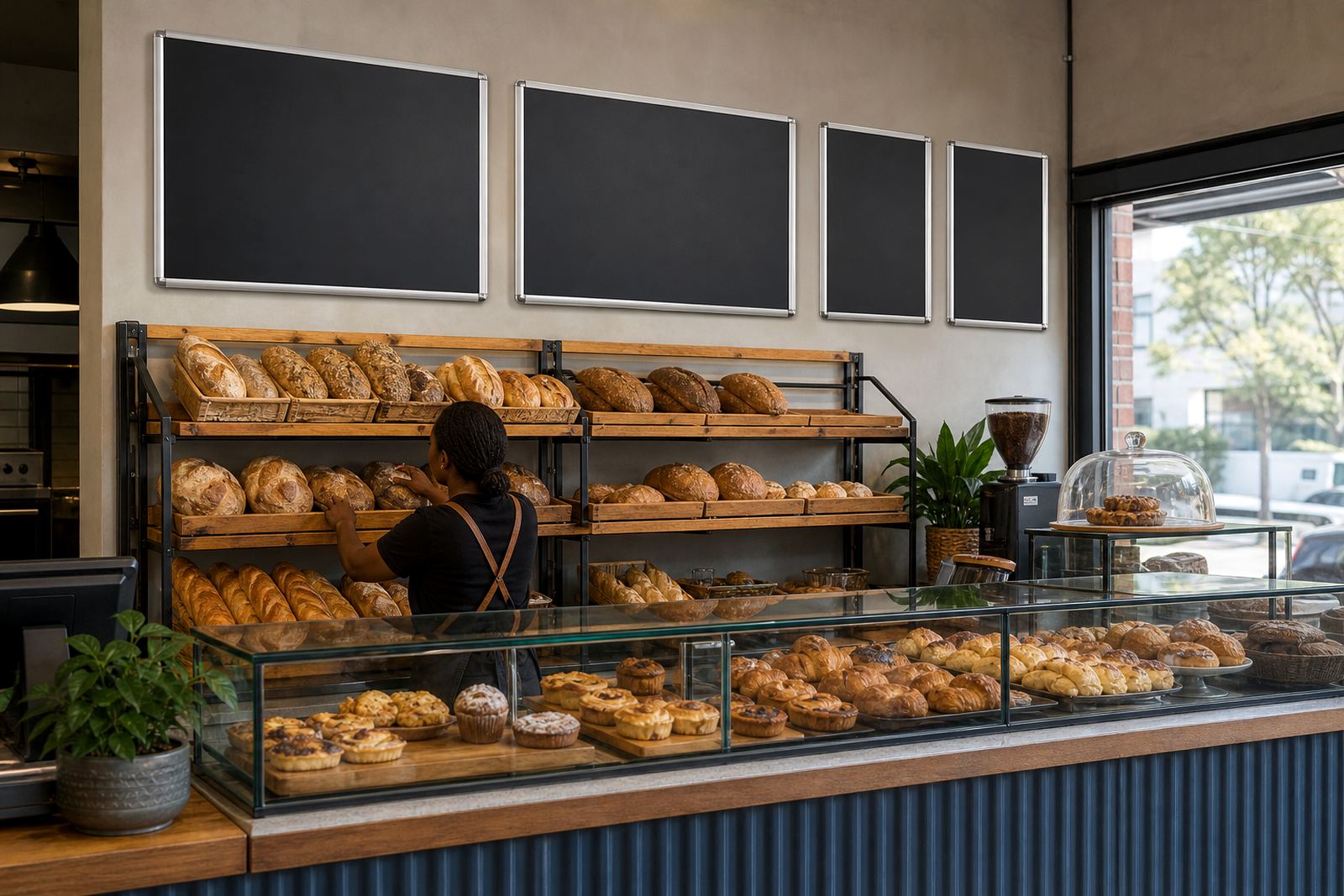
A bakery counter changes before the doors close
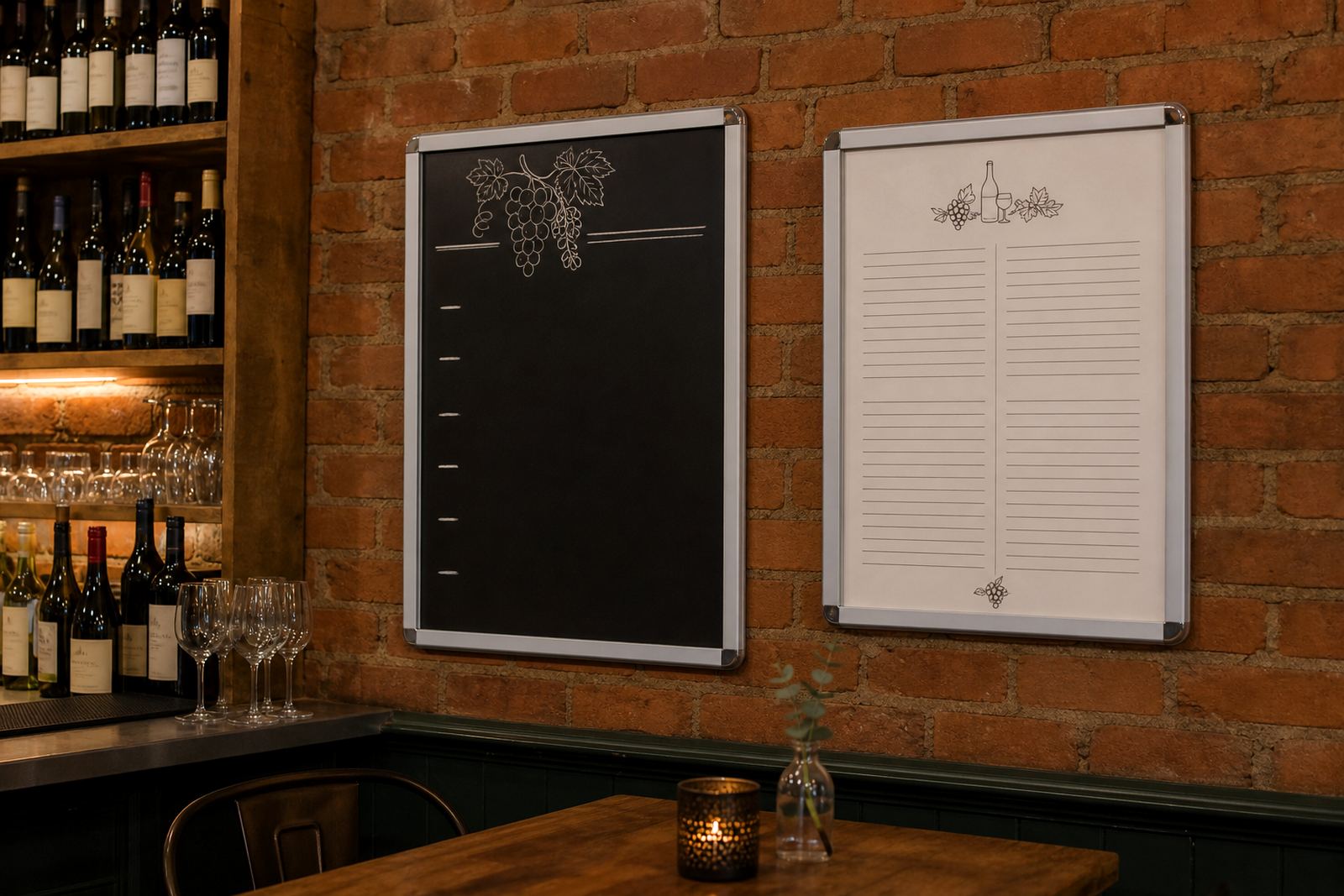
A bakery rarely keeps one steady menu for long. Butter croissants move out early, loaves sell by weight, and the sweeter items often shift with the day. A snap frame suits that rhythm because printed sheets slide in behind an anti-glare cover and the aluminium frame shuts cleanly over the edge.
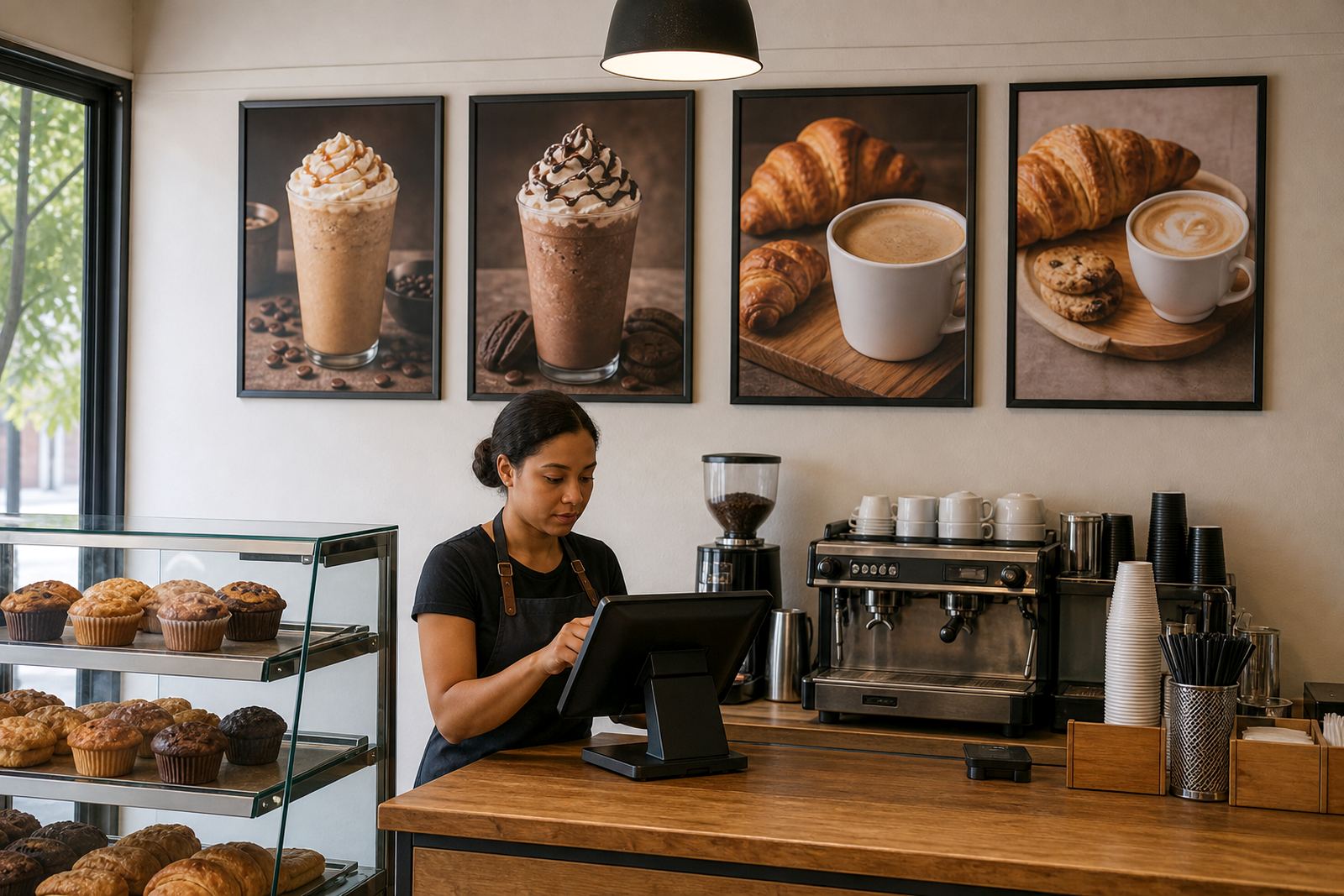
For most bakery counters, A4 and A3 frames carry the right amount of detail without crowding the board. A4 works well for coffee offers, sandwich lists and small baked item callouts. A3 gives more breathing room for product groups, flavour notes and pricing lines that need a little space. In a busy shopfront the frame stays neat, and the menu can be reset without tools or loose clips.
The fittings that suit front counter service
Bakery menus often need more than one display point. A wall-mounted board can hold the main product list near the till, while a window frame catches passing foot traffic from the street. An A-frame stand suits the pavement edge, especially where the daily specials change with ovens, stock and weather.
- Aluminium snap frames for wall or window fixing
- A4 inserts for coffee, cake slices and add-on items
- A3 inserts for fuller lists and category boards
- A-frame stands for footpath or entrance display
- Chalkboards for rotating specials and house notes
- Clear anti-glare covers for bright shopfront light
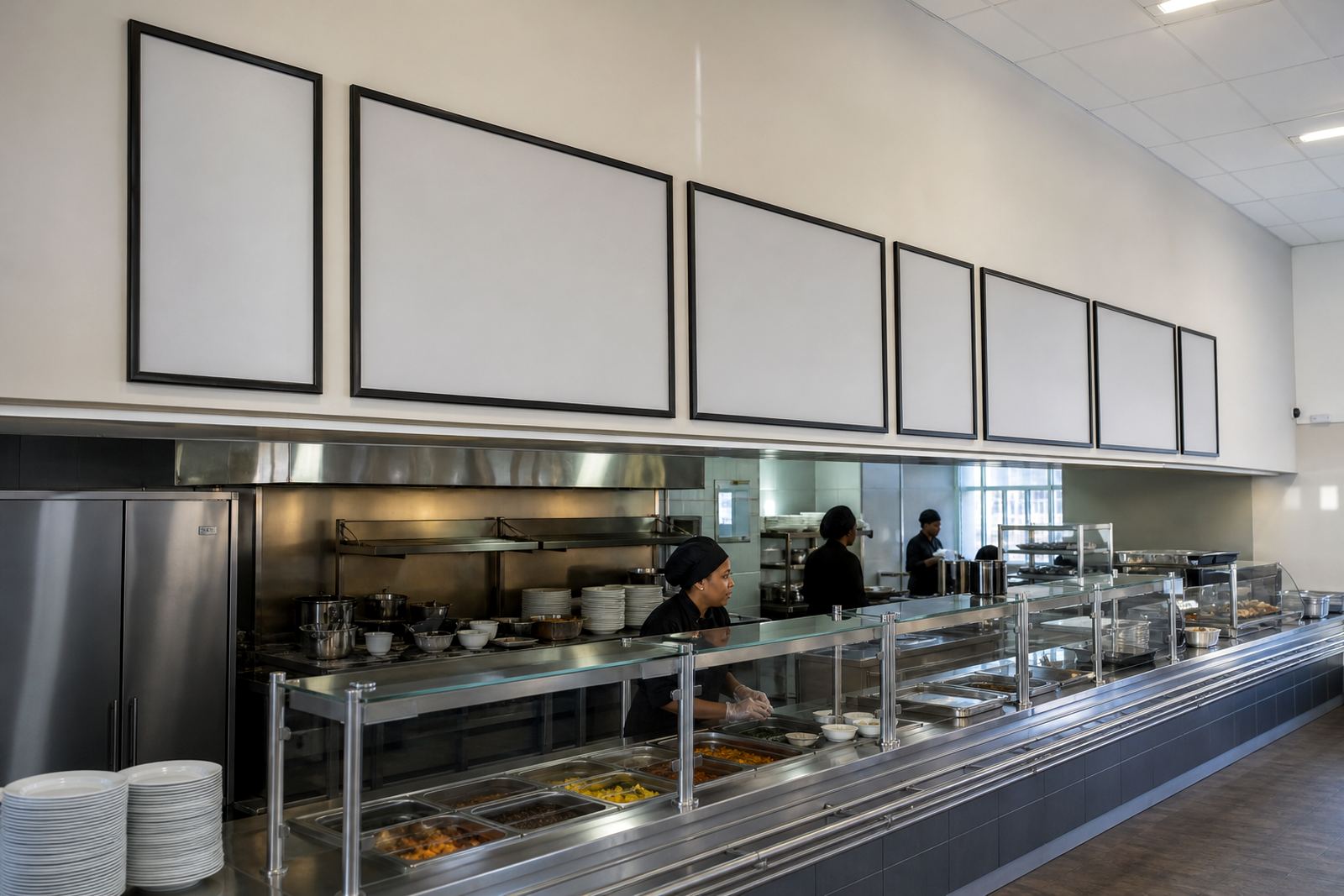
Where a bakery serves breakfast counters, deli items or takeaway lunches, a mixed set often works best. One board can carry the stable items, while another stays open for the bits that change with dough proofing, staff shifts and what has just cooled on the rack.
Layout choices that keep the board readable
Good bakery menus read quickly. Customers standing in line should be able to spot a coffee, a tart or a savoury roll without hunting across the page. That means clean spacing, plain type and enough contrast between the background and the lettering. On glossy paper, a laminated finish helps protect the print from fingerprints and moisture from hands or the hatch area.
Menu resizing is often part of the job. A design that looked fine on a computer screen can become cramped once prices, weights and product names are added. We can help with typesetting and proofing so the final print matches the frame size and leaves room for the real list, not an overfilled one. If the board sits near a sunny window in Stellenbosch or Durban, the anti-glare cover matters even more than people expect.
What bakery owners usually ask the frame to hold
Most bakery displays carry a mix of fresh stock and regular favourites. The frame needs to cope with short notices, seasonal changes and the odd line that only runs on certain days. Some shops prefer one board for breads and another for hot drinks, while others keep the whole offer on a single wall set so staff can work from one glance.
- Fresh product lists that change through the day
- Coffee and tea prices near the till
- Tray bake names and slice sizes
- Window specials for walk-by customers
- Takeaway counter notices and collection notes
- Seasonal treats like hot cross buns, koesisters or festive cakes
Short run printing suits bakeries that test new items before committing to larger quantities. A few dozen inserts can cover a limited promotion or a new recipe, and the same frame can keep working after the test period ends.
Budget bands that make sense in Rand
The budget depends on size, finish and how many frames sit in the shop. A small A4 snap frame for a counter insert sits at the lower end, while a bigger A3 frame, laminated print and wall fixing moves the cost up. A-frame stands cost more than a simple wall unit because the stand and base carry more material and hardware.
For a modest bakery setup, a single A4 frame can start in the low hundreds of Rand, while a fuller A3 board, print finishing and mount fittings may move into the mid hundreds. A pavement A-frame with printed inserts and courier packaging can sit higher again, especially if the order includes multiple boards for more than one branch. For larger rollouts across Cape Town, Johannesburg or Gqeberha, the total depends on the number of frames, print sizes and delivery points, so the quote needs the full list not a rough guess.
Packing, delivery and the small things that protect the job
Bakery items move through flour dust, steam and busy counter hands, so packing matters. Frames should arrive with the covers protected, corners secured and prints flat enough to slide straight in. Courier packaging helps when boards are travelling to Milnerton, Bellville, Paarl or further afield, because bent inserts waste time at the counter.
Our team in Paarden Eiland handles menu printing sizes, finishing and packaging with the frame order, which keeps the set aligned. Marius Mlambo oversees the business side, while Anele Zondo handles production, Bianca Ebrahim manages sales, Thabo Kajee leads installations, Liam Mkhabela coordinates print work and Zanele Wessels supports customer queries through our contact form. The result is a board that fits the real counter, not a loose idea of one.
The mistakes that make bakery menus hard to read
Bakery boards often go wrong in the same few ways. Too many items get squeezed into one frame, the font gets too light for the room, or the print size is chosen before the layout has been checked. Another common problem is mixing product groups with no spacing, which makes the whole board feel rushed.
- Using one frame for too many price lines
- Picking a size before the text is final
- Leaving no room for daily specials
- Placing the board where glare washes out the print
- Using paper that curls or marks easily near heat and moisture
- Skipping proofing and then reprinting after the fact
A better approach is to separate the stable list from the moving parts. Keep the standard range on one insert and leave a second frame, chalkboard or A-frame for the bits that change. That keeps the counter tidy and the staff response lighter on a busy morning.