A coffee counter needs a board that stays legible
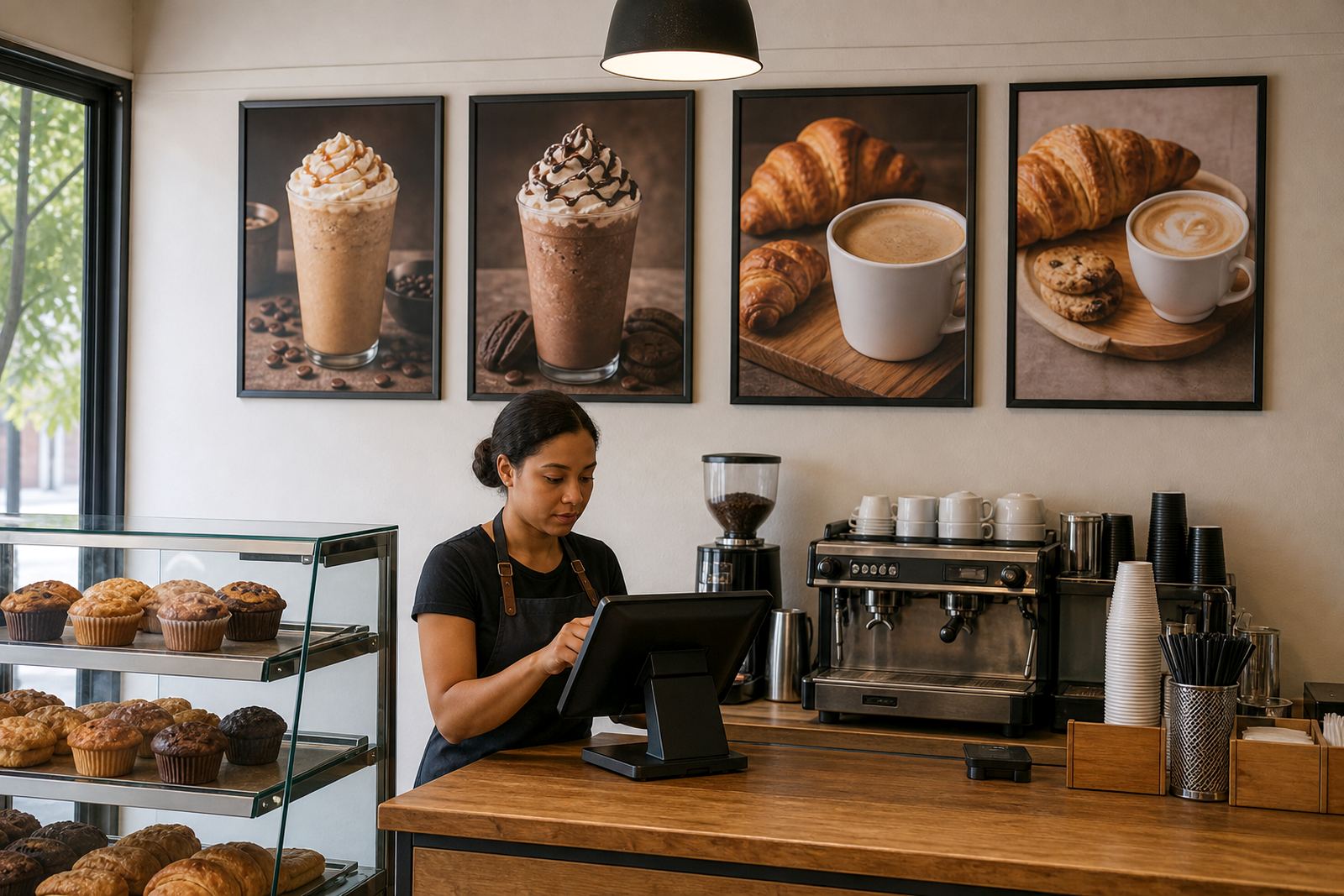
In a busy coffee shop, the menu sits close to the till, the grinder and the queue. People are glancing while they order, so the layout has to hold up at a short distance and still read well above the machine noise and movement at the counter.
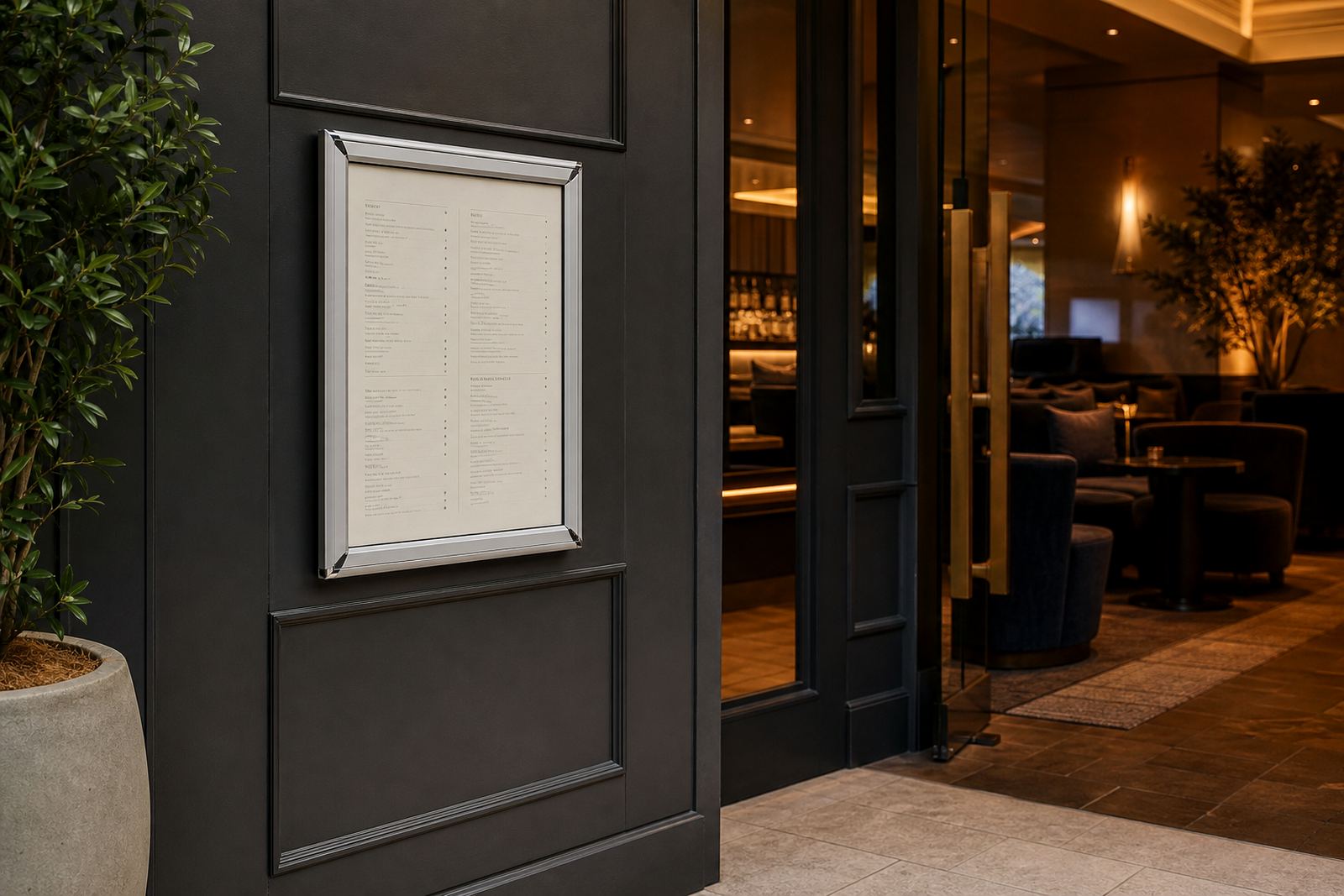
Snap frames work well for this setting because the printed sheet slides under a clear anti-glare cover and stays flat. A4 suits short lists, single-origin boards and milk add-ons. A3 gives more breathing room for drinks, pastry notes and grouped specials without cramping the type.
Typical set-up for drinks, extras and seasonal specials
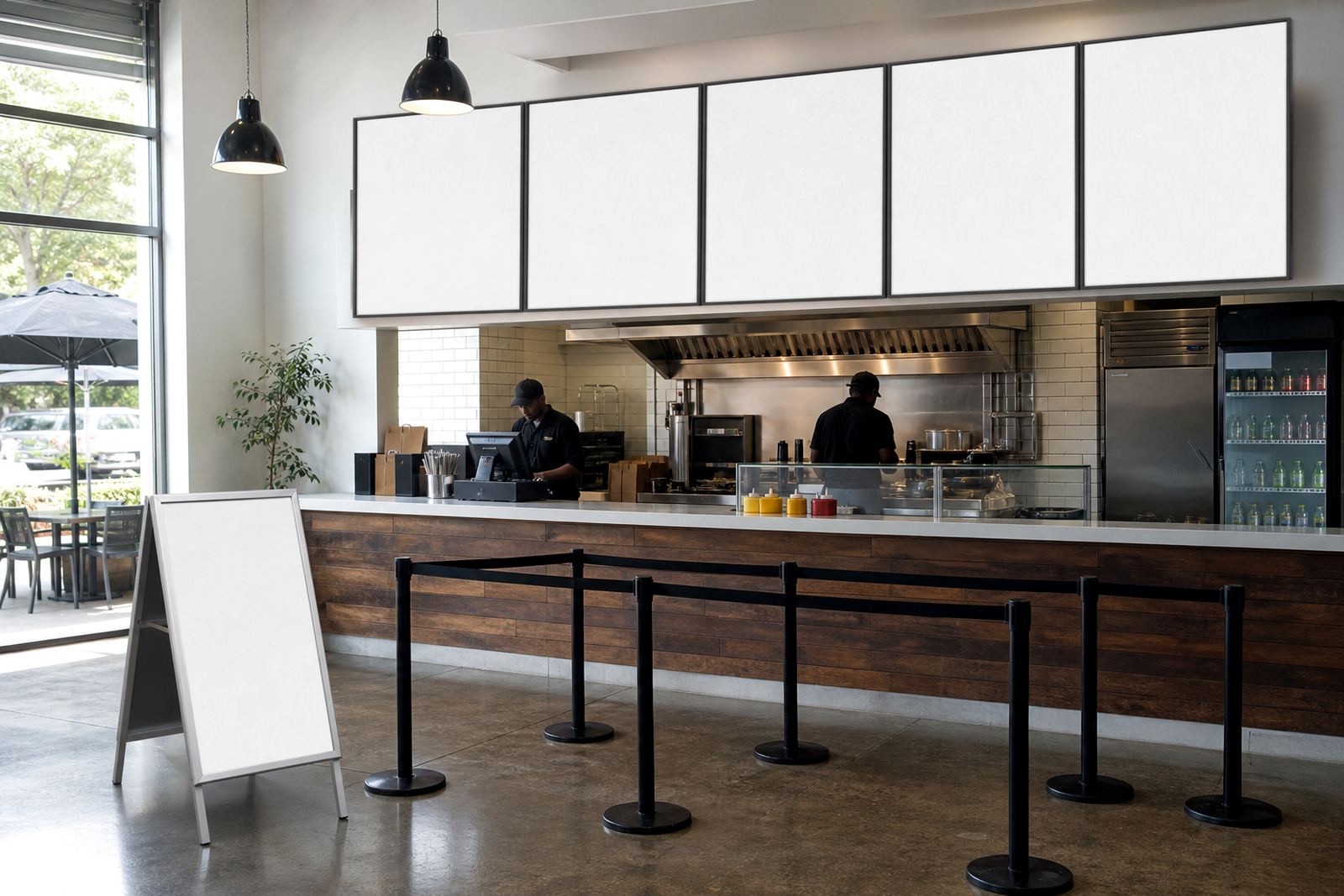
Most coffee shops do not need one large sheet trying to carry everything. A better set-up is a main wall board for hot drinks, a smaller frame for cold drinks or food items, and one A-frame stand near the entrance or queue point for the day’s special. That way the sale item is visible before the customer reaches the till.
- A4 snap frames for compact price lists and small signs
- A3 snap frames for fuller menus with better line spacing
- Wall mounting for service counters and back walls
- Window mounting where passers-by need a quick read
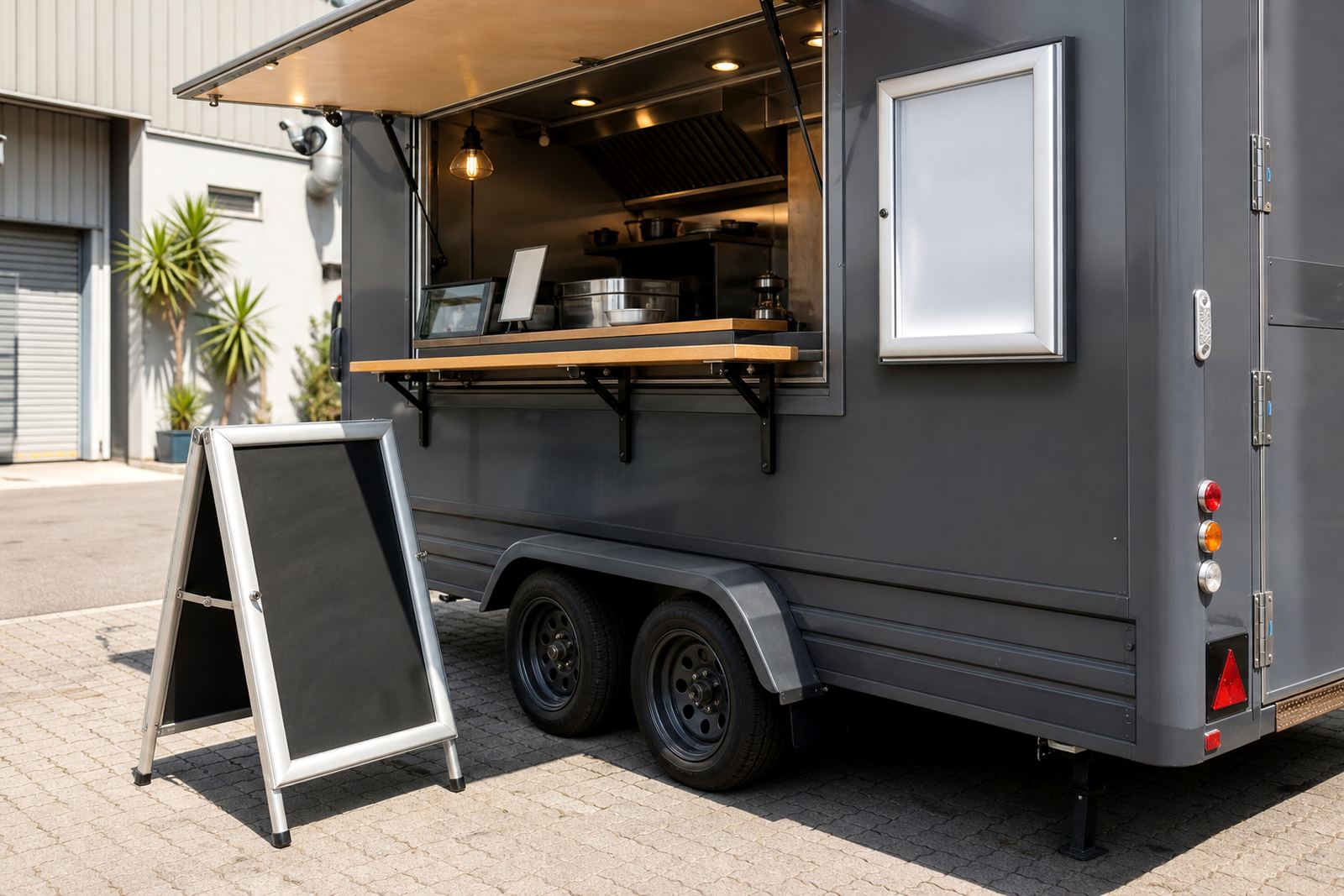
- A-frame stands for pavement placement or entry points
- Chalkboards where hand-written specials change often
For stores in Cape Town or Milnerton with a lot of foot traffic, a window-facing frame can carry the morning offer without taking space off the counter. In Stellenbosch and Paarl, where many shops lean on daily specials, a chalkboard or insert board is handy for changing the message before lunch.
Layout choices that save time behind the till
A coffee menu needs order, not decoration. Group drinks by hot, iced and blended, then keep milk options, syrups and extra shots in a smaller block below the main price. If the board is too crowded, staff spend longer explaining it and the line starts to drag.
Menu printing sizes should match the frame size exactly. A4 inserts are easier to update for seasonal drinks, while A3 suits a fuller house menu or a board with icons, allergen notes and bundle pricing. We also do menu typesetting, menu resizing and proofing, so the printed sheet lands cleanly inside the frame with margins that do not cut off the prices.
- Keep the most ordered drinks at eye level
- Use one font family across the board
- Leave space around price columns
- Separate food items from beverage lines
- Use colour matching for a consistent shop look
On window mounts, anti-glare covers matter because afternoon sun in Cape Town or Durban can wash out a shiny insert. A matte protective sheet is easier to read and keeps the board looking tidy after cleaning.
Printing, inserts and finishes that suit coffee shops
Menu boards for cafés need inserts that can be changed without tools or fuss. Short run printing works for seasonal drinks, breakfast sets and limited items. Laminated menu prints suit counters that get wiped often, and poster insert printing is useful where the same frame carries different promotions across the week.
For shops that run a mix of dine-in and takeaway, the finish matters almost as much as the layout. A clean laminated sheet handles milk splashes better. A tighter print finish helps small text stay sharp. Courier packaging is useful when boards are going to Johannesburg, Durban or Gqeberha and the frame has to arrive in one piece.
Common mistakes on coffee menus
The most common problem is trying to fit too much into one frame. Long product names, extra notes and prices in different sizes make the board feel busy and slow to scan. Another problem is using a frame that is too small for the wall space, or too large for the counter area so it crowds the service point.
- Too many specials competing for attention
- Small text that fades at a distance
- Inserts that do not match the frame opening
- Boards placed where steam or glare affects reading
- Mixed styles across wall, window and counter signs
We often see coffee shops with one board for the main menu and another for promotions, but the second board is placed too low or too far from the queue. A better approach is to keep the sale message near the payment point, then use a separate A-frame or wall sign for seasonal drinks and pastry pairings.
Budget ranges for South African coffee shops
For a small coffee shop, a simple A4 snap frame with printed insert can start around R350 to R850 depending on finish and mounting. A larger A3 menu board or wall unit with a better profile and anti-glare cover often sits around R900 to R2,500. A-frame menu stands generally begin around R1,800 and can move higher when the frame needs heavier construction or double-sided printing.
Short run printing, finishing and menu updates add to the total, especially if the shop wants several board sizes for one outlet. A practical set for a new café might include two wall frames, one A-frame and a few spare printed inserts for seasonal changes. For multi-branch coffee groups in Bellville, Stellenbosch or Durban, we can keep the layout consistent across branches while still adjusting each print set for local specials and opening hours.