Lounge spaces need menus that stay neat through a busy service
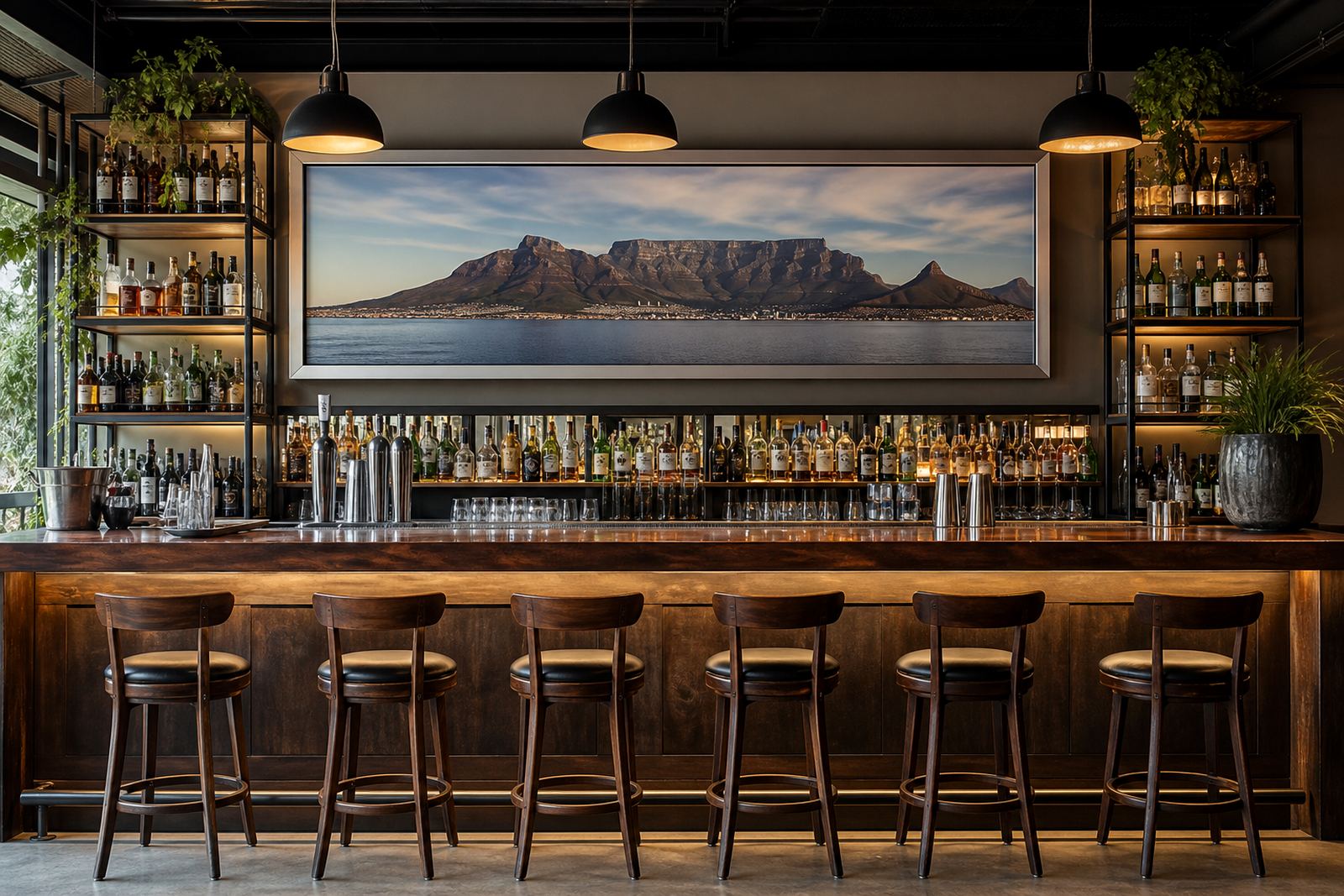
A hotel lounge usually carries more than one menu at once. There may be a drinks list near the bar, a snacks board by the entrance, and an all-day dining insert for guests settling in after check-in. In that setting the frame has to look refined, but it also has to make a quick change easy when a cocktail list shifts or a chef special runs out.
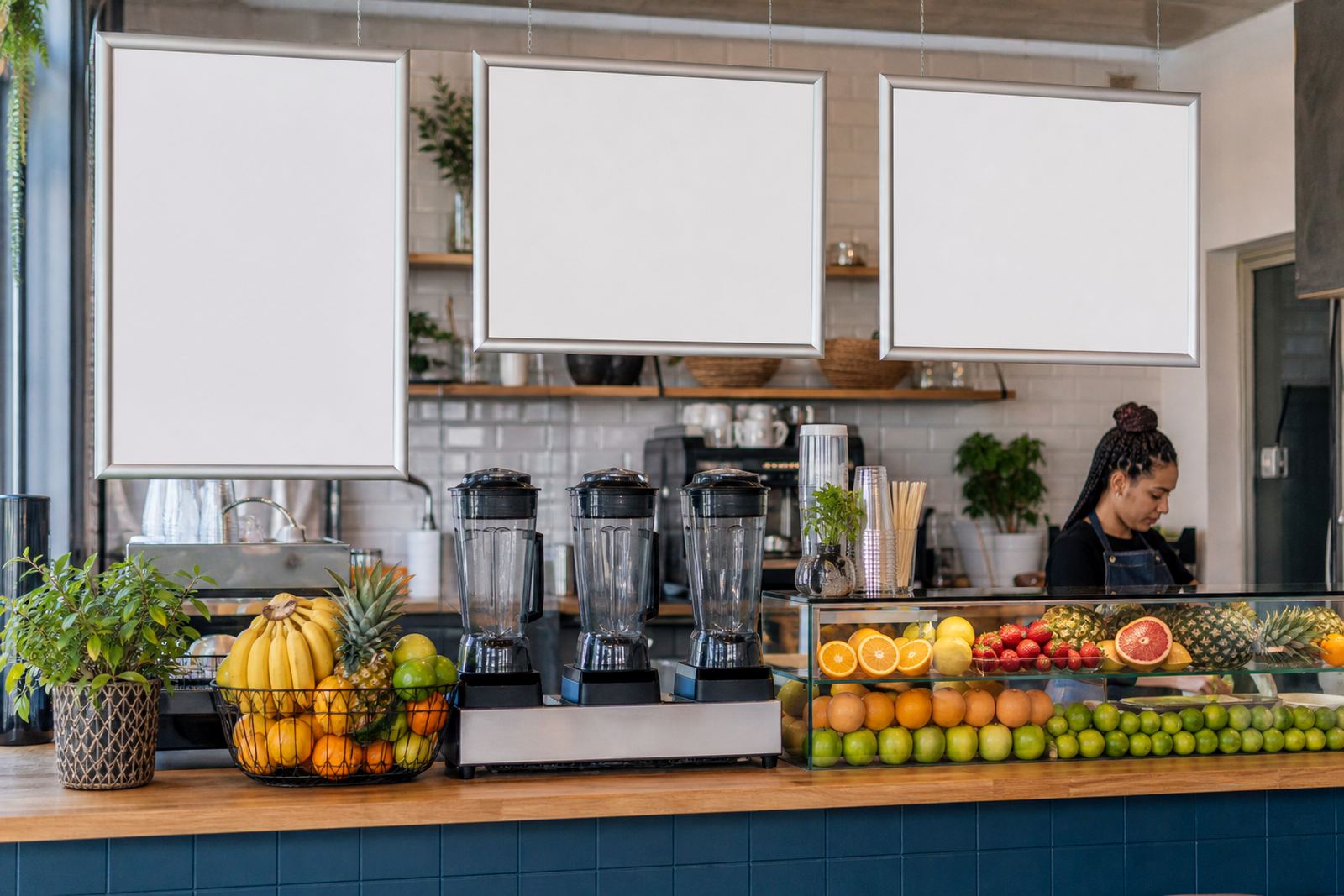
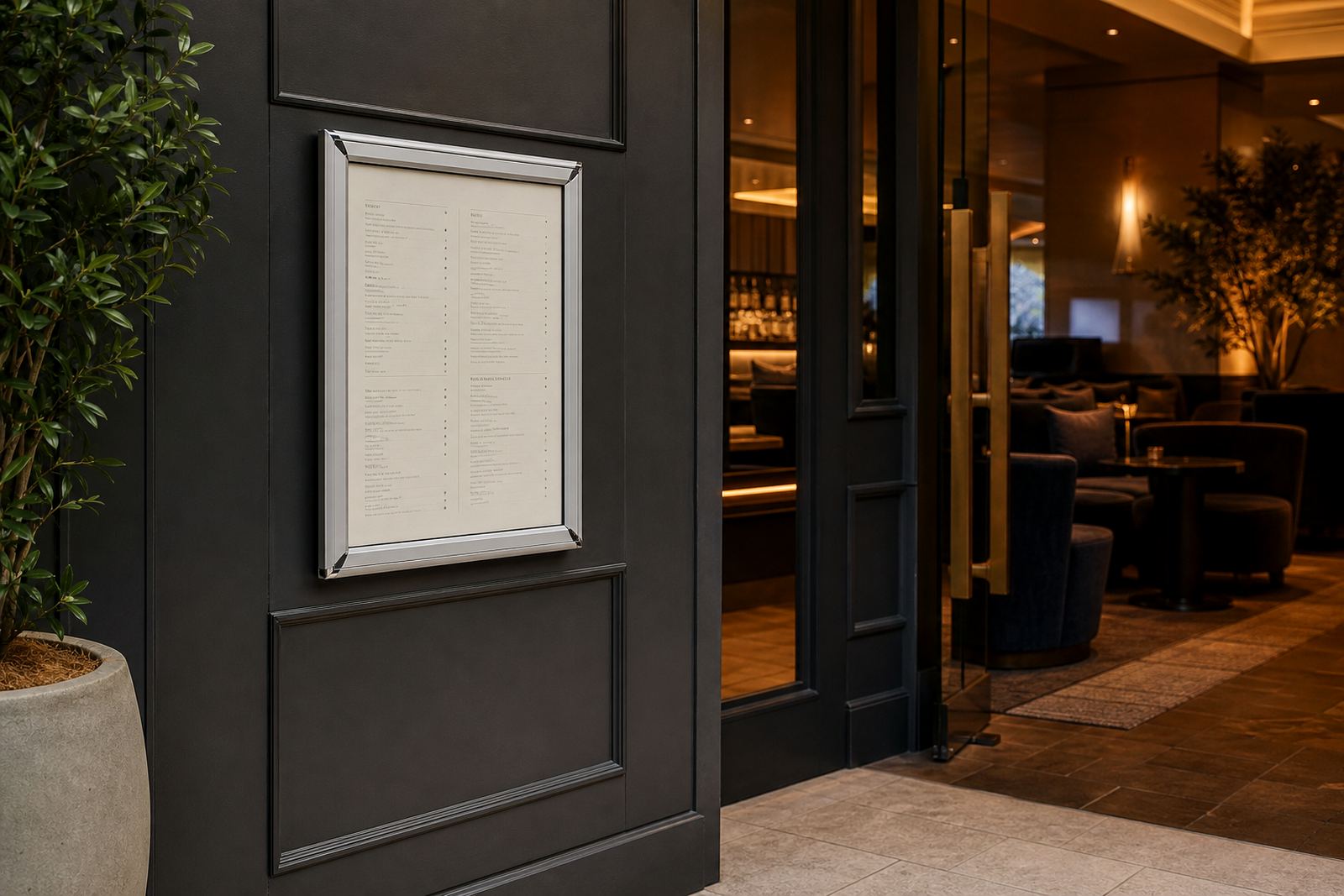
Our snap menu frames and wall menu boards are suited to A4 and A3 inserts, with aluminium profiles and clear anti-glare covers that keep text readable under warm lighting. A guest should be able to scan the prices without leaning in. That matters in lounges where lighting is softer and the room has glass, mirrors or polished surfaces that can throw a glare back at the viewer.
For high-traffic areas, wall mounting keeps the menu in a fixed spot. For entrance points or hostess positions, an A-frame menu stand works well because it can be moved for the evening set-up, then parked out of the circulation path. The right choice depends on where guests pause, where the bar staff stand and how often the menu changes.
A typical hotel lounge set-up, room by room
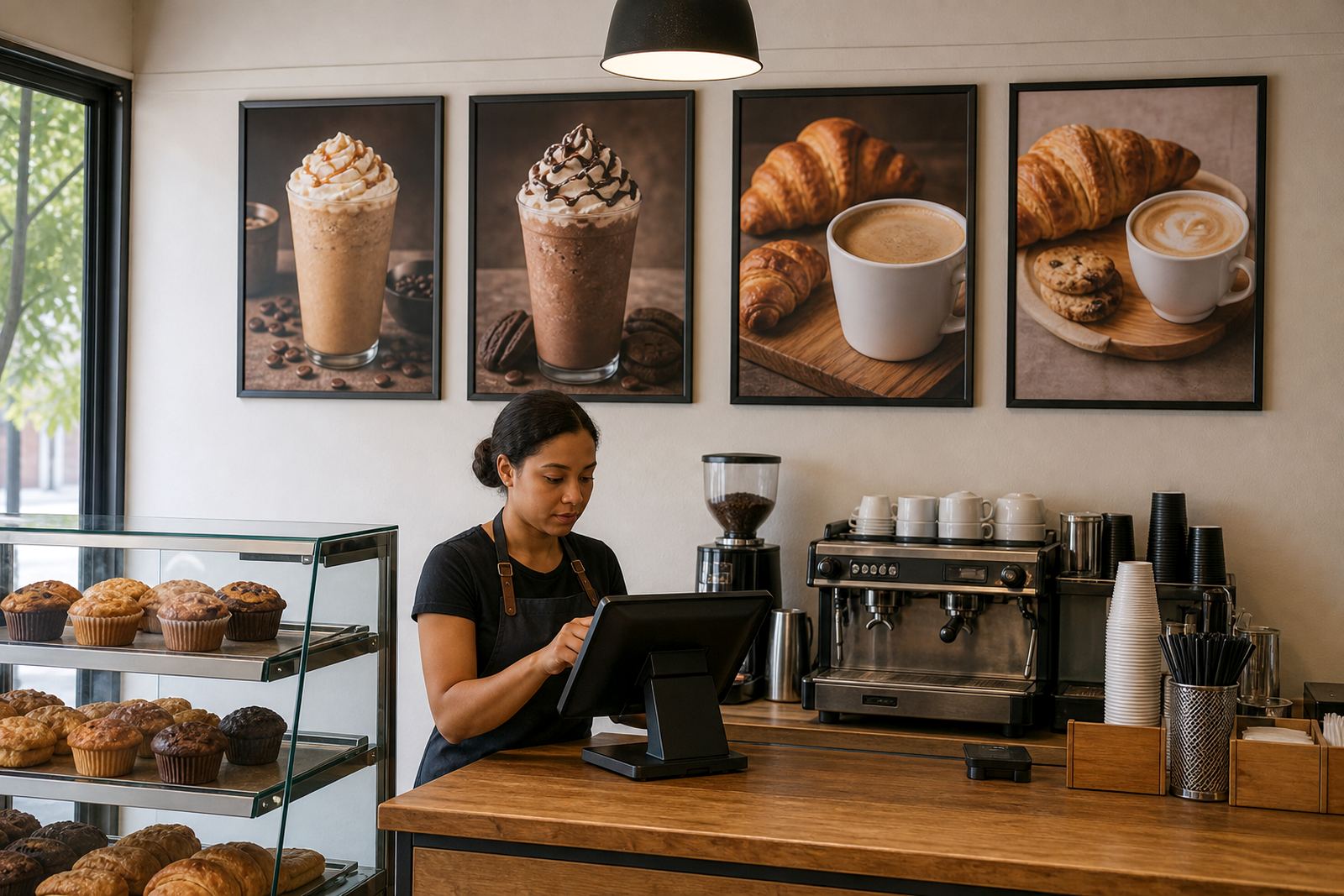
Most lounge briefs start with a small group of items rather than one large board. A drinks list, a short snack offer, and a separate notice for breakfast or late dining often cover the basics. In that kind of layout, smaller inserts can look cleaner than one crowded panel. A4 works well for compact lists, while A3 suits longer menus or a board that needs stronger presence across the room.
For window facing areas, a snap frame with a rear wall mount can be used behind glass so the content stays visible from inside and outside. In some lounges, especially near doors to a terrace or cigar area, a double-sided A-frame helps with traffic flow because the same message can be seen from both directions.
- A4 snap frames for drinks lists, spa notices or short snack menus
- A3 wall boards for all-day dining, dessert lists or larger specials
- Window mounted frames for visible entrance notices and promotions
- A-frame menu stands for lobby thresholds, lift exits and host stands
- Chalkboard style panels for handwritten specials where the offer changes often
Hotels in Cape Town, Stellenbosch, Johannesburg, Durban and Gqeberha often want the same family of items across more than one lounge or dining zone. That is where consistent sizing helps. If the frame dimensions stay the same, the print team can prepare inserts that move from one wall to another without rethinking the whole layout.
How menu layout keeps service calm in a shared space
A good lounge menu is not only about looks. The menu has to be readable for a guest sitting three metres away and still clear for someone standing at the bar. Typeface size, spacing and the amount of white space matter more than people think. In a room with soft furnishing and low light, a busy layout can disappear faster than expected.
Menu typesetting helps here. Short line lengths, careful category breaks and a simple price column make the insert easier to follow. If the drinks list contains coffee, spirits and small plates on one page, the order of the items should guide the eye. We also handle colour matching where a lounge wants printed inserts to sit neatly beside existing décor or branded panels.
One common issue is overfilling a page. A3 gives room to breathe, but only if the content is trimmed to fit. Another issue is mixing old and new menus in the same area. A fresh board beside a faded one looks untidy, and guests can miss the correct price or the current special. Regular menu updates keep the lounge service line in step with the kitchen and bar.
Common mistakes that make lounge menus work harder than they should
Hotel lounges often live with a mix of printed inserts, handwritten specials and temporary notices. That is normal, but the wrong frame choice can make the whole display look cluttered. Thin paper in a loose holder curls at the edges. A board without anti-glare cover sheets becomes hard to read near a lamp or window. A stand that is too large can block the host path or catch a trolley wheel.
Another mistake is using one size for every message. A welcome notice, a full drinks list and a small dessert insert do not need the same footprint. A frame that is correct for the bar may be too strong for a quiet lounge corner. In busy hotels, the best result usually comes from a small family of matching frames used with care rather than one oversized solution everywhere.
- Do not place a reflective insert under bright downlights
- Do not mix frame colours and finish across one seating area
- Do not crowd too much text into a single A4 insert
- Do not leave temporary specials in loose sleeves for long periods
- Do not position a floor stand where guests turn with drinks in hand
When the room changes through the day, the display should still look intentional. Morning coffee service, afternoon snacks and evening cocktails can all sit inside the same system if the insert sizes and mounting points were planned properly from the start.
Planning notes for Cape Town hotels and coastal locations
In Cape Town and other coastal towns, salt air and humidity can affect lower grade fittings and paper edges. Aluminium profiles hold up well in lounge environments, and laminated menu prints are useful where drinks spill, condensation or frequent handling are part of the day. For window mount work, the glass surface should be checked against the route of foot traffic so the frame does not interfere with blinds, handles or cleaning access.
For interior planning, think about sightlines first. A guest seated low in a lounge reads differently from a guest standing at the bar. If the menu is meant to be seen from across the room, the heading and category names need more weight. If it is meant for close reading, the focus should shift to clear spacing and neat print finishing rather than oversized type.
Courier packaging is useful when a hotel group needs frames sent to several sites. We supply across South Africa, including Cape Town, Stellenbosch, Johannesburg, Durban and Gqeberha, so one menu format can be repeated across different branches without changing the core layout every time.
What a lounge menu project usually costs in rand
Budget depends on frame size, quantity, print finish and whether the job includes wall mounting or floor stands. A small lounge refresh with a few A4 inserts and one or two frames sits at a lower end of the range, while a broader roll-out with A3 boards, laminated prints and multiple stands naturally sits higher. Short run printing keeps smaller updates practical when only a few menus need changing.
For planning purposes, many hotel teams look at a starting range of about R450 to R1,200 per frame set for basic sizes, depending on finish and configuration. Larger A3 boards, double-sided stands and printed inserts with laminating can move into the R1,500 to R3,500 range per item or set. Complex layouts, menu resizing and courier packaging add to the total. These figures are broad, but they help a lounge manager compare a compact drinks board with a full entrance display.
Where there are several areas to outfit at once, it helps to group the brief by zone. Bar, reception lounge, terrace and dinner service can each have its own frame type. That keeps the spend tied to actual use, not guesswork, and makes later menu updates much easier to manage.