Front-of-house boards that suit a busy service
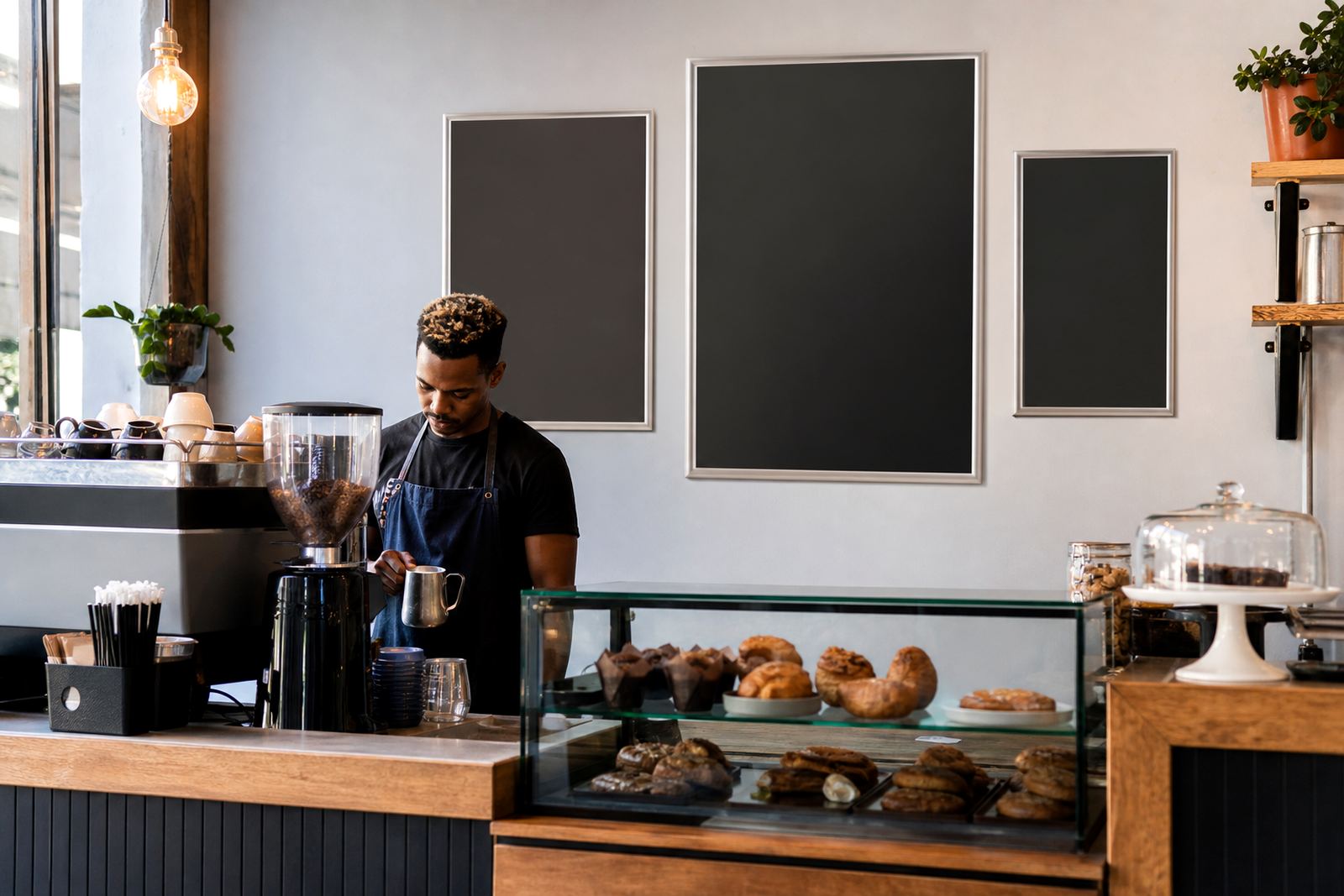
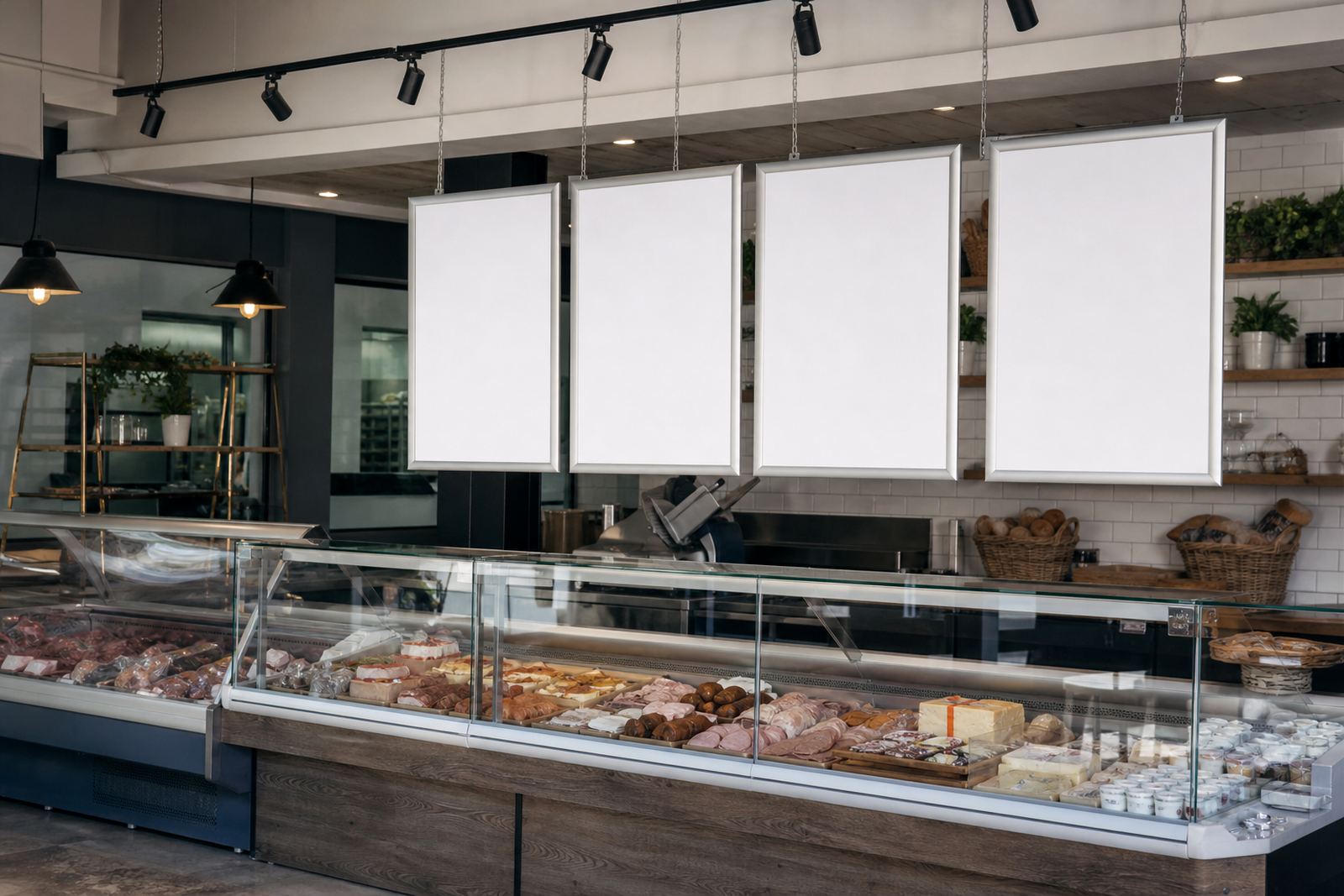
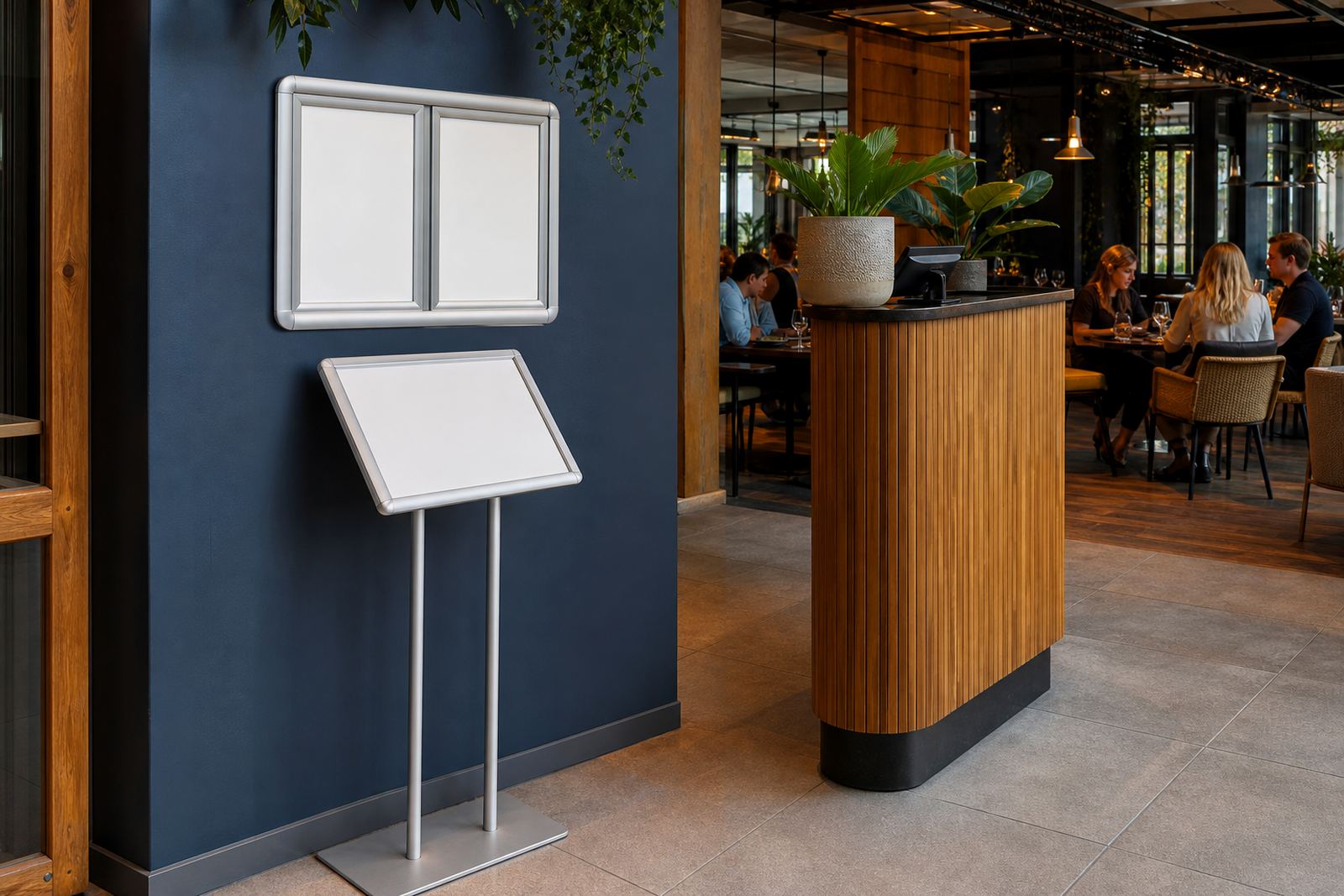
Dining rooms, patios and takeaways all use menu displays differently. A wall frame at the entrance may carry the full menu, while a second board near the host stand can hold specials, set meals or trading hours. For smaller rooms, an A3 snap frame often gives enough room for clear pricing without crowding the wall, while A4 works well for coffee, desserts and short lists.
In Cape Town restaurants, salt air and window glare can make paper look tired quickly. An anti-glare cover helps the print stay readable near glass doors, and aluminium profiles hold their shape better than soft plastic corners when the board is handled often.
What restaurant teams usually ask for
Most restaurant layouts need more than one display point. A dine-in room may use a main menu board inside, a window board for passing trade, and a freestanding stand near the entrance. Where the menu is updated often, the frame should open and close cleanly so staff can swap prints during a quiet gap between table turns.
Menu boards also work well for upselling. A framed specials insert beside the till can hold breakfast extras, dessert pairings or house drinks. When the menu changes by time of day, shorter inserts reduce clutter and keep the first glance easy to read.
Planning the size and layout before printing
Menu design starts with the viewing distance. A board read from the doorway needs larger type than one placed at eye level near the counter. For a restaurant with laminated tabletop menus, the wall display can carry a trimmed version that keeps the same wording and price structure, just in a cleaner column layout.
We usually work with A4 and A3 menu templates, then resize the artwork where needed. That keeps the final print within the frame border and avoids cropping a price line or a dish title. In narrow shopfronts, a vertical A3 frame can fit better than a wide board and still hold a decent amount of detail.
Mistakes that make menus harder to use
One common problem is trying to fit too much onto one page. Small type, long dish descriptions and packed price columns all slow the reader down. Another issue is mixing old and new prints, which leaves different shades of white or slightly different fonts across the board. In a restaurant with natural light, that uneven finish shows up fast.
Damage often starts at the corners. If a frame is opened too roughly or mounted where people brush past it, the print can shift and the cover can lift. A proper print finish, clean trimming and correct fitting help the display stay neat through daily service and regular menu updates.
Costs in Rand for a working restaurant setup
Budget depends on the number of boards, the frame size and whether printing is included. A single A4 snap frame with print can suit a small specials board, while a set of A3 wall displays and an A-frame stand will cost more because of the extra material and finishing. For restaurants ordering a small run, short run printing is often more practical than overprinting a stack that will age before it is used.
As a rough guide, many restaurants budget a few hundred Rand for a basic A4 insert and more for larger A3 framed menus, laminated prints and courier packaging. A full front-of-house set with multiple boards, resizing and finishing can move into the low thousands. The final figure depends on quantity, artwork changes and delivery to Cape Town, Johannesburg, Durban, Gqeberha or a smaller town on the route.
Getting the right set for your floor plan
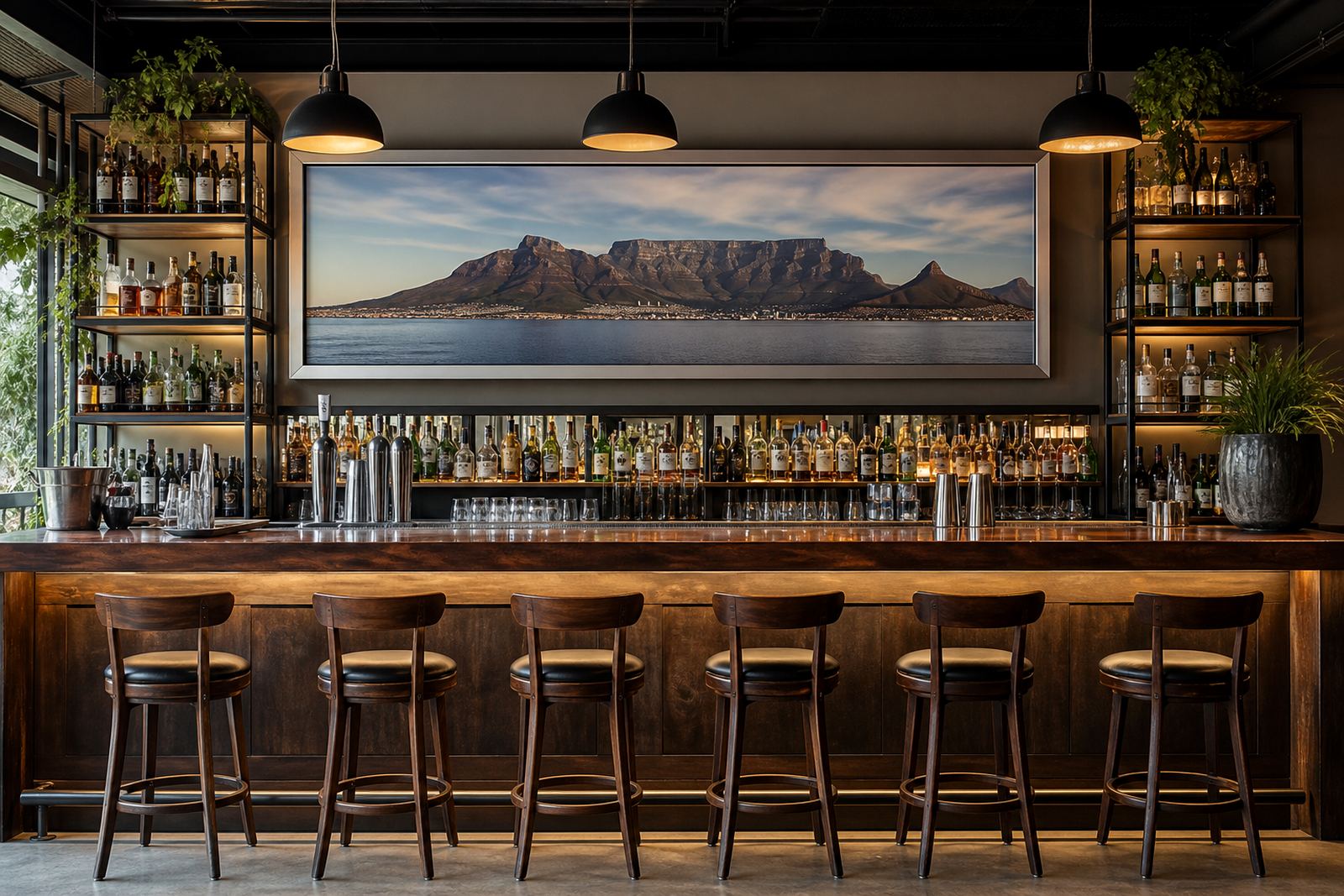
Restaurants in Milnerton, Bellville, Paarl and Stellenbosch often need different display mixes from a busy city centre venue. A wine bar may prefer slim wall frames and a chalkboard by the door, while a family restaurant may want clear lunch boards and a durable A-frame outside. The right set depends on how often the menu changes and where guests stop to read.
Our team in Paarden Eiland handles menu printing sizes, finishing and courier packaging for delivery nationwide. If you need a restaurant display set with clean layout, readable pricing and inserts that swap without tools, our contact form is the easiest starting point for the brief.