
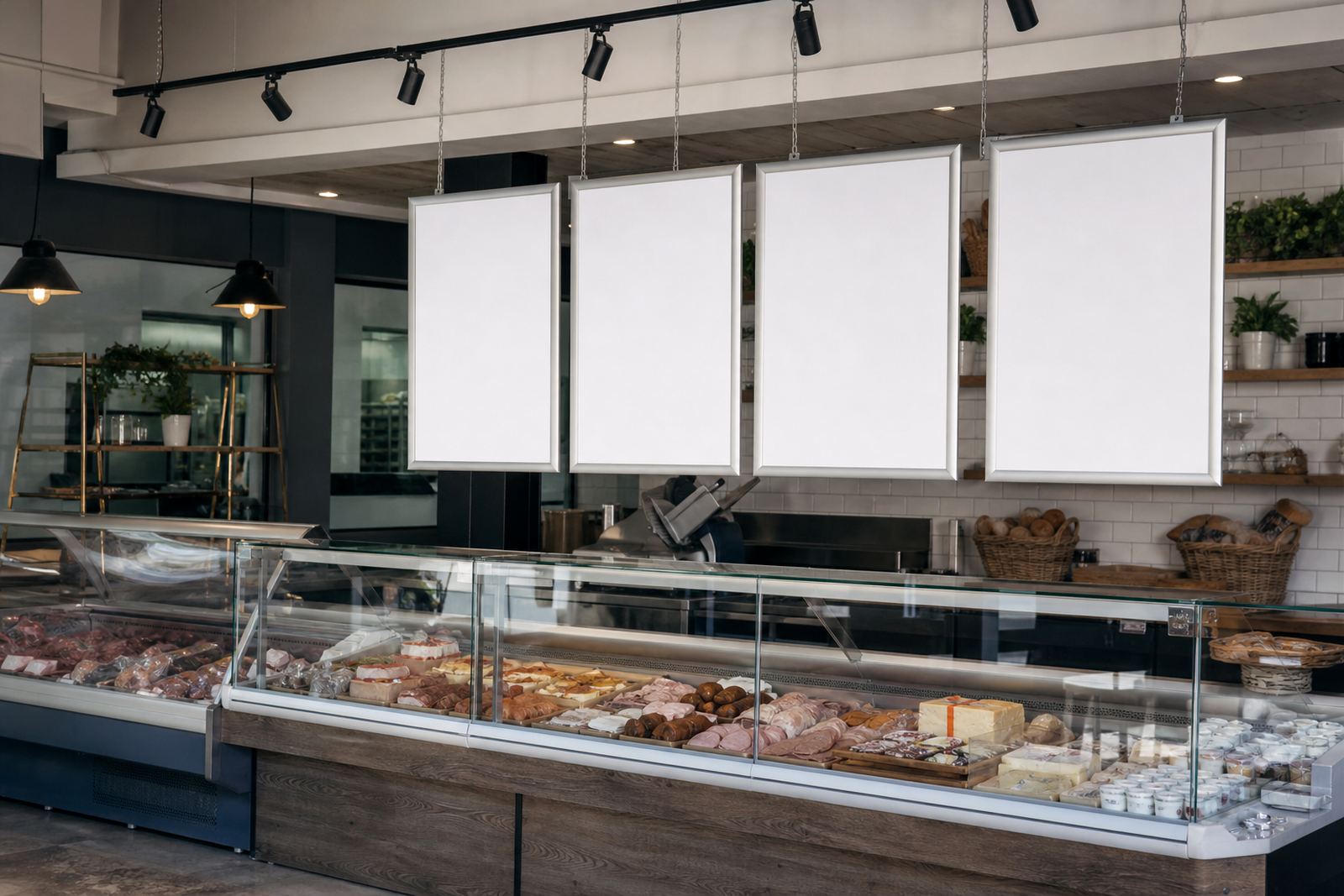
Counter boards that suit a deli rhythm
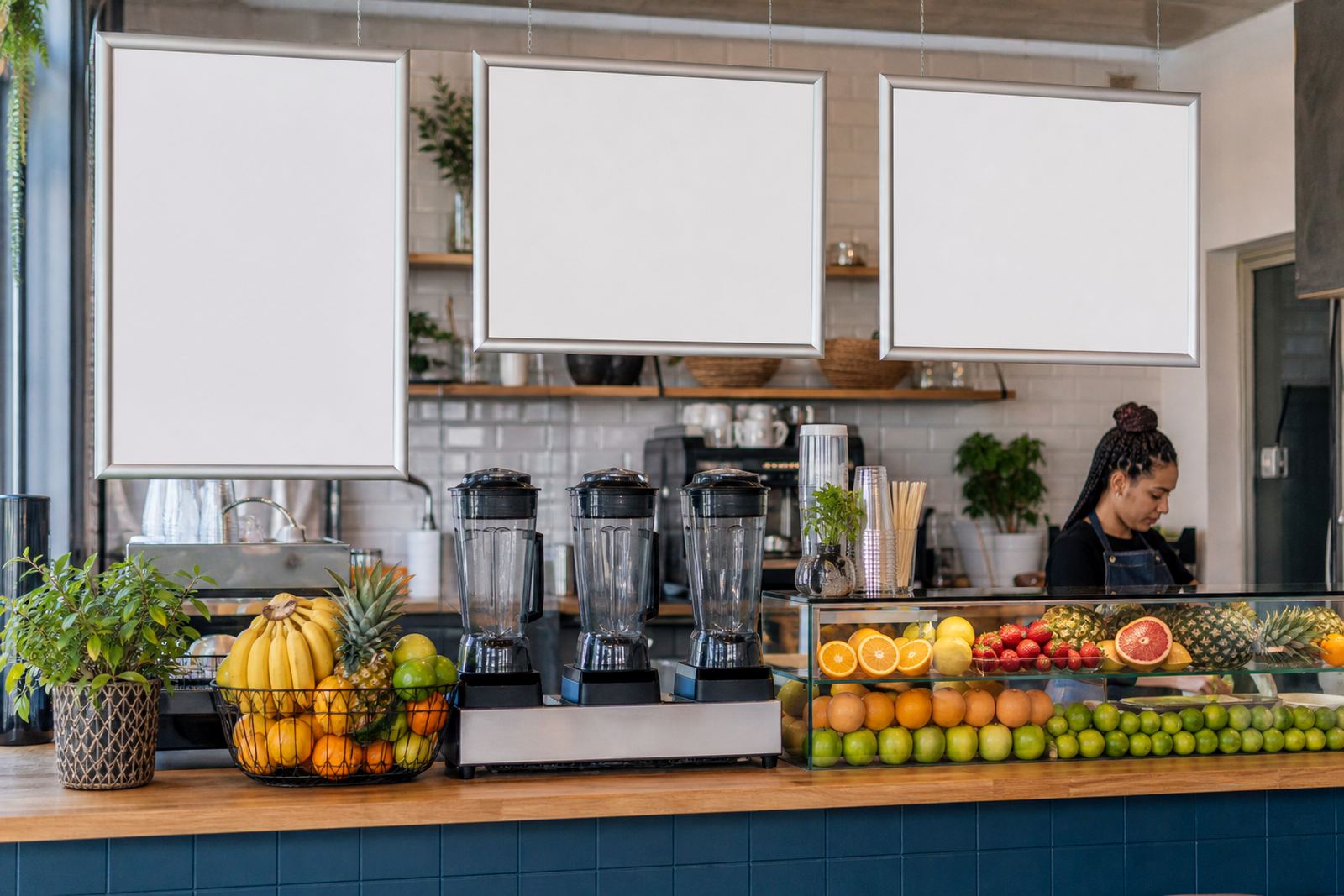
A deli counter usually carries more than one message at once. There is the full food list, then the sandwich board, then the soup or salad special, and sometimes a short breakfast or lunch strip that changes through the week. Snap frames let those inserts move without tools, which helps when the counter display shifts with stock and prep.
A4 works well for narrow specials and daily add-ons, while A3 gives more breathing room for a fuller menu or a list with ingredients. Aluminium frames suit shopfront use because they hold the print flat and keep the face tidy, even where staff members change inserts often.
The usual deli kit, arranged by job
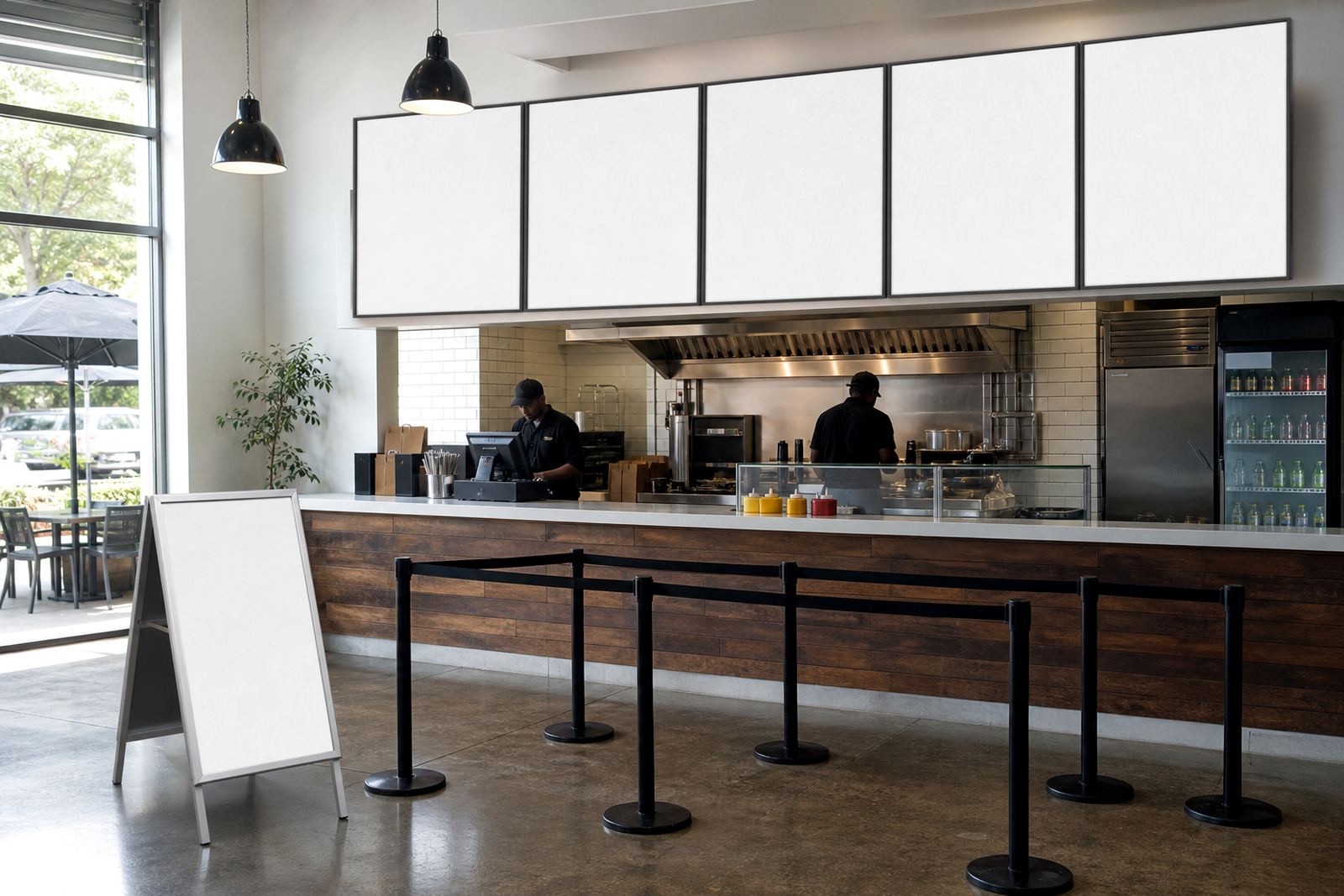
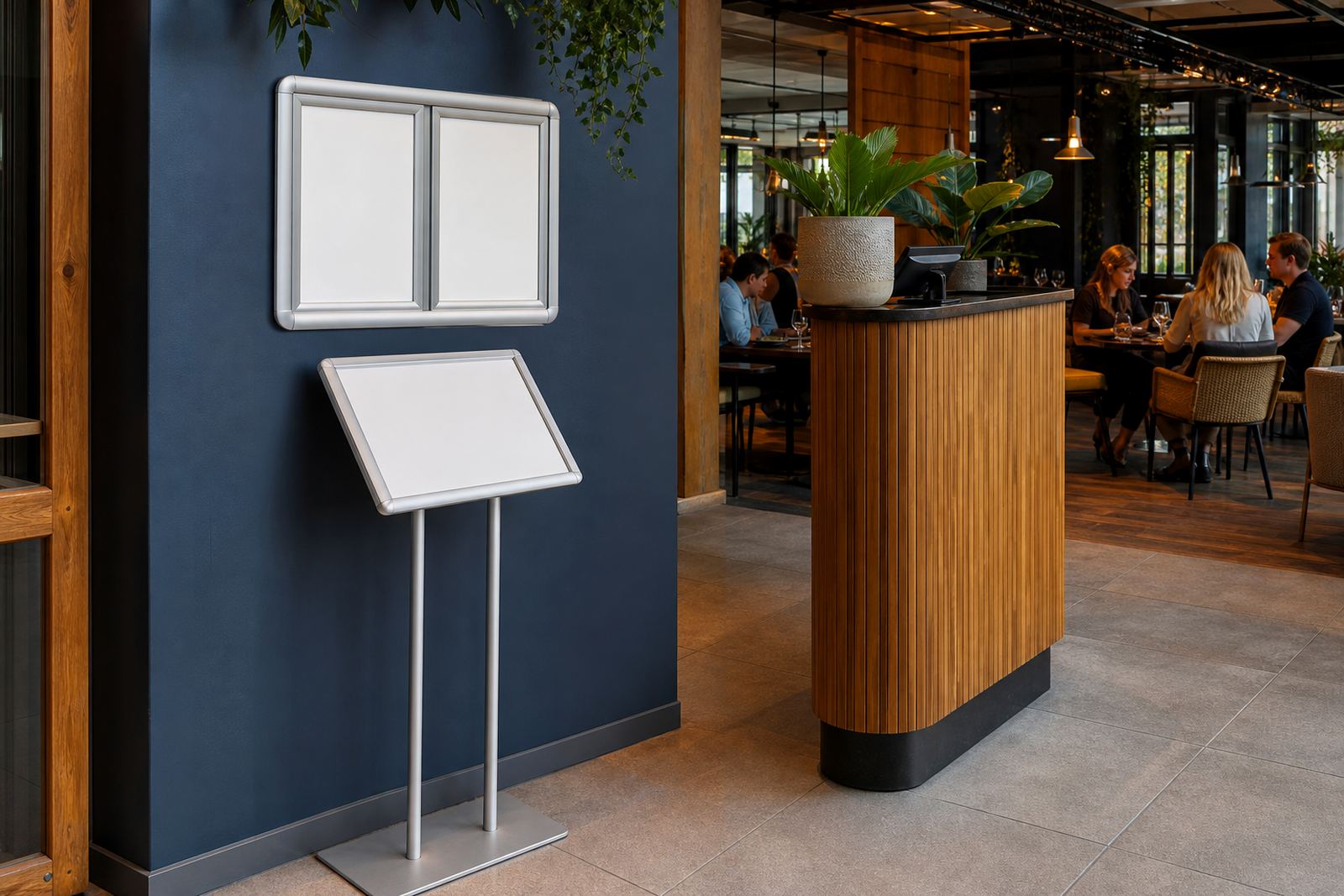
Most deli fit-outs use a mix of wall frames, window signs and a portable stand near the service point. The right mix depends on whether the shop sells ready meals, sandwiches, cakes or hot counter items. A frame near the till can carry the price list, while a larger wall board can carry the main food range and allergens note.
- A4 snap frames for specials, add-ons and short price notices
- A3 snap frames for fuller menu boards or category lists
- Window-mount frames for trading hours, daily deals and takeaway lines
- A-frame stands for pavement placement or entrance displays
- Chalkboard panels for hand written notes and rotating specials
Layout choices that keep the counter easy to read
For delis, the best layout is usually the one a customer can read while standing in a queue. Keep the main food groups in one order, then place the quickest choices first, such as sandwiches, toasties, salads and heat-and-eat dishes. If the board is too busy, staff spend more time explaining it and less time serving.
Use one frame style across the counter area where possible. Mixed fonts, crowded spacing and too many panel sizes make the board feel patchy. A simple grid, with enough white space around each line, works better in a small shop than a crowded poster full of extra copy.
Where daylight hits the front window, anti-glare covers help with reflection. That matters in Cape Town malls, street-facing shops and bright corners in Stellenbosch, Bellville and Milnerton, where a glossy insert can disappear behind the shine.
Common deli mistakes that cost time at service
The most common problem is a menu that tries to say too much. A deli board should not read like a kitchen notebook. If the customer must scan half the wall before spotting the chicken mayo roll, the board is carrying too much detail.
- Using one oversized print for every price change
- Mixing chalk notes with formal printed panels on the same board
- Choosing a frame size that is too small for the text length
- Putting reflective covers where sunlight makes the print hard to read
- Ignoring wall height so the top line sits above eye level
Another problem is layout drift, where the menu changes bit by bit until no one can tell which item sits in which section. A clean reset every so often helps the whole board stay readable and keeps the counter looking organised.
Printing, inserts and finishing for deli counters
Menu inserts for delis often need short runs, because specials move with stock and season. Printed inserts can be supplied in menu-ready sizes such as A4 and A3, with laminated finishes where the board sits close to hands, spills and regular wiping. Poster inserts also work well for window boards and larger wall displays.
For shops that update daily, colour matching keeps the printed insert close to the deli's existing look, especially where the same board holds both typewritten items and photographed dishes. Finishing should suit the use, not fight it. A hard gloss may suit a bright window, while a softer finish reads better on a wall board under direct lights.
Budget bands in Rand for deli menu boards
Costs depend on frame size, the number of inserts, mounting type and whether the job needs printing or finishing. A small A4 snap frame for a short special usually sits at the lower end of the range, while larger wall boards, A3 menu panels and A-frame stands push the total higher. Courier packaging also matters when the order is sent to Johannesburg, Durban or Gqeberha.
- Single A4 snap frame with printed insert: about R250 to R650
- A3 snap frame or wall board with print: about R450 to R950
- A-frame stand with insert system: about R1 200 to R2 800
- Multiple boards with menu updates and finishing: about R1 500 to R6 500
A deli in Paarden Eiland may want a front-of-house bundle for the counter, while a shop in Paarl or Durban may need a wider set that covers window display, specials and take-away messaging in one order. The right spend is usually the one that reduces reprinting and keeps the board easy to change.