
Clear dust before it works into the clips
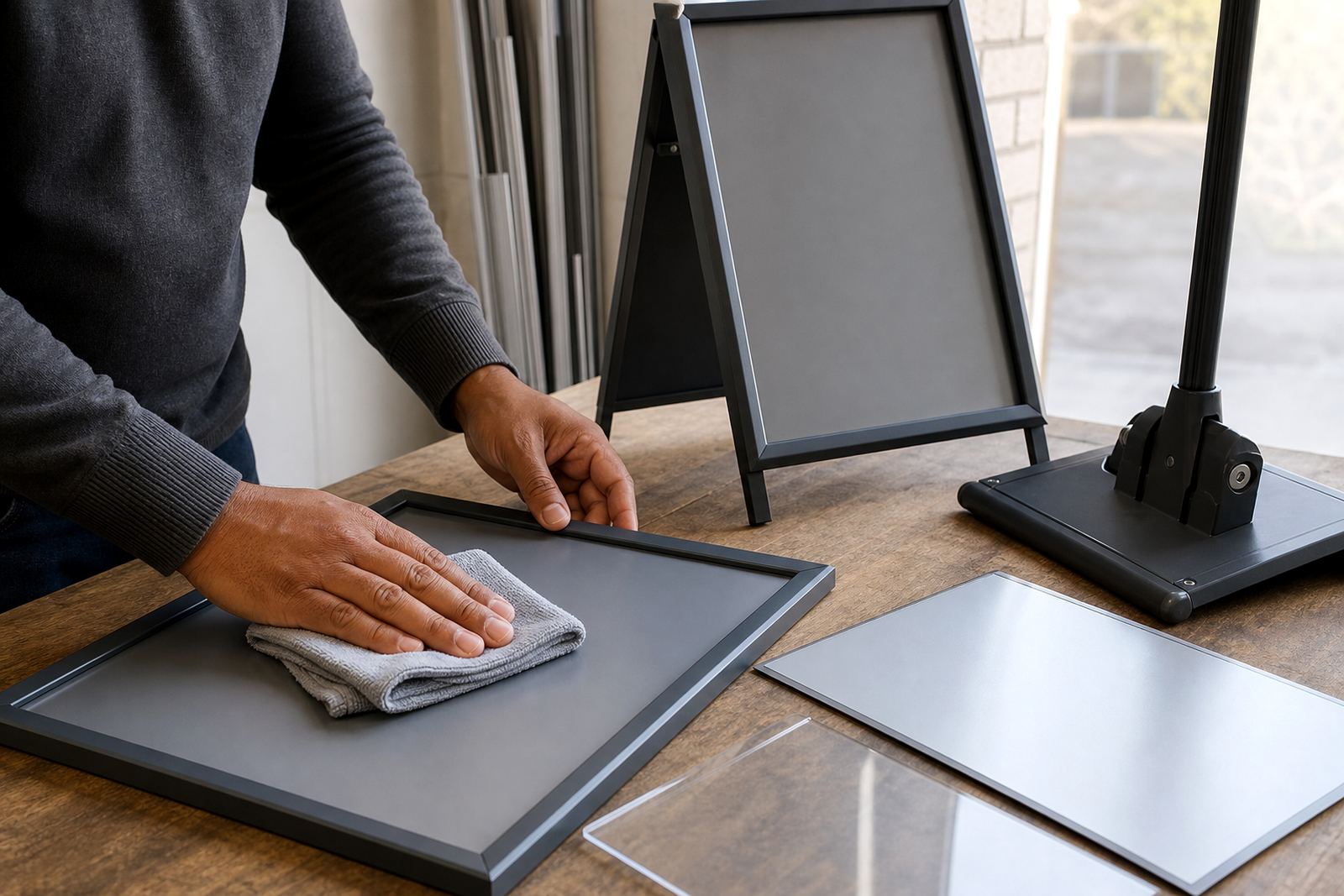
Start with a soft dry microfibre cloth and wipe the aluminium profile, corners and stand legs. Fine dust builds up fast in Cape Town kitchens and on takeaway counters, and if it sits in the clip channel it can make opening the frame feel stiff.
If a frame is mounted near a window or pass-through, wipe both sides of the cover as part of the same routine. Keep the cloth clean, because grit on the fabric can leave fine marks on anti-glare sheets.
Clean the cover without clouding it
Anti-glare covers need a gentle hand. Use lukewarm water with a small amount of mild soap, then dry with a soft cloth. Avoid harsh cleaners, scouring pads and anything gritty, because the surface can take on a dull patch if it gets scrubbed too hard.
- Lift the cover out of the frame before washing it.
- Check for crumbs, salt spray or sticky residue at the edges.
- Dry the sheet fully before clipping it back in place.
Keep printed menus flat and tidy
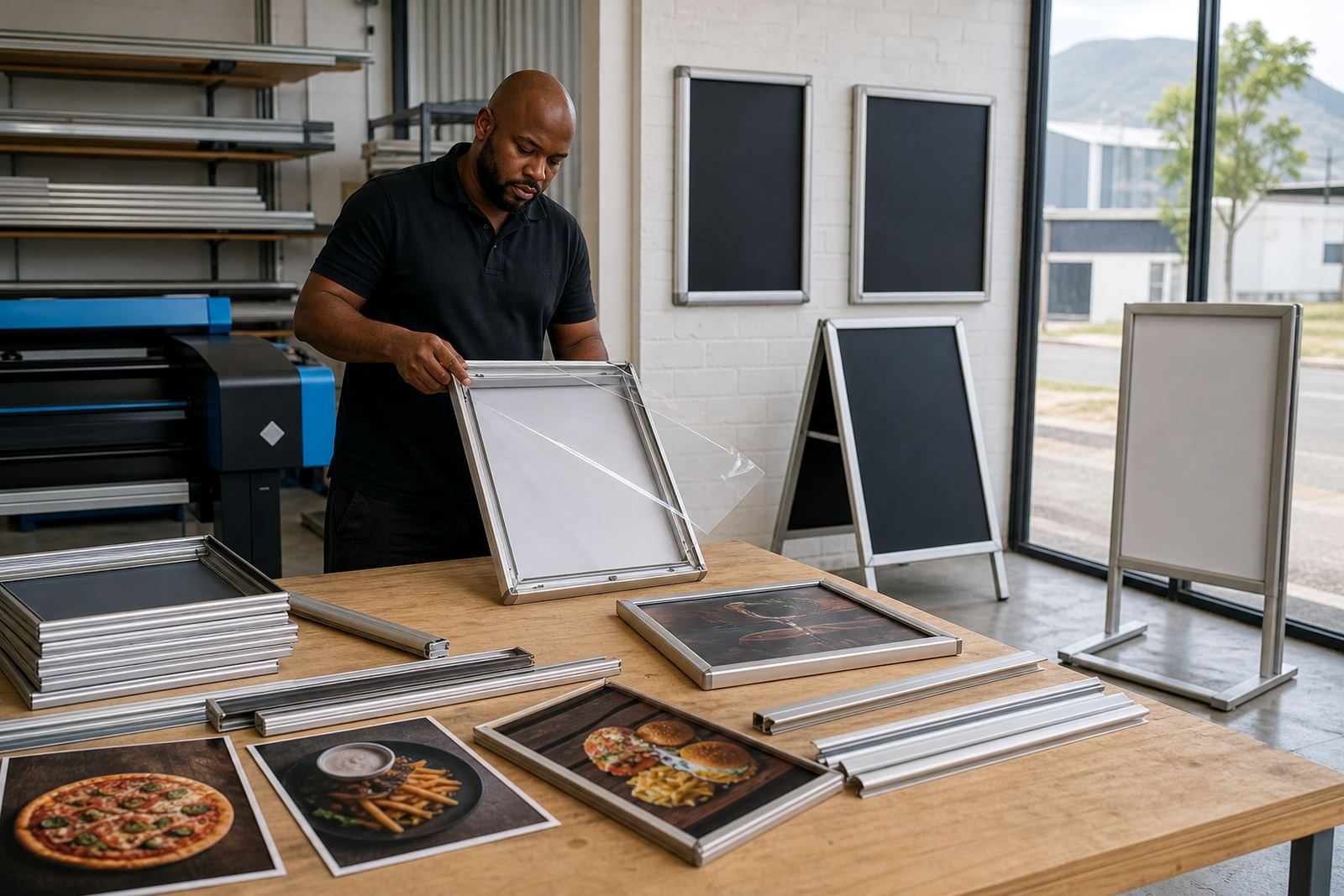
Printed inserts look best when they stay flat inside the frame. If the sheet curls at the corners, remove it and press it under a clean board overnight before refitting it. For laminated menu prints, avoid bending the corners sharply, as that can mark the laminate edge.
When menu text changes, replace the insert rather than sliding a wrinkled print back into place. A clean sheet behind the cover is easier to read under bright café lighting and on window-mounted boards.
Small checks for wall and window mounting
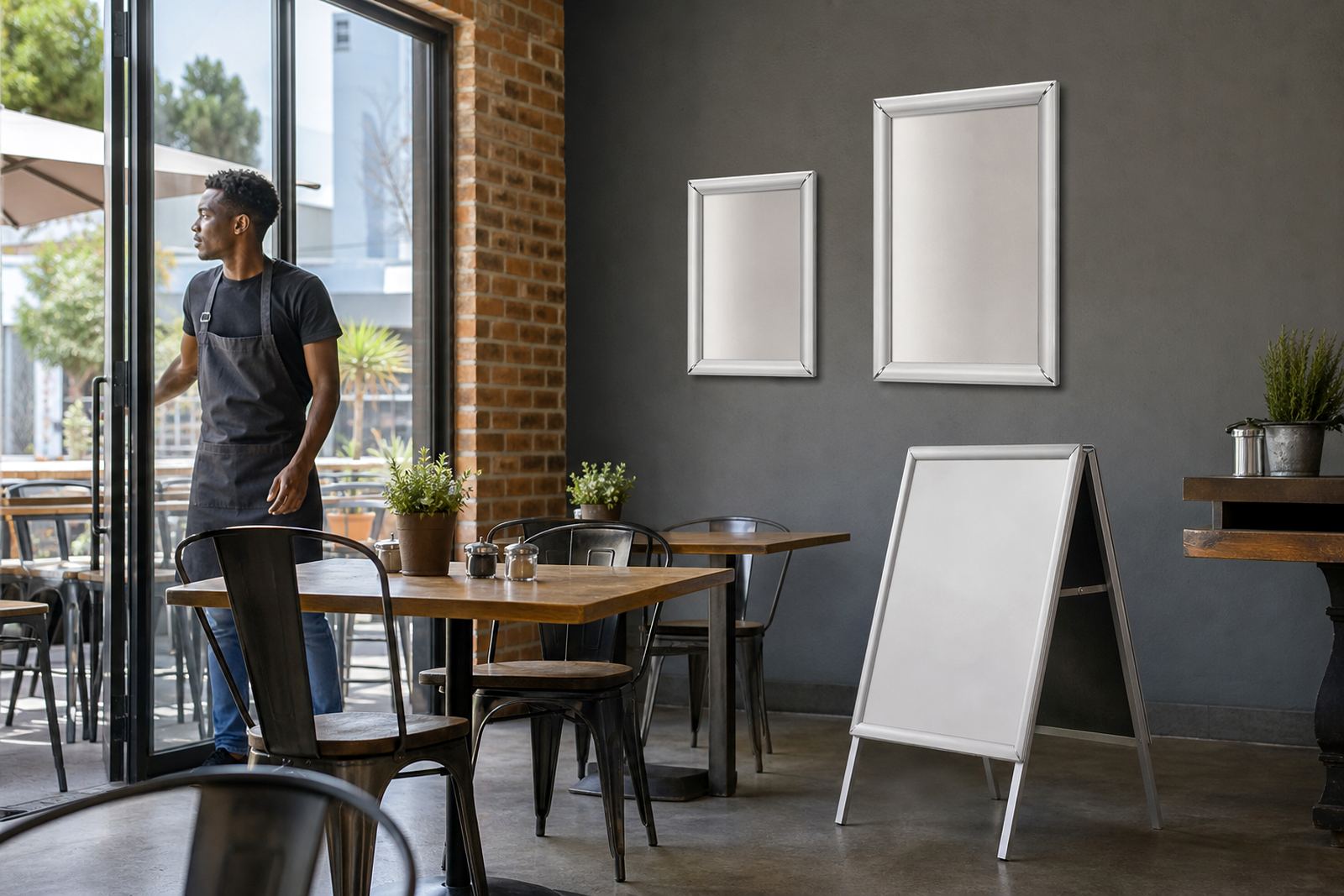
Mounted frames should sit square on the wall and hold firm on the fixings. Give each one a light check during your regular cleaning round, especially in busy stores where staff open and close the frame many times a day. If a board starts to tilt, the fixings may need tightening.
- Look for loose screws or worn plugs on wall-mounted units.
- Check that window-mounted frames still sit flush against the glass.
- Make sure the open edge closes evenly on both sides.
A-frame stands need balance, not force
A-frame menu stands work well on level paving, but they should not be forced onto uneven ground. Clean the frame feet, hinges and top sign area with a damp cloth, then dry them off so moisture does not sit in the joints. On coastal sites, a quick wipe after mist or sea air helps reduce surface marks.
If the board rocks on the floor, check for debris under the feet first. Sand, crumbs and small stones can throw the stand off balance, and that can wear the hinges over time.
When a frame starts to feel stiff
If a snap frame becomes hard to open, do not use tools to pry it apart. That can bend the profile and mark the cover. Open the sides by hand, clear out dust or trapped paper bits, then close the frame evenly from each corner. A gentle, even press is usually enough for most menu boards.
For A3 and A4 frames with frequent updates, keep spare inserts cut to the correct size so staff are not trimming paper at the counter. Clean, direct-fitting inserts save time and keep the display tidy.
Packing frames for courier delivery or storage
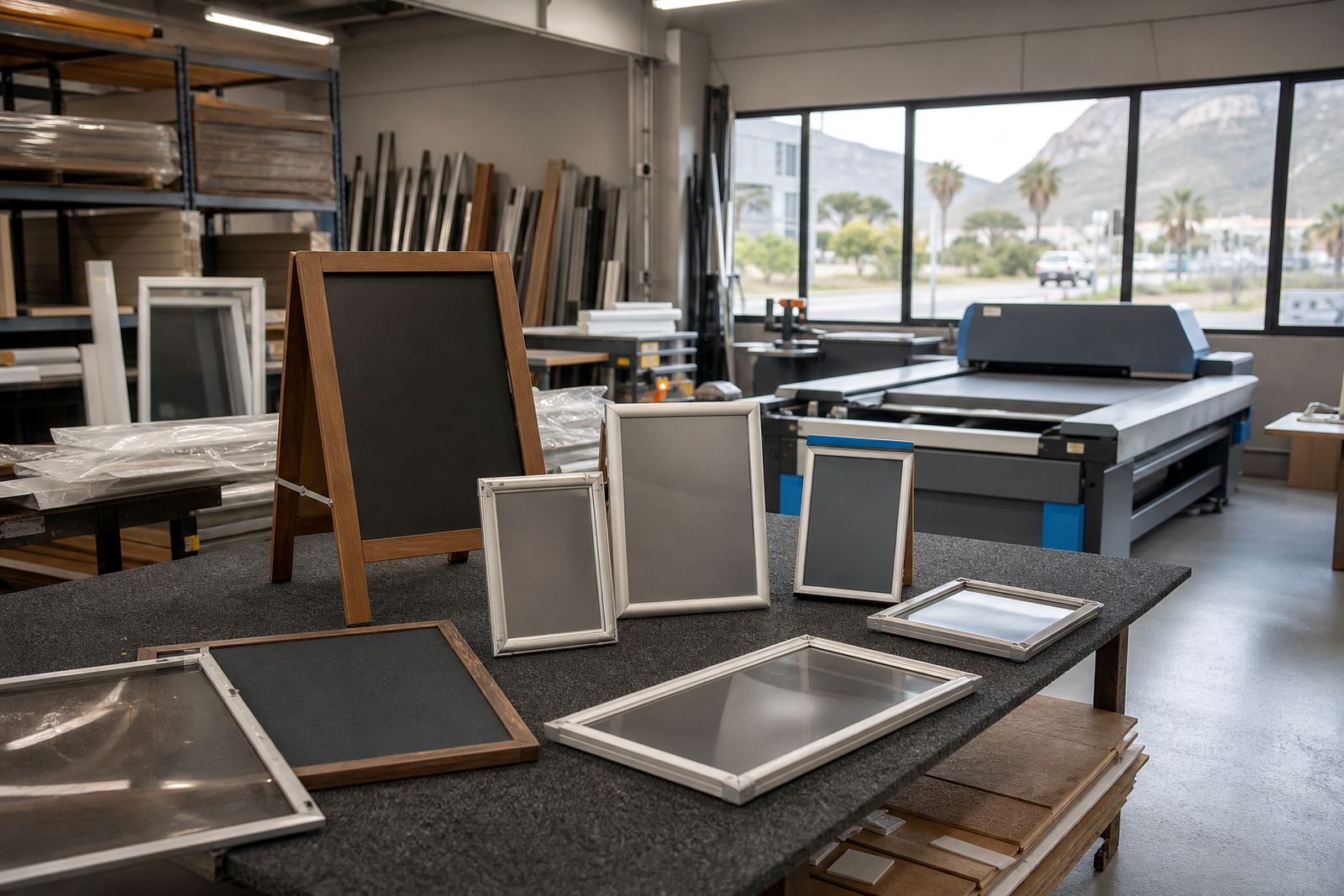
When frames need to travel to another branch in Johannesburg, Durban, Gqeberha or Stellenbosch, wrap the corners and protect the face of the cover first. Keep the profile edges from rubbing together, because aluminium can scuff if it shifts around in the box. Store boards upright where possible, with nothing leaning hard against the face.
- Use clean paper or foam between stacked frames.
- Keep screws, plugs and small fittings in a marked pouch.
- Store printed inserts flat, away from heat and moisture.