A framed cover for menus that need extra shielding
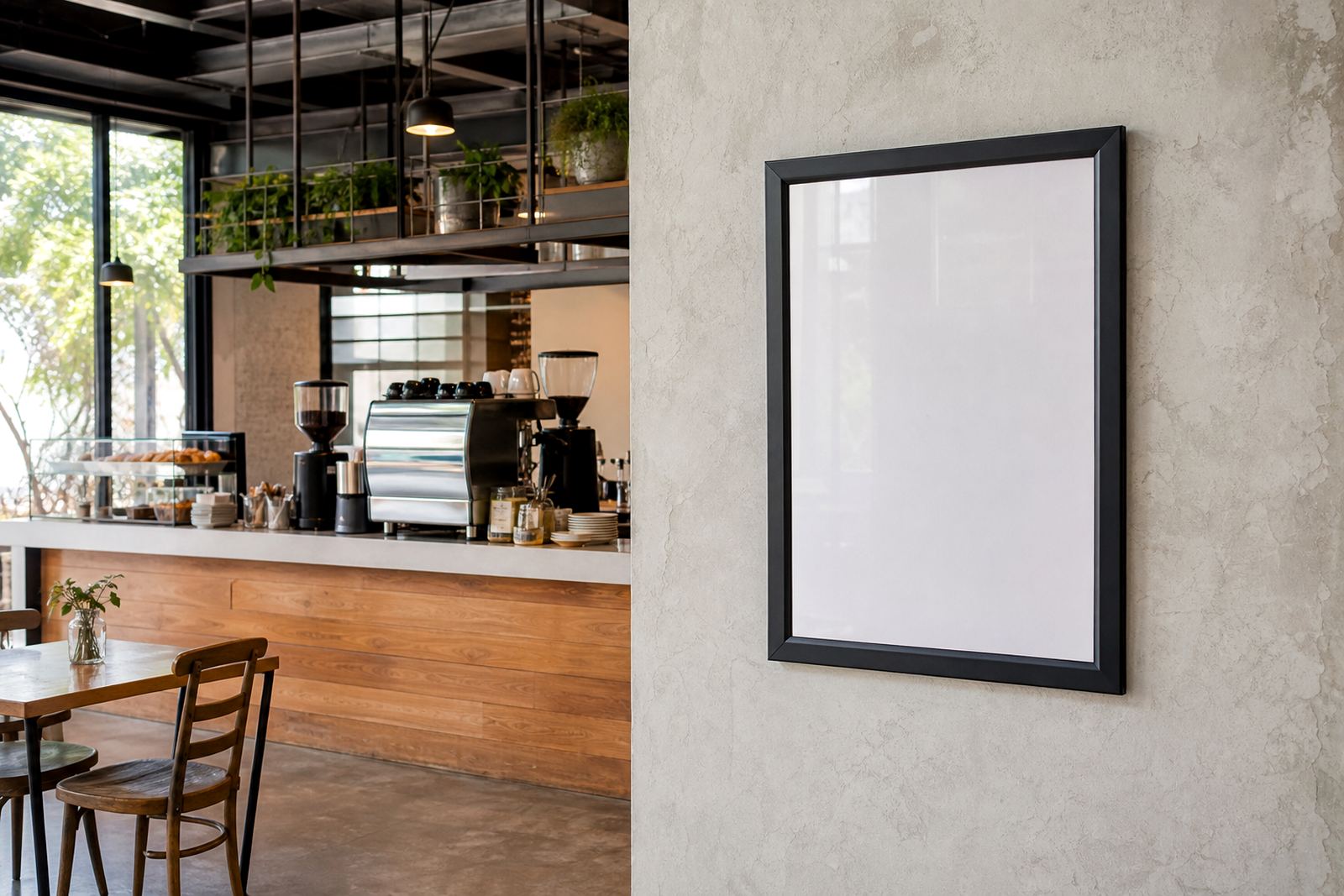
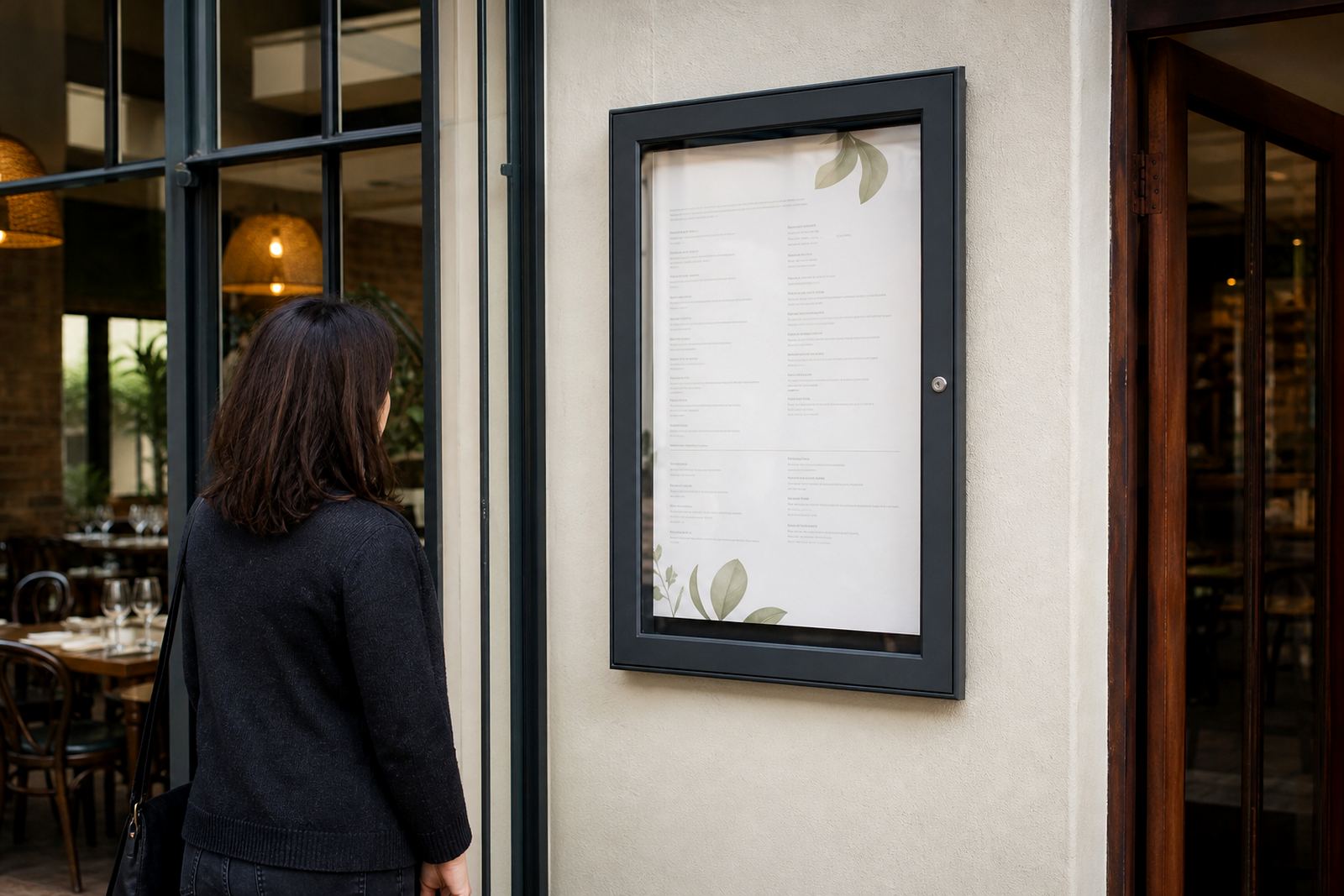
A poster menu case is a wall mounted frame built to hold a printed insert behind a protective front panel. In restaurants, cafes, bars and takeaway counters, it gives the menu a neater face and a stronger guard against fingerprints, splash marks and handling around the till point.
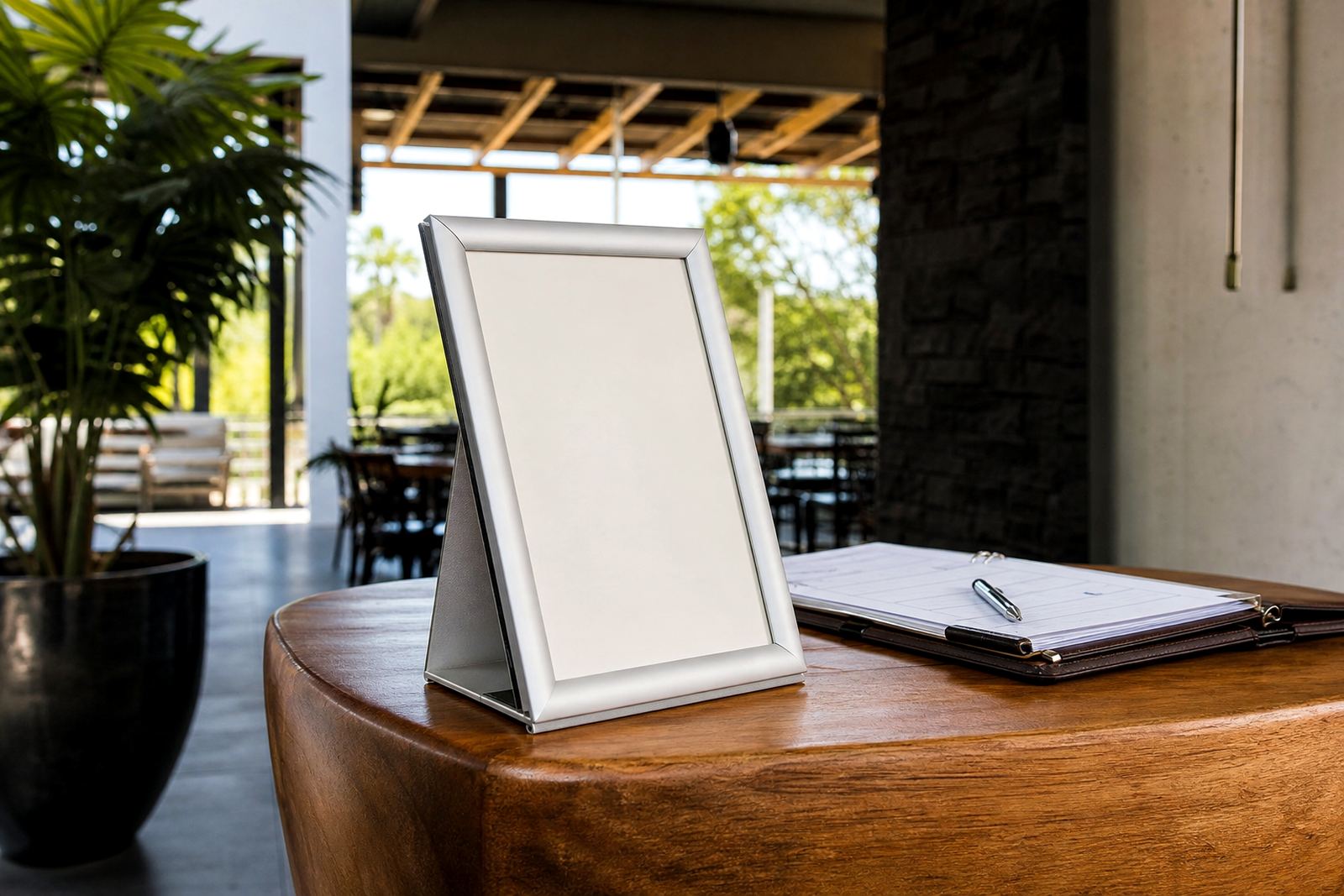
The case is built around a slim aluminium profile with a clear front cover and a backing board that keeps the print flat. Inserts lift in and out through the front opening, so staff can swap daily specials, price changes or breakfast boards without removing the whole unit from the wall. The profile stays neat on painted walls, tiled finishes and service counters with glass nearby. It is a practical piece of kit where menus are viewed close up and touched often.
We make these menu cases for indoor front of house use, and they suit spaces where the paper or printed board needs a stronger face than a loose poster clip. In a humid coastal spot like Cape Town, the sealed front also helps the menu stay cleaner for longer, especially where the entrance picks up damp air and grit.
Sizes, front styles and insert formats that fit the job
The standard sizes are A4 and A3, which cover most menu inserts used at wall level. A4 works well for drinks lists, takeaway specials and compact price boards. A3 gives more room for larger menu layouts, section headings and photos that need a bit more breathing space.
- A4 portrait for compact menu boards and narrow wall spaces
- A3 portrait for fuller menu layouts and larger lettering
- Wall fixing only, or wall fixing with a hanging orientation for specific layouts
- Clear anti-glare cover for brighter rooms and window-side positions
- Poster insert format for printed menus, specials sheets or laminated sheets
Most cases are supplied with a snap open front, so the insert can be changed without tools. The front cover helps cut reflections from overhead lights, which is useful in cafes with bright interiors or bars with spot lighting. If your artwork uses fine type, we usually suggest checking the viewing distance first, because a menu that reads well at 1.5 metres may need a different size when it sits higher on the wall. Small type can look cramped if the board is overloaded, so the layout matters as much as the frame.
Where this wall case earns its keep
Poster menu cases suit service areas that need the menu visible, orderly and harder to damage. They work well beside counters, in entry walls, near waiting areas and along inside shopfronts where customers read the menu before ordering. In takeaway counters, the case keeps the printed insert in one place instead of curling, slipping or picking up marks from repeated touch.
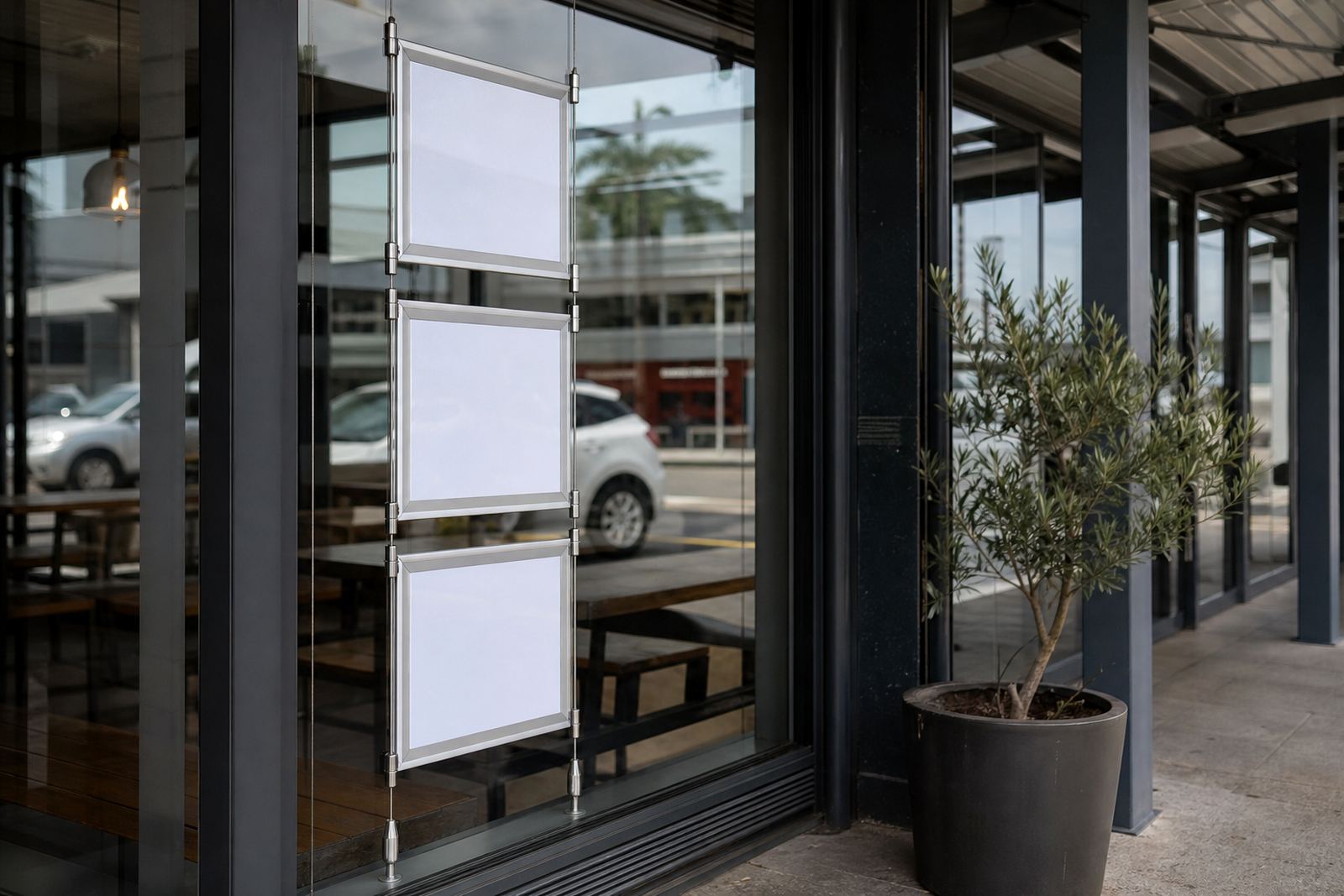
They are also useful in multi-site food businesses that want the same menu format across several branches. A case can carry a standard breakfast sheet in the morning, then switch to lunch or drinks later in the day. In a busy Stellenbosch deli or a Durban café close to the coast, that sort of changeover is easier when the insert sits behind a firm cover instead of loose clips. It also suits window-facing menu displays where glare and dust would otherwise make reading harder.
For venues that prefer a tidy wall finish, the case has a cleaner feel than a loose poster pinned to the surface. It is less busy visually, and the menu sits square without lifting at the corners.
- Restaurants with changing menus and visible wall space
- Cafes with coffee lists, breakfast boards and specials sheets
- Bars that need a fixed drinks or snack list near the till
- Takeaway counters that update offers through the day
- Hotel food areas, delis and reception-adjacent serving points
Fixing the case to wall, tile or timber
Installation is a straightforward wall fitting job, but the fixing surface matters. On plastered brick or concrete, standard plugs and screws hold the case firmly. On tile, timber cladding or decorative wall panels, the fitter needs to check the backing before drilling so the frame sits level and the face opens cleanly. If the case is being mounted above counter height, the reading line should stay comfortable for standing customers and service staff alike.
We can supply the frame for fitment by your own team, or include the fixing details for a handover on site. For larger A3 cases, the wall should be sound and flat, because a bowed surface can make the front panel sit slightly out. If the display is going into a busy passage or a narrow service area, allow enough room for the front to open without knocking nearby fittings. That small check prevents trouble later and keeps the frame looking straight.
In some layouts, the case is paired with nearby menu boards or a chalkboard display, so the wall line stays consistent. A single menu case can sit beside a specials board or a poster display and still feel like part of the same service wall.
Keeping the front clear in a working food space
Care is simple. Wipe the front cover with a soft microfibre cloth and a mild cleaner, then dry it carefully to avoid streaks. Harsh scouring pads can scratch the cover, especially on a glossy face, and strong solvent cleaners may cloud it over time. The aluminium profile should be dusted at the edges and kept free of food splatter, grease film and sticky fingerprints.
If the unit is fitted near a kitchen hatch or service window, check the seal around the insert from time to time. Steam and repeated handling can work grime into the corners, so a careful clean now and then keeps the menu visible. For laminated prints, a neat edge trim helps the sheet slide in easier and reduces curling at the corners. A clean case makes a simple menu look cared for, even before the guest reads the price line.
For venues near the sea, especially around Milnerton, Muizenberg or Gqeberha, the frame benefits from regular wiping because salty air can leave a film on exposed surfaces. It is a small habit, but it keeps the display looking fresh and not tired by midweek.
What to confirm before we print or cut the frame
To set up the right case, we need the display size, orientation and intended use. Tell us whether the insert is an A4 or A3 menu, whether the board hangs portrait or landscape, and whether the artwork will be printed as a poster insert or a laminated sheet. If the menu must match other branch displays, we also need the exact trim size so the border and viewable area line up correctly.
- Insert size: A4 or A3
- Orientation: portrait or landscape
- Mounting surface: wall, tile, timber or glass-adjacent wall
- Print type: poster insert, laminated print or repeated specials sheet
- Finish request: anti-glare cover, standard clear front or colour match to the site
- Quantity and delivery point for Cape Town, Johannesburg, Durban, Stellenbosch or Gqeberha
We also check where the menu sits in relation to lights, windows and foot traffic. That matters because glare, height and reach all change how the board reads. If you already have menu artwork, send the exact dimensions through our contact form, and if you need the print made up too, we can handle resizing, typesetting, proofing and short run printing before courier packaging.
Key facts
| Product type | Protected wall case for printed menu inserts |
|---|---|
| Standard sizes | A4 and A3 |
| Frame material | Aluminium profile with clear front cover |
| Front style | Snap open access for quick insert changes |
| Mounting | Wall fixed display for indoor menu use |
| Best use | Menus, specials sheets and poster inserts in food service areas |