
A counter display that keeps the menu upright
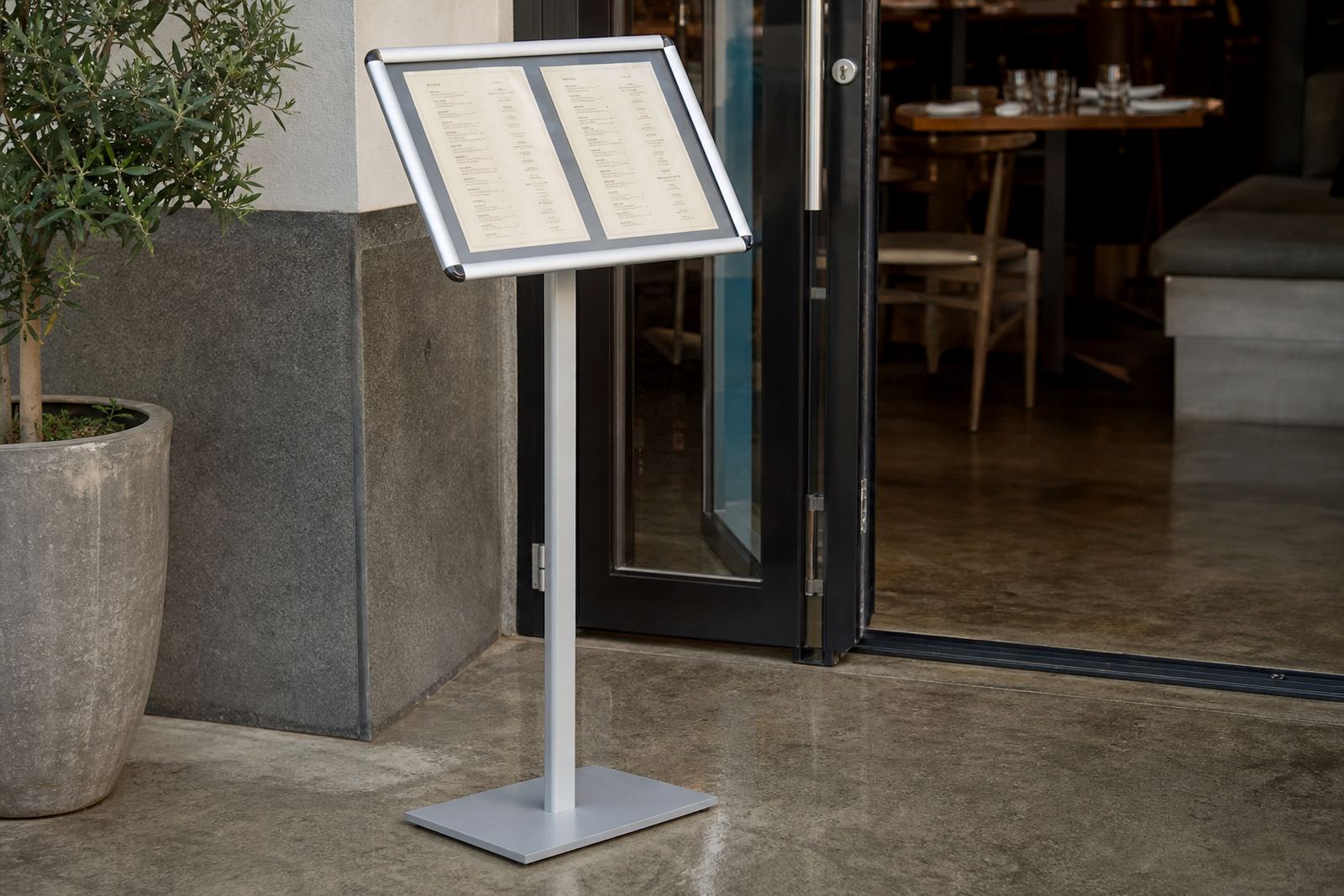
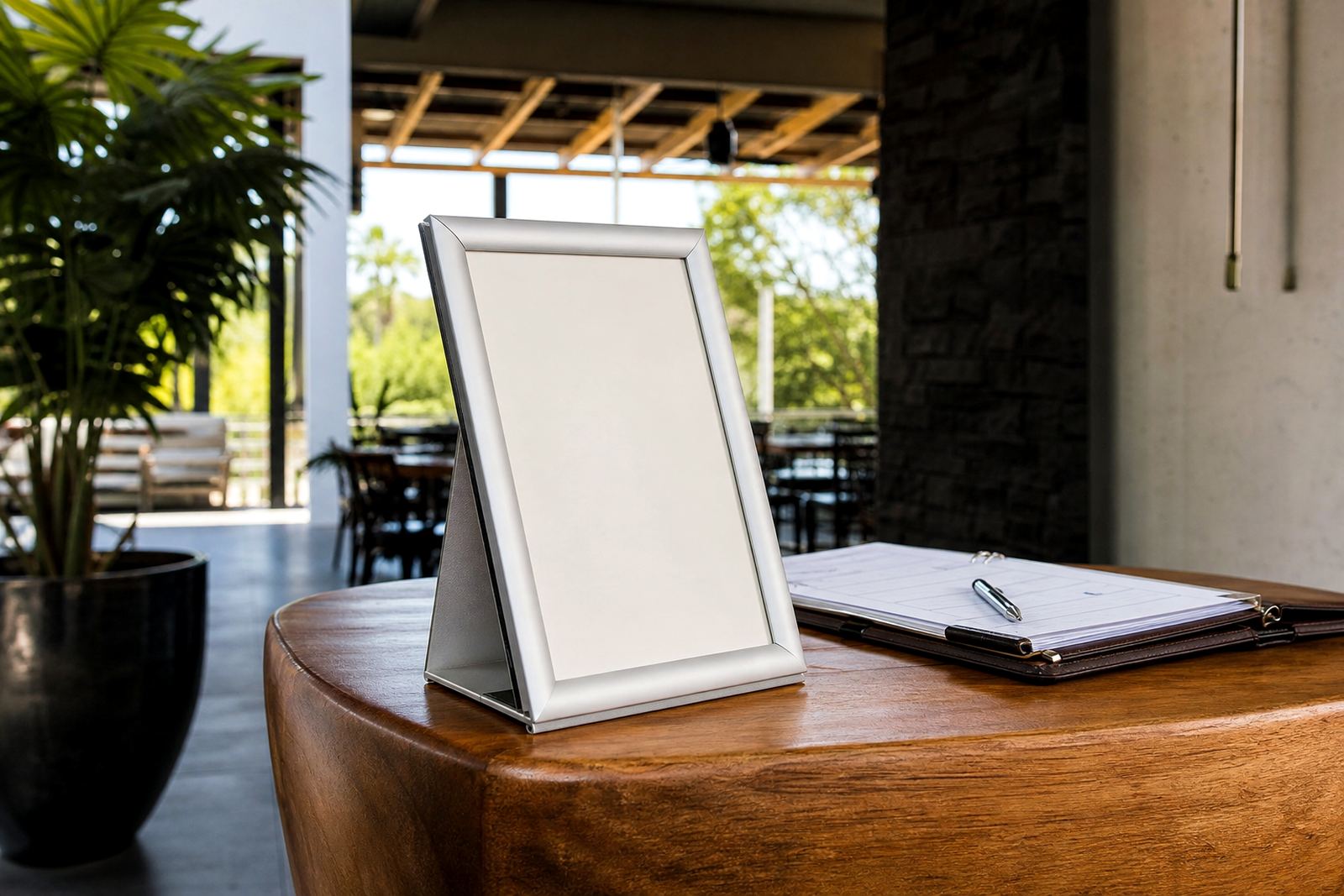
A tabletop menu stand is a freestanding display built for flat surfaces such as service counters, reception points and collection tables. The frame holds a printed insert behind a clear cover, so the menu can be changed without tools and without disturbing the stand itself.
For busy food service spaces, that means specials, brunch lists, tasting notes or collection instructions sit in one tidy place. The stand can face the customer, the queue or the till point depending on how the service area is set out, and the profile stays slim enough not to crowd the counter.
Most versions are made in aluminium with a clear anti-glare face, which helps the page stay readable under spotlights and strong daylight from shopfront windows. In a bright takeaway counter or a cafe near the coast, that finish is useful because reflections are less of a nuisance and the insert stays protected from fingerprints and light splash.
Sizes, angles and insert formats that fit the job
The tabletop range is commonly made for A4 and A3 inserts, with portrait and landscape versions depending on the wording and artwork. A4 suits short menus, daily specials and single-sheet notices. A3 gives more room for item grouping, pricing and allergen notes, which helps when the list runs longer than expected.
Some stands use a single-sided face, while others are double-sided for viewing from both sides of the counter. The viewing angle is set to keep the sheet readable when the stand sits slightly below eye level, and the base is weighted enough to stay steady on a smooth surface.
- A4 portrait for compact specials and short menus
- A4 landscape for wider item lists or price tables
- A3 portrait for fuller menus with section headers
- A3 landscape for counters that need broader text blocks
- Single-sided or double-sided display options
- Anti-glare face cover for indoor light and window glare
Where the content changes often, print-ready templates help keep margins, bleed and text blocks in line with the frame size. That saves awkward trimming later and keeps the insert sitting square in the channel.
Where this stand earns its place in service areas
This product suits host stands, pastry counters, coffee bars, deli points and takeaway collections where people need one clear reading point before they order. It also works on hotel reception counters, tasting tables and small retail tills that need a price card or daily notice in view.
For restaurants and cafes in Cape Town, Stellenbosch, Johannesburg, Durban and Gqeberha, the stand helps when the menu changes by time of day or by stock on hand. A brunch list may sit on the counter in the morning, then switch to lunch specials later with no fuss. In smaller spaces the footprint stays compact, so the counter does not feel crowded.
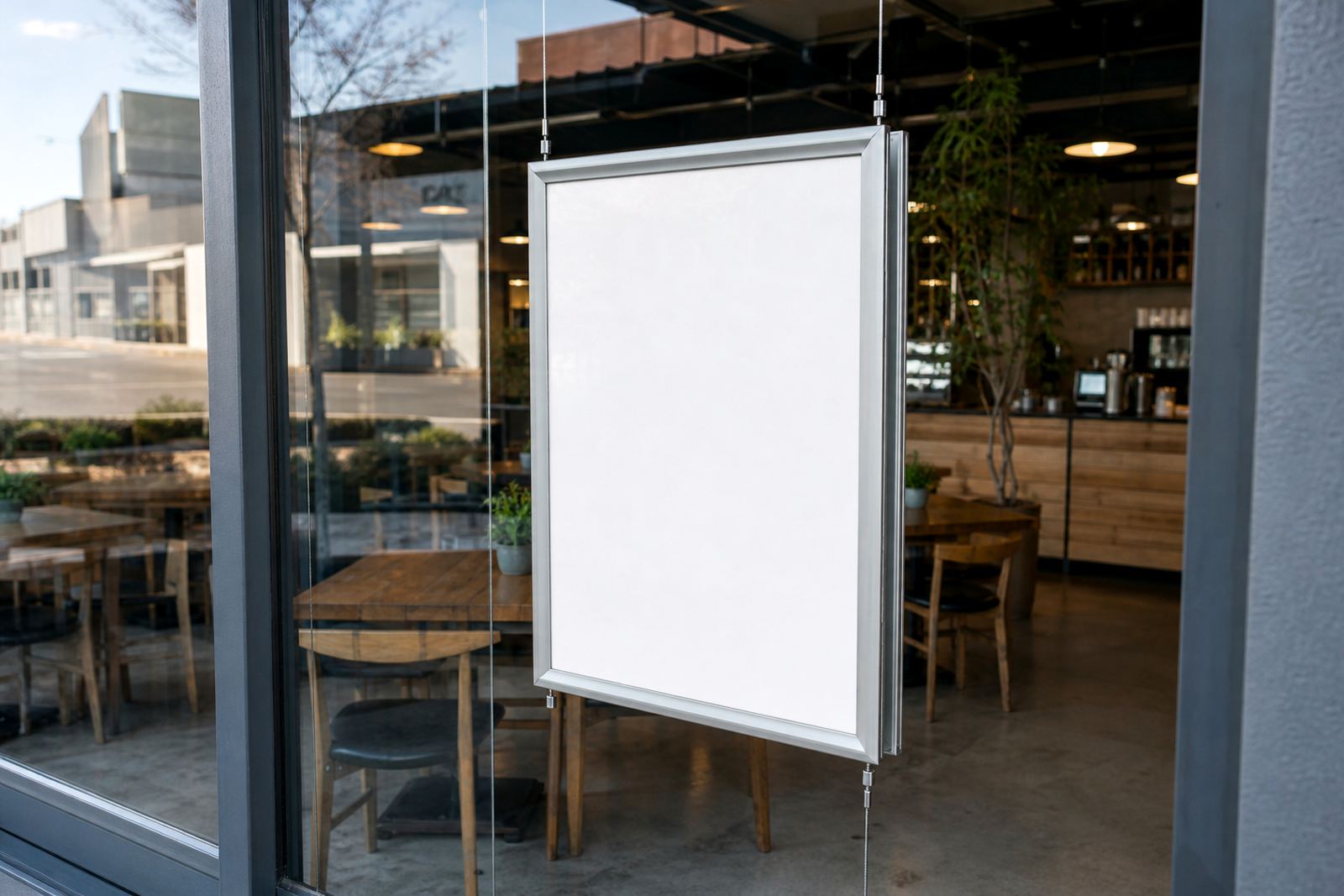
Where the stand sits near a window, the anti-glare cover matters more than most people expect. It keeps strong light from washing out the print and helps the page stay legible from a short queue or across a narrow service gap.
Making the stand part of the counter layout
Installation is straightforward, but the setting still needs a little thought. The stand should sit flat on a clean surface, away from spills, loose cutlery and areas where trays are slid across the counter. If it is placed near the till or collection point, leave enough space for hand movement and card machines.
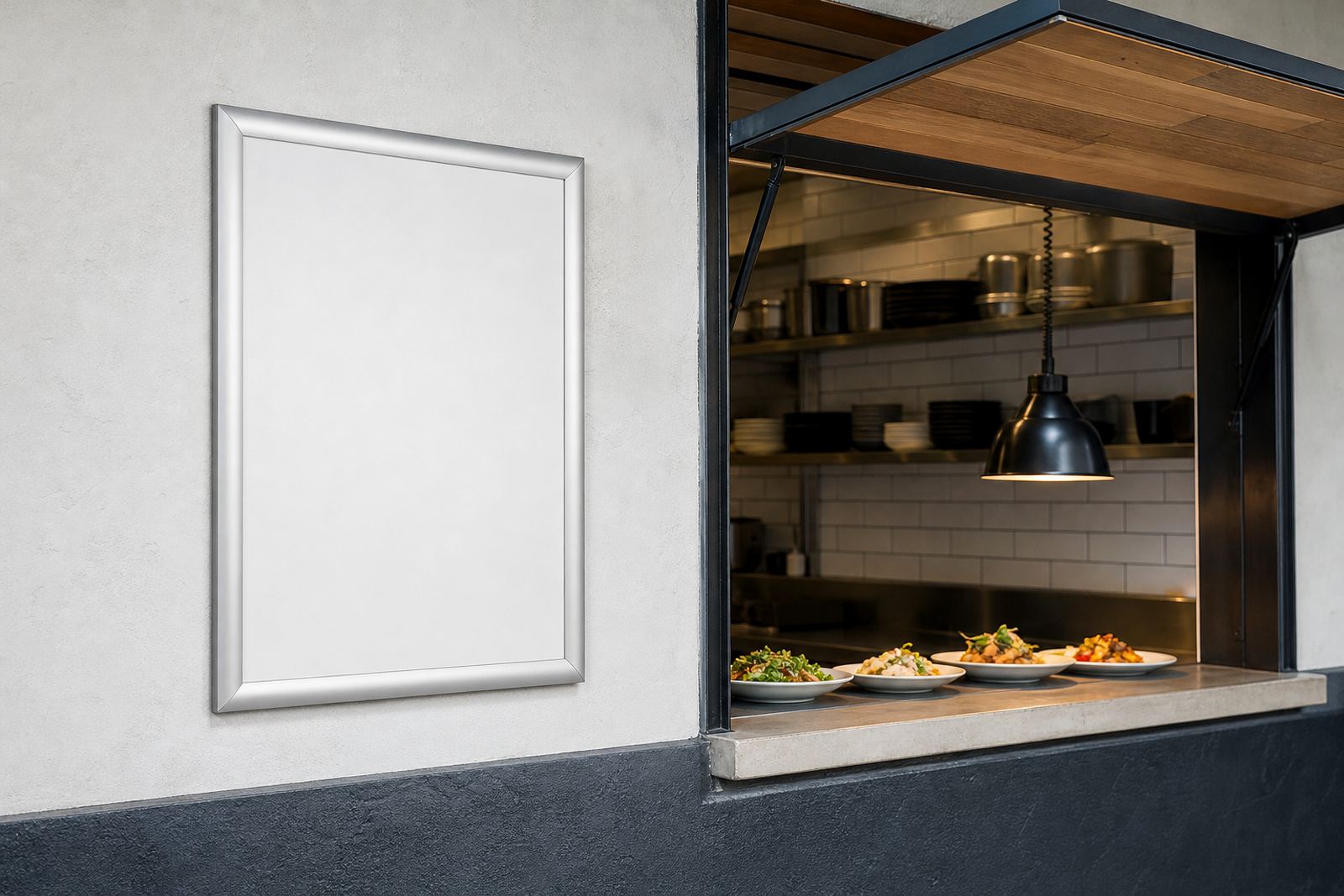
For more permanent use, some tabletop frames can be paired with a secure base or fitted into a dedicated holder. Where the menu board needs to sit in a fixed spot on a host station or service ledge, that location should be confirmed before production so the base size and viewing angle match the furniture.
- Confirm the counter depth and available standing space
- Check whether the display should face one side or both sides
- Measure the insert size before artwork is set
- Decide if the stand needs a weighted or fixed base
- Allow for easy sheet changes during trading hours
- Keep clear of heat, steam and direct spray from cleaning
On polished stone or laminate, a soft base pad can help protect the surface. In busy service areas the stand should be easy to lift for cleaning underneath, then placed back without scraping the counter finish.
Print inserts, finishing and everyday care
The tabletop stand works best when the insert is printed to the exact size and finished neatly. For restaurant use, laminated menu prints hold up better against handling and light moisture, while poster insert printing suits larger specials that may change often. Short run printing is useful when the menu needs a smaller batch for a launch, seasonal shift or temporary tasting list.
Menu typesetting and proofing matter too, because the print needs to read well at arm's length. Line spacing, pricing columns and section headers should sit cleanly inside the visible area, with no words hidden by the frame edge. Colour matching helps if the stand is part of a wider menu system and the artwork must sit alongside wall boards or window frames.
Daily care is simple: wipe the frame with a soft cloth, clean the clear cover with non-abrasive liquid and avoid harsh scourers that can mark the face. In coastal areas, a gentle clean helps stop salt film building up on exposed metal parts, so the finish stays neat for longer.
Details to confirm before the stand is made
When ordering a tabletop menu stand, the useful details are practical ones. Confirm the insert size, portrait or landscape layout, single-sided or double-sided viewing, and whether the menu will sit on a host counter, counter or collection table. If the artwork includes icons, prices or multiple language lines, that should be set out before printing starts.
It also helps to mention the type of surface the stand will sit on and whether the display needs courier packaging for branch delivery. For clients in Paarl, Bellville, Milnerton and further afield, the same product can be packed for nationwide courier delivery, with print inserts and frame parts kept together and protected.
- Insert size, A4 or A3
- Portrait or landscape layout
- Single-sided or double-sided use
- Indoor position and viewing direction
- Whether inserts are printed, laminated or left open for swaps
- Delivery town or branch collection point
That detail keeps the stand matched to the counter and avoids awkward trimming later. It also means the menu can be swapped cleanly when stock changes or a new special needs to sit in front of customers that afternoon.