
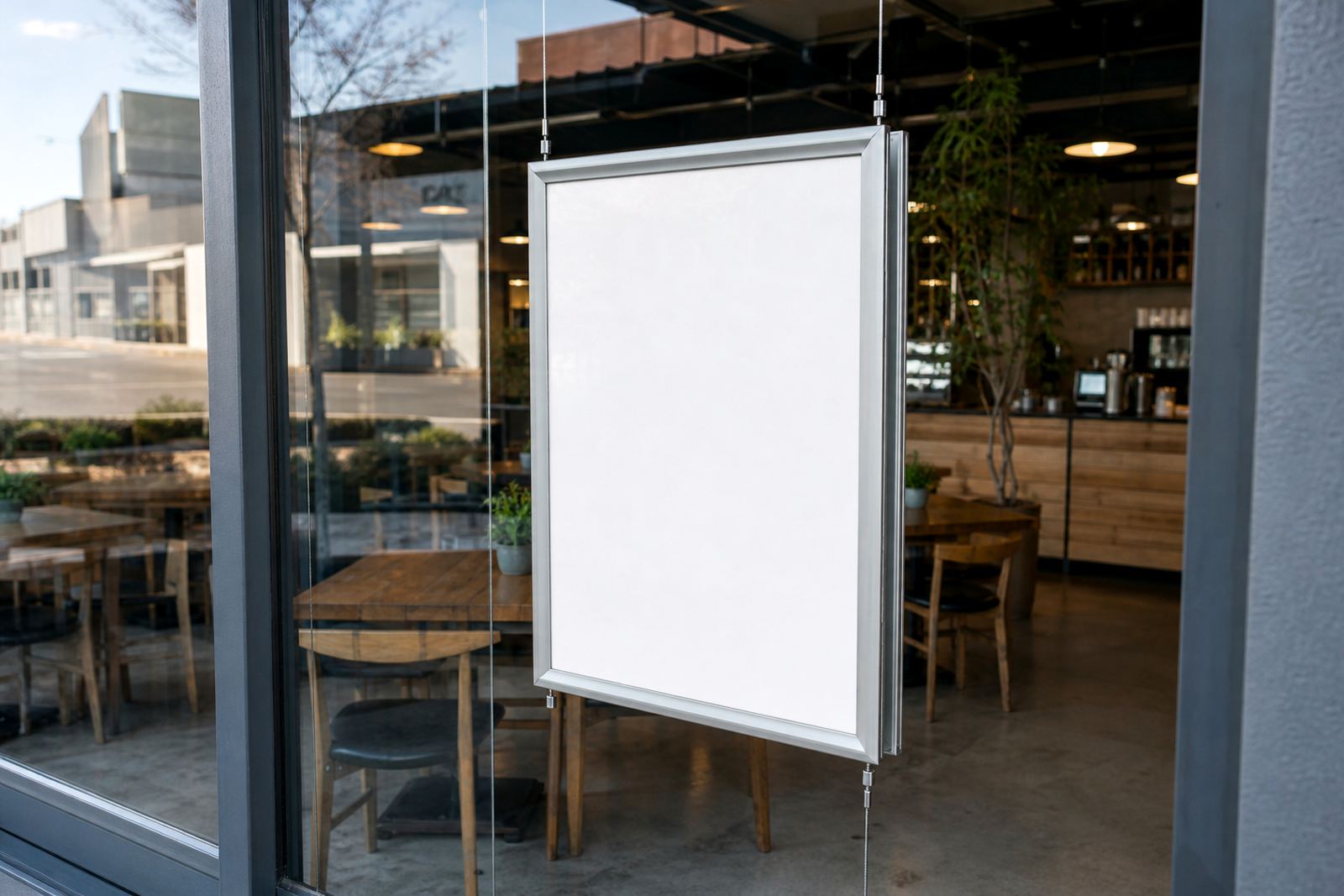
A frame built for glass-facing menus
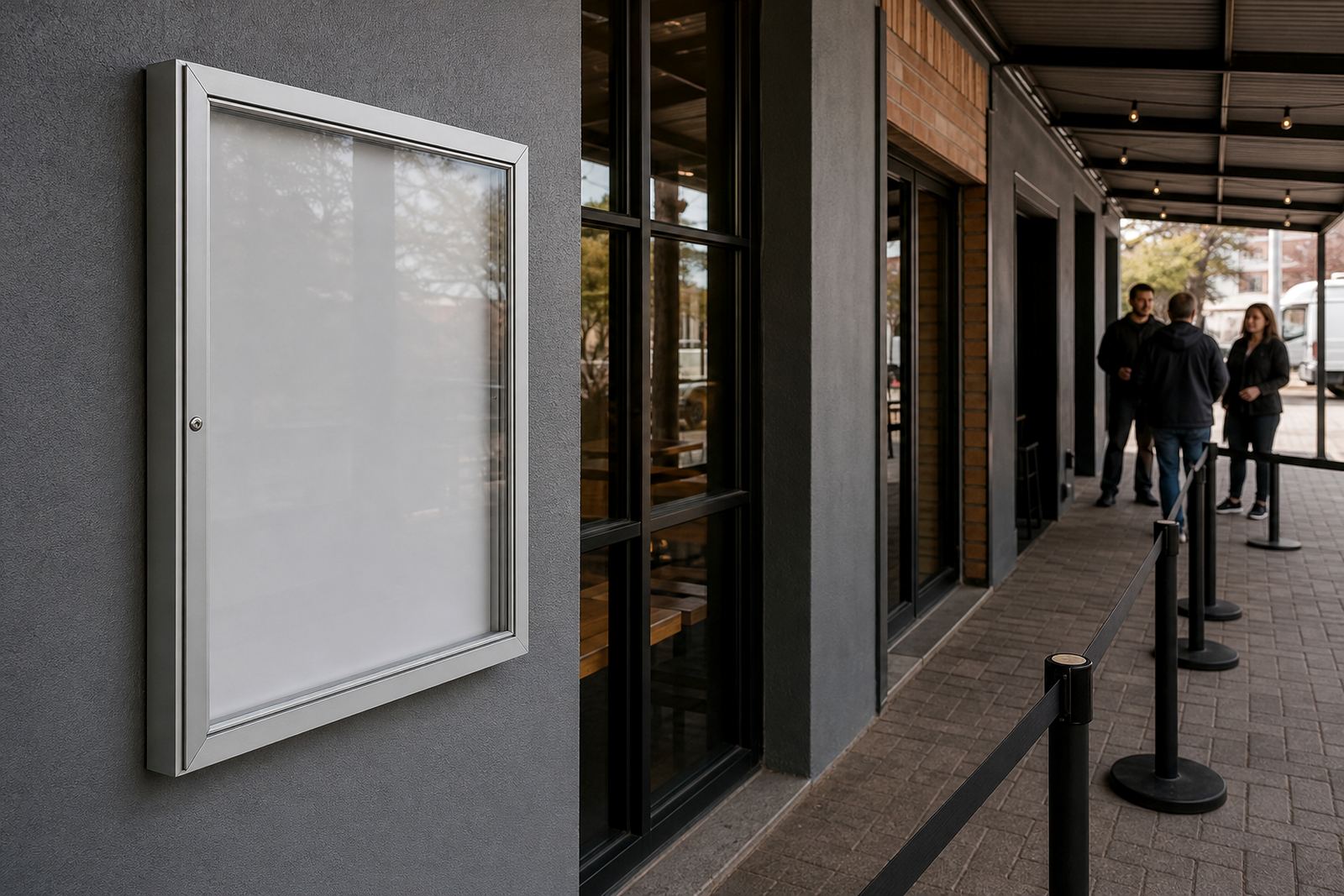
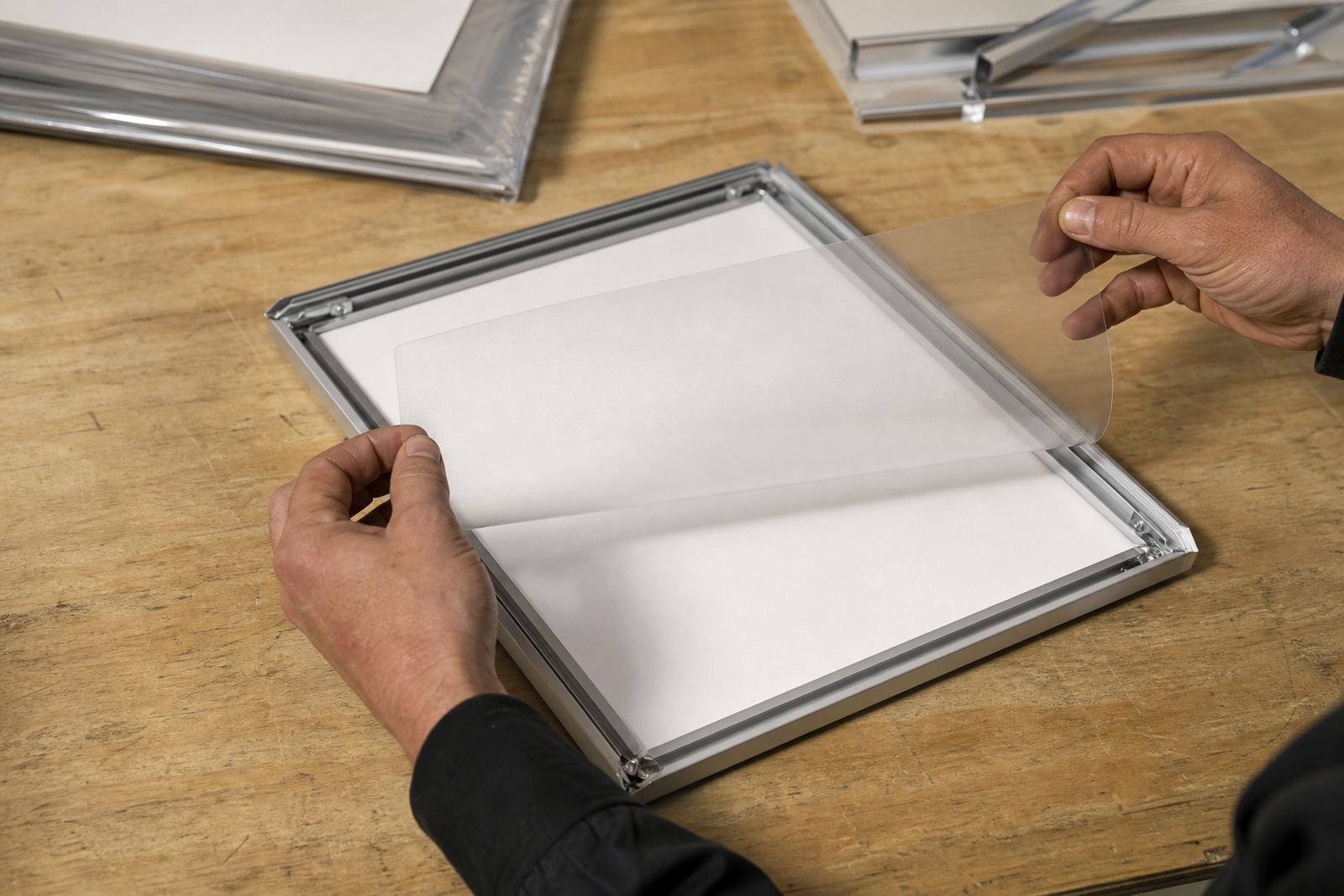
This double-sided display is made for glazing where the same message must read cleanly from either side. The frame uses an aluminium snap profile with a clear cover on both faces, so the insert sits flat and the sheet can be changed without removing the whole unit.
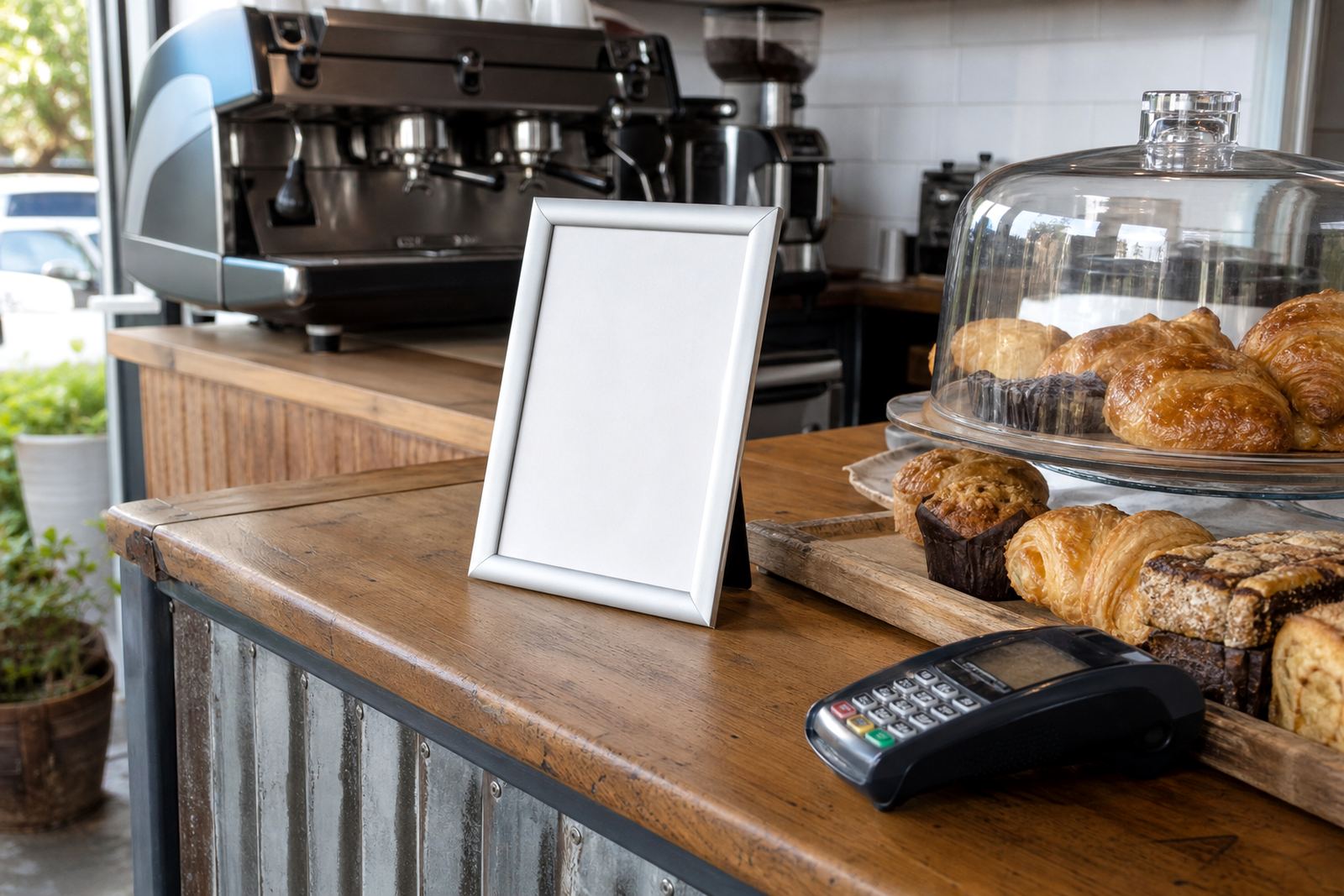
In practice, the frame is used for menus, opening notices, breakfast boards and specials that need to face the pavement and the counter at once. It is a tidy option for restaurants and cafes in Cape Town, Stellenbosch and Milnerton where window space does the work of an extra signboard.
- Double-sided viewing through glass
- Snap-open profile for quick insert changes
- Available in A4 and A3 formats
- Aluminium frame with clear protective covers
- Suitable for menus, notices and short promotional boards
Sizes, inserts and print fit
The most common sizes are A4 and A3, both easy to handle and easy to reprint when a menu changes. A4 works well for tight window panels and single-item specials, while A3 gives more room for a fuller menu list, pricing columns or larger type for passing foot traffic.
We can supply the frame for print-ready inserts, laminated menu prints or poster insert printing where the artwork needs a firm fit inside the snap edge. If the design is being resized, the type should be checked carefully so prices, allergens and item names stay readable at window height.
- A4 display area for compact window spaces
- A3 display area for larger menus or bigger type
- Poster insert prints for regular changeouts
- Laminated inserts for better handling in busy service areas
- Menu resizing and proofing for a cleaner final fit
For narrow panes, the frame can be planned to suit the visible glass rather than the full opening. That matters in older shopfronts, where mullions and security bars cut the view and the board has to sit exactly where people look first.
Where it suits on the shopfront
This product suits spots where the menu must work from the street and from inside the shop. It is common at takeaway counters, coffee windows, compact bars, bakery fronts and mall-facing units where customers stand on both sides of the glass and need the same information.
It also works in more controlled spaces such as an enclosed patio, a waiting area or a service hatch. In coastal towns like Durban and Gqeberha, the frame should be wiped often so salt and fine dust do not build up on the cover, especially near openings that stay in regular use.
Typical uses include:
- Daily specials facing the road and the counter
- Breakfast or lunch boards at a front window
- Takeaway pricing near a serving hatch
- Promotional notices for set menus or combo meals
- Seasonal menu changes where the insert is updated often
Mounting, fitting and glass details
Fitting depends on the window build and how the frame must sit against the pane. Some openings suit direct glass mounting, while others need a framed support or a cleaner alignment with the surrounding trim. The important part is that the display sits square, does not twist, and leaves enough access for insert swaps.
If the board is going onto a street-facing window in Johannesburg or Bellville, the installer should check the sightline from the pavement, the height from the floor and the space needed for opening the snap edges. Where the window takes regular cleaning, the position should leave room to lift and wipe around the frame.
- Glass mounting for neat front-facing display
- Frame positioning to suit visible sightlines
- Access space for menu changes without strain
- Alignment checked against mullions and security bars
- Suitable for indoor or window-side installation
The frame does not need any utility connection, but the final fit still needs careful measuring, especially where glass panels differ by a few millimetres. A small mismatch can leave the insert off centre or the cover sitting unevenly against the print.
Looking after the cover and insert
The clear cover should be wiped with a soft cloth and a mild cleaner so the viewing face stays clear. Harsh pads can mark the surface and make glare worse in strong daylight, particularly on west-facing windows that catch afternoon sun.
Menu inserts need to stay dry, flat and trimmed to size. If the print is laminated, make sure the edge seals are clean and the corners are cut neatly so the sheet slides into the snap frame without catching. In busy cafés, staff should open and close the frame with a steady hand rather than forcing the edges shut.
- Use a soft cloth on the cover
- Avoid abrasive scrubbers on the clear face
- Keep inserts flat to prevent curling
- Check the snap edges for dust before fitting
- Wipe salt, grease and fingerprints often in high-traffic areas
Where the menu changes often, the printed artwork should be stored in a clean sleeve until use. That keeps the sheet free of dust and helps the insert sit neatly inside the frame when the lunch board or specials panel is changed over.
The details to confirm before ordering
To make the frame fit properly, confirm the visible glass size, the preferred format and the way the menu must be read. A board for pavement traffic may need larger type than one read from inside a queue, and the mounting position should match the customer flow at the counter.
It also helps to confirm whether the insert will be changed daily, weekly or only for special runs. That affects whether the artwork should be printed, laminated, or supplied as a poster insert for repeated use. If the shopfront has tinting, frosting or a strong reflection, the cover finish and layout should be checked with that in mind.
- Glass opening size and usable face area
- A4 or A3 format choice
- Single menu, specials board or dual-purpose insert
- Mounting position on the pane
- Need for printing, lamination or proofing
- Whether the same board must read from both sides equally well
For courier delivery across South Africa, the frame should be packed to protect the profile corners and the clear covers from scoring in transit. Paarden Eiland handling teams deal with this sort of packaging every day, because a clean frame arriving in good shape is the only sensible start for a shopfront install.