
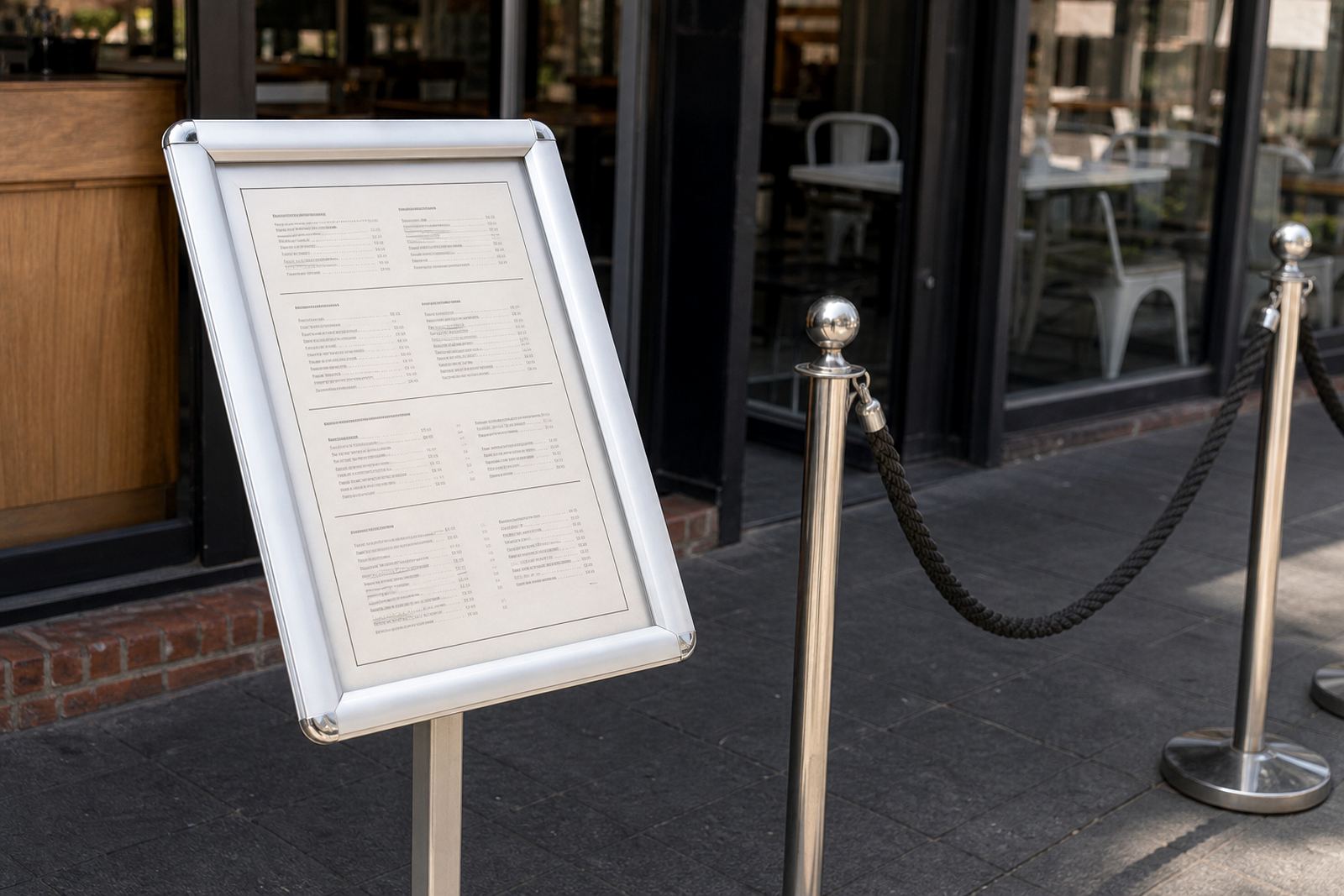
Portrait format for upright menu sheets
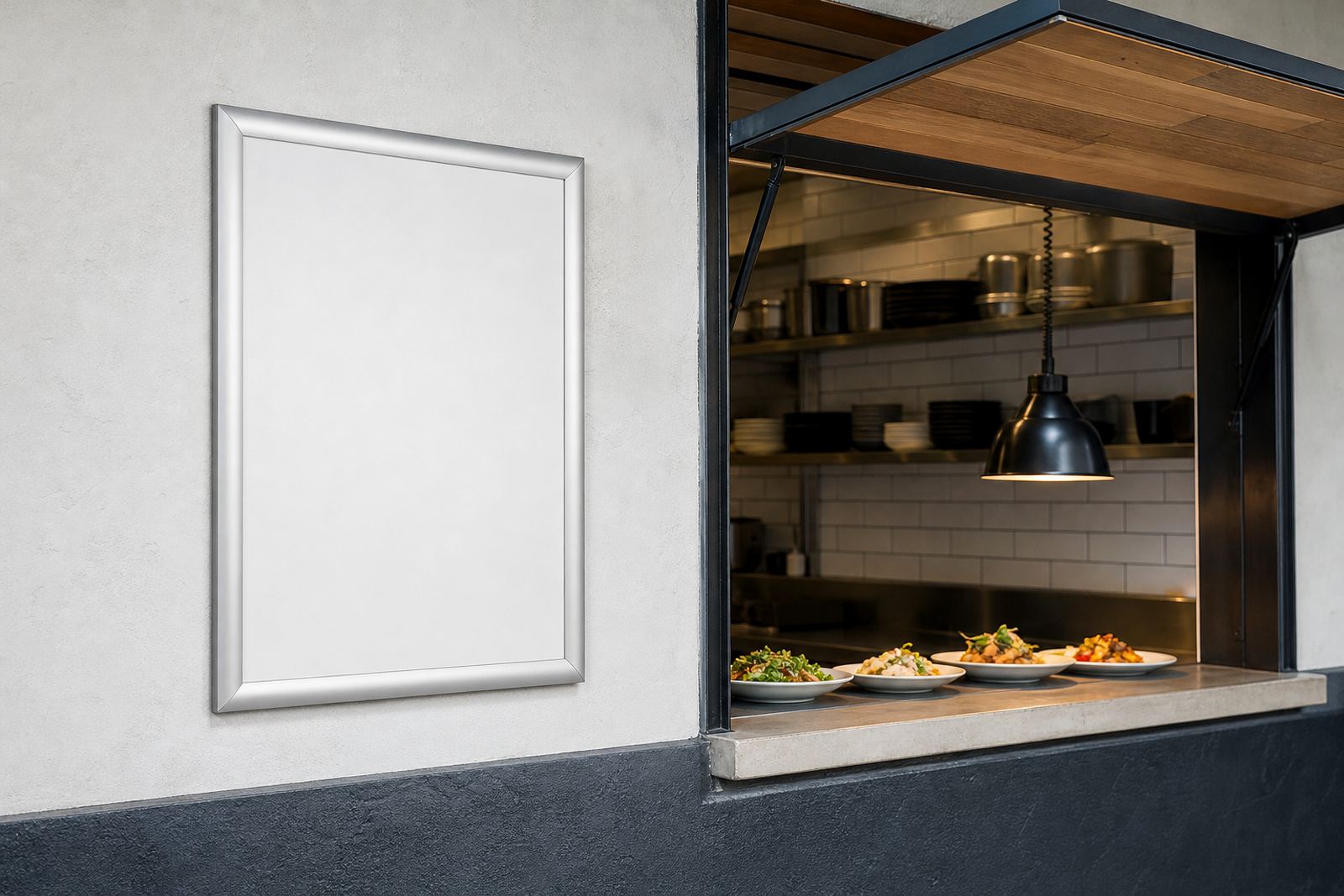
A portrait snap frame is built for vertical artwork, usually in A4 or A3 size, so the page reads the way most menu sheets are printed. The aluminium profile opens on all four sides and the front edge flips up to let staff change the insert without tools, which matters when specials shift during lunch or supper service. On a restaurant wall or inside a takeaway counter, the frame keeps the edge of the sheet protected and the presentation neat, even where hands are moving all day.
For menus that change often, the portrait layout is also useful for promotions, notices and daily boards. The frame body is normally supplied with a clear anti glare cover, so printed text stays visible under ceiling lights and near window glare, without the shine that can make small type hard to read. A clean fit is important because a frame that is too loose or too tight will sit badly on the wall and look unfinished.
- Common sizes: A4 portrait and A3 portrait
- Frame profile: slim aluminium snap edge
- Cover: clear anti glare front sheet
- Insert method: front loading for fast sheet changes
Where portrait snap frames earn their place
This product suits front-of-house spaces where menus need to stay visible, but also easy to replace. Restaurants use them beside the till, on a feature wall or near the entrance. Cafes place them in window sections or at the counter for breakfast boards and mid morning specials. Bars often use portrait frames for cocktail lists, tasting notes and narrow promotional pages that do not need a wide landscape layout.
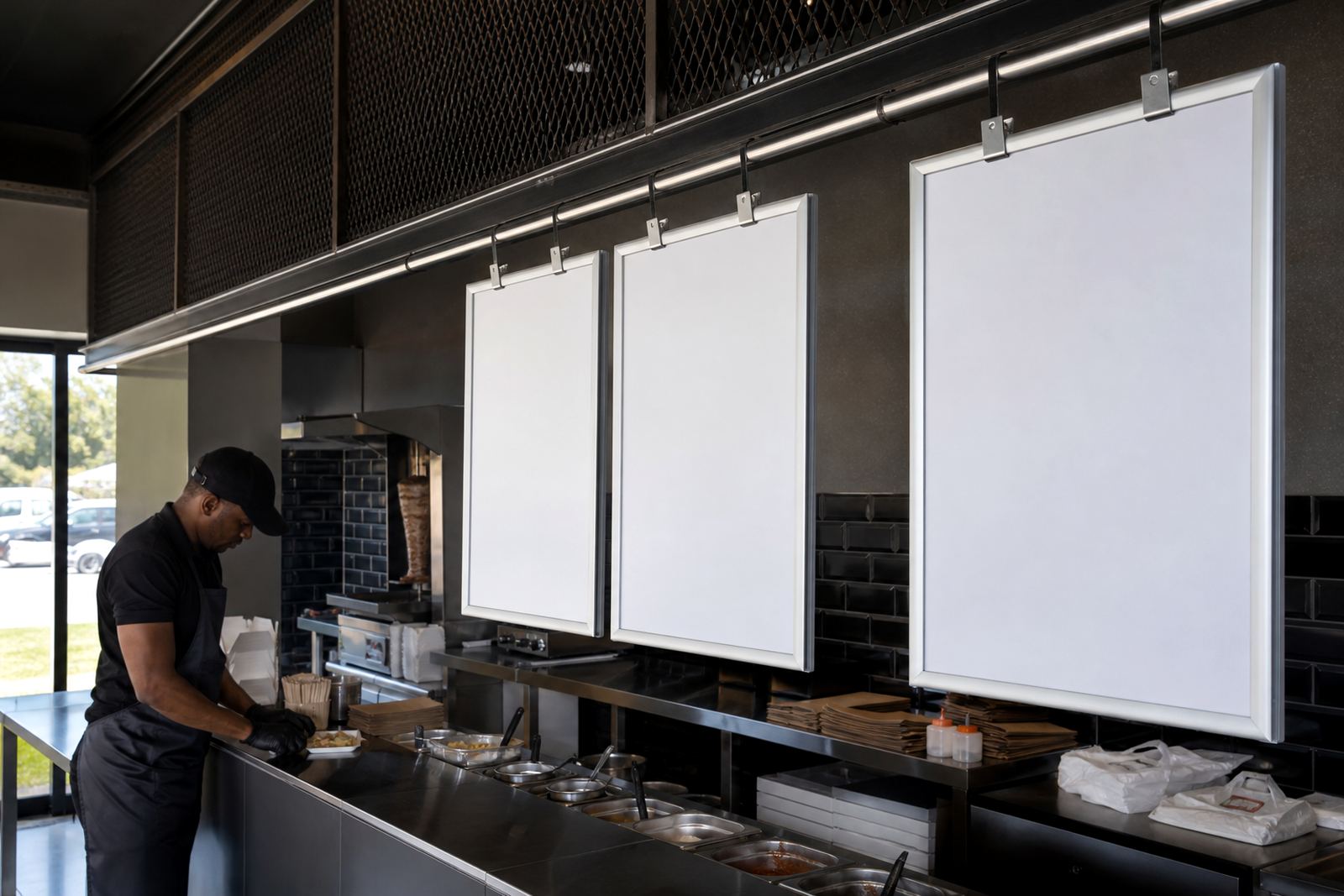
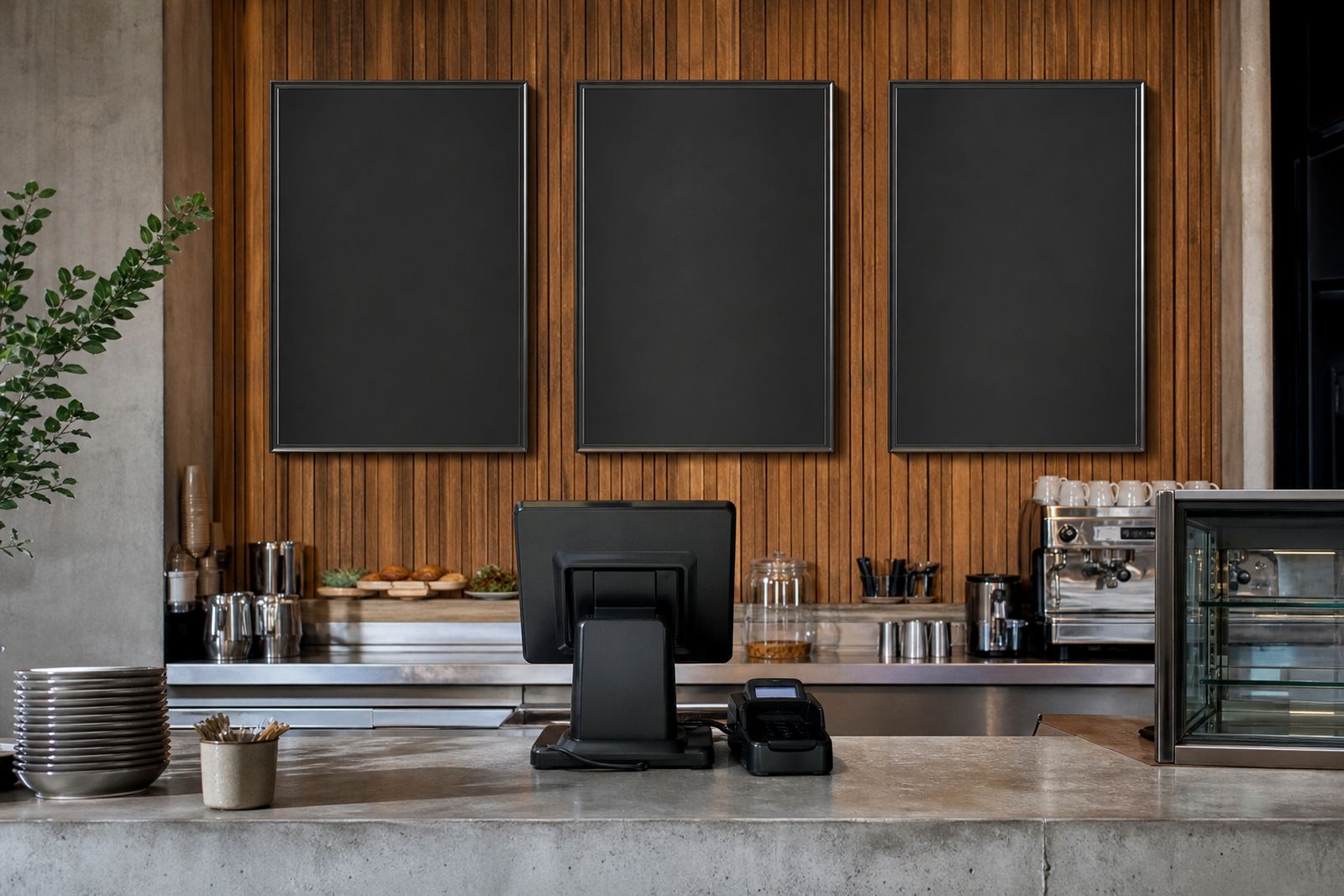
Takeaway counters and quick service spots use the frame for price boards, combo meals and single page notices. In Cape Town coastal air, the frame should be mounted where spray and fine dust are kept in check. In larger city sites, portrait frames are often grouped in sets so the menu board reads in order from top to bottom, instead of scattering the information across different surfaces.
- Entrance menus and window-facing promotions
- Wall boards behind counters and service points
- Specials lists for cafes, bars and bakeries
- Menu display in retail food areas and reception spots
Mounting choices that suit the space
A portrait snap frame can be fixed directly to a wall, fitted to glazing with suitable hardware, or paired with a stand where the menu must sit free-standing. Wall mounting is the most common choice for permanent menu boards, while window mounting works well when the promotion needs to face foot traffic from outside. The frame must be aligned with the sheet size so the insert sits square and the corners meet properly.
When the frame is installed near a door or service path, check the mounting height so staff can reach it without strain. For a window fit, the glass surface should be clean and dry before fitting and the frame should not obstruct handles, latches or opening panels. If the menu board is part of a larger display, spacing between frames should be planned before drilling begins, because uneven gaps show up quickly on a blank wall.
- Wall mount for fixed menu displays
- Window fit for street-facing promotions
- A-frame pairing for pavement or entry use
- Spacing set to suit the artwork size and viewing height
Print sizes, inserts and finishing details
Portrait snap frames work best when the print is prepared to the exact insert size. A4 is suited to short lists, notices and tighter counter space, while A3 gives more room for item names, prices and simple images. If the sheet is being printed locally, the border and safe area need to be checked so the text does not sit too close to the edges and disappear under the profile. For repeated use, laminated menu prints help keep the page clean where fingers, steam and light moisture are part of the day.
Menu boards often need more than one print option. A café might need a standard breakfast page, a lunch insert and a temporary specials sheet. In that case the frame should be ordered with the finished print size in mind, not just the paper size. Slight trimming differences can change how the page sits and affect the clean line of the border.
- A4 insert for compact notices and specials
- A3 insert for fuller menus and higher visibility
- Laminated or short run printed inserts available
- Border allowance should suit the snap edge width
Care that keeps the frame neat
The aluminium profile is easy to maintain with a soft cloth and a mild cleaner suited to coated metal and clear plastic. The anti glare cover should be wiped gently so fine scratches do not build up, especially on boards near the entrance where dust and fingerprints collect. If the frame is used in a coastal area, regular cleaning helps keep salt film from marking the finish, and the hinges or spring edges should stay free of grit.
Staff should open the frame from the sides or corners designed for the snap action, not force one edge only. If a print is changed often, the backing board and cover should be checked for warping or wear. A tidy frame makes the menu look current, but a bent edge or cloudy cover draws attention away from the content.
Key facts
| Format | Portrait / vertical orientation |
|---|---|
| Common sizes | A4 and A3 |
| Profile | Aluminium snap-edge frame |
| Front cover | Clear anti-glare sheet |
| Mounting | Wall, window or stand fitting |
| Use cases | Menus, specials, promotions and notices |