Split the menu without splitting the room
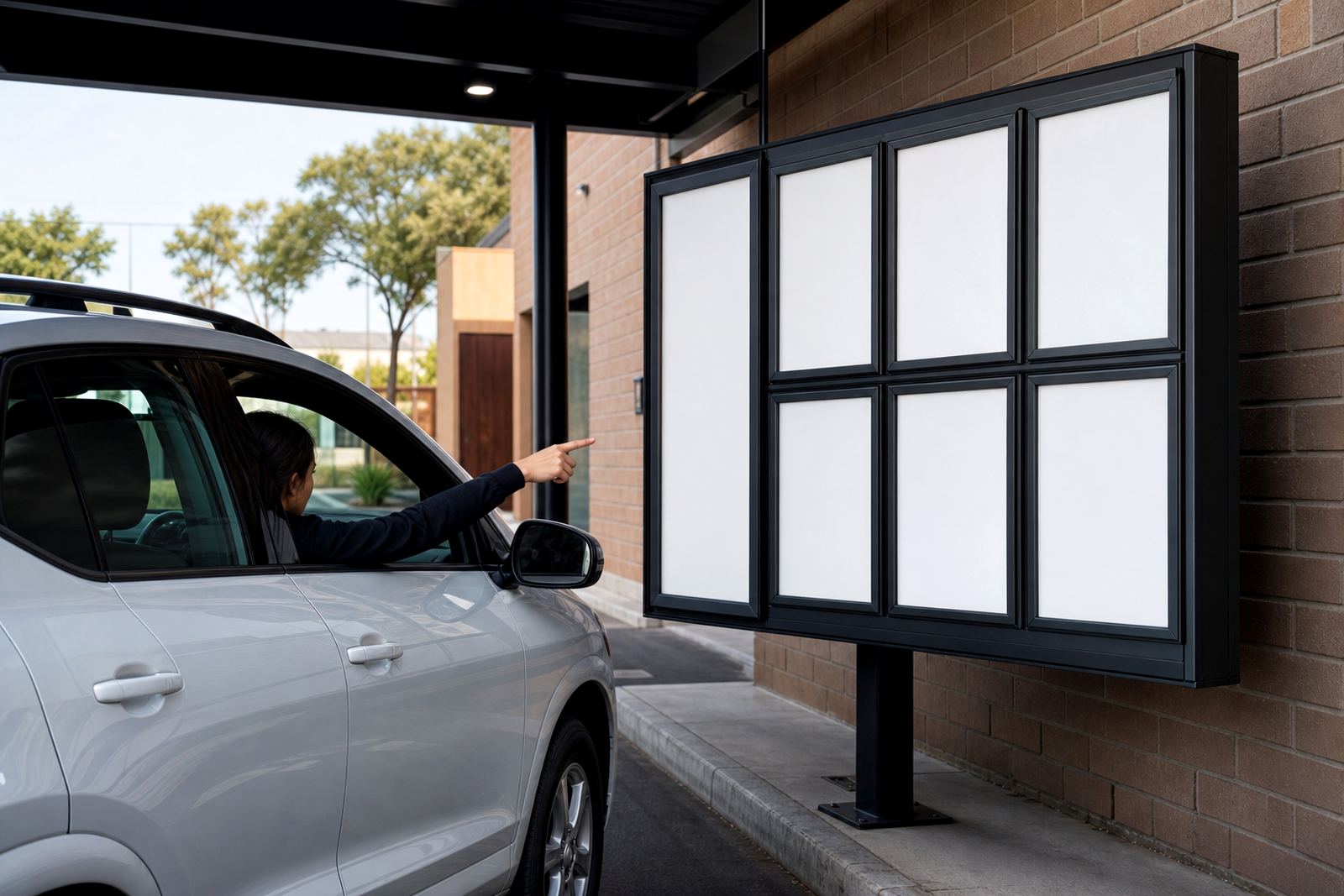
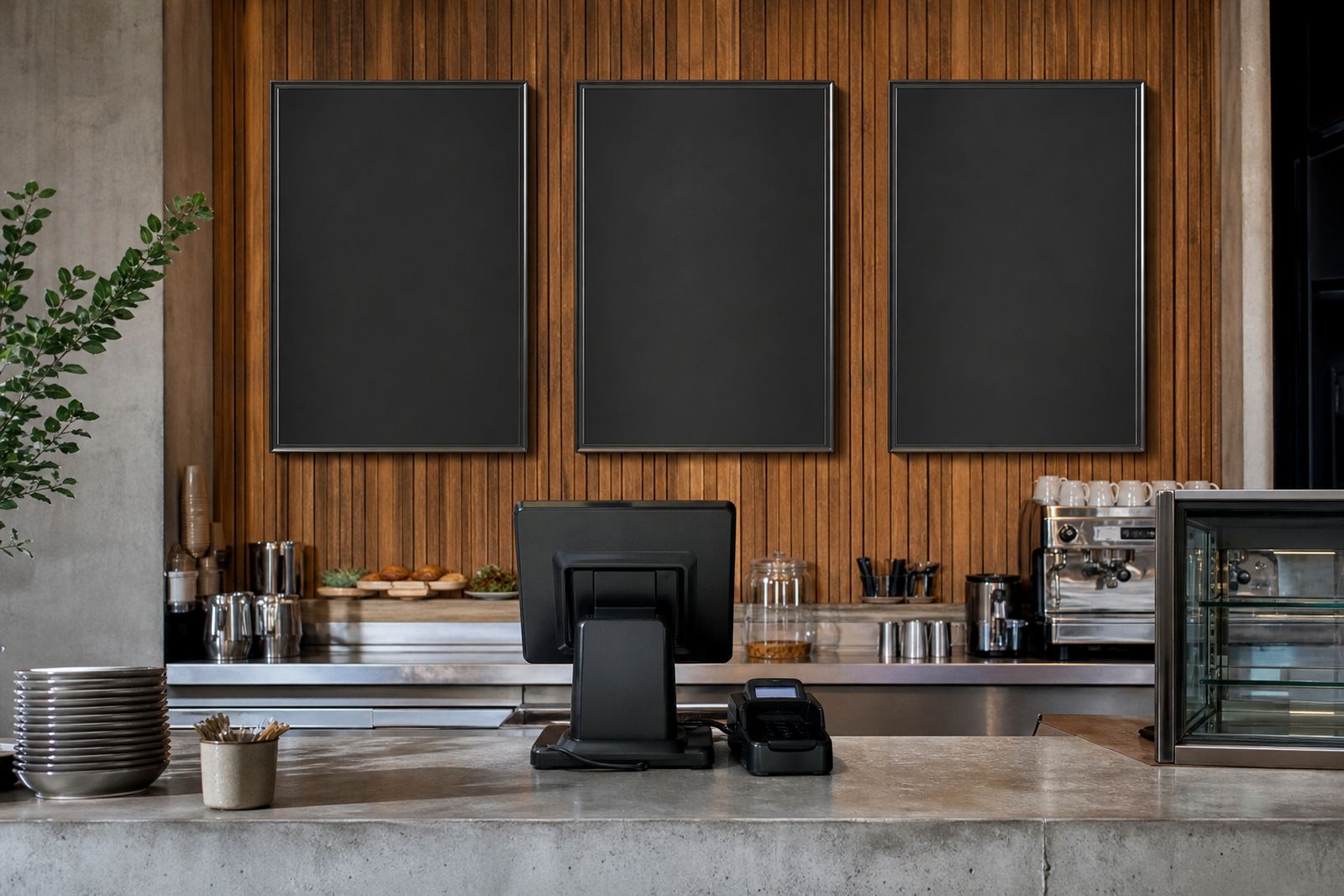
A multi-panel board is a grouped wall-mounted menu solution made up of coordinated panels that sit together as one display. The panels can be arranged in a straight row or a stacked layout, depending on the wall space and the length of the menu. Each section uses snap aluminium frames with clear protective covers, so printed inserts can be changed without removing the full board from the wall.
In practice, it works well where a restaurant, café or takeaway counter needs to show starters, mains, drinks and add-ons in separate blocks. That makes the board easier to read from the queue or table area, and staff can update one panel without disturbing the rest. The overall look stays tidy even when the menu changes often.
We make these boards for Cape Town, Stellenbosch, Johannesburg, Durban and Gqeberha, with courier packaging arranged for nationwide delivery. The format suits front-of-house walls, service counters and enclosed serving points where the menu needs to stay visible and professional.
Panel sizes that fit real menu layouts
The board can be built from matching A4 or A3 modules, or mixed sizes where the heading needs more impact than the item list below it. A3 suits broader category labels, daily specials and larger price blocks, while A4 is useful for tighter columns and shorter lists. Where the wall is narrow, a vertical stack can keep the board readable without taking up too much frontage.
Menus with wine, cocktails, breakfast items or takeaway combos often benefit from split sections. That way the pricing, descriptions and headers are not crowded into one frame. We can also set up the board around printed inserts that are trimmed to the exact visible area, with space allowed for neat margins and safe cutting.
For poster insert printing, the visible size needs to match the insert artwork exactly. A small allowance is kept for the snap profile overlap and the protective cover, so the final print lands cleanly inside the frame. If the board is being used near a window or bright service light, the anti-glare cover helps reduce reflection on the text.
Where this board earns its place
This format suits venues that change menus more than once a week, or need room for several sections that must stay separate. Cafés often use it for breakfast, lunch, cakes and drinks. Bars use it for beer, wine, cocktails and snacks. Takeaway counters use it when meal sizes, sauces and add-ons need to be shown in a clear order.
It is also useful where wall space is available but a single oversized board would feel awkward. A grouped setup lets the menu follow the shape of the wall, and that helps in narrow shopfronts or long counter runs. In Paarden Eiland and around Cape Town, the board is often chosen for front-of-house spaces that need a clean reading line and regular print swaps.
For larger venues, the panels can be repeated across a run of wall space so the content stays balanced. If a shop is updating seasonal dishes or rotating specials, the boards can be arranged so one section is fixed and another section changes often. That keeps printing costs more controlled and the board stays useful over time.
Fitting details that keep the board straight
The board is normally fixed to a wall, timber backing or similar solid surface using the correct hardware for the substrate. If the display is near a window or a busy order point, placement matters because the top edge, lower edge and viewing height all affect readability. A level fit is important, especially where two or more panels must line up cleanly across one run.
We can prepare the frame set for wall mounting, and where a shop wants a window-facing display, the same kind of panel arrangement can be used with the right fixings and visibility in mind. The board should be fitted where staff can reach the snaps comfortably for insert changes, without stretching over hot equipment or around a crowded service lane.
For wall-mounted installations, the final position should allow space around the edges for cleaning and for future changes to the menu layout. If the surface is uneven, packing pieces or a backing board may be needed so the panels sit flush. In busy sites, that small detail keeps the lines neat and stops the board from looking off-square.
Printing, inserts and the finish inside the frame
Multi-panel boards are only as tidy as the inserts inside them, so the artwork needs accurate sizing and correct bleed. We can handle menu typesetting, menu resizing, colour matching and proofing before print. That helps when a venue already has a logo style, menu font set or a colour band that must stay consistent across every panel.
Short run printing is useful when the menu changes often, while laminated menu prints and poster insert printing suit boards that stay in use for longer periods. The protective cover keeps the print flat and gives the panel a cleaner front surface. Where the menu includes photos or fine text, a careful proof is worth doing so line breaks and price columns land where they should.
Some customers use chalkboards for specials beside the multi-panel board, but the grouped board itself is meant for printed inserts with a sharper, more repeatable finish. If the menu is split over several panels, the same type family, border style and heading size should be carried across each section. That keeps the whole display reading as one unit, not a patchwork of bits.
Details to confirm before we set the board up
When ordering a multi-panel board, it helps to confirm the number of sections, the visible size of each panel and whether the layout runs sideways or vertically. The menu content matters too, because a drinks list with short lines needs different spacing to a food menu with descriptions and prices. If the board is going near a window, say so early, because glare and daylight affect how the print reads.
We also need the wall type, the final mounting position and whether the display must match an existing counter, painted wall or timber finish. If the board has to sit beside another sign, the gap between items should be measured carefully so the whole frontage feels balanced. Small details such as border thickness, panel count and insert quantity make a proper difference in the final setup.
Courier packaging is prepared for the frame set and the inserts, with careful wrapping around corners and glass-like cover surfaces. In practice, the cleaner the brief, the easier the production match becomes. A clear panel count, insert size and wall position are the main things that keep the order on track.
Key facts
| Product type | Grouped wall menu board with multiple coordinated snap panels |
|---|---|
| Common sizes | A4 and A3 panel formats |
| Frame material | Aluminium snap profile |
| Front cover | Clear protective sheet with anti-glare option |
| Mounting | Wall-mounted, with window-facing use where suitable |
| Use case | Menus with separate food, drinks, specials or takeaway sections |