Made for the order point, not the dining room
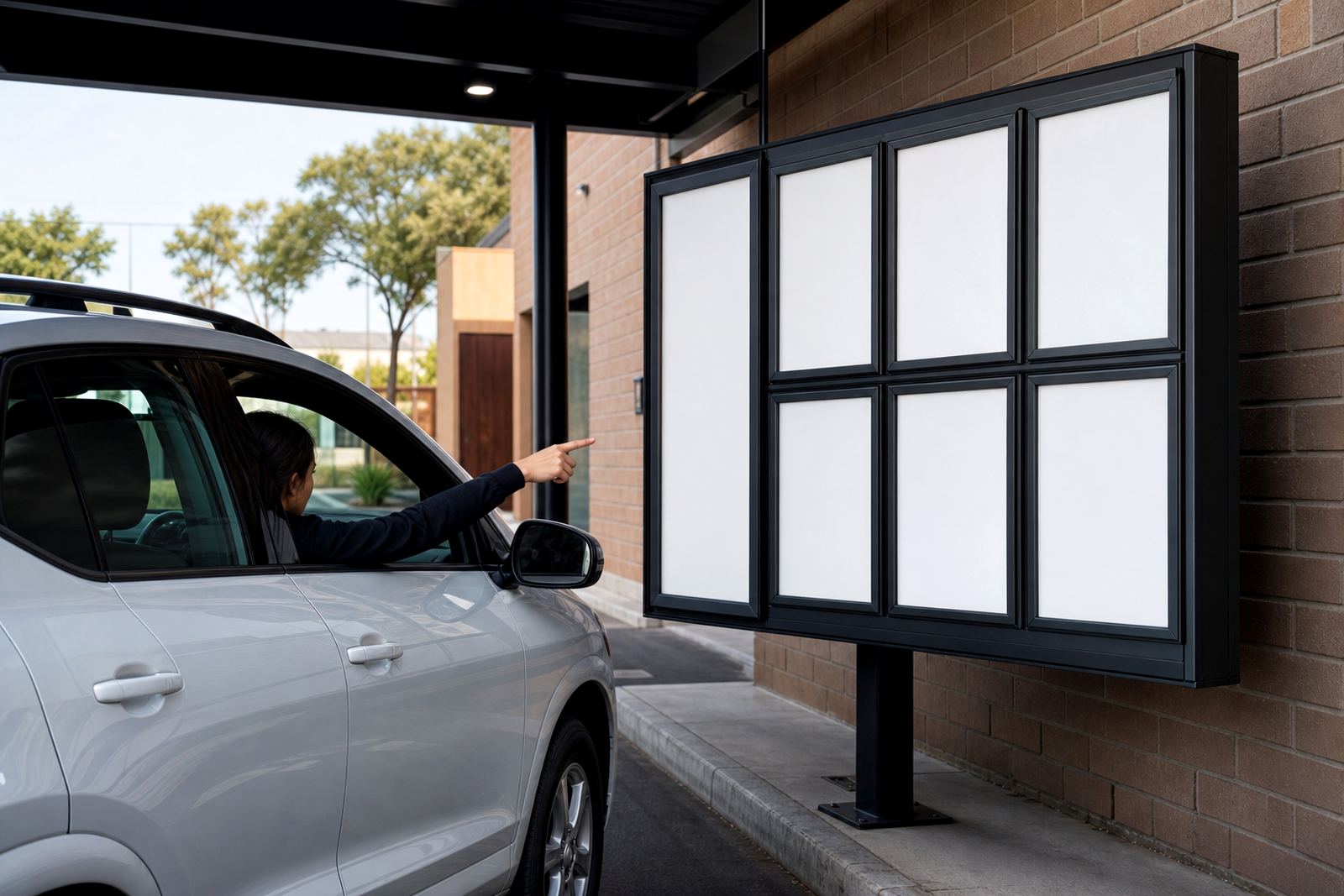
A drive-thru menu board sits where drivers scan prices, meal options and extras from a short distance, often with glare, dust or evening light working against it. The format needs bigger lettering than an indoor menu, stronger holding hardware, and a layout that stays readable from the vehicle window.
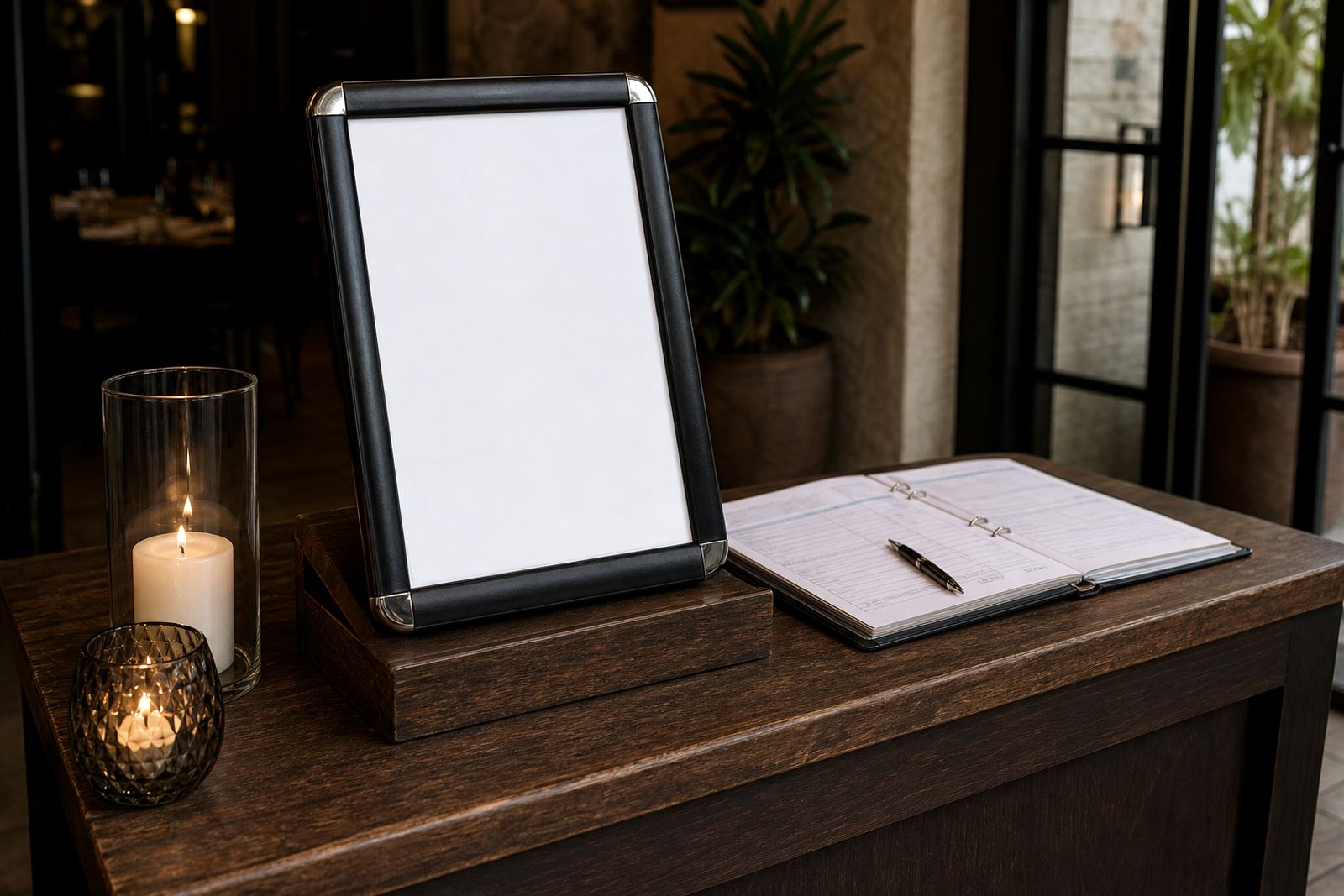
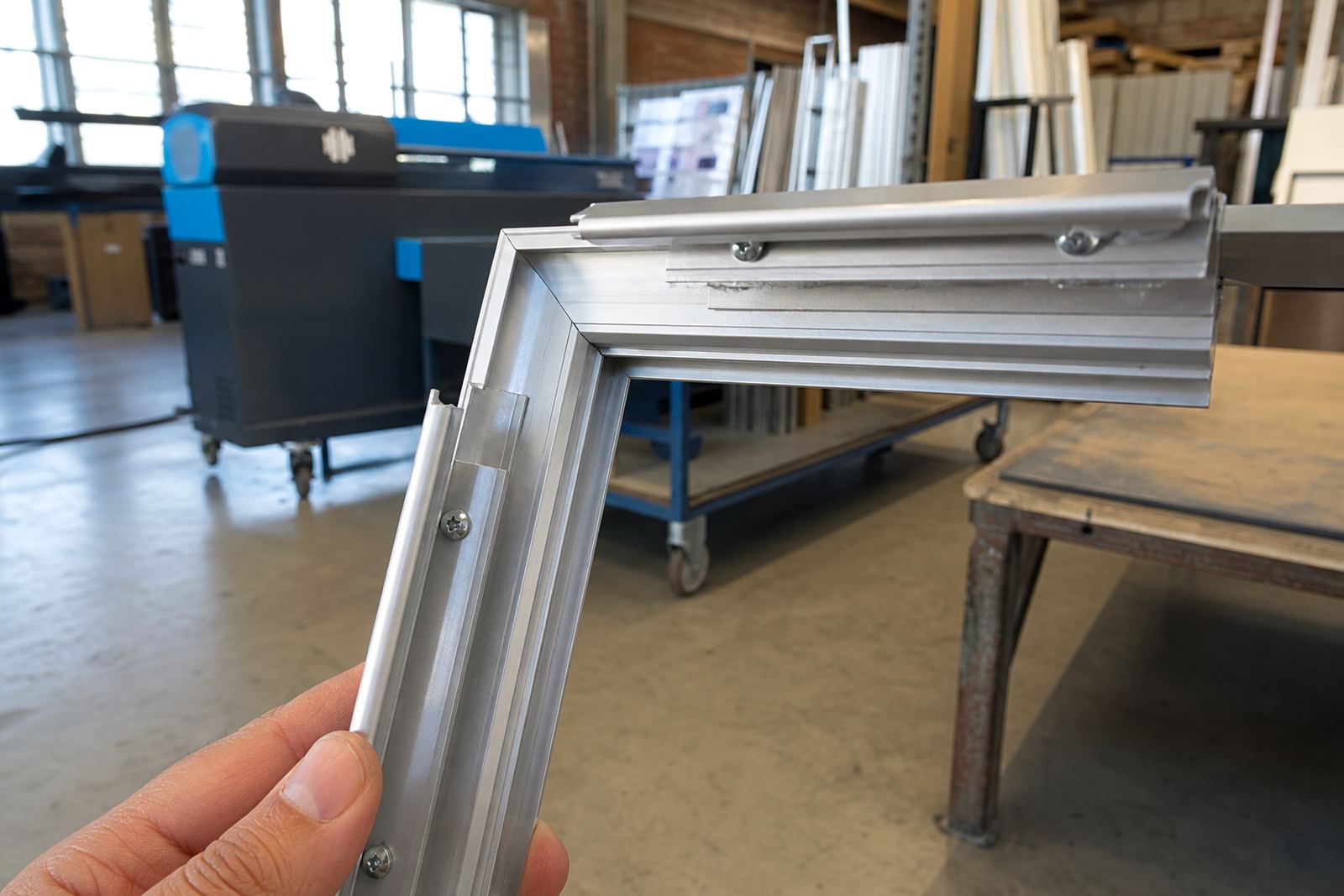
We make drive-thru boards as snap frame menu holders, wall-mounted menu boards or freestanding display units with interchangeable inserts. The frame opens at the edge, so printed sheets can be changed without tools, which matters when breakfast items shift at noon or a limited-time item runs for a few weeks.
Sizes, frame styles and viewing distance
Most drive-thru installations use A1, A0, 1200 x 900 mm or custom wide-format boards, depending on how much menu text must be shown. A4 and A3 inserts still play a role inside larger boards, especially for grouped sections, combo blocks or fixed item lists. The right size depends on lane width, the height of the board and how far the driver stops from the face of the menu.
- Aluminium snap profile with mitred corners for quick insert changes
- Anti-glare PVC or PET cover to reduce reflection in daylight
- Landscape or portrait orientation, depending on menu flow
- Wall mount, post mount or bracketed fitment for service lanes
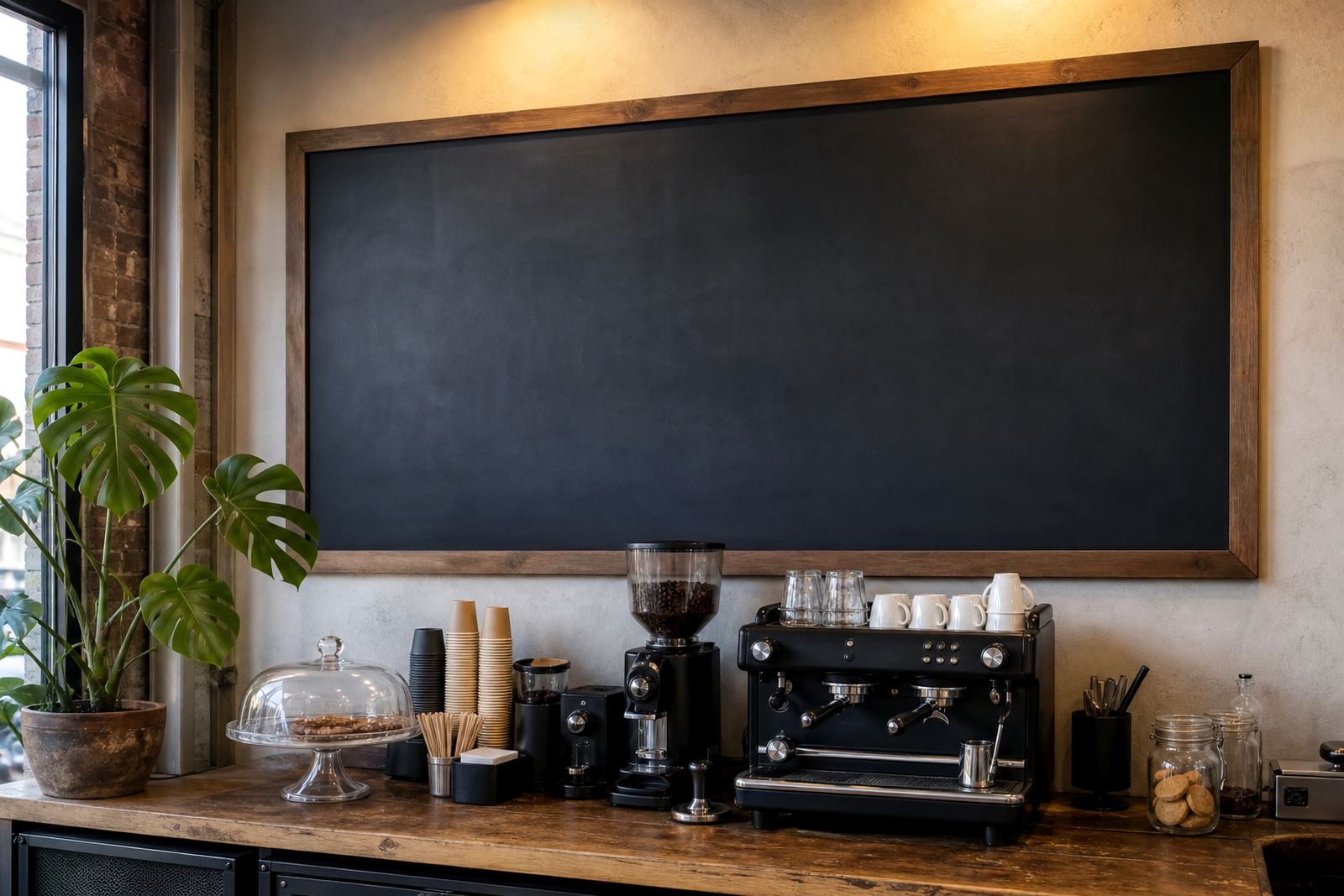
- Optional chalkboard or write-on panel for specials and day items
When a board needs more than a printout
Some lanes need a fixed board with clear price blocks, while others need a mixed layout with printed menus and changeable inserts. A laminated menu print suits areas where the list stays stable, but snap frames are better where items move often or pricing gets updated. For boards exposed to wind, sea air or frequent cleaning, the aluminium profile and sealed cover help the face stay neat for longer.
In Cape Town coastal air, especially near Milnerton or Paarden Eiland, fittings should be checked for corrosion resistance and secure anchoring. Inland sites in Johannesburg or Pretoria may need stronger UV protection, while Durban sites often benefit from careful weather sealing and an anti-glare finish that copes with bright conditions and humidity.
Installation details that matter on site
Fitting a drive-thru board is about structure, height and line of sight. The board must sit where a driver can read it without leaning forward too far, and the top edge should not compete with canopies, light fittings or payment windows. On post-mounted units, the support needs proper footing and bracing. On wall-mounted boards, the masonry or steel frame must carry the weight of the panel and insert pack.
- Confirm the lane width and the stop position at the speaker or order window
- Check whether the unit is wall mounted, pole mounted or part of a freestanding frame
- Measure the face area available for header text, category blocks and price lines
- Allow space for servicing the insert and cleaning the cover
- Confirm if the site uses overhead lighting that may reflect on the panel
Printing, inserts and artwork setup
We prepare print-ready menu inserts in A4 and A3 sizes, then scale them into the larger board layout where needed. Menu resizing, typesetting and proofing are part of the process, so text stays legible and prices do not squeeze into awkward corners. If a board needs short run printing or poster insert printing, the artwork can be split into sections for breakfast, main meals, drinks or add-ons.
Clear spacing is important on a drive-thru board because the viewer has only a few seconds to read it. That means larger line spacing, stronger contrast and careful colour matching between printed inserts and the surrounding frame. Menu updates are easier when the structure is planned around the way the service point works, not just around a page size.
Caring for the frame through daily service
Drive-thru boards take regular dust, fingerprints and occasional splash marks from weather or kitchen traffic. A soft cloth and mild cleaner are usually enough for the cover and frame face. Harsh abrasives can cloud the anti-glare layer, so it is better to wipe gently and dry the surface after cleaning. Where the board sits near the coast, a periodic check on hinges, seals and fasteners helps keep the unit square and tidy.
Chalkboard sections should be cleaned with the right pad and kept dry after rain. If the board has frequent insert changes, it helps to store spare prints flat and covered, so corners do not curl before the next update. Courier packaging also matters for replacement inserts, especially when boards are sent to Stellenbosch, Durban, Gqeberha or Johannesburg.
Details to confirm before the board is made
Every drive-thru site has its own set of measurements, and small differences change the final layout. A lane with a high canopy needs different proportions from a compact takeaway window. The cleaner the brief, the better the board sits in the space and the easier it is to keep it updated over time.
- Finished board size and preferred orientation
- Mounting method, wall, post or freestanding frame
- Insert size mix, including A4 or A3 menu panels
- Whether the board needs anti-glare covering
- Artwork sections for breakfast, meals, drinks or specials
- Delivery address or site collection point in South Africa
Our team in Paarden Eiland handles menu printing, finishing and courier packaging for branches and service points across Cape Town, Bellville, Paarl, Milnerton, Stellenbosch, Johannesburg, Durban and Gqeberha.
Key facts
| Product type | Drive-thru menu board with snap frame insert system |
|---|---|
| Common sizes | A4, A3, A1, A0 and custom wide-format boards |
| Frame material | Aluminium snap profile with hinged edge opening |
| Cover options | Anti-glare clear cover for outdoor viewing |
| Mounting options | Wall mount, post mount or freestanding fitment |
| Typical use | Restaurants, cafes, takeaway counters and vehicle order points |