A rail that keeps changing menus in one line
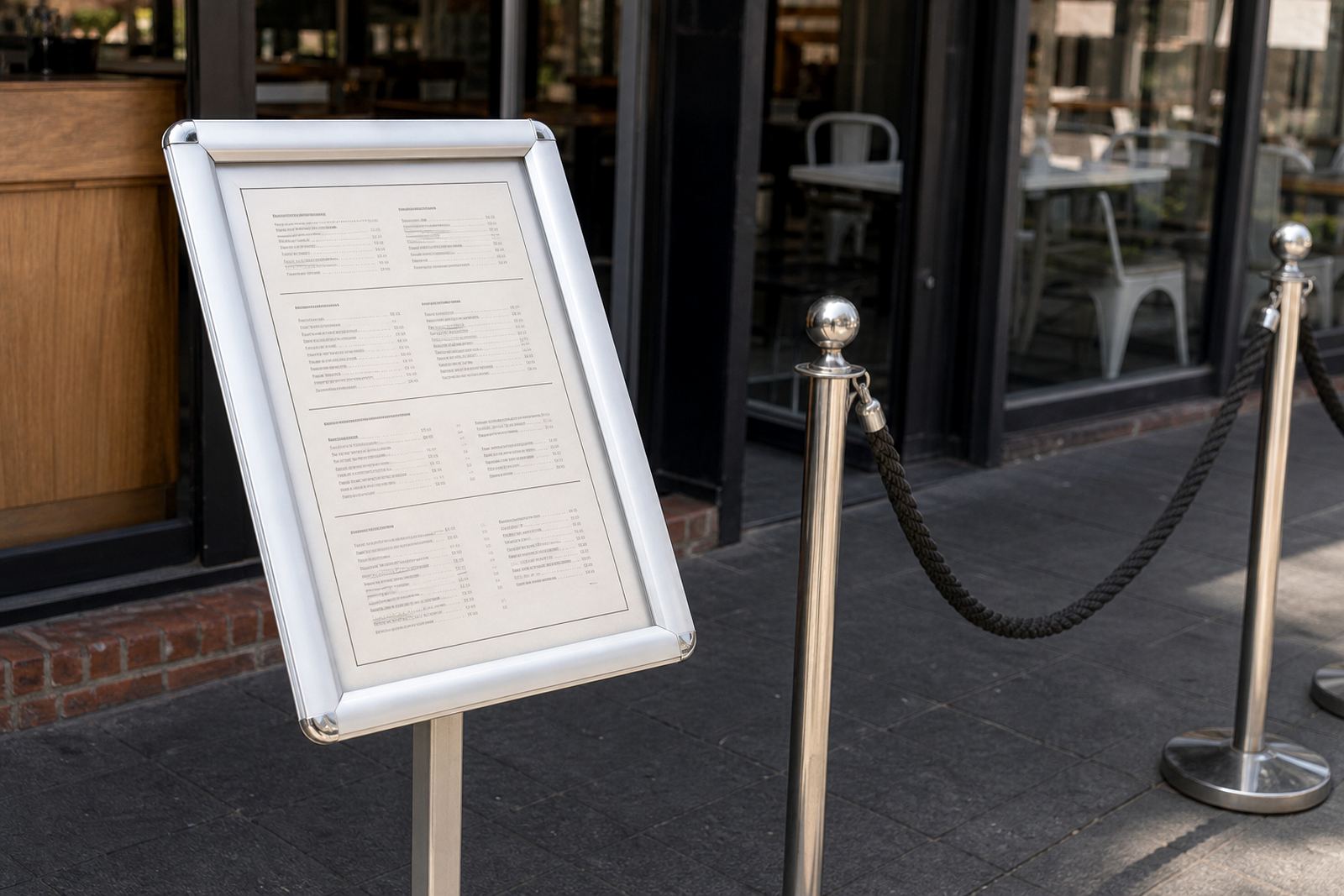
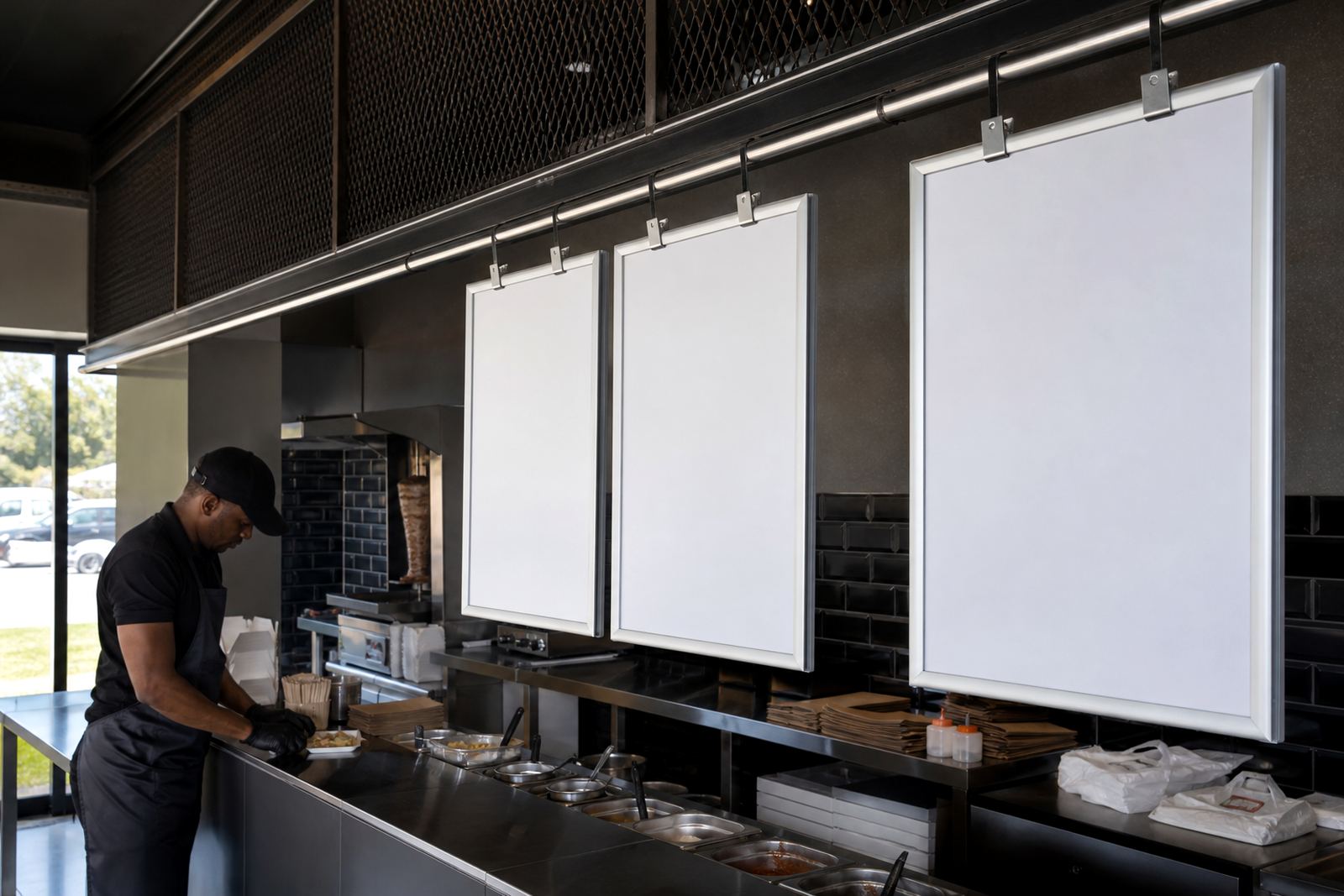
The menu holder rail is a linear wall fitting for insert sheets that need to move in and out without fuss. It gives each page a fixed place along the rail, so specials, pricing and daily items stay tidy instead of being pinned one by one across a board.
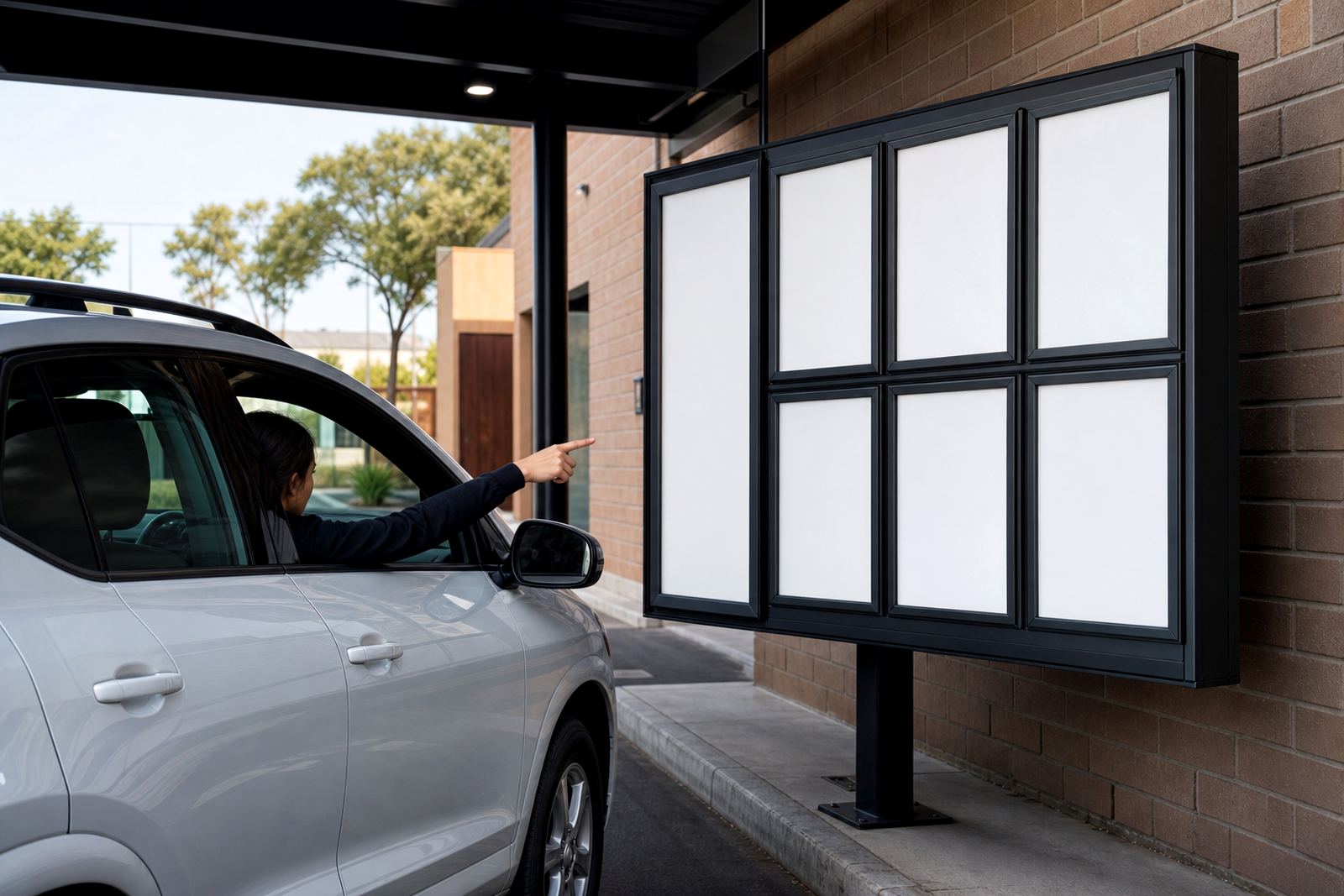
In a restaurant or cafe, it works well above a pass, along a service wall or beside the till where the team needs a clear run of menu pages. It is also useful at takeaway counters in Cape Town, Milnerton or Bellville where the display changes often and the face of the counter has to stay orderly.
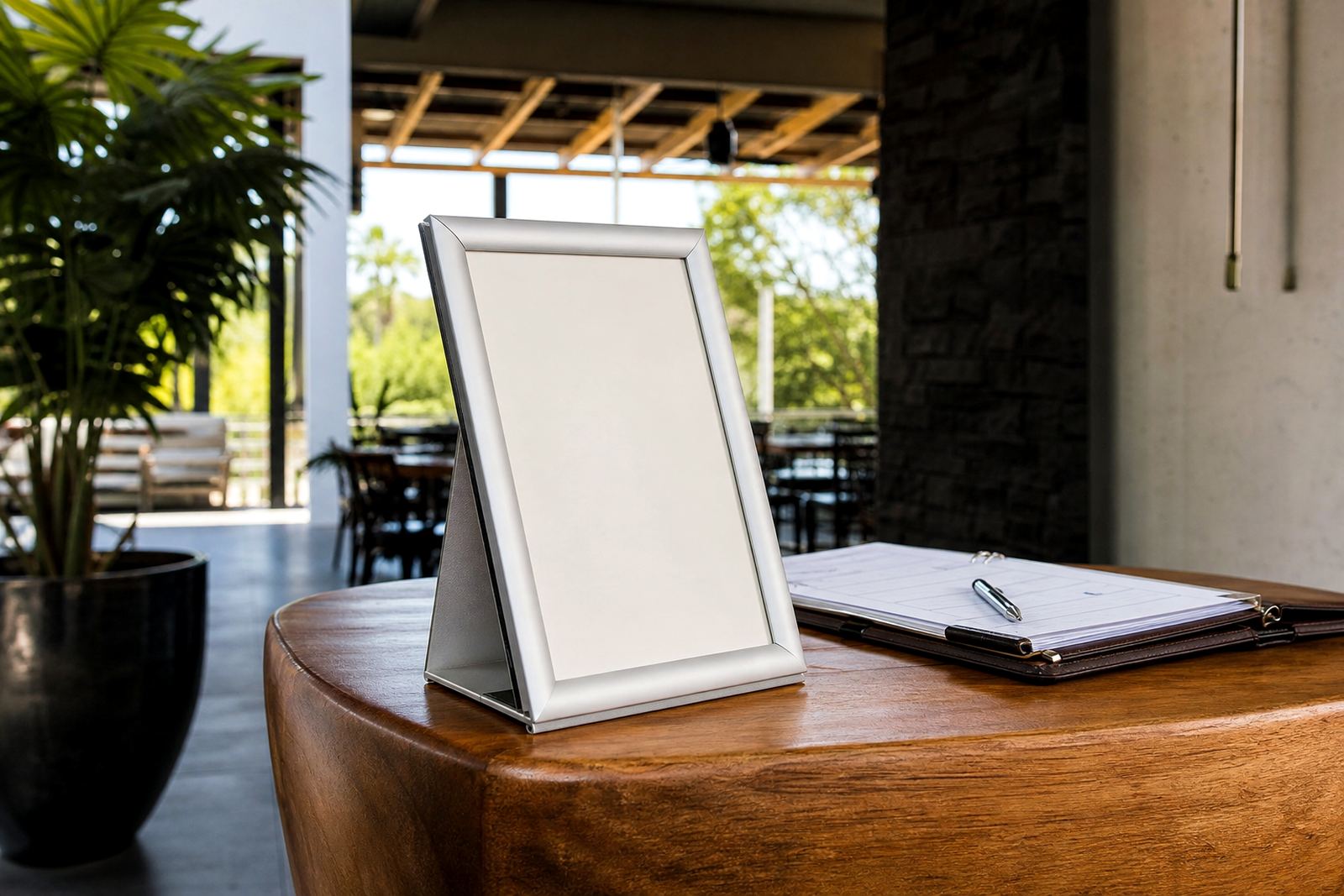
The rail is normally made from aluminium extrusion with a narrow front profile and a clean insert channel. Depending on the layout, the pages can be held in portrait or landscape positions, and a clear cover can be used where glare, dust or kitchen spray is a concern.
Sizes, inserts and viewing length
Most menu holder rails are set up around standard print sizes, especially A4 and A3. A4 suits tighter wall spaces, dessert lists and drinks strips. A3 is better when the customer must read from across a queue or from the front door. Longer rails can hold repeated sections, while shorter lengths work for a single menu line or a few featured items.
The insert width, channel depth and mounting centres matter more than the product name alone. A narrow rail takes one sheet at a time, while a deeper profile can accept laminated inserts or poster stock with a cleaner edge. In humid coastal areas like Gqeberha, a firmer cover and well cut print edge help keep the display looking sharp.
- A4 portrait inserts for compact menu strips
- A4 landscape inserts for wider pricing blocks
- A3 inserts for bold main menus or specials
- Laminated prints for frequent handling
- Poster insert sheets where a heavier face is needed
Where the rail earns its place
This fitting suits hospitality spaces that need a neat sequence of changing pages rather than one large permanent board. It works for menu boards, breakfast lists, tasting notes, snack menus and service notices where the content changes often enough to justify an organised rail system.
It can also be used in window-facing areas, along internal walls or above counters where the customer reads while waiting. In Stellenbosch wine bars, Durban cafes and Johannesburg takeaway counters, the rail is useful when the menu needs to sit in a straight line and stay readable under busy service conditions.
Where several menu families sit together, the rail can be paired with snap frames, chalkboards or A-frame stands so each section has its own position. That keeps the front of house easy to scan, especially when a venue runs breakfast, lunch and after-hours items from the same wall.
Fitting details that matter on site
The rail can be fixed to masonry, timber or a prepared panel, provided the wall is straight and the fixing points are set out properly. On tiled or painted walls, the fitter checks line, spacing and surface condition before drilling. If the rail is running above a counter or pass, the top line should sit level so the inserts hang cleanly across the full length.
Some layouts use stand-off mounting to give the rail a slight gap from the wall, especially where the insert backing needs room. Others sit tight to the surface for a slimmer look. If the site has frequent menu changes, the fixing choice should allow easy access to the front channel without scraping the wall finish.
- Confirm wall material before fitting
- Check the full rail length against the available wall span
- Decide whether inserts will be portrait or landscape
- Allow clearance for a finger grip on the front edge
- Use corrosion-resistant fixings in coastal sites
Print finish and care on busy service walls
For menu inserts, laminated prints are common where pages are handled often or wiped during service. Anti-glare film helps where ceiling lights or front windows throw reflections across the face of the menu. If the display sits close to kitchen traffic, the finish should be easy to clean with a soft cloth and mild cleaner.
A menu holder rail should be kept free of grease, dust and paper debris so each insert slides in without snagging. On the print side, colour matching and clean trimming matter just as much as the hardware, because a badly cut sheet can curl inside the channel and spoil the line of the display.
In coastal weather, a quick wipe-down matters more than people think. Salt air can mark exposed fittings and dull a clean face if it is left alone for too long. A neat rail with well trimmed inserts keeps the menu looking steady, even when the room is full.
Details to confirm before the rail is cut or packed
When ordering, it helps to confirm the exact display length, the number of pages, the print size and whether the inserts are going in from the top or the side. The team also needs to know if the rail will hold plain prints, laminated sheets or poster inserts, because that affects channel depth and the front opening.
If the rail is going to sit in a restaurant foyer, takeaway window or bar wall, the intended reading distance matters too. A narrow rail can suit a short specials line, while a longer one works better for multiple menu strips. For projects going to Paarl, Bellville or Gqeberha by courier, packaging should protect the ends and keep the profile straight in transit.
- Overall rail length in millimetres
- Insert size required, A4 or A3
- Portrait or landscape layout
- Number of pages or menu panels
- Wall finish at the install point
- Whether the display needs a clear cover
Key facts
| Product type | Wall-mounted menu holder rail for changing insert pages |
|---|---|
| Common sizes | A4 and A3 insert formats |
| Material | Aluminium profile with insert channel |
| Mounting | Wall fixed with suitable plugs and screws |
| Finish options | Natural aluminium, black or other powder-coated finishes |
| Use case | Restaurants, cafes, bars and takeaway counters |