Suspended framing for tight front-of-house spaces
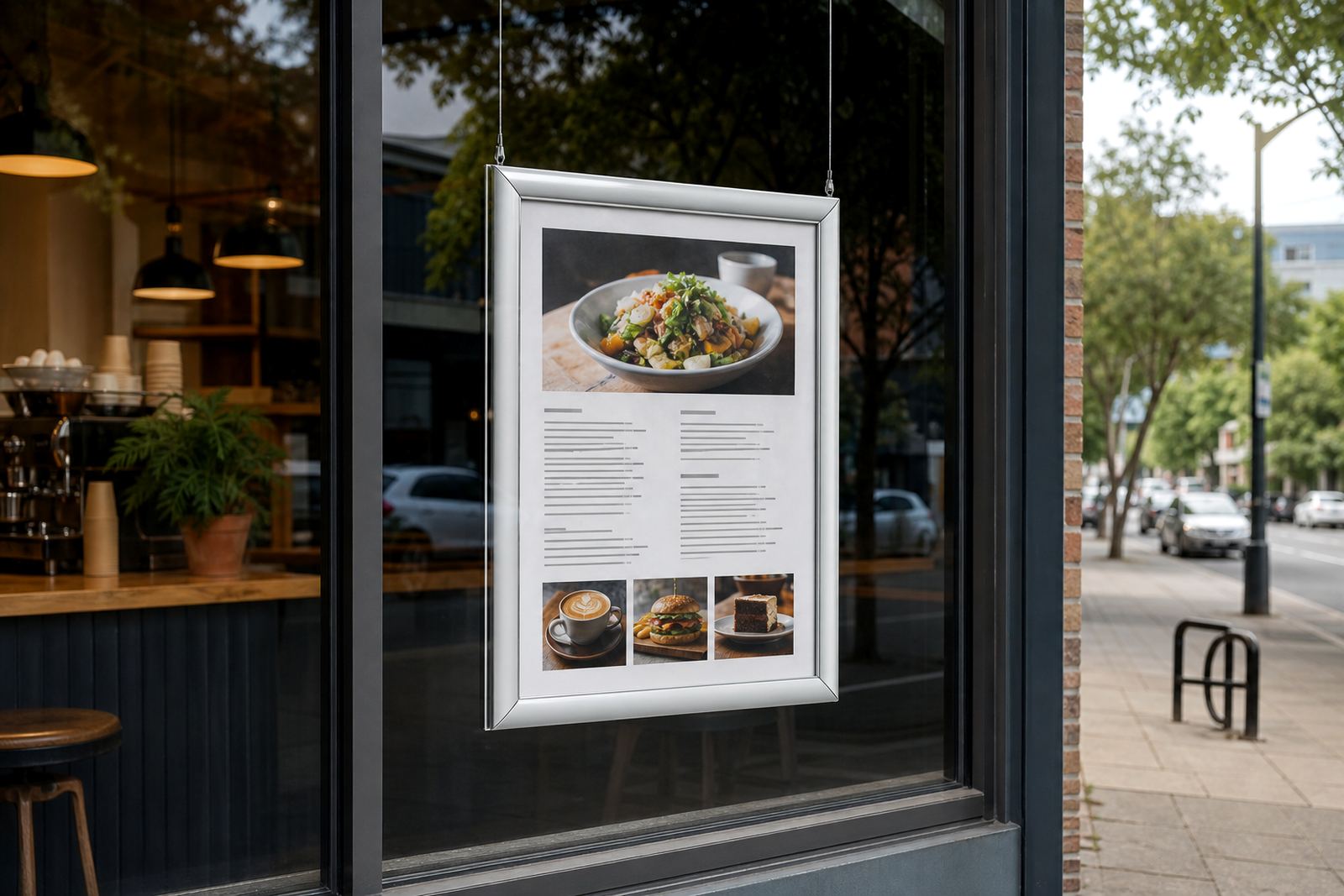
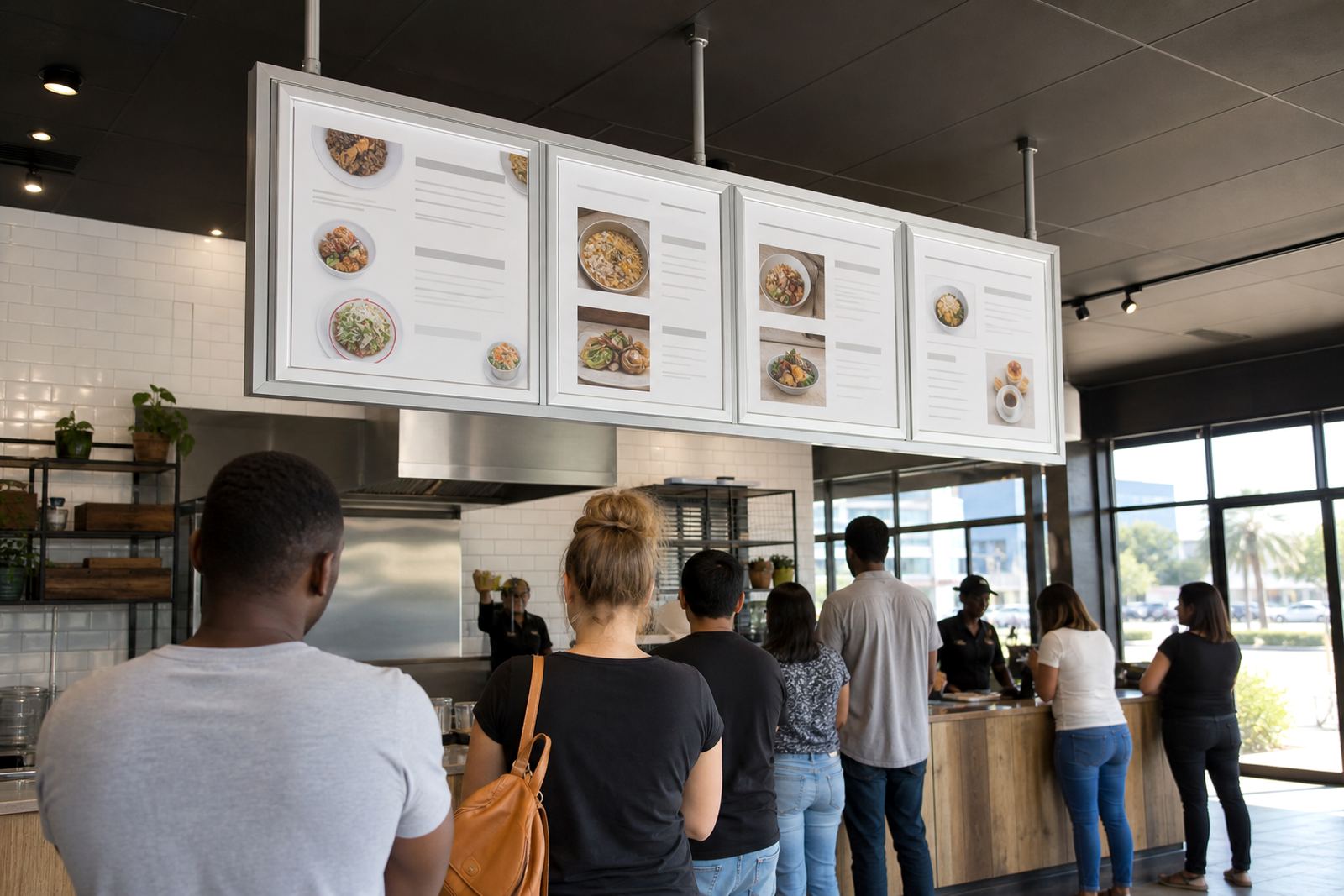
A ceiling hung frame is a suspended display holder for menu pages, specials and notices that need to sit above eye level or float in a window line. The frame hangs from the ceiling by cable or rod hardware, then holds the printed sheet between aluminium snap edges and a clear front cover.
In restaurants, cafes and takeaway counters, that setup keeps the message visible without crowding counters, glass panels or service paths. The frame suits front windows, queue lanes, host points and waiting areas where people need to read a menu while standing or moving.
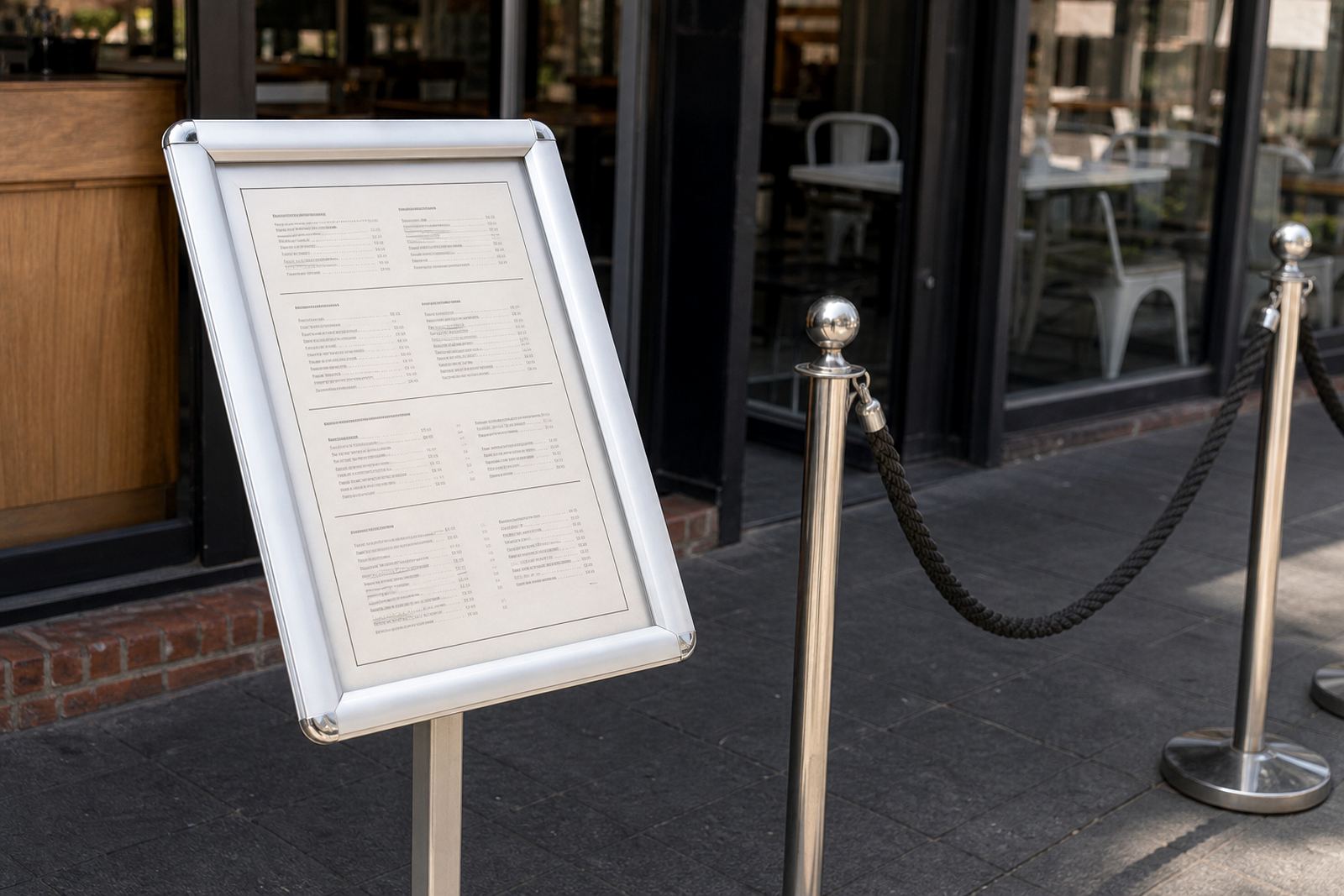
A4 and A3 sizes with aluminium snap edges
Most ceiling hung frames are ordered in A4 or A3, because those sizes match standard menu pages and printed inserts without waste. A4 works well for short specials, drinks lists and narrow window bays, while A3 gives more room for a fuller menu page or larger type.
- A4 insert size: 210 x 297 mm
- A3 insert size: 297 x 420 mm
- Profile depth: usually slim aluminium for a neat front view
- Front cover: clear protective sheet, often anti-glare for bright shopfront light
- Opening: snap edge profile for tool-free insert changes
The profile finish is usually silver aluminium, though other neutral finishes can suit darker shop interiors. If the menu changes often, a snap edge frame is far cleaner than taped-up boards or loose sleeves.
Where a ceiling hung frame works best
This format suits places where a printed menu must be read at a glance while people wait, queue or look through a window. It is common in cafes with street-facing glass, fast service counters, deli windows and entrance zones where the eye line needs support from above.
It also helps where wall space is already taken by shelving, art, health notices or point-of-sale material. In a narrow front area, the suspended frame keeps the menu in view without blocking the counter face or the customer pathway.
- Window-facing menus for passers-by
- Queue path notices and specials
- Waiting area menu boards
- Counter-side menu pages above head height
- Seasonal lists that change often
Hanging hardware, fixing points and fitting details
The fitting must suit the ceiling structure, hanging height and the finished weight of the frame with its insert. Most suspended frames use cables or rods fixed to a proper overhead point, then adjusted so the display sits level and reads cleanly from the customer side.
For a neat install, the fitter checks the drop length, the ceiling material and the swing space around the frame. In a coastal shopfront near Paarden Eiland or Milnerton, it is worth choosing fittings that hold up well where humidity and salt air can affect exposed metal over time.
If the frame sits in a window, the hanging position should allow the page to face traffic without glare from the glass line. The final height matters too, because a frame hung too high loses legibility and one hung too low can intrude into service movement.
Print inserts, covers and day-to-day care
The frame is only part of the job, the insert has to read properly in the light around it. For that reason, the printed page should be set with enough margin, strong type and clear spacing, especially if it sits behind an anti-glare cover near direct sun.
Daily care is straightforward. Wipe the outer face with a soft cloth and a mild cleaner, then check that the snap edges close evenly after each insert change. Avoid rough cloths on the cover, because scratches show quickly when the frame is hung in a bright window.
- Keep artwork trimmed square to the chosen size
- Use clear contrast for prices and item names
- Leave enough safe area so text does not sit in the clip line
- Check both sides of the suspension for level alignment
- Keep spare inserts flat, dry and labelled by date
Details to confirm before the frame is made
When ordering, the useful details are the insert size, orientation, hanging height, finish and whether the frame must face inside, outside or both directions. It also helps to confirm if the page will be changed often, because that affects the kind of cover and snap profile that suits the job.
For a clean result, send the menu dimensions, the ceiling height, the intended viewing distance and the number of pages needed. If you want print support, our team can handle A4 Menu Templates, A3 Menu Templates, menu resizing, typesetting, proofing, laminated menu prints, poster insert printing and courier packaging from Paarden Eiland, Cape Town.
Clients in Cape Town, Stellenbosch, Johannesburg, Durban and Gqeberha use our contact form with the menu details, the preferred size and the location the frame will hang in. That gives the team enough information to match the suspended frame to the site, not the other way around.
Key facts
| Product type | Ceiling hung menu frame for suspended display |
|---|---|
| Common sizes | A4 and A3 insert formats |
| Frame material | Aluminium snap profile |
| Front cover | Clear protective sheet, optional anti-glare finish |
| Mounting | Ceiling suspension with cables or rods |
| Typical use | Windows, waiting zones, queue paths and counter fronts |