A frame that takes a fast change of message
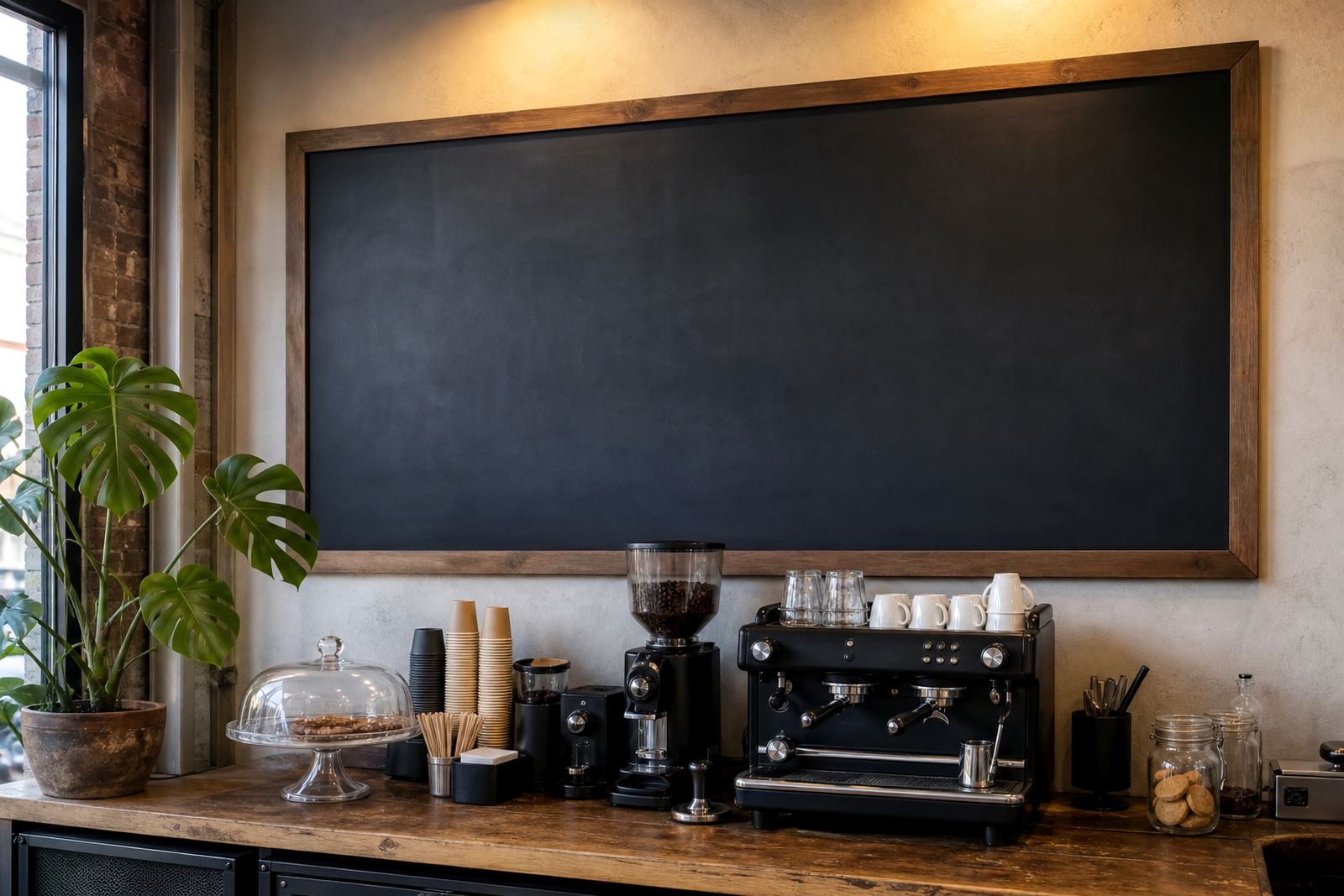
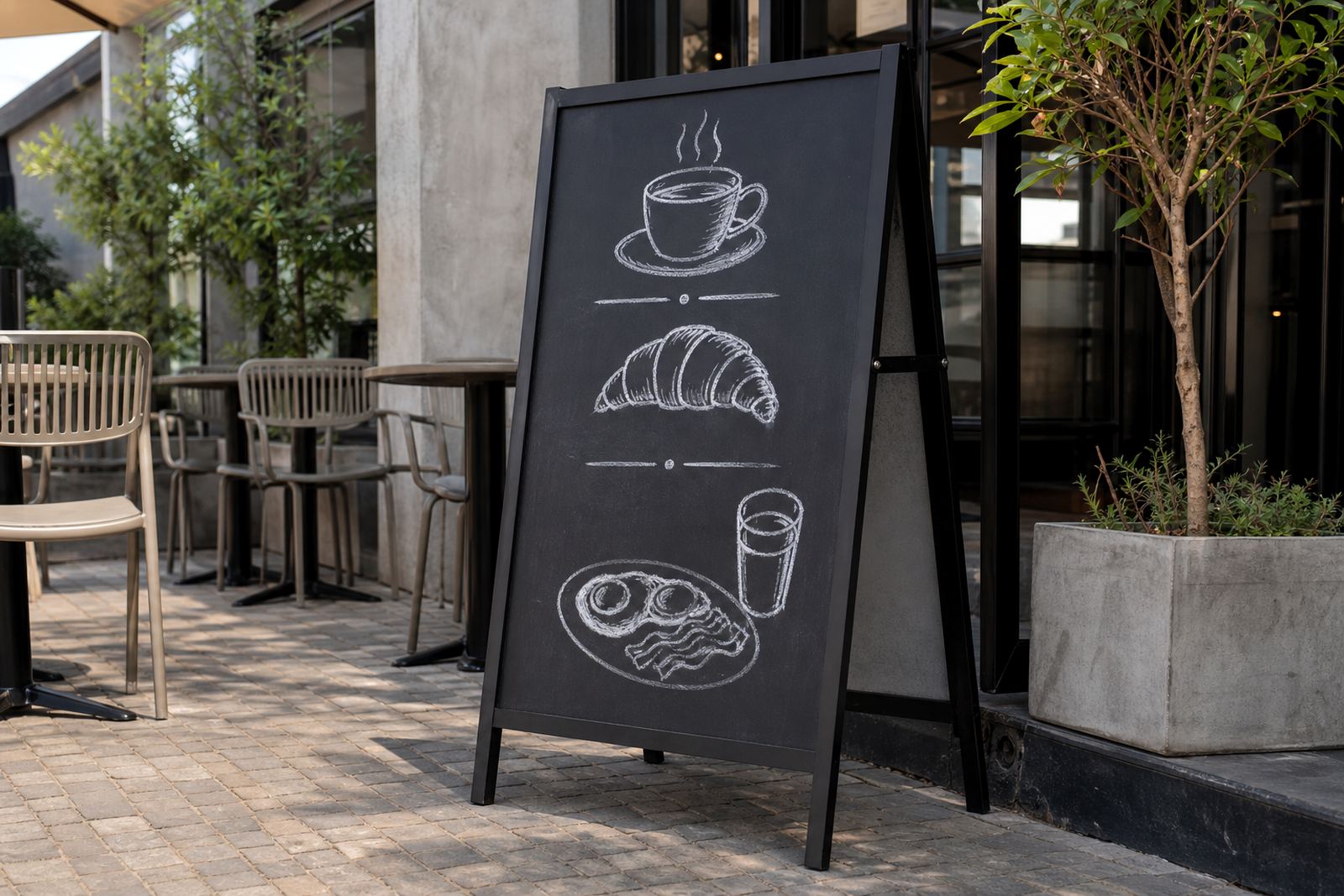
This chalkboard A-frame is made for handwritten specials, daily menu boards and quick price changes at the front of service. The two sided format works well where foot traffic moves in both directions and the message needs to hold attention from the pavement, foyer or takeaway queue.
The frame is generally built in aluminium or similarly light metal, with a blackboard-style insert that takes chalk or liquid chalk markers depending on the finish supplied. The writing surface is set within a folding A-frame body so staff can place it at the door, on a tiled floor, near a hostess point or beside a payment counter.
- Two display faces for the same message or two different messages
- Portable fold-flat format for storage between service periods
- Wipe-clean writing surface for changing specials and notices
- Works well for menu callouts, bar promos and directional notes
Sizes that sit neatly in the service space
Most chalkboard A-frames are specified in familiar menu sizes, with A3 being a common choice for larger reading distance and A4 working well in tighter spaces. The size affects how much text fits, how bold the handwriting can be, and how far back a customer can stand and still read the board without crowding the entrance.
For narrow walkways, an A4 board is usually easier to position near a counter or coffee station. A3 is often better for a stand outside a restaurant, along a pathway, or at a café entrance where the specials need to carry a little more presence. If the board will be used for daily handwritten items, leave enough blank space so staff are not squeezing lines into the corners.
- A4 boards suit compact interiors and shorter menu notes
- A3 boards suit entrance points and larger handwriting
- Board face size should match viewing distance and text length
- Clear margins help keep the writing neat and readable
Where this board earns its place
Restaurants use chalkboard A-frames for breakfast boards, lunch specials, dessert prompts and wine by the glass notes. Cafés often place them at the door or beside the till for coffee deals, toasted sandwiches and seasonal items. Takeaway counters use them for meal deals, collection instructions and quick notices that change with stock on hand.
The board also suits bars, bakeries and small hospitality spaces where the message changes before lunch, then again later in the day. In coastal areas such as Cape Town or Durban, the writing surface should be handled with care if it is left near wind or damp air, especially where the board stands on paving and gets moved around often.
- Front-of-house specials and daily menu notes
- Queue guidance at takeaway counters
- Outdoor entry points with short customer reads
- Temporary promotions for events, happy hour or tastings
Fitting, placement and the ground underfoot
An A-frame needs a flat surface and enough clearance for staff to open it fully without catching chairs, planters or door swings. If it will sit outside, the placement should account for foot traffic, wind exposure and where customers naturally pause. On polished tiles or smooth concrete, a small foot stop or added weight may help the board stay in place.
There is no fixed wall fitting for this format, but the hinges, chain or support arms need to open cleanly and hold the angle correctly. When the board is used near an entrance, make sure it does not block disabled access or the main route in and out of the shop. For pavement use in Cape Town or Johannesburg, local space rules and building access matter more than a board looks on paper.
- Level floor area for stable standing
- Open angle should suit reading distance and foot flow
- Support hardware must hold the board steady in daily use
- Outdoor placement should respect access paths and local rules
Cleaning marks without stripping the surface
Keep the board dry between services and wipe it with a soft cloth, mild cleaner or damp sponge, depending on the marker type used. Harsh scouring pads can mark the writing face and leave it harder to clean the next day. If the board is used with liquid chalk markers, test a small edge first so the ink clears properly.
In humid coastal air, especially in places like Milnerton or Gqeberha, let the surface dry before folding the frame away. If the board has metal edges, check the corners now and then for salt wear or knocks from stacking. A frame that is folded and stored carefully lasts better than one leaned against a wall beside crates and trays.
- Use soft cloths rather than abrasive pads
- Dry the face before folding or storing
- Check corners and hinges for knocks
- Keep markers matched to the board finish
Details to settle before the board is cut
When ordering, confirm the board size, intended use and whether you need one message on both sides or different messages on each face. If the board will live indoors, outdoors or under a covered stoep, that changes the finish, hardware and how much wear it will take. It also helps to note whether the writing will be done by hand in store, or whether a printed insert must sit behind the board face.
For menu boards that need support from print material, ask for the print size, trimming allowance and whether the artwork should follow A4 or A3 proportions. If the board will sit at a branch in Stellenbosch, Paarl or Bellville, note the doorway width, floor type and any wind exposure at the entrance. That keeps the stand practical instead of awkward in the path of customers.
- Board size: A4 or A3
- Single-sided or double-sided use
- Indoor, outdoor or covered placement
- Handwritten chalk or printed insert backing
- Floor type and entrance clearance
Key facts
| Product | Chalkboard A-Frame menu stand |
|---|---|
| Common sizes | A4 and A3 |
| Frame | Folding A-frame body with support hardware |
| Writing surface | Chalkboard-style face for manual updates |
| Use | Restaurants, cafés, bars and takeaway counters |
| Delivery | Nationwide courier delivery across South Africa |