
A compact frame for fast menu swaps
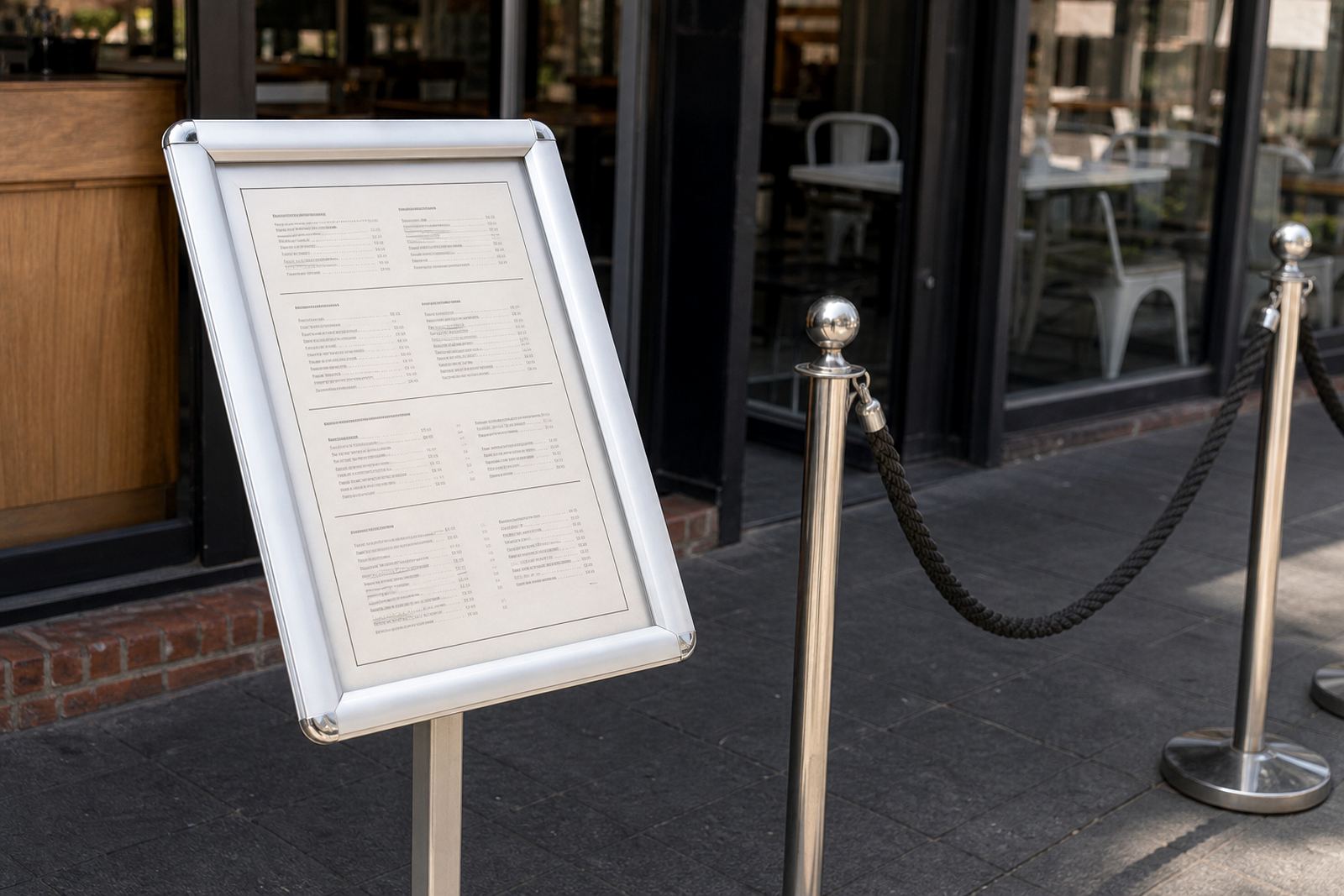
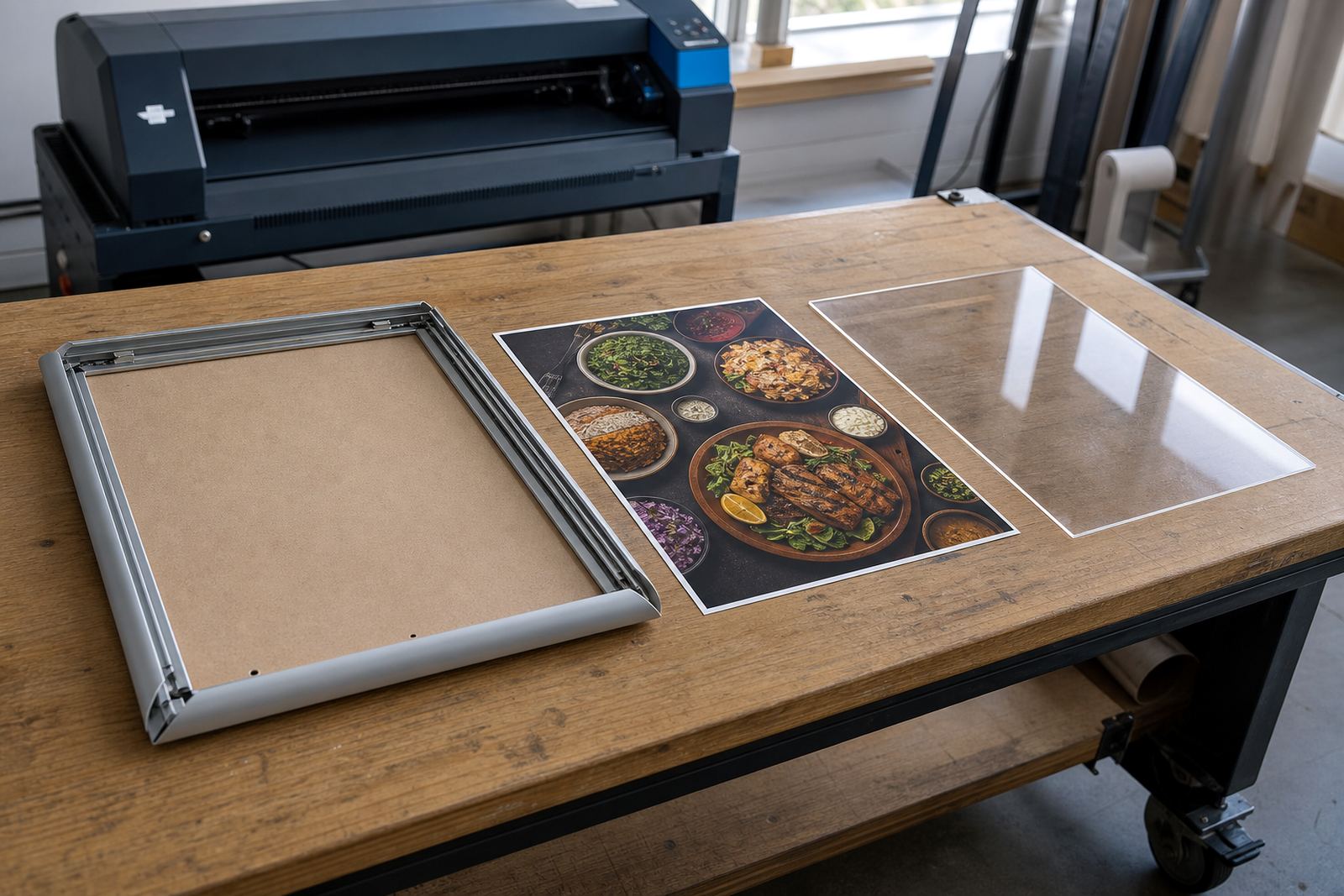
The A4 snap frame is built around a slim aluminium profile with spring-loaded edges that open by hand. The front cover lifts out, the print sits flat, and the frame closes again over the sheet so the menu stays tidy on the wall.
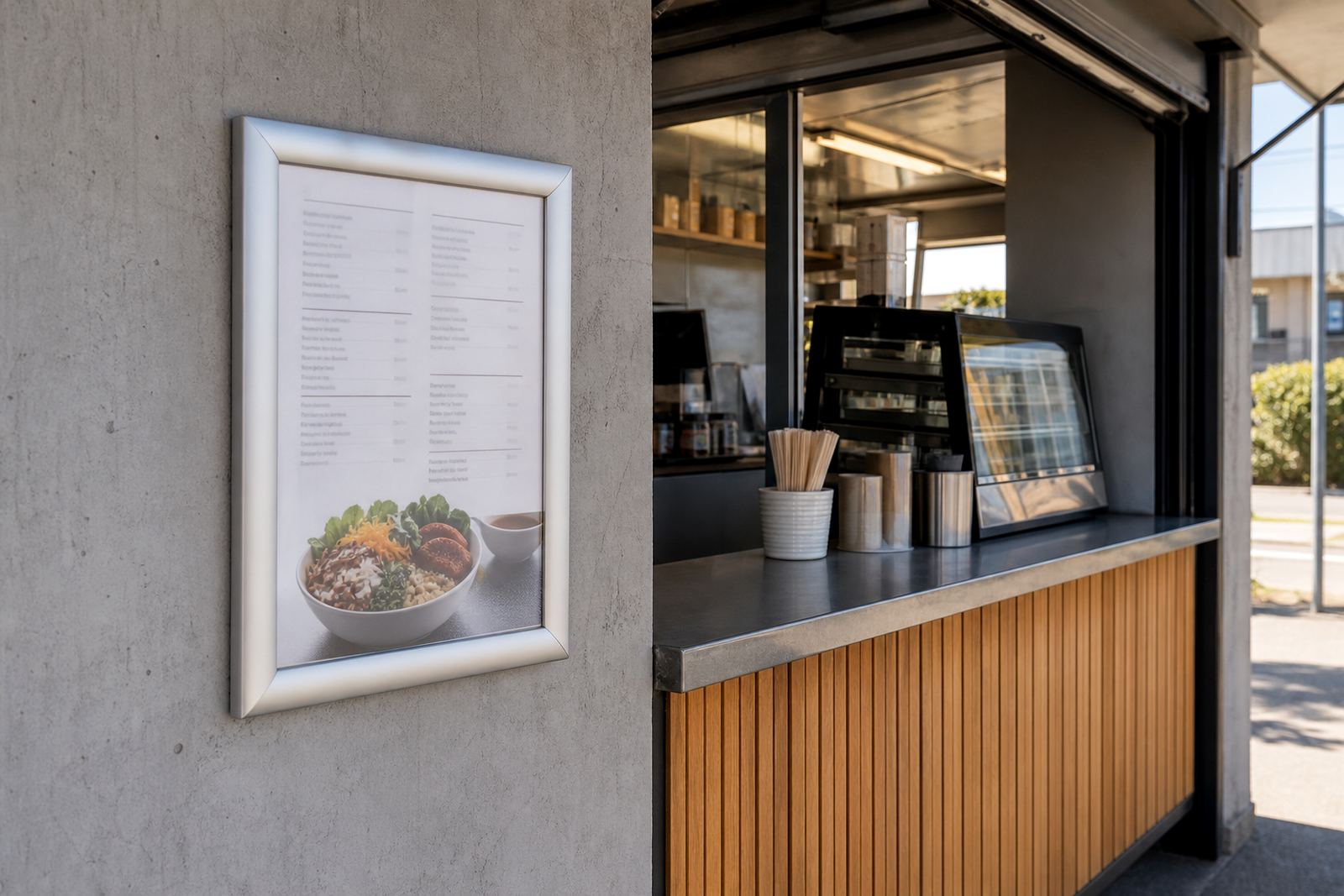
For restaurants, cafes and takeaway counters in Cape Town or Stellenbosch, that matters when the menu changes through the week. One frame can hold a single page special list, a breakfast board, a lunch offering or a short drinks menu, as long as the artwork is set to A4 size and prepared with the right bleed and safe area.
The usual face size is 210 x 297 mm, with the visible area slightly smaller once the frame lip sits over the edges. We supply frames for portrait or landscape layout, and the profile depth is chosen to suit the look and the fixing point. In a tight service area, the narrower profile keeps the wall cleaner and the menu easier to read from the queue.
Profile, cover and mounting choices
Most A4 snap frames use a metal frame body with a clear protective front. For busy counters, an anti-glare cover helps cut reflections from ceiling lights and front windows, especially where daylight lands on the menu board through the afternoon. In a coastal shop near Milnerton, that cover also helps protect the print from finger marks and the salt-laden air that moves through open doors.
- Frame size: A4, 210 x 297 mm
- Layout: portrait or landscape
- Profile: slim snap edge in aluminium finish
- Cover: clear or anti-glare sheet
- Mounting: wall fixings, window face fitting or stand-off style where required
- Use: single-sheet menus, specials, drinks lists and notices
Where the frame must sit on a glass partition or front window, the fixing method needs a clean surface and a level line. On painted masonry, plugs and screws are usually the better choice. If the board is going into a tiled back wall, that surface needs careful drilling and the fixing points must line up before the frame goes up.
Where an A4 frame earns its keep
This size suits narrow menu moments rather than long lists. Think espresso bars, dessert inserts, wine by the glass, lunch specials, takeaway add-ons and daily notices at the till. In Durban, where counters can stay busy through humid afternoons, a sealed frame keeps the print looking crisp and stops the page from curling at the edges.
For front-of-house use in Cape Town, a row of A4 frames can break a menu into clear sections without crowding the wall. A single frame by the counter may be enough for the day special, while a series of matching frames can guide customers through mains, drinks and extras. That approach also works in Paarl and Bellville where space behind the till is often limited and staff need the menu board within easy reach.
- Small menu updates that change often
- Specials boards beside the till or service hatch
- Window-facing displays for passing foot traffic
- Tea, coffee and drinks lists in compact spaces
- Indoor wall displays where a clean frame line matters
Artwork, printing and finishing details
A good frame starts with a clean print. We work with menu templates, menu resizing, typesetting and proofing so the sheet fits the frame properly and the text sits where it should. If the menu is being printed for short runs, the colours, line weights and text sizes need to suit the A4 format rather than being forced down from a larger layout.
For a single-page menu, the print usually goes to a flat sheet or a laminated insert, depending on how often it changes. If the design includes a border, we keep enough margin so the snap lip does not trim the important text. For window use, the reverse side should be checked too, because light can make thin type look faded unless the contrast is set correctly.
When the order includes a new insert, confirm whether the frame is for portrait or landscape hanging, whether the artwork is final or still needs proofing, and whether the board will sit in a wall bay, on glass or near the service counter. Those points affect the print size, the finish and the fitting pack that goes out with the frame.
Caring for the frame in daily service
An A4 snap frame does not need much attention, but it does need the right cleaning cloth. A soft microfibre cloth works well on the front cover and the aluminium edge, while harsh abrasives can scratch the surface and leave the display looking dull. In a kitchen-facing pass area, grease mist can settle on the frame, so a regular wipe is worth doing before the menu starts to look tired.
Near the coast, keep an eye on the fixing points and the corners of the profile. Salt air can mark metal fittings over time if they are left damp, and a loose screw makes the frame sit unevenly on the wall. If the board is changed often, avoid forcing the spring edges beyond their natural open point. The clips are made for repeated use, but rough handling shortens the clean snap action.
- Wipe the cover with a soft cloth only
- Check wall fixings after repeated insert changes
- Keep printed sheets flat before fitting
- Replace damaged inserts before they fade or buckle
- Store spare prints in a dry folder, not loose behind the counter
Ordering notes for a clean fit
To prepare the right frame and insert, the order needs a few firm details. Send the menu size, the final orientation, the number of frames required and the destination town. If the board is going to Cape Town, Johannesburg, Durban or Gqeberha, courier packaging should be planned to keep the cover and corners intact in transit.
It also helps to note whether the frame is for internal wall use, a front window or a service hatch. Some sites need extra care around glare, mounting height or traffic flow, and those details shape the final result. If the print is to be matched to an existing menu set, the colour tone and font scale should be checked against the other boards so the display reads as one family rather than a mixed pile of inserts.
For customers working through our contact form, include the artwork size, the wall surface and whether the menu is a one-off or part of a larger update. That gives the production team enough to prepare the frame, the insert and the fitting method without guesswork.