A fixed board for fast menu changes
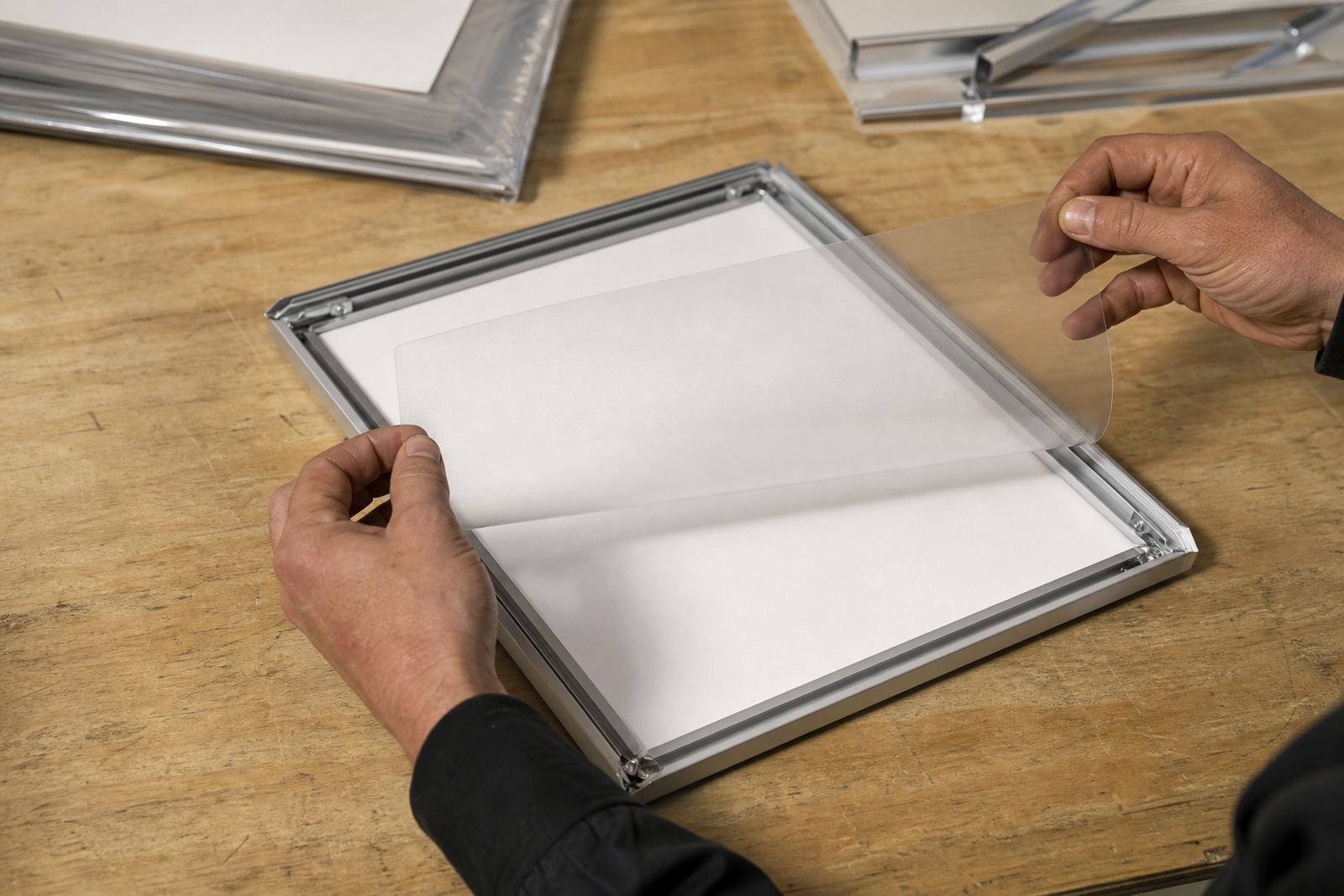
A wall menu board is built for front-of-house use where the menu needs to stay neat and legible through a busy service. The frame holds printed inserts behind a clear cover, so the layout stays protected from fingerprints, steam and dust while staff can update the content as the menu changes. In restaurants, cafes and takeaway counters, that matters more than a hanging poster that curls or a loose notice tacked to the wall.
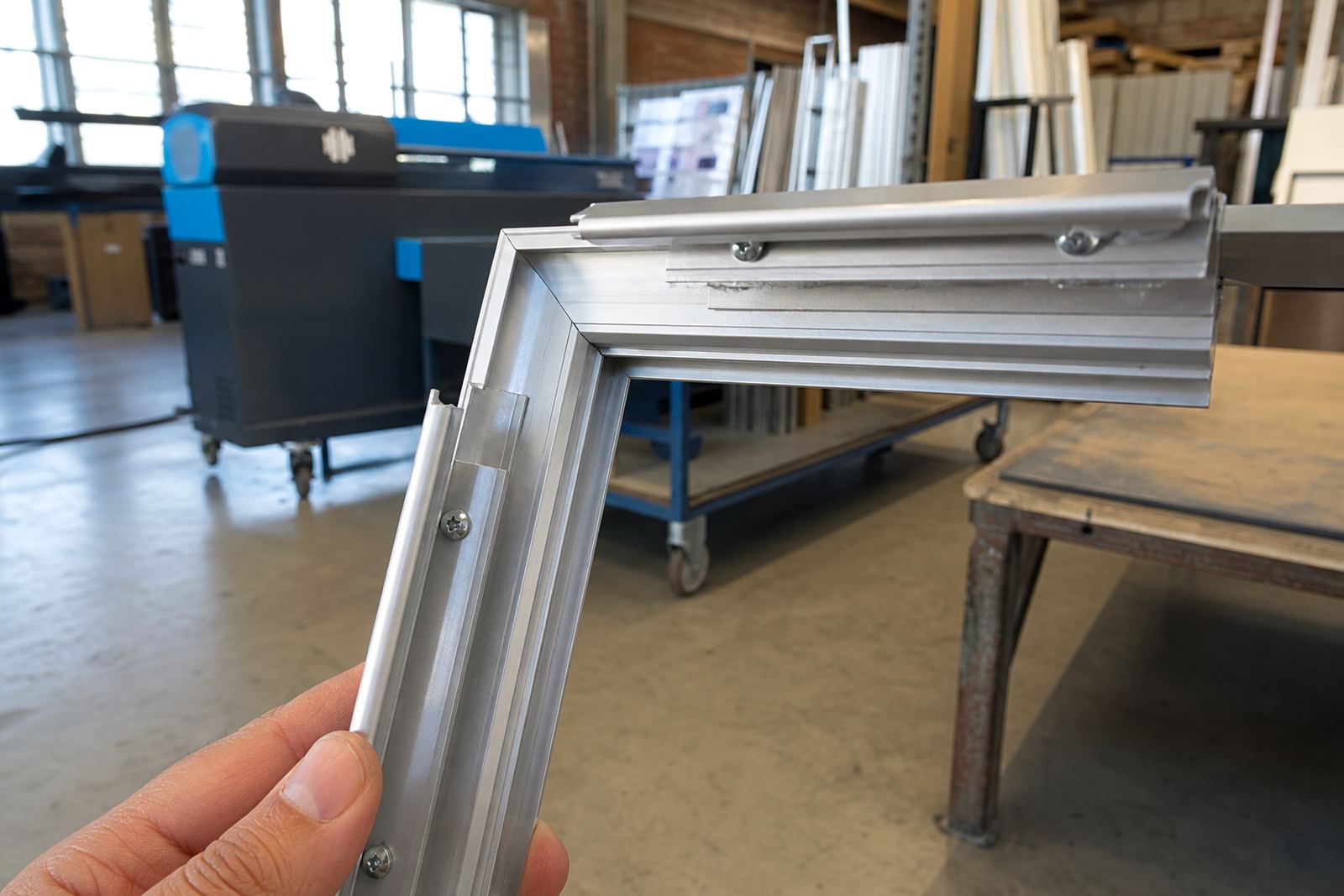
We make these boards in common A4 and A3 formats, with aluminium profiles that sit cleanly on tiled walls, painted plaster or timber panels. The cover is usually anti-glare, which helps under strong indoor lighting and along shopfront windows where daylight can wash out the print. Where the layout needs to be repeated across a service counter, matching boards keep the look orderly from one section to the next.
Sizes, profiles and mount points that suit the room
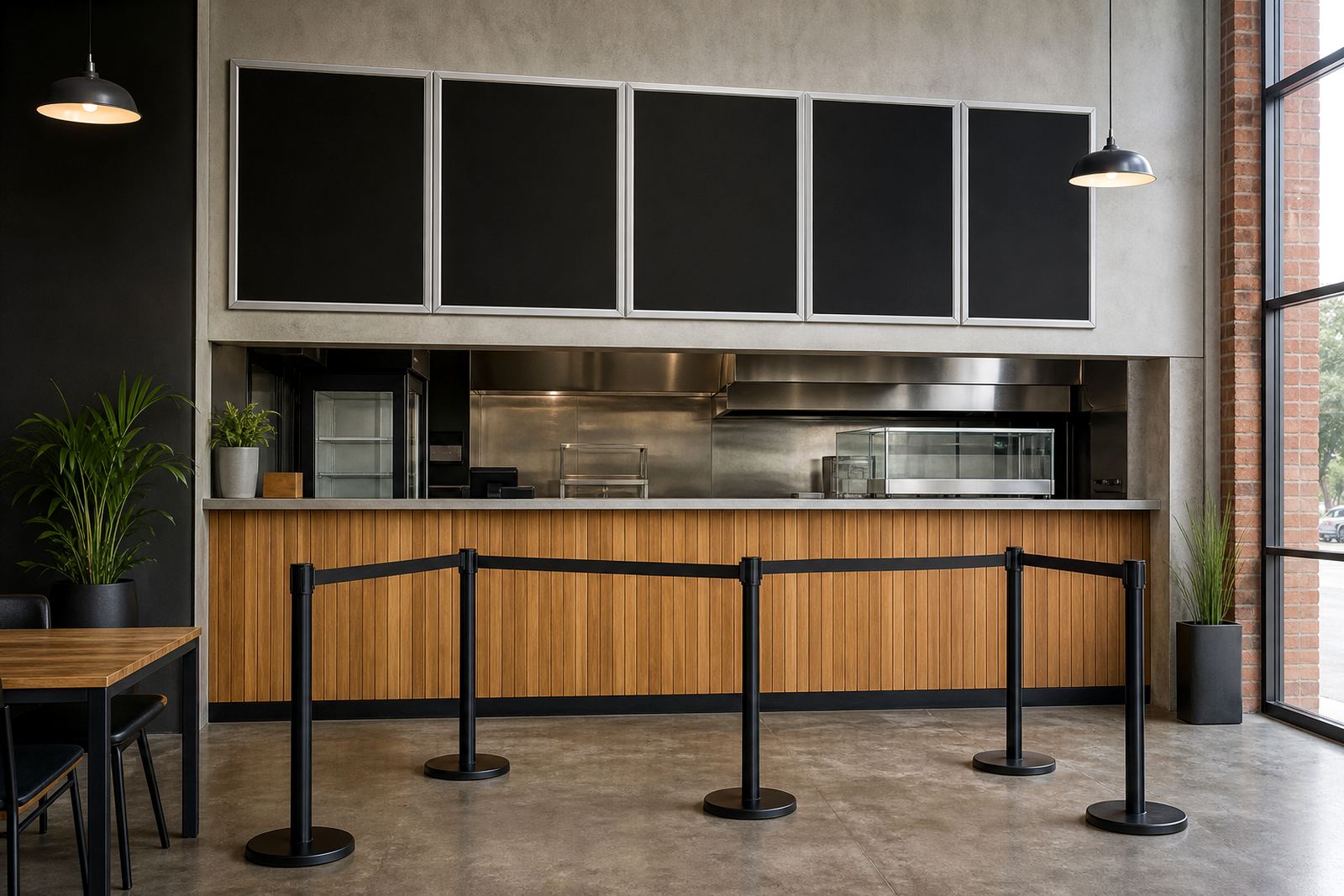
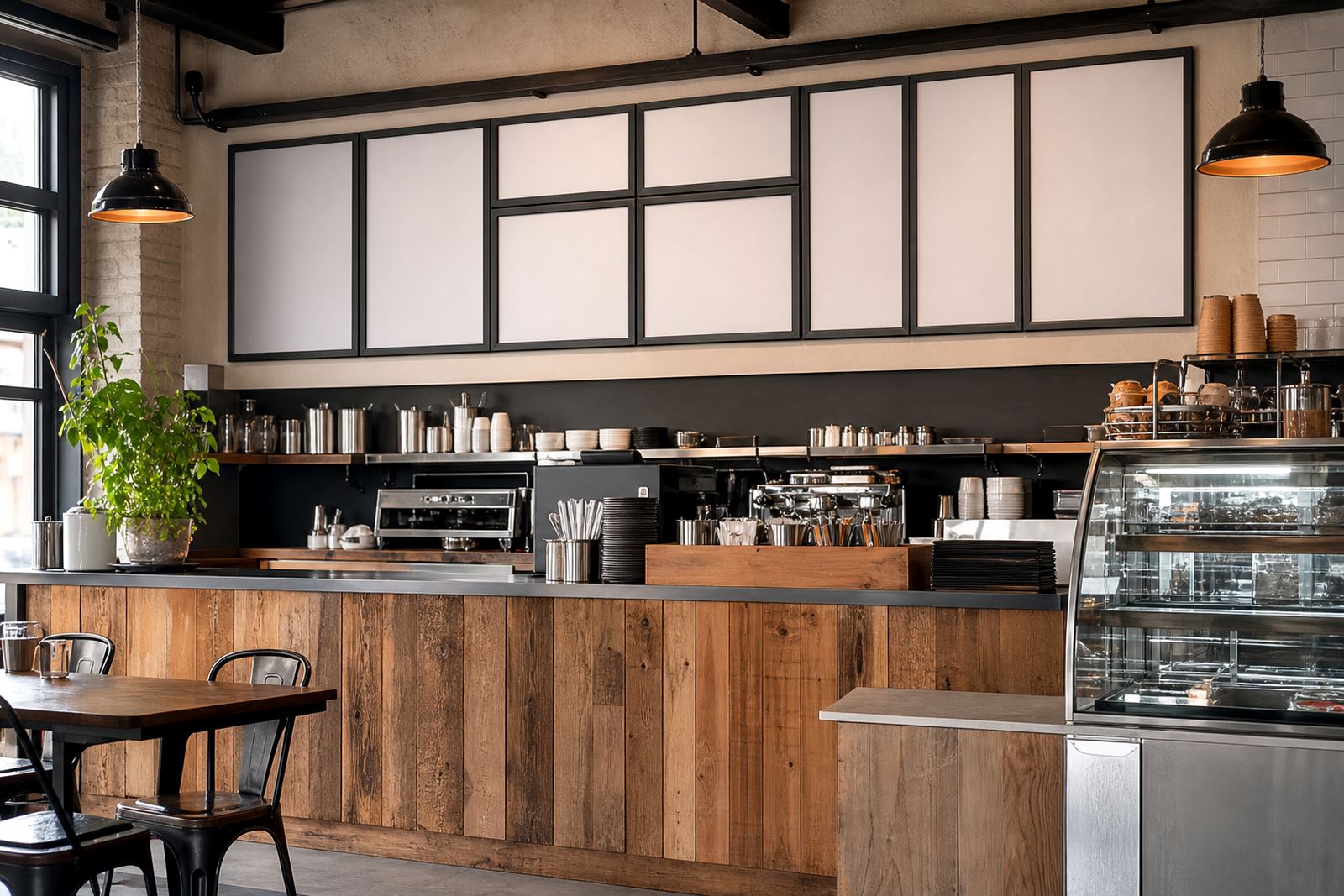
The board size should match the distance between the customer and the menu. A4 works well for item lists, short breakfast boards and compact specials. A3 gives more room for pricing blocks, add-ons and longer menu sets. For larger wall runs, several boards can sit side by side with the same frame profile and the same print size, so the whole wall reads as one system instead of a patchwork of sheets.
- A4 and A3 snap frame options for single menus or grouped boards
- Aluminium frame profile for a clean edge and steady grip on the insert
- Anti-glare front cover for bright interiors and window-facing areas
- Wall mounting points for masonry, plasterboard or timber backing
- Optional portrait or landscape layout, depending on the menu block
Some counters work better with one board above eye level and a second board lower down for specials, allergen notes or combo offers. In a narrow passage, portrait boards keep the width tight. For a long service wall, landscape boards can carry larger headings and clearer price columns.
Where the board does the heavy lifting
Wall menu boards suit places where staff need to point to a price and the customer must read it without crowding the counter. That includes cafe servery walls, deli counters, bakery lines, bar service points and takeaway collection areas. In Cape Town coastal conditions, where salt in the air can leave a film on nearby fittings, a frame that wipes clean matters more than decorative trim. In Johannesburg or inland towns, dust and fine grit make a sealed cover just as useful.
These boards also work well where the printed menu changes often. Seasonal breakfast lines, weekday lunch boards and drinks lists can be kept separate, so one section can be updated while the rest stays in place. For multi-branch groups in Stellenbosch, Durban, Gqeberha or Bellville, using the same board size across branches makes print resizing and artwork control far easier.
- Queue lines where customers need a clear read before ordering
- Counter walls with daily specials, combo deals or set meals
- Window-facing areas where daylight can affect readability
- Bars and cafes with rotating drinks or snack lists
- Takeaway counters that need a tidy fixed menu display
Fitting the frame into your wall layout
Wall fitting usually depends on the surface behind the board and the height at which the menu must be read. A practical mount keeps the snap edge reachable for insert changes, but high enough that customers do not brush past it all day. If the board sits near a serving hatch or prep pass, allow space for staff hands and for the cover to open fully without catching on shelves, bulkheads or lighting rails.
We can prepare print-ready templates to match the frame opening, then size the menu text to suit the viewing distance. If you are fitting boards during a shop fit-out, it helps to confirm the wall material, exact centre line and whether the board should align with a counter edge, tile line or window mullion. On glass or shopfront zones, window mounting can be used where the board needs to sit in a visible position without crowding the interior wall.
- Confirm wall material before drilling or fixings are planned
- Check the preferred viewing height from the customer side
- Decide on portrait or landscape orientation early
- Allow room for the frame to open when changing inserts
- State if the board must line up with tiles, counters or window bays
Print inserts, menu layout and finishing choices
The board itself is only half the job, the printed insert has to read clearly under real counter lighting. We handle A4 menu templates, A3 menu templates, menu resizing, menu typesetting and proofing so the insert fits the frame cleanly. Short-run printing suits specials boards, trial menus and seasonal lines, while laminated menu prints and poster insert printing suit higher-use displays that need extra wipe resistance.
Colour matching matters when a brand uses a fixed palette across menus, loyalty cards and signage. A board with a clear frame should not fight the print, so margins, font size and spacing need to be set for quick reading from a standing queue. Where a menu changes often, a simple layout with strong headings and clean price columns is usually easier to update than a crowded page full of small text.
- A4 or A3 artwork sized to the exact frame opening
- Short run or repeat printing for seasonal changes
- Laminated prints for more frequent handling
- Proofing before print where wording or pricing needs checking
- Courier packaging for branch delivery across South Africa
Care, cleaning and daily handling
A wall menu board is easy to keep presentable if the cover and frame are wiped with a soft cloth and a mild cleaner. Avoid harsh abrasives that can cloud the anti-glare face or scratch the aluminium edge. In busy cafes and takeaway counters, greasy fingertips and steam can build up near the lower edge of the frame, so a quick wipe at close of trade helps keep the insert visible and the board looking tidy.
If the board is mounted near a kitchen pass or coffee station, ask for a layout that leaves enough white space around the text. That spacing makes the menu easier to read when light catches the cover. For coastal branches in places like Milnerton or Gqeberha, regular cleaning also helps stop salt film from dulling the finish. A little care goes a long way when the board is part of everyday service.
What to confirm before production starts
To get the board right, we need the size, layout, mounting position and the wording for the printed insert. If you already have an existing menu, send the current artwork or the text and we can resize it to suit the chosen frame. If the board is being added to a new counter, include the wall width, the height available above the counter and whether the menu should be read from a queue line or a seated area.
It also helps to confirm whether the board should be used on its own or paired with matching A-frame menu stands at another entry point. A consistent frame style across wall, window and pavement displays keeps the menu family together. Our contact form can be used for the details, and it helps us line up the board size, insert size and finish before print or fitting is arranged.
- Final board size and orientation
- Wall surface and fixing point
- Menu wording, prices and any daily special blocks
- Insert finish, laminated or standard print
- Whether you need one board or a matching set
Key facts
| Product type | Fixed wall-mounted snap menu board |
|---|---|
| Common sizes | A4 and A3 |
| Frame material | Aluminium profile |
| Front cover | Clear anti-glare sheet |
| Mounting | Wall or window fitting options |
| Use case | Menus, specials and price lists for restaurants, cafes and takeaway counters |